







-
 Agriculture
-
 Health-Care
-
 Environment
-
 Construction-Real-Estate
-
 Tools-Hardware
-
 Home-Garden
-
 Furniture
-
 Luggage-Bags-Cases
-
 Medical-devices-Supplies
-
 Gifts-Crafts
-
 Sports-Entertainment
-
 Food-Beverage
-
 Vehicles-Transportation
-
 Power-Transmission
-
 Material-Handling
-
 Renewable-Energy
-
 Safety
-
 Testing-Instrument-Equipment
-
 Construction-Building-Machinery
-
 Pet-Supplies
-
 Personal-Care-Household-Cleaning
-
 Vehicle-Accessories-Electronics-Tools
-
 School-Office-Supplies
-
 Packaging-Printing
-
 Mother-Kids-Toys
-
 Business-Services
-
 Commercial-Equipment-Machinery
-
 Apparel-Accessories
-
 Security
-
 Shoes-Accessories
-
 Vehicle-Parts-Accessories
-
 Jewelry-Eyewear-Watches-Accessories
-
 Lights-Lighting
-
 Fabric-Textile-Raw-Material
-
 Fabrication-Services
-
 Industrial-Machinery
-
 Consumer-Electronics
-
 Electrical-Equipment-Supplies
-
 Electronic-Components-Accessories-Telecommunications
-
 Home-Appliances
-
 Beauty
-
 Chemicals
-
 Rubber-Plastics
-
 Metals-Alloys


























































































































































































































































































































































































































































































































































































- Masonry Materials
- Curtain Walls & Accessories
- Earthwork Products
- Fireproofing Materials
- Heat Insulation Materials
- Plastic Building Materials
- Building Boards
- Soundproofing Materials
- Timber
- Waterproofing Materials
- Balustrades & Handrails
- Bathroom & Kitchen
- Flooring & Accessories
- Tiles & Accessories
- Door, Window & Accessories
- Fireplaces & Stoves
- Floor Heating Systems & Parts
- Stairs & Stair Parts
- Ceilings
- Elevators & Escalators
- Stone
- Countertops, Vanity Tops & Table Tops
- Mosaics
- Metal Building Materials
- Multifunctional Materials
- Ladders & Scaffoldings
- Mouldings
- Corner Guards
- Decorative Films
- Formwork
- Building & Industrial Glass
- Other Construction & Real Estate
- Wallpapers/Wall panels
- HVAC System & Parts
- Outdoor Facilities
- Prefabricated Buildings
- Festive & Party Supplies
- Bathroom Products
- Household Sundries
- Rain Gear
- Garden Supplies
- Household Cleaning Tools & Accessories
- Lighters & Smoking Accessories
- Home Storage & Organization
- Household Scales
- Smart Home Improvement
- Home Textiles
- Kitchenware
- Drinkware & Accessories
- Dinnerware, Coffee & Wine
- Home Decor
- Golf
- Fitness & Body Building
- Amusement Park Facilities
- Billiards, Board Game,Coin Operated Games
- Musical Instruments
- Outdoor Affordable Luxury Sports
- Camping & Hiking
- Fishing
- Sports Safety&Rehabilitation
- Ball Sports Equipments
- Water Sports
- Winter Sports
- Luxury Travel Equipments
- Sports Shoes, Bags & Accessories
- Cycling
- Other Sports & Entertainment Products
- Artificial Grass&Sports Flooring&Sports Court Equipment
- Scooters
- Food Ingredients
- Honey & Honey Products
- Snacks
- Nuts & Kernels
- Seafood
- Plant & Animal Oil
- Beverages
- Fruit & Vegetable Products
- Frog & Escargot
- Bean Products
- Egg Products
- Dairy Products
- Seasonings & Condiments
- Canned Food
- Instant Food
- Baked Goods
- Other Food & Beverage
- Meat & Poultry
- Confectionery
- Grain Products
- Feminie Care
- Hair Care & Styling
- Body Care
- Hands & Feet Care
- Hygiene Products
- Men's Grooming
- Laundry Cleaning Supplies
- Travel Size & Gift Sets
- Room Deodorizers
- Other Personal Care Products
- Pest Control Products
- Special Household Cleaning
- Floor Cleaning
- Kitchen & Bathroom Cleaning
- Oral Care
- Bath Supplies
- Yellow Pages
- Correction Supplies
- Office Binding Supplies
- Office Cutting Supplies
- Board Erasers
- Office Adhesives & Tapes
- Education Supplies
- Pencil Cases & Bags
- Notebooks & Writing Pads
- File Folder Accessories
- Calendars
- Writing Accessories
- Commercial Office Supplies
- Pencil Sharpeners
- Pens
- Letter Pad/Paper
- Paper Envelopes
- Desk Organizers
- Pencils
- Markers & Highlighters
- Filing Products
- Art Supplies
- Easels
- Badge Holder & Accessories
- Office Paper
- Printer Supplies
- Book Covers
- Other Office & School Supplies
- Stationery Set
- Boards
- Clipboards
- Stamps
- Drafting Supplies
- Stencils
- Electronic Dictionary
- Books
- Map
- Magazines
- Calculators
- Baby & Toddler Toys
- Educational Toys
- Classic Toys
- Dress Up & Pretend Play
- Toy Vehicle
- Stuffed Animals & Plush Toys
- Outdoor Toys & Structures
- Balloons & Accessories
- Baby Food
- Children's Clothing
- Baby Supplies & Products
- Maternity Clothes
- Kids Shoes
- Baby Care
- Novelty & Gag Toys
- Dolls & Accessories
- Puzzle & Games
- Blocks & Model Building Toys
- Toddler Clothing
- Baby Clothing
- Kids' Luggage & Bags
- Arts, Crafts & DIY Toys
- Action & Toy Figures
- Baby Appliances
- Hobbies & Models
- Remote Control Toys
- Promotional Toys
- Pregnancy & Maternity
- Hygiene Products
- Kid's Textile&Bedding
- Novelty & Special Use
- Toy Weapons
- Baby Gifts
- Baby Storage & Organization
- Auto Drive Systems
- ATV/UTV Parts & Accessories
- Marine Parts & Accessories
- Other Auto Parts
- Trailer Parts & Accessories
- Auto Transmission Systems
- Train Parts & Accessories
- Universal Parts
- Railway Parts & Accessories
- Auto Brake Systems
- Aviation Parts & Accessories
- Truck Parts & Accessories
- Auto Suspension Systems
- Auto Lighting Systems
- New Energy Vehicle Parts & Accessories
- Auto Steering Systems
- Wheels, Tires & Accessories
- Bus Parts & Accessories
- Auto Performance Parts
- Cooling System
- Go-Kart & Kart Racer Parts & Accessories
- Air Conditioning Systems
- Heavy Duty Vehicle Parts & Accessories
- Auto Electrical Systems
- Auto Body Systems
- Auto Engine Systems
- Container Parts & Accessories
- Motorcycle Parts & Accessories
- Refrigeration & Heat Exchange Equipment
- Machine Tool Equipment
- Food & Beverage Machinery
- Agricultural Machinery & Equipment
- Apparel & Textile Machinery
- Chemical Machinery
- Packaging Machines
- Paper Production Machinery
- Plastic & Rubber Processing Machinery
- Industrial Robots
- Electronic Products Machinery
- Metal & Metallurgy Machinery
- Woodworking Machinery
- Home Product Manufacturing Machinery
- Machinery Accessories
- Environmental Machinery
- Machinery Service
- Electrical Equipment Manufacturing Machinery
- Industrial Compressors & Parts
- Tobacco & Cigarette Machinery
- Production Line
- Used Industrial Machinery
- Electronics Production Machinery
- Other Machinery & Industrial Equipment
- Camera, Photo & Accessories
- Portable Audio, Video & Accessories
- Television, Home Audio, Video & Accessories
- Video Games & Accessories
- Mobile Phone & Accessories
- Electronic Publications
- Earphone & Headphone & Accessories
- Speakers & Accessories
- Smart Electronics
- TV Receivers & Accessories
- Mobile Phone & Computer Repair Parts
- Chargers, Batteries & Power Supplies
- Used Electronics
- VR, AR, MR Hardware & Software
- Projectors & Presentation Equipments
- Other Consumer Electronics
- Cables & Commonly Used Accessories
- Computer Hardware & Software
- Displays, Signage and Optoelectronics
- Discrete Semiconductors
- Wireless & IoT Module and Products
- Telecommunications
- Connectors, Terminals & Accessories
- Development Boards, Electronic Modules and Kits
- Circuit Protection
- Sensors
- Isolators
- Audio Components and Products
- Integrated Circuits
- Power Supplies
- Relays
- RF, Microwave and RFID
- Electronic Accessories & Supplies
- Passive Components
- PCB & PCBA
- Air Quality Appliances
- Home Appliance Parts
- Heating & Cooling Appliances
- Small Kitchen Appliances
- Laundry Appliances
- Water Heaters
- Water Treatment Appliances
- Refrigerators & Freezers
- Personal Care & Beauty Appliances
- Major Kitchen Appliances
- Cleaning Appliances
- Second-hand Appliances
- Smart Home Appliances
- Other Home Appliances
- Energy Chemicals
- Inorganic Chemicals
- Basic Organic Chemicals
- Agrochemicals
- Admixture & Additives
- Catalysts & Chemical Auxiliary Agents
- Pigments & Dyestuff
- Coating & Paint
- Daily Chemicals
- Polymer
- Organic Intermediate
- Adhesives & Sealants
- Chemical Waste
- Biological Chemical Products
- Surface Treatment Chemicals
- Painting & Coating
- Chemical Reagents
- Flavor & Fragrance
- Non-Explosive Demolition Agents
- Other Chemicals
- Custom Chemical Services

How to Schedule Hybrid Moving Head Shipments Without Event Delays
Reliable delivery of hybrid moving heads requires coordination between the event date, equipment specifications, production schedule, shipping method, customs process, and venue installation. Buyers should confirm the exact model and quantity early, secure manufacturing capacity, and use the stated 20–30-day lead-time reference after deposit as a starting point. Extra time should then be added for transportation, customs clearance, inspection, installation, and commissioning.
Shipment Planning Priorities
Before production begins, prepare a complete equipment and logistics brief. Include the fixture model, quantity, accessories, control requirements, packaging details, destination, preferred trade term, and required arrival date. This information enables the supplier to coordinate manufacturing, testing, export documents, freight booking, and delivery around the event schedule.
- Confirm product specifications, quantities, destination, delivery terms, and the required on-site date.
- Reserve factory capacity before the project becomes time-critical. Color Imagination reports a maximum monthly capacity of 7,000 lights and accepts orders from one unit.
- Choose transportation according to volume and urgency: sea freight for bulk orders, air freight for urgent deliveries, and DHL, FedEx, UPS, or TNT for samples, spare parts, and smaller consignments.
- Allow enough time after delivery for receiving inspection, installation, focusing, programming, and system commissioning.
Production, Product Data, and Lead-Time Control
The available product reference describes a 150W white laser beam moving head rather than a hybrid fixture. Its specifications may help illustrate the type of information needed for freight planning, but they must not be applied to another model without written confirmation. The reference unit is listed with an IP66 rating, a net weight of 24.9 kg, product dimensions of 268.4 by 407.5 by 581.5 mm, and packing dimensions of 495 by 675 by 350 mm. Hybrid moving head shipments should be calculated using the confirmed packed dimensions and gross weight of the selected model.
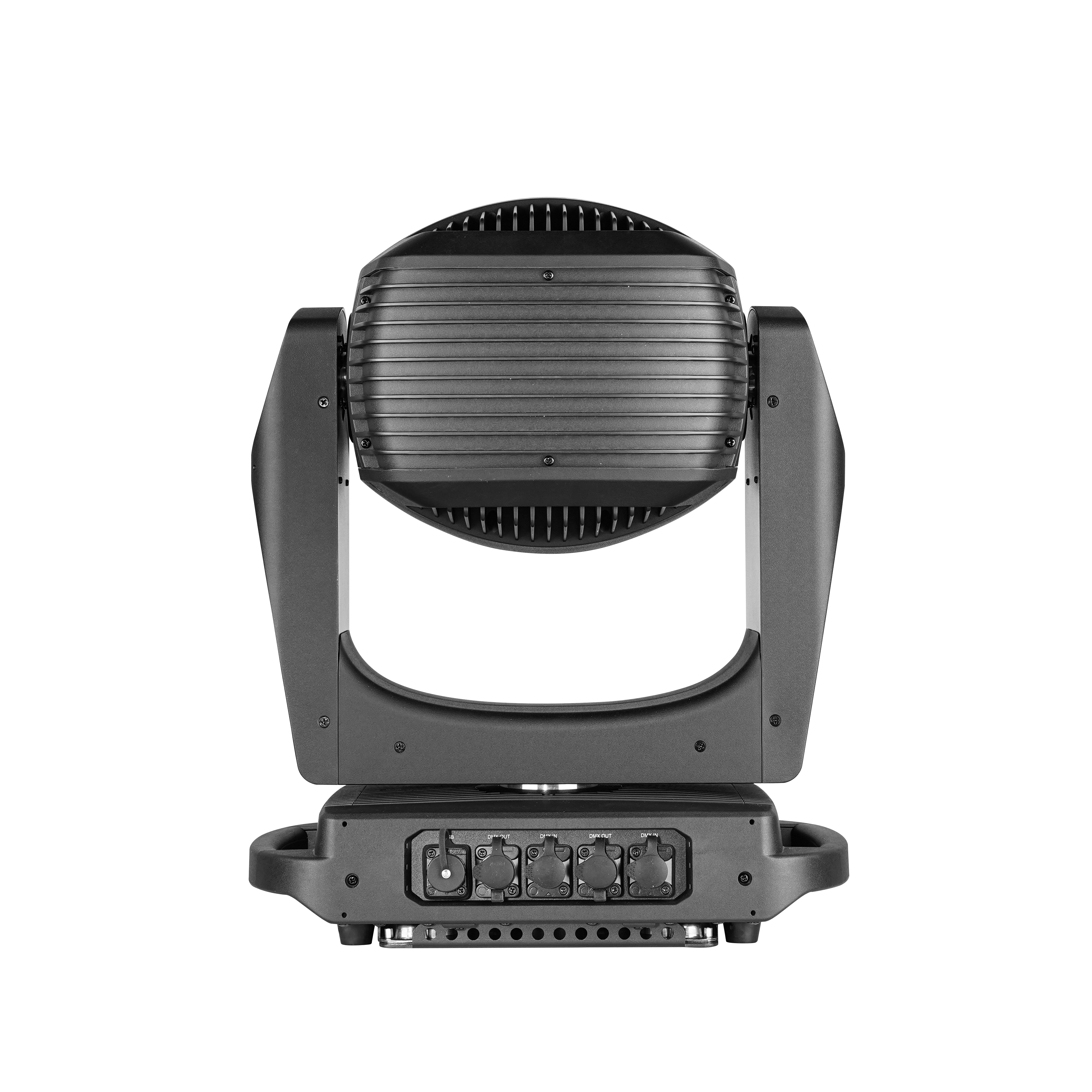
Production should be aligned with the event contract before the deposit is paid. The stated delivery reference is 20–30 days after deposit, although the actual schedule varies with the model and order quantity. This period should be combined with the selected freight transit time, customs processing, local transportation, and venue preparation. For an important opening date, the equipment should arrive before the final installation deadline rather than immediately before the event.
Color Imagination describes an integrated manufacturing process that includes mechanical and electronic assembly, SMT and PCB work, optical module installation, calibration, programming, aging tests, inspection, packaging, and logistics coordination. The company also states that it supports high-volume manufacturing, OEM and ODM work, customized engineering, rapid delivery requirements, and parallel production of multiple product types.
Pre-Dispatch Quality Checks
Quality verification before shipment helps reduce the risk of discovering a fault at the venue. The stated inspection activities include incoming material checks, PCB function testing, optical performance testing, electrical safety verification, waterproof testing for IP-rated equipment, burn-in and aging tests, final inspection, and packaging checks. The business information also identifies 100% functional testing, burn-in, safety inspection, and final quality control before dispatch.
Selecting Freight for the Event Schedule
Transportation should be selected after production timing and shipment dimensions are known. Sea freight by FCL or LCL is generally suitable for large orders and venue-wide projects, provided that the longer transit period is included in the plan. Air freight is more appropriate when the event date leaves limited recovery time. Express courier services are practical for samples, replacement components, spare parts, and other small shipments that require tracking.
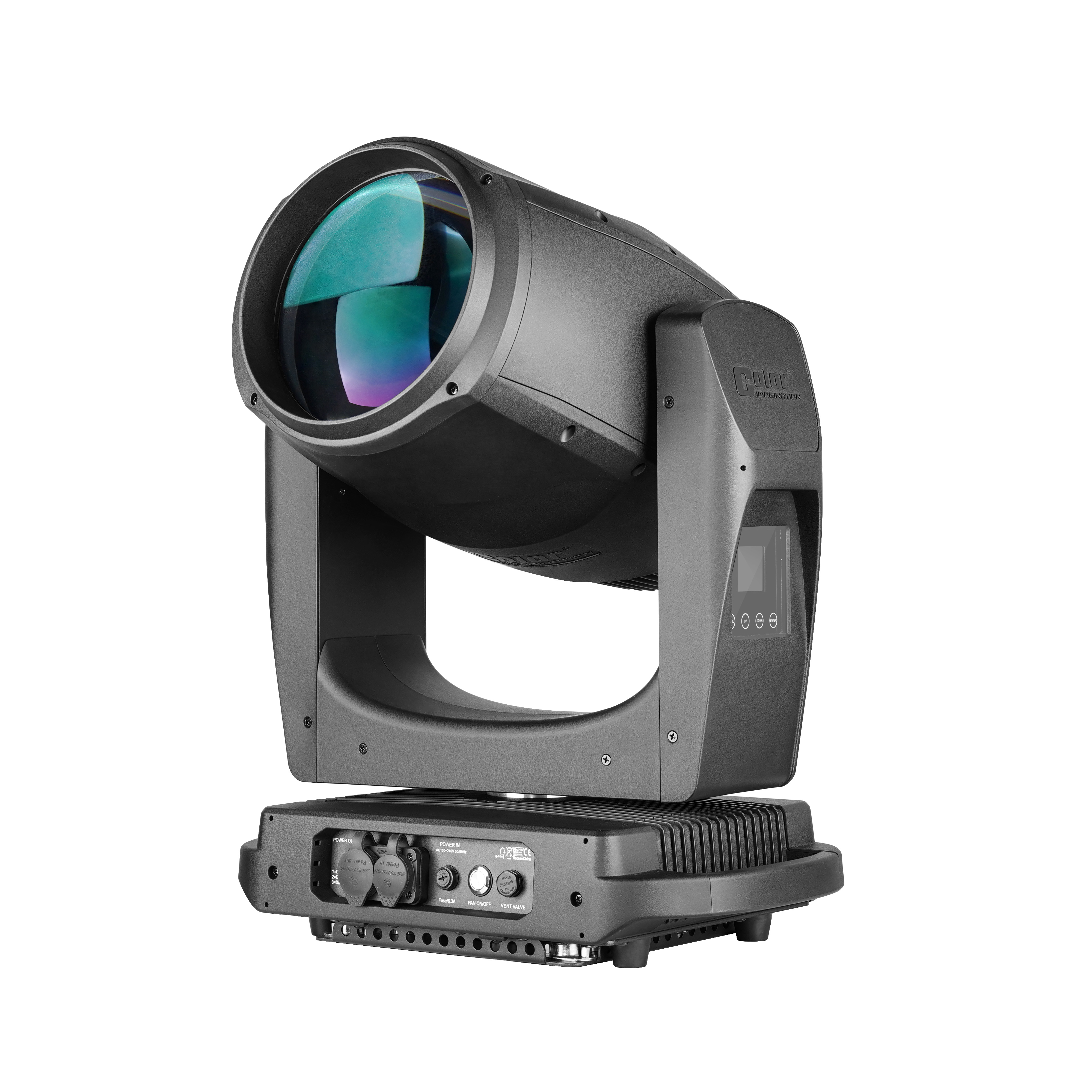
Commercial responsibility must also be agreed before dispatch. Color Imagination states that EXW, FOB, CIF, and DDP can be supported upon request, subject to project terms. The buyer and supplier should clearly define who handles export arrangements, international freight, insurance, import clearance, duties, taxes, and final delivery to the venue.
Packaging and documentation can affect the actual arrival date. The stated logistics process uses reinforced cartons, foam protection, and shock-resistant materials. The logistics team provides tracking information and customs documentation support. Before shipping, confirm the commercial invoice, packing list, package count, packed weight, dimensions, destination requirements, and the party responsible for import procedures.
Installation and Operating Conditions
A shipment is not complete when it reaches the loading dock. Schedule time to check quantities and visible condition, test each fixture, install trusses or floor positions, address control-network requirements, focus the units, and complete programming. This is especially important for concerts, festivals, theaters, television studios, live productions, nightclubs, rental companies, and architectural lighting projects.
The referenced product is described as suitable for outdoor use with an IP66 rating and an operating temperature range from -25 degrees C to 45 degrees C. These figures apply to the listed product only. The environmental rating, connector arrangement, control protocol, power requirements, and operating limits of the selected hybrid moving head should be confirmed separately.
Color Imagination documents a Kunming nightclub project that used 3,500 stage lights. The installation combined beam, wash, effect, and pixel fixtures to produce synchronized visuals for live shows, DJ performances, themed events, and regular nightclub operation. Projects of this scale show why product grouping, production sequencing, freight planning, and system integration must be handled as one coordinated schedule.
Shipment Method Comparison
| Project Condition | Recommended Action | Relevant Information |
|---|---|---|
| Large event or venue order | Use FCL or LCL sea freight and reserve time for port handling and receiving. | Sea freight is presented as the standard approach for bulk and large-scale projects. |
| Short lead time | Consider air freight after confirming production completion and available flight capacity. | Air freight is available for urgent requirements. |
| Samples, replacement units, or spare parts | Use an express courier and request tracking and customs documents. | DHL, FedEx, UPS, and TNT are listed courier options. |
| Normal production cycle | Place the order early enough to cover production, transit, customs, inspection, and installation. | The stated reference is 20–30 days upon deposit, depending on model and quantity. |
| High-volume program | Submit the complete product list and agree on phased production and shipment dates. | The reported maximum monthly production capacity is 7,000 lights. |
| International trade arrangement | Define freight, customs, tax, and delivery responsibilities in the purchase terms. | EXW, FOB, CIF, and DDP are available upon request. |
Frequently Asked Questions
When should a hybrid moving head shipment be scheduled?
Start planning as soon as the model, quantity, destination, and event date are known. Use the stated 20–30 days after deposit as the production reference, then add time for freight, customs, receiving tests, installation, and commissioning.
What is the best shipping method for a large event order?
FCL or LCL sea freight is identified for bulk and major project deliveries. Air freight can support urgent schedules, while express services are better suited to samples, spare parts, and small packages.
Which details are required to calculate freight accurately?
Confirm the exact model, packed dimensions, gross weight, quantity, packaging configuration, destination, and trade term. The reference product has a gross weight of 28.6 kg and packing dimensions of 495 by 675 by 350 mm, but these values should not be used for a different hybrid fixture without confirmation.
Conclusion and Practical Recommendations
To protect an event schedule, place the fixture specifications, quantities, deposit date, factory plan, freight method, customs documents, and installation deadline into one written logistics schedule. Treat the 20–30-day reference as only one part of the timeline, and build in contingency for transport disruption, customs review, delivery inspection, and venue work. Color Imagination provides R&D, manufacturing, sales, technical services, OEM/ODM support, and project solutions for customers in Europe, North America, South America, Asia, and the Middle East. For technical assistance or a detailed project quotation, contact Jack Chen at jack@color-imagination.com.
About Us
Guangzhou Color Imagination LED Lighting Limited, also known as Color Imagination, is a Guangzhou-based manufacturer that combines research and development, production, sales, and technical services for professional stage and entertainment lighting. Its product range includes moving head fixtures, entertainment lighting, studio and broadcast equipment, and architectural lighting. The company supports OEM/ODM programs and turnkey projects, operates a 6,000-square-meter manufacturing facility, and reports a maximum capacity of 7,000 lights per month. Its listed markets include Europe, North America, South America, Asia, and the Middle East. Documented credentials include CE certificates LCSB070523036E and LCSB070523041S and ISO certificates GH004-2023E0421 and GH004-2023Q0766.

REPORT