







-
 Agriculture
-
 Health-Care
-
 Environment
-
 Construction-Real-Estate
-
 Tools-Hardware
-
 Home-Garden
-
 Furniture
-
 Luggage-Bags-Cases
-
 Medical-devices-Supplies
-
 Gifts-Crafts
-
 Sports-Entertainment
-
 Food-Beverage
-
 Vehicles-Transportation
-
 Power-Transmission
-
 Material-Handling
-
 Renewable-Energy
-
 Safety
-
 Testing-Instrument-Equipment
-
 Construction-Building-Machinery
-
 Pet-Supplies
-
 Personal-Care-Household-Cleaning
-
 Vehicle-Accessories-Electronics-Tools
-
 School-Office-Supplies
-
 Packaging-Printing
-
 Mother-Kids-Toys
-
 Business-Services
-
 Commercial-Equipment-Machinery
-
 Apparel-Accessories
-
 Security
-
 Shoes-Accessories
-
 Vehicle-Parts-Accessories
-
 Jewelry-Eyewear-Watches-Accessories
-
 Lights-Lighting
-
 Fabric-Textile-Raw-Material
-
 Fabrication-Services
-
 Industrial-Machinery
-
 Consumer-Electronics
-
 Electrical-Equipment-Supplies
-
 Electronic-Components-Accessories-Telecommunications
-
 Home-Appliances
-
 Beauty
-
 Chemicals
-
 Rubber-Plastics
-
 Metals-Alloys


























































































































































































































































































































































































































































































































































































- Masonry Materials
- Curtain Walls & Accessories
- Earthwork Products
- Fireproofing Materials
- Heat Insulation Materials
- Plastic Building Materials
- Building Boards
- Soundproofing Materials
- Timber
- Waterproofing Materials
- Balustrades & Handrails
- Bathroom & Kitchen
- Flooring & Accessories
- Tiles & Accessories
- Door, Window & Accessories
- Fireplaces & Stoves
- Floor Heating Systems & Parts
- Stairs & Stair Parts
- Ceilings
- Elevators & Escalators
- Stone
- Countertops, Vanity Tops & Table Tops
- Mosaics
- Metal Building Materials
- Multifunctional Materials
- Ladders & Scaffoldings
- Mouldings
- Corner Guards
- Decorative Films
- Formwork
- Building & Industrial Glass
- Other Construction & Real Estate
- Wallpapers/Wall panels
- HVAC System & Parts
- Outdoor Facilities
- Prefabricated Buildings
- Festive & Party Supplies
- Bathroom Products
- Household Sundries
- Rain Gear
- Garden Supplies
- Household Cleaning Tools & Accessories
- Lighters & Smoking Accessories
- Home Storage & Organization
- Household Scales
- Smart Home Improvement
- Home Textiles
- Kitchenware
- Drinkware & Accessories
- Dinnerware, Coffee & Wine
- Home Decor
- Golf
- Fitness & Body Building
- Amusement Park Facilities
- Billiards, Board Game,Coin Operated Games
- Musical Instruments
- Outdoor Affordable Luxury Sports
- Camping & Hiking
- Fishing
- Sports Safety&Rehabilitation
- Ball Sports Equipments
- Water Sports
- Winter Sports
- Luxury Travel Equipments
- Sports Shoes, Bags & Accessories
- Cycling
- Other Sports & Entertainment Products
- Artificial Grass&Sports Flooring&Sports Court Equipment
- Scooters
- Food Ingredients
- Honey & Honey Products
- Snacks
- Nuts & Kernels
- Seafood
- Plant & Animal Oil
- Beverages
- Fruit & Vegetable Products
- Frog & Escargot
- Bean Products
- Egg Products
- Dairy Products
- Seasonings & Condiments
- Canned Food
- Instant Food
- Baked Goods
- Other Food & Beverage
- Meat & Poultry
- Confectionery
- Grain Products
- Feminie Care
- Hair Care & Styling
- Body Care
- Hands & Feet Care
- Hygiene Products
- Men's Grooming
- Laundry Cleaning Supplies
- Travel Size & Gift Sets
- Room Deodorizers
- Other Personal Care Products
- Pest Control Products
- Special Household Cleaning
- Floor Cleaning
- Kitchen & Bathroom Cleaning
- Oral Care
- Bath Supplies
- Yellow Pages
- Correction Supplies
- Office Binding Supplies
- Office Cutting Supplies
- Board Erasers
- Office Adhesives & Tapes
- Education Supplies
- Pencil Cases & Bags
- Notebooks & Writing Pads
- File Folder Accessories
- Calendars
- Writing Accessories
- Commercial Office Supplies
- Pencil Sharpeners
- Pens
- Letter Pad/Paper
- Paper Envelopes
- Desk Organizers
- Pencils
- Markers & Highlighters
- Filing Products
- Art Supplies
- Easels
- Badge Holder & Accessories
- Office Paper
- Printer Supplies
- Book Covers
- Other Office & School Supplies
- Stationery Set
- Boards
- Clipboards
- Stamps
- Drafting Supplies
- Stencils
- Electronic Dictionary
- Books
- Map
- Magazines
- Calculators
- Baby & Toddler Toys
- Educational Toys
- Classic Toys
- Dress Up & Pretend Play
- Toy Vehicle
- Stuffed Animals & Plush Toys
- Outdoor Toys & Structures
- Balloons & Accessories
- Baby Food
- Children's Clothing
- Baby Supplies & Products
- Maternity Clothes
- Kids Shoes
- Baby Care
- Novelty & Gag Toys
- Dolls & Accessories
- Puzzle & Games
- Blocks & Model Building Toys
- Toddler Clothing
- Baby Clothing
- Kids' Luggage & Bags
- Arts, Crafts & DIY Toys
- Action & Toy Figures
- Baby Appliances
- Hobbies & Models
- Remote Control Toys
- Promotional Toys
- Pregnancy & Maternity
- Hygiene Products
- Kid's Textile&Bedding
- Novelty & Special Use
- Toy Weapons
- Baby Gifts
- Baby Storage & Organization
- Auto Drive Systems
- ATV/UTV Parts & Accessories
- Marine Parts & Accessories
- Other Auto Parts
- Trailer Parts & Accessories
- Auto Transmission Systems
- Train Parts & Accessories
- Universal Parts
- Railway Parts & Accessories
- Auto Brake Systems
- Aviation Parts & Accessories
- Truck Parts & Accessories
- Auto Suspension Systems
- Auto Lighting Systems
- New Energy Vehicle Parts & Accessories
- Auto Steering Systems
- Wheels, Tires & Accessories
- Bus Parts & Accessories
- Auto Performance Parts
- Cooling System
- Go-Kart & Kart Racer Parts & Accessories
- Air Conditioning Systems
- Heavy Duty Vehicle Parts & Accessories
- Auto Electrical Systems
- Auto Body Systems
- Auto Engine Systems
- Container Parts & Accessories
- Motorcycle Parts & Accessories
- Refrigeration & Heat Exchange Equipment
- Machine Tool Equipment
- Food & Beverage Machinery
- Agricultural Machinery & Equipment
- Apparel & Textile Machinery
- Chemical Machinery
- Packaging Machines
- Paper Production Machinery
- Plastic & Rubber Processing Machinery
- Industrial Robots
- Electronic Products Machinery
- Metal & Metallurgy Machinery
- Woodworking Machinery
- Home Product Manufacturing Machinery
- Machinery Accessories
- Environmental Machinery
- Machinery Service
- Electrical Equipment Manufacturing Machinery
- Industrial Compressors & Parts
- Tobacco & Cigarette Machinery
- Production Line
- Used Industrial Machinery
- Electronics Production Machinery
- Other Machinery & Industrial Equipment
- Camera, Photo & Accessories
- Portable Audio, Video & Accessories
- Television, Home Audio, Video & Accessories
- Video Games & Accessories
- Mobile Phone & Accessories
- Electronic Publications
- Earphone & Headphone & Accessories
- Speakers & Accessories
- Smart Electronics
- TV Receivers & Accessories
- Mobile Phone & Computer Repair Parts
- Chargers, Batteries & Power Supplies
- Used Electronics
- VR, AR, MR Hardware & Software
- Projectors & Presentation Equipments
- Other Consumer Electronics
- Cables & Commonly Used Accessories
- Computer Hardware & Software
- Displays, Signage and Optoelectronics
- Discrete Semiconductors
- Wireless & IoT Module and Products
- Telecommunications
- Connectors, Terminals & Accessories
- Development Boards, Electronic Modules and Kits
- Circuit Protection
- Sensors
- Isolators
- Audio Components and Products
- Integrated Circuits
- Power Supplies
- Relays
- RF, Microwave and RFID
- Electronic Accessories & Supplies
- Passive Components
- PCB & PCBA
- Air Quality Appliances
- Home Appliance Parts
- Heating & Cooling Appliances
- Small Kitchen Appliances
- Laundry Appliances
- Water Heaters
- Water Treatment Appliances
- Refrigerators & Freezers
- Personal Care & Beauty Appliances
- Major Kitchen Appliances
- Cleaning Appliances
- Second-hand Appliances
- Smart Home Appliances
- Other Home Appliances
- Energy Chemicals
- Inorganic Chemicals
- Basic Organic Chemicals
- Agrochemicals
- Admixture & Additives
- Catalysts & Chemical Auxiliary Agents
- Pigments & Dyestuff
- Coating & Paint
- Daily Chemicals
- Polymer
- Organic Intermediate
- Adhesives & Sealants
- Chemical Waste
- Biological Chemical Products
- Surface Treatment Chemicals
- Painting & Coating
- Chemical Reagents
- Flavor & Fragrance
- Non-Explosive Demolition Agents
- Other Chemicals
- Custom Chemical Services

How to Select a Double-End Saw for Accurate Hardwood Processing and Daily Production
Choosing a Double-End Saw for hardwood cutting and continuous daily output requires more than comparing published specifications. The right machine should deliver repeatable sizing accuracy, remain stable during extended operation, and be supported by documented inspection and testing before shipment. For solid wood furniture, wooden doors, windows, and wood-aluminum composite products, the equipment configuration must also fit the material characteristics and the downstream production process.
What Matters Most When Selecting a Double-End Saw
A reliable Double-End Saw should be evaluated from four practical perspectives: accuracy control, endurance under production load, compatibility with the intended workflow, and supplier service capability. Hardwood materials place higher demands on cutting consistency and machine stability, particularly when every workpiece must move accurately into profiling, drilling, grooving, assembly, or finishing stages.
- Verify how the manufacturer controls and measures dimensional accuracy rather than accepting tolerance claims without supporting records.
- Ask for proof of long-duration operating tests, including full-load running, vibration checks, and electrical stability verification.
- Confirm that the machine is configured for your wood species, finished dimensions, daily capacity, and line layout.
- Review spare-parts availability, remote troubleshooting procedures, and technical response speed before placing an order.
Accuracy Depends on Manufacturing Control and Final Calibration
For hardwood processing, dimensional repeatability is essential. Small variations in cutting length, width, or alignment can create problems in later operations and reduce assembly quality. A buyer should therefore examine the supplier's process for controlling critical machine components, assembly precision, and final commissioning.
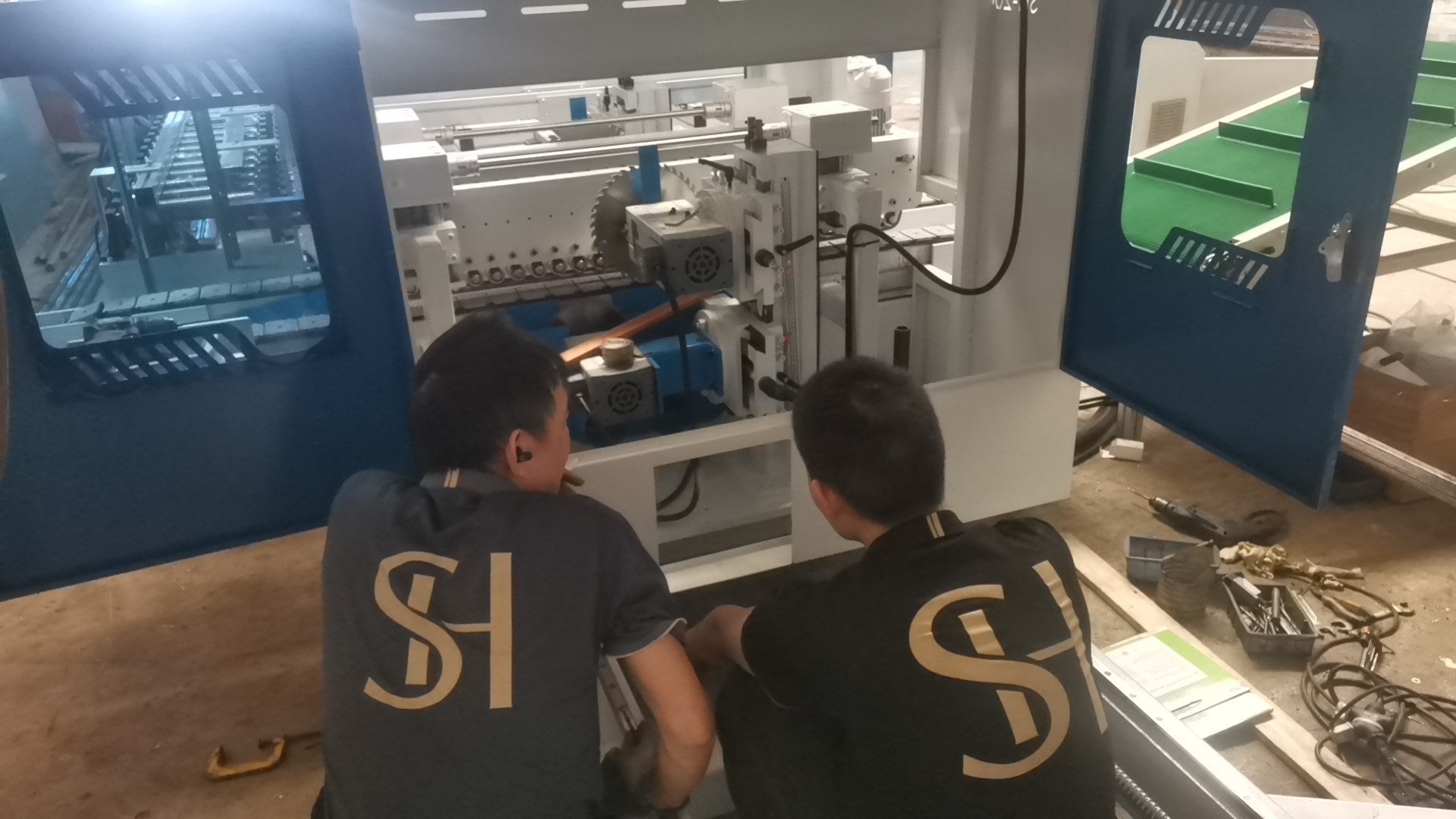
Foshan Sun Hunt states that it uses digital monitoring for key production parameters during sheet metal fabrication, frame welding, component installation, and machine debugging. Its inspection process covers dimensional tolerance, assembly clearance, transmission coaxiality, and electrical matching. When comparing Double-End Saw suppliers, these are useful checkpoints because they indicate whether accuracy is verified throughout production rather than only at the end.
Testing for Continuous Daily Production
A machine intended for repeated daily use should demonstrate stable operation beyond a brief idle test. Buyers should request confirmation that the completed equipment has been assessed under realistic running conditions, especially when the saw will process hardwood over extended shifts.
According to the supplier's stated quality procedures, finished machines undergo no-load operation followed by long-term full-load testing. Precision is rechecked after running, while noise, vibration, and electrical stability are also examined. Before container loading, the machine, accessories, packaging, and order documentation are inspected again to confirm that shipment matches the customer's requirements.
Key Verification Items Before Delivery
| Evaluation Category | Questions to Ask | Stated Supplier Evidence |
|---|---|---|
| Repeatable accuracy | How are dimensions, assembly clearances, and transmission alignment controlled? | Key-parameter production control and dedicated testing stations |
| Operational endurance | Has the machine been tested during prolonged operation and under load? | No-load tests, long-term full-load running, and precision remeasurement |
| Machine stability | Are vibration, operating noise, and electrical performance checked? | Noise and vibration detection plus electrical stability inspection |
| Export protection | How are precision components protected during international shipping? | Moisture-proof film, cushioning materials, reinforced wooden cases, and packaging tests |
| Production recovery support | What happens when a fault or spare-parts need is confirmed? | Remote technical support and stated international express dispatch within two working days after confirmation |
Match the Saw to the Complete Production Workflow
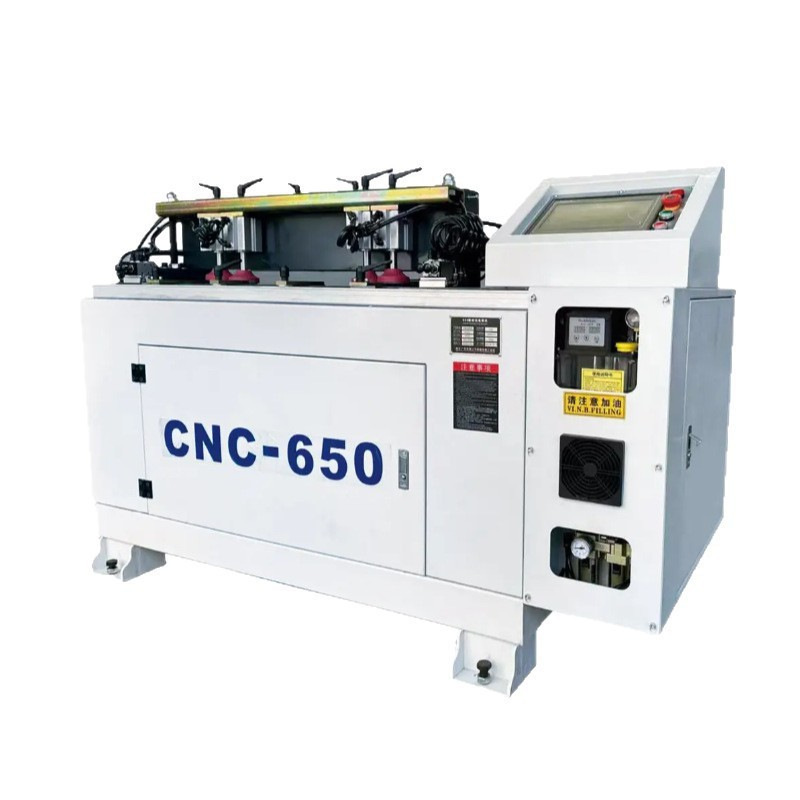
The Double-End Saw should not be selected as an isolated machine. Its value depends on how well it fits material preparation, feeding, sizing requirements, and the next processing stations. Suitable applications identified by the supplier include solid wood furniture manufacturing, wooden door production, wooden window processing, and wood-aluminum composite door and window production.
Relevant production-line experience can also help buyers assess a supplier's planning capabilities. Foshan Sun Hunt reports supplying 19 machines for a new wooden door factory line in India and 10 machines for a wood-processing line in the UAE. Since these cases refer to broader line projects rather than a specific Double-End Saw model, buyers should still request machine-specific confirmation for their hardwood type, workpiece dimensions, and output target.
After-Sales Capability Is Part of Production Reliability
Downtime can be costly in a daily production environment, so technical support should be considered during the purchasing stage. Useful service capabilities include remote diagnosis by video or voice, installation guidance, continuing technical assistance, and a defined process for confirming faults and arranging replacement parts.
The supplier states that it provides online video or voice support, installation tutorials, permanent technical assistance, and remote fault verification. For confirmed spare-parts needs, it states that international express delivery can be arranged within two working days. The stated warranty period is one year, excluding consumable parts and damage resulting from improper operation.
Frequently Asked Questions
How do I determine whether a Double-End Saw can keep its accuracy over time?
Request records or explanations covering dimensional tolerance control, fitting clearance, transmission coaxiality, final machine calibration, and post-running precision measurement. Long-term full-load testing is especially important for equipment planned for continuous production.
Why is machine configuration important for hardwood?
Hardwood processing may require a configuration that suits the material, cutting dimensions, feed requirements, and downstream operations. The saw must support the complete manufacturing sequence, not simply make an initial cut.
What should be checked before the machine is shipped?
Confirm that the supplier performs final operational testing, checks machine accessories against the order, protects precision parts with suitable export packaging, and provides the relevant technical documentation.
Conclusion
To choose a Double-End Saw that remains accurate in hardwood and high-frequency production, focus on verifiable manufacturing controls, extended-load testing, workflow suitability, shipping protection, and responsive service support. Foshan Sun Hunt offers non-standard customization and overall production-line solutions, with a stated minimum order quantity of one set and a normal delivery period of 20 to 35 days. For a detailed technical proposal or service consultation, contact vincent@fsshmachine.cn.
About Us
Foshan Sun Hunt Woodworking Machinery Co.,Ltd. is a woodworking machinery manufacturer located in Lunjiao Subdistrict, Shunde District, Foshan. Founded in 2014, the company operates a 2,000-square-meter factory and supplies CNC router machines, Double-End Saw series, planer machines, drilling machines, edge banding machines, and panel saws. Its quality management approach covers source control, production parameter management, warehousing, packaging, quality inspection, pre-shipment inspection, and after-sales support for customers requiring individual machines or production-line projects.

REPORT