







-
 Agriculture
-
 Health-Care
-
 Environment
-
 Construction-Real-Estate
-
 Tools-Hardware
-
 Home-Garden
-
 Furniture
-
 Luggage-Bags-Cases
-
 Medical-devices-Supplies
-
 Gifts-Crafts
-
 Sports-Entertainment
-
 Food-Beverage
-
 Vehicles-Transportation
-
 Power-Transmission
-
 Material-Handling
-
 Renewable-Energy
-
 Safety
-
 Testing-Instrument-Equipment
-
 Construction-Building-Machinery
-
 Pet-Supplies
-
 Personal-Care-Household-Cleaning
-
 Vehicle-Accessories-Electronics-Tools
-
 School-Office-Supplies
-
 Packaging-Printing
-
 Mother-Kids-Toys
-
 Business-Services
-
 Commercial-Equipment-Machinery
-
 Apparel-Accessories
-
 Security
-
 Shoes-Accessories
-
 Vehicle-Parts-Accessories
-
 Jewelry-Eyewear-Watches-Accessories
-
 Lights-Lighting
-
 Fabric-Textile-Raw-Material
-
 Fabrication-Services
-
 Industrial-Machinery
-
 Consumer-Electronics
-
 Electrical-Equipment-Supplies
-
 Electronic-Components-Accessories-Telecommunications
-
 Home-Appliances
-
 Beauty
-
 Chemicals
-
 Rubber-Plastics
-
 Metals-Alloys


























































































































































































































































































































































































































































































































































































- Masonry Materials
- Curtain Walls & Accessories
- Earthwork Products
- Fireproofing Materials
- Heat Insulation Materials
- Plastic Building Materials
- Building Boards
- Soundproofing Materials
- Timber
- Waterproofing Materials
- Balustrades & Handrails
- Bathroom & Kitchen
- Flooring & Accessories
- Tiles & Accessories
- Door, Window & Accessories
- Fireplaces & Stoves
- Floor Heating Systems & Parts
- Stairs & Stair Parts
- Ceilings
- Elevators & Escalators
- Stone
- Countertops, Vanity Tops & Table Tops
- Mosaics
- Metal Building Materials
- Multifunctional Materials
- Ladders & Scaffoldings
- Mouldings
- Corner Guards
- Decorative Films
- Formwork
- Building & Industrial Glass
- Other Construction & Real Estate
- Wallpapers/Wall panels
- HVAC System & Parts
- Outdoor Facilities
- Prefabricated Buildings
- Festive & Party Supplies
- Bathroom Products
- Household Sundries
- Rain Gear
- Garden Supplies
- Household Cleaning Tools & Accessories
- Lighters & Smoking Accessories
- Home Storage & Organization
- Household Scales
- Smart Home Improvement
- Home Textiles
- Kitchenware
- Drinkware & Accessories
- Dinnerware, Coffee & Wine
- Home Decor
- Golf
- Fitness & Body Building
- Amusement Park Facilities
- Billiards, Board Game,Coin Operated Games
- Musical Instruments
- Outdoor Affordable Luxury Sports
- Camping & Hiking
- Fishing
- Sports Safety&Rehabilitation
- Ball Sports Equipments
- Water Sports
- Winter Sports
- Luxury Travel Equipments
- Sports Shoes, Bags & Accessories
- Cycling
- Other Sports & Entertainment Products
- Artificial Grass&Sports Flooring&Sports Court Equipment
- Scooters
- Food Ingredients
- Honey & Honey Products
- Snacks
- Nuts & Kernels
- Seafood
- Plant & Animal Oil
- Beverages
- Fruit & Vegetable Products
- Frog & Escargot
- Bean Products
- Egg Products
- Dairy Products
- Seasonings & Condiments
- Canned Food
- Instant Food
- Baked Goods
- Other Food & Beverage
- Meat & Poultry
- Confectionery
- Grain Products
- Feminie Care
- Hair Care & Styling
- Body Care
- Hands & Feet Care
- Hygiene Products
- Men's Grooming
- Laundry Cleaning Supplies
- Travel Size & Gift Sets
- Room Deodorizers
- Other Personal Care Products
- Pest Control Products
- Special Household Cleaning
- Floor Cleaning
- Kitchen & Bathroom Cleaning
- Oral Care
- Bath Supplies
- Yellow Pages
- Correction Supplies
- Office Binding Supplies
- Office Cutting Supplies
- Board Erasers
- Office Adhesives & Tapes
- Education Supplies
- Pencil Cases & Bags
- Notebooks & Writing Pads
- File Folder Accessories
- Calendars
- Writing Accessories
- Commercial Office Supplies
- Pencil Sharpeners
- Pens
- Letter Pad/Paper
- Paper Envelopes
- Desk Organizers
- Pencils
- Markers & Highlighters
- Filing Products
- Art Supplies
- Easels
- Badge Holder & Accessories
- Office Paper
- Printer Supplies
- Book Covers
- Other Office & School Supplies
- Stationery Set
- Boards
- Clipboards
- Stamps
- Drafting Supplies
- Stencils
- Electronic Dictionary
- Books
- Map
- Magazines
- Calculators
- Baby & Toddler Toys
- Educational Toys
- Classic Toys
- Dress Up & Pretend Play
- Toy Vehicle
- Stuffed Animals & Plush Toys
- Outdoor Toys & Structures
- Balloons & Accessories
- Baby Food
- Children's Clothing
- Baby Supplies & Products
- Maternity Clothes
- Kids Shoes
- Baby Care
- Novelty & Gag Toys
- Dolls & Accessories
- Puzzle & Games
- Blocks & Model Building Toys
- Toddler Clothing
- Baby Clothing
- Kids' Luggage & Bags
- Arts, Crafts & DIY Toys
- Action & Toy Figures
- Baby Appliances
- Hobbies & Models
- Remote Control Toys
- Promotional Toys
- Pregnancy & Maternity
- Hygiene Products
- Kid's Textile&Bedding
- Novelty & Special Use
- Toy Weapons
- Baby Gifts
- Baby Storage & Organization
- Auto Drive Systems
- ATV/UTV Parts & Accessories
- Marine Parts & Accessories
- Other Auto Parts
- Trailer Parts & Accessories
- Auto Transmission Systems
- Train Parts & Accessories
- Universal Parts
- Railway Parts & Accessories
- Auto Brake Systems
- Aviation Parts & Accessories
- Truck Parts & Accessories
- Auto Suspension Systems
- Auto Lighting Systems
- New Energy Vehicle Parts & Accessories
- Auto Steering Systems
- Wheels, Tires & Accessories
- Bus Parts & Accessories
- Auto Performance Parts
- Cooling System
- Go-Kart & Kart Racer Parts & Accessories
- Air Conditioning Systems
- Heavy Duty Vehicle Parts & Accessories
- Auto Electrical Systems
- Auto Body Systems
- Auto Engine Systems
- Container Parts & Accessories
- Motorcycle Parts & Accessories
- Refrigeration & Heat Exchange Equipment
- Machine Tool Equipment
- Food & Beverage Machinery
- Agricultural Machinery & Equipment
- Apparel & Textile Machinery
- Chemical Machinery
- Packaging Machines
- Paper Production Machinery
- Plastic & Rubber Processing Machinery
- Industrial Robots
- Electronic Products Machinery
- Metal & Metallurgy Machinery
- Woodworking Machinery
- Home Product Manufacturing Machinery
- Machinery Accessories
- Environmental Machinery
- Machinery Service
- Electrical Equipment Manufacturing Machinery
- Industrial Compressors & Parts
- Tobacco & Cigarette Machinery
- Production Line
- Used Industrial Machinery
- Electronics Production Machinery
- Other Machinery & Industrial Equipment
- Camera, Photo & Accessories
- Portable Audio, Video & Accessories
- Television, Home Audio, Video & Accessories
- Video Games & Accessories
- Mobile Phone & Accessories
- Electronic Publications
- Earphone & Headphone & Accessories
- Speakers & Accessories
- Smart Electronics
- TV Receivers & Accessories
- Mobile Phone & Computer Repair Parts
- Chargers, Batteries & Power Supplies
- Used Electronics
- VR, AR, MR Hardware & Software
- Projectors & Presentation Equipments
- Other Consumer Electronics
- Cables & Commonly Used Accessories
- Computer Hardware & Software
- Displays, Signage and Optoelectronics
- Discrete Semiconductors
- Wireless & IoT Module and Products
- Telecommunications
- Connectors, Terminals & Accessories
- Development Boards, Electronic Modules and Kits
- Circuit Protection
- Sensors
- Isolators
- Audio Components and Products
- Integrated Circuits
- Power Supplies
- Relays
- RF, Microwave and RFID
- Electronic Accessories & Supplies
- Passive Components
- PCB & PCBA
- Air Quality Appliances
- Home Appliance Parts
- Heating & Cooling Appliances
- Small Kitchen Appliances
- Laundry Appliances
- Water Heaters
- Water Treatment Appliances
- Refrigerators & Freezers
- Personal Care & Beauty Appliances
- Major Kitchen Appliances
- Cleaning Appliances
- Second-hand Appliances
- Smart Home Appliances
- Other Home Appliances
- Energy Chemicals
- Inorganic Chemicals
- Basic Organic Chemicals
- Agrochemicals
- Admixture & Additives
- Catalysts & Chemical Auxiliary Agents
- Pigments & Dyestuff
- Coating & Paint
- Daily Chemicals
- Polymer
- Organic Intermediate
- Adhesives & Sealants
- Chemical Waste
- Biological Chemical Products
- Surface Treatment Chemicals
- Painting & Coating
- Chemical Reagents
- Flavor & Fragrance
- Non-Explosive Demolition Agents
- Other Chemicals
- Custom Chemical Services

How to Select Outdoor Handles for Comfort, Strength, and Stability
Choosing a handle for outdoor equipment involves more than finding a comfortable shape. The grip material, threaded hardware, mounting method, and surface finish must all suit the conditions the handle will face. Moisture, salt, temperature changes, impact, and repeated adjustment can affect service life and fastening stability.
Start with the Environment and Load
For general equipment adjustment, thermoplastic handles such as PA6, nylon, polyamide, PP, or ABS offer low weight along with impact, wear, and chemical resistance. These materials are commonly used on automation, packaging, electronic equipment, and furniture hardware.
When a handle must withstand greater torque or repeated loading, reinforced polyamide and glass-fiber nylon provide increased mechanical strength. Their heat, oil, and solvent resistance can make them suitable for industrial machinery, CNC equipment, medical devices, and heavy-duty fixtures.
Aluminum is another lightweight option for instrument panels, premium equipment, and medical devices. In marine or persistently exposed settings, pay particular attention to the insert or stud: stainless steel grades such as SUS303, SUS304, and SUS316L offer tensile strength and corrosion resistance. SUS304 or SUS316L are often considered for damp or saltwater environments, but suitability depends on the full design and actual exposure. Brass inserts can be useful where smooth threading and repeated tightening are priorities.
Match the Grip and Mounting Style
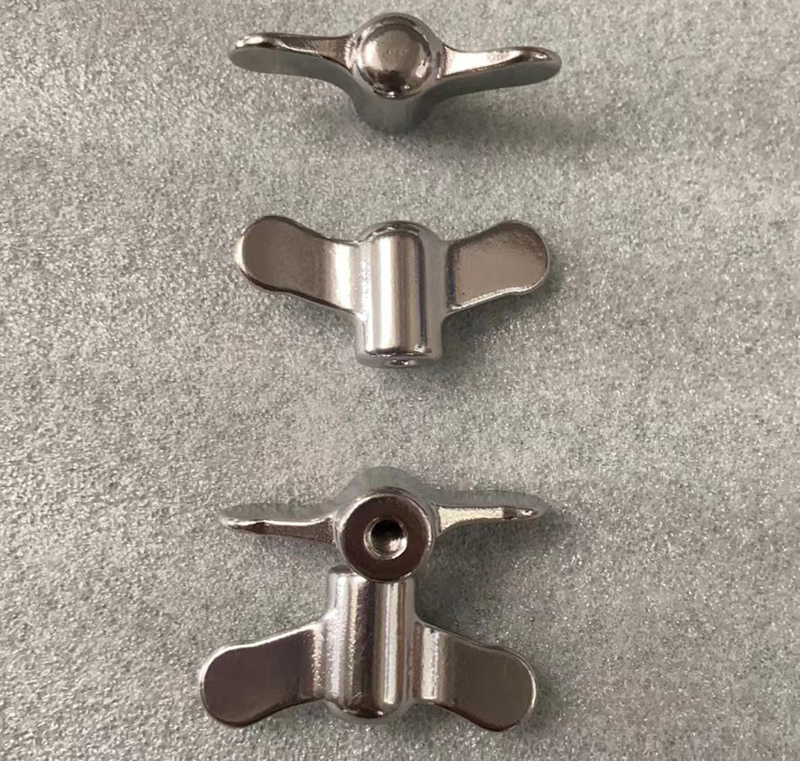
Wing, star, knurled, and scalloped profiles each provide a different hand feel and tightening action. Select a shape that is comfortable to operate and gives adequate control for the force required. Mounting options include female threads, male studs, and through holes; through-hole designs may use plain, reamed, or keyway bores.
Check the thread size, stud length, insert depth, and pull-out resistance against the equipment structure. Female-thread options commonly include M4, M5, M6, M8, M10, and M12. Correctly matching these details helps prevent loosening or damage during repeated adjustment.
Check Finish and Temperature Limits
Surface treatment can influence corrosion protection, appearance, and handling. Available finishes include passivation, polishing, electropolishing, zinc, chrome, or nickel plating, black oxide, brushed or polished surfaces, sandblasting, and anodizing for aluminum. Confirm that the chosen finish is appropriate for the expected exposure and maintenance conditions.
Product information gives an example operating range of -20 degrees C to 120 degrees C. This is not a universal rating: verify the temperature limits for the selected material, finish, and assembled handle before use.
Compare Common Handle and Insert Options
| Option | Key Properties and Typical Use |
|---|---|
| Thermoplastic handle | Lightweight and cost-effective, with impact, wear, and chemical resistance; suitable for general equipment adjustment and automation. |
| Reinforced polyamide or glass-fiber nylon | Offers greater mechanical and torque strength, plus heat, oil, and solvent resistance for demanding fixtures and machinery. |
| Aluminum handle | Combines low weight, strength, and corrosion resistance for equipment, instrument panels, and medical devices. |
| Stainless steel insert or stud | Provides tensile strength and corrosion resistance for outdoor, marine, food-processing, and frequently fastened equipment. |
| Brass insert | Supports smooth threading and repeated tightening, with good machinability for precision instruments. |
Quality and Customization
The manufacturer reports an ISO 9001-certified quality process that includes first-article and full dimensional inspections, material certificates, and RoHS and REACH compliance. Patent-protected designs are also listed among its offerings. A marine-grade handwheel project for a marine equipment customer illustrates the importance of corrosion resistance and service life in exposed applications.
OEM and ODM options include custom dimensions, colors and Pantone colors, logos, packaging, thread configurations, insert materials, and stud lengths. Available mounting formats include female threads, male studs, and through holes.
Frequently Asked Questions
What should I choose for handles exposed to moisture or saltwater?
Stainless steel inserts or studs, particularly SUS304 or SUS316L, may provide suitable corrosion resistance for marine and outdoor equipment. Confirm the grade, handle body, finish, and maintenance requirements against the specific environment.
How do I improve grip comfort and fastening stability?
Choose a wing, star, knurled, or scalloped profile that suits the hand action and adjustment force. Then verify thread type and size, stud length or insert depth, and pull-out resistance for the mounting structure.
Are custom outdoor handles available?
Customization can cover dimensions, threads, stud lengths, insert materials, colors, logos, and packaging. Confirm the required specifications and production quantities with the supplier.
Selection Recommendations
Prioritize corrosion resistance, grip geometry, thread durability, mounting strength, and operating temperature when specifying an outdoor handle. Reinforced nylon is suited to lightweight, higher-load adjustment; aluminum is useful where low weight and corrosion resistance matter; and stainless steel hardware is a strong candidate for marine or exposed installations. Match the final assembly to the actual environment rather than relying on material labels alone.
Zhejiang Dream Industry Limited offers OEM and ODM manufacturing, custom CNC machining, factory-direct supply, bulk production, and small-batch orders. Its stated quality process includes dimensional and first-article inspection. For technical support, contact the company at 86-15868979792.
About the Manufacturer
ZheJiang Dream Industry Limited has more than 20 years of precision manufacturing experience. The company makes custom CNC-machined parts and assemblies from stainless steel, aluminum, brass, copper, carbon steel, and engineering plastics. Its engineering and R&D capabilities include product design, structural optimization, precision machining, mold development, surface finishing, and customized manufacturing. Products include handwheels, operator controls, bushings, pins, fasteners, couplings, gears, shafts, pipe fittings, and other metal and plastic components. The company holds ISO 9001 certification and serves customers across multiple industries.
REPORT