







-
 Agriculture
-
 Health-Care
-
 Environment
-
 Construction-Real-Estate
-
 Tools-Hardware
-
 Home-Garden
-
 Furniture
-
 Luggage-Bags-Cases
-
 Medical-devices-Supplies
-
 Gifts-Crafts
-
 Sports-Entertainment
-
 Food-Beverage
-
 Vehicles-Transportation
-
 Power-Transmission
-
 Material-Handling
-
 Renewable-Energy
-
 Safety
-
 Testing-Instrument-Equipment
-
 Construction-Building-Machinery
-
 Pet-Supplies
-
 Personal-Care-Household-Cleaning
-
 Vehicle-Accessories-Electronics-Tools
-
 School-Office-Supplies
-
 Packaging-Printing
-
 Mother-Kids-Toys
-
 Business-Services
-
 Commercial-Equipment-Machinery
-
 Apparel-Accessories
-
 Security
-
 Shoes-Accessories
-
 Vehicle-Parts-Accessories
-
 Jewelry-Eyewear-Watches-Accessories
-
 Lights-Lighting
-
 Fabric-Textile-Raw-Material
-
 Fabrication-Services
-
 Industrial-Machinery
-
 Consumer-Electronics
-
 Electrical-Equipment-Supplies
-
 Electronic-Components-Accessories-Telecommunications
-
 Home-Appliances
-
 Beauty
-
 Chemicals
-
 Rubber-Plastics
-
 Metals-Alloys


























































































































































































































































































































































































































































































































































































- Masonry Materials
- Curtain Walls & Accessories
- Earthwork Products
- Fireproofing Materials
- Heat Insulation Materials
- Plastic Building Materials
- Building Boards
- Soundproofing Materials
- Timber
- Waterproofing Materials
- Balustrades & Handrails
- Bathroom & Kitchen
- Flooring & Accessories
- Tiles & Accessories
- Door, Window & Accessories
- Fireplaces & Stoves
- Floor Heating Systems & Parts
- Stairs & Stair Parts
- Ceilings
- Elevators & Escalators
- Stone
- Countertops, Vanity Tops & Table Tops
- Mosaics
- Metal Building Materials
- Multifunctional Materials
- Ladders & Scaffoldings
- Mouldings
- Corner Guards
- Decorative Films
- Formwork
- Building & Industrial Glass
- Other Construction & Real Estate
- Wallpapers/Wall panels
- HVAC System & Parts
- Outdoor Facilities
- Prefabricated Buildings
- Festive & Party Supplies
- Bathroom Products
- Household Sundries
- Rain Gear
- Garden Supplies
- Household Cleaning Tools & Accessories
- Lighters & Smoking Accessories
- Home Storage & Organization
- Household Scales
- Smart Home Improvement
- Home Textiles
- Kitchenware
- Drinkware & Accessories
- Dinnerware, Coffee & Wine
- Home Decor
- Golf
- Fitness & Body Building
- Amusement Park Facilities
- Billiards, Board Game,Coin Operated Games
- Musical Instruments
- Outdoor Affordable Luxury Sports
- Camping & Hiking
- Fishing
- Sports Safety&Rehabilitation
- Ball Sports Equipments
- Water Sports
- Winter Sports
- Luxury Travel Equipments
- Sports Shoes, Bags & Accessories
- Cycling
- Other Sports & Entertainment Products
- Artificial Grass&Sports Flooring&Sports Court Equipment
- Scooters
- Food Ingredients
- Honey & Honey Products
- Snacks
- Nuts & Kernels
- Seafood
- Plant & Animal Oil
- Beverages
- Fruit & Vegetable Products
- Frog & Escargot
- Bean Products
- Egg Products
- Dairy Products
- Seasonings & Condiments
- Canned Food
- Instant Food
- Baked Goods
- Other Food & Beverage
- Meat & Poultry
- Confectionery
- Grain Products
- Feminie Care
- Hair Care & Styling
- Body Care
- Hands & Feet Care
- Hygiene Products
- Men's Grooming
- Laundry Cleaning Supplies
- Travel Size & Gift Sets
- Room Deodorizers
- Other Personal Care Products
- Pest Control Products
- Special Household Cleaning
- Floor Cleaning
- Kitchen & Bathroom Cleaning
- Oral Care
- Bath Supplies
- Yellow Pages
- Correction Supplies
- Office Binding Supplies
- Office Cutting Supplies
- Board Erasers
- Office Adhesives & Tapes
- Education Supplies
- Pencil Cases & Bags
- Notebooks & Writing Pads
- File Folder Accessories
- Calendars
- Writing Accessories
- Commercial Office Supplies
- Pencil Sharpeners
- Pens
- Letter Pad/Paper
- Paper Envelopes
- Desk Organizers
- Pencils
- Markers & Highlighters
- Filing Products
- Art Supplies
- Easels
- Badge Holder & Accessories
- Office Paper
- Printer Supplies
- Book Covers
- Other Office & School Supplies
- Stationery Set
- Boards
- Clipboards
- Stamps
- Drafting Supplies
- Stencils
- Electronic Dictionary
- Books
- Map
- Magazines
- Calculators
- Baby & Toddler Toys
- Educational Toys
- Classic Toys
- Dress Up & Pretend Play
- Toy Vehicle
- Stuffed Animals & Plush Toys
- Outdoor Toys & Structures
- Balloons & Accessories
- Baby Food
- Children's Clothing
- Baby Supplies & Products
- Maternity Clothes
- Kids Shoes
- Baby Care
- Novelty & Gag Toys
- Dolls & Accessories
- Puzzle & Games
- Blocks & Model Building Toys
- Toddler Clothing
- Baby Clothing
- Kids' Luggage & Bags
- Arts, Crafts & DIY Toys
- Action & Toy Figures
- Baby Appliances
- Hobbies & Models
- Remote Control Toys
- Promotional Toys
- Pregnancy & Maternity
- Hygiene Products
- Kid's Textile&Bedding
- Novelty & Special Use
- Toy Weapons
- Baby Gifts
- Baby Storage & Organization
- Auto Drive Systems
- ATV/UTV Parts & Accessories
- Marine Parts & Accessories
- Other Auto Parts
- Trailer Parts & Accessories
- Auto Transmission Systems
- Train Parts & Accessories
- Universal Parts
- Railway Parts & Accessories
- Auto Brake Systems
- Aviation Parts & Accessories
- Truck Parts & Accessories
- Auto Suspension Systems
- Auto Lighting Systems
- New Energy Vehicle Parts & Accessories
- Auto Steering Systems
- Wheels, Tires & Accessories
- Bus Parts & Accessories
- Auto Performance Parts
- Cooling System
- Go-Kart & Kart Racer Parts & Accessories
- Air Conditioning Systems
- Heavy Duty Vehicle Parts & Accessories
- Auto Electrical Systems
- Auto Body Systems
- Auto Engine Systems
- Container Parts & Accessories
- Motorcycle Parts & Accessories
- Refrigeration & Heat Exchange Equipment
- Machine Tool Equipment
- Food & Beverage Machinery
- Agricultural Machinery & Equipment
- Apparel & Textile Machinery
- Chemical Machinery
- Packaging Machines
- Paper Production Machinery
- Plastic & Rubber Processing Machinery
- Industrial Robots
- Electronic Products Machinery
- Metal & Metallurgy Machinery
- Woodworking Machinery
- Home Product Manufacturing Machinery
- Machinery Accessories
- Environmental Machinery
- Machinery Service
- Electrical Equipment Manufacturing Machinery
- Industrial Compressors & Parts
- Tobacco & Cigarette Machinery
- Production Line
- Used Industrial Machinery
- Electronics Production Machinery
- Other Machinery & Industrial Equipment
- Camera, Photo & Accessories
- Portable Audio, Video & Accessories
- Television, Home Audio, Video & Accessories
- Video Games & Accessories
- Mobile Phone & Accessories
- Electronic Publications
- Earphone & Headphone & Accessories
- Speakers & Accessories
- Smart Electronics
- TV Receivers & Accessories
- Mobile Phone & Computer Repair Parts
- Chargers, Batteries & Power Supplies
- Used Electronics
- VR, AR, MR Hardware & Software
- Projectors & Presentation Equipments
- Other Consumer Electronics
- Cables & Commonly Used Accessories
- Computer Hardware & Software
- Displays, Signage and Optoelectronics
- Discrete Semiconductors
- Wireless & IoT Module and Products
- Telecommunications
- Connectors, Terminals & Accessories
- Development Boards, Electronic Modules and Kits
- Circuit Protection
- Sensors
- Isolators
- Audio Components and Products
- Integrated Circuits
- Power Supplies
- Relays
- RF, Microwave and RFID
- Electronic Accessories & Supplies
- Passive Components
- PCB & PCBA
- Air Quality Appliances
- Home Appliance Parts
- Heating & Cooling Appliances
- Small Kitchen Appliances
- Laundry Appliances
- Water Heaters
- Water Treatment Appliances
- Refrigerators & Freezers
- Personal Care & Beauty Appliances
- Major Kitchen Appliances
- Cleaning Appliances
- Second-hand Appliances
- Smart Home Appliances
- Other Home Appliances
- Energy Chemicals
- Inorganic Chemicals
- Basic Organic Chemicals
- Agrochemicals
- Admixture & Additives
- Catalysts & Chemical Auxiliary Agents
- Pigments & Dyestuff
- Coating & Paint
- Daily Chemicals
- Polymer
- Organic Intermediate
- Adhesives & Sealants
- Chemical Waste
- Biological Chemical Products
- Surface Treatment Chemicals
- Painting & Coating
- Chemical Reagents
- Flavor & Fragrance
- Non-Explosive Demolition Agents
- Other Chemicals
- Custom Chemical Services

How to Select the Right Battery Size and Chemistry for Your Device
Start battery selection with the device’s specifications. Check the required battery format, model code, voltage, compartment dimensions, and operating demands. Once the physical fit is confirmed, choose only a chemistry approved by the equipment manufacturer. A matching shape alone does not guarantee that a different battery chemistry will operate safely or correctly.
Start with the Device’s Battery Requirements
The equipment manual, marking on the original cell, or label inside the battery compartment is the best reference for the replacement model. Confirm the code and contact arrangement, and make sure the cell fits the available space. Then review the device’s voltage and expected load profile before choosing a battery type.
Compact equipment such as watches, meters, remotes, sensors, and small instruments often uses button cells. Higher-power devices may require larger cylindrical batteries. Use the format specified for the equipment rather than choosing by size alone.
Where Alkaline Manganese Button Cells Fit
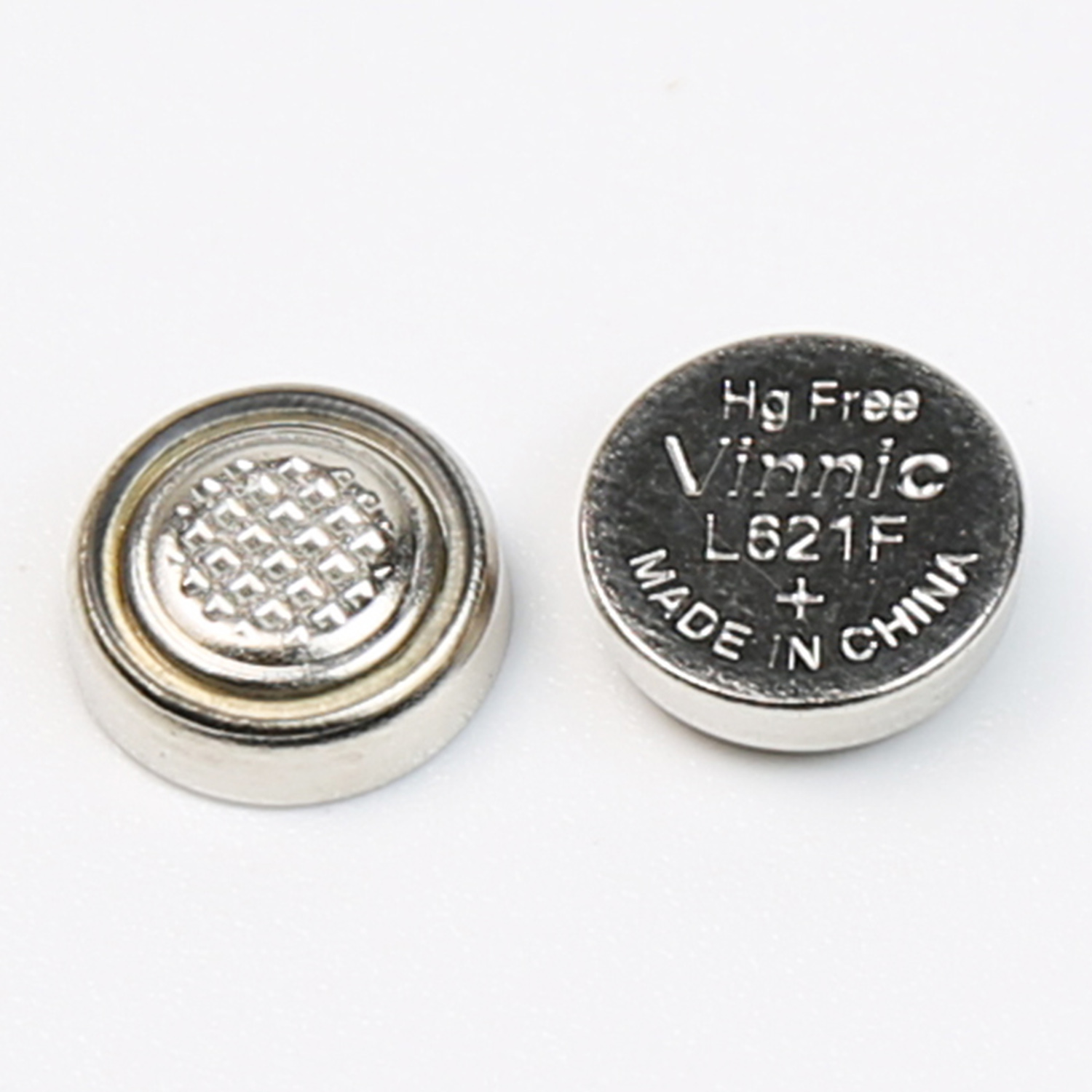
Vinnic Alkaline Manganese Button Cells are listed for quartz watches, blood glucose meters, digital thermometers, calculators, car key remotes, precision sensors, and other small electronics. Their stated characteristics include high leakage resistance, a constant voltage level, low self-discharge, and long running time.
The product range includes models such as L1028F, L1345F, L1335F, L1325F, L1320F, L1315F, L1016F, L1013F, L1010F, L828F, L822F, L816F, L813F, and L810F. Check the exact code required by the device before ordering.
Timekeeping and Instrument Uses
Applications listed for this button-cell series include mid-to-high-end quartz watches, pocket watches, wall clocks, sports stopwatches, and laboratory precision timers. Other cited uses include calculators, laser presentation pointers, digital multimeters, laser rangefinders, car key remotes, precision sensors, and industrial counting devices.
Healthcare and Monitoring Uses
The application list also covers home blood glucose meters, digital thermometers, arm and wrist blood pressure monitors, finger pulse oximeters, small hearing aids, and medical monitoring equipment. These examples describe the product range; the device manufacturer’s specified battery model and chemistry should determine the final choice.
Compare Size, Chemistry, and Operating Needs
| Selection factor | What to check | Relevant Vinnic information |
|---|---|---|
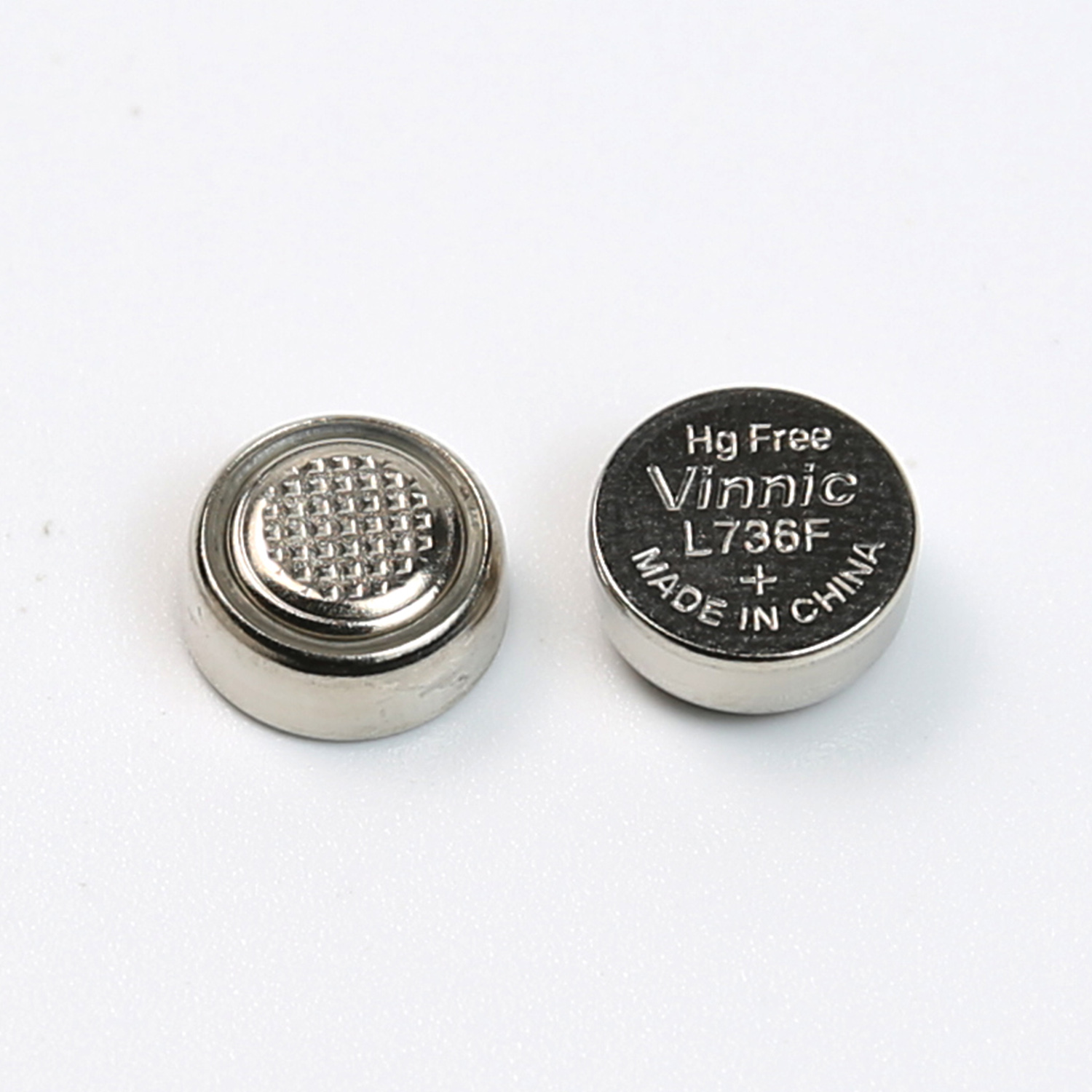
| Battery size | Verify the model code, compartment dimensions, and contact layout. | Listed button-cell models include L1028F, L1154F, L1142F, L1131F, L1121F, L936F, L932F, L926F, L921F, L754F, L736F, L732F, L726F, L721F, L626F, L621F, L526F, and L521F. |
| Chemistry | Follow the chemistry specified for the equipment; do not substitute based only on a similar form factor. | The range includes alkaline manganese button cells, manganese dioxide lithium batteries, and 0% mercury silver oxide button cells. |
| Performance needs | Consider voltage behavior, leakage resistance, self-discharge, and expected operating time. | Alkaline manganese button cells are listed with high leakage resistance, constant voltage level, low self-discharge, and long running time. |
| Device application | Identify whether the battery is for a watch, monitor, remote, sensor, instrument, or toy. | Listed applications include watches, meters, remotes, precision sensors, industrial counters, and electronic toys. |
| Ordering | Confirm order quantity, delivery schedule, inspection, and shipping arrangements. | The stated MOQ is 10,000 units, with a 30-day delivery time. Sea freight is available. |
Other Battery Formats and Chemistries
Vinnic’s broader portfolio illustrates why battery formats and chemistries need to be evaluated separately. AM1, AM2, AM3, AM4, and AM9VF alkaline manganese batteries are listed for products such as flashlights, toys, remotes, sensors, alarms, and portable equipment. Lithium button cells are listed for compact electronics including car key remotes, tire-pressure monitoring sensors, smart wearables, medical devices, and IoT nodes. These options are not interchangeable unless the equipment manufacturer approves the substitution.
Quality and Supply Information
According to the supplied product information, quality checks include inspection of every unit on the production line, laboratory sampling and testing, and inspection of incoming raw materials. Company records list ISO 9001:2015 and IATF 16949:2016 certifications.
Frequently Asked Questions
How can I find the right battery size?
Use the code printed on the existing battery or specified in the equipment documentation. Before fitting a replacement, also check its shape, contact arrangement, and the space available in the compartment.
When is an alkaline manganese button cell appropriate?
Use one when the device specification calls for that chemistry and format. Vinnic lists applications including quartz watches, calculators, car key remotes, digital thermometers, blood glucose meters, precision sensors, and other small electronic devices.
Can I substitute an alkaline manganese cell for a lithium or silver oxide cell?
Not based on physical dimensions alone. Lithium, silver oxide, and alkaline manganese cells have different specifications and application guidance. Follow the battery type and model approved by the device manufacturer.
Choosing and Ordering with Confidence
First verify the required battery code, size, chemistry, and operating conditions for the equipment. If the specified battery is an alkaline manganese button cell, compare the exact Vinnic model and its listed performance characteristics. For business orders, the stated terms include a 10,000-unit minimum, 30-day delivery, and sea freight availability. Production-line inspection, laboratory sampling and testing, and incoming-material inspection are also listed. For technical assistance or product details, contact vinnic@chungpak.com.
About Vinnic
CHUNG PAK (GUANG DONG)BATTERY INDUSTRIAL CO., LTD operates under the Vinnic brand. Founded in 1980, the company has expanded from battery manufacturing into paper separators, zinc materials, metal and plastic parts, tooling, and machinery. It reports annual production capacity exceeding 1.8 billion units and serves customers in America, Europe, Africa, and Southeast Asia.
The company’s listed certifications are ISO 9001:2015 and IATF 16949:2016.

REPORT