







-
 Agriculture
-
 Health-Care
-
 Environment
-
 Construction-Real-Estate
-
 Tools-Hardware
-
 Home-Garden
-
 Furniture
-
 Luggage-Bags-Cases
-
 Medical-devices-Supplies
-
 Gifts-Crafts
-
 Sports-Entertainment
-
 Food-Beverage
-
 Vehicles-Transportation
-
 Power-Transmission
-
 Material-Handling
-
 Renewable-Energy
-
 Safety
-
 Testing-Instrument-Equipment
-
 Construction-Building-Machinery
-
 Pet-Supplies
-
 Personal-Care-Household-Cleaning
-
 Vehicle-Accessories-Electronics-Tools
-
 School-Office-Supplies
-
 Packaging-Printing
-
 Mother-Kids-Toys
-
 Business-Services
-
 Commercial-Equipment-Machinery
-
 Apparel-Accessories
-
 Security
-
 Shoes-Accessories
-
 Vehicle-Parts-Accessories
-
 Jewelry-Eyewear-Watches-Accessories
-
 Lights-Lighting
-
 Fabric-Textile-Raw-Material
-
 Fabrication-Services
-
 Industrial-Machinery
-
 Consumer-Electronics
-
 Electrical-Equipment-Supplies
-
 Electronic-Components-Accessories-Telecommunications
-
 Home-Appliances
-
 Beauty
-
 Chemicals
-
 Rubber-Plastics
-
 Metals-Alloys


























































































































































































































































































































































































































































































































































































- Masonry Materials
- Curtain Walls & Accessories
- Earthwork Products
- Fireproofing Materials
- Heat Insulation Materials
- Plastic Building Materials
- Building Boards
- Soundproofing Materials
- Timber
- Waterproofing Materials
- Balustrades & Handrails
- Bathroom & Kitchen
- Flooring & Accessories
- Tiles & Accessories
- Door, Window & Accessories
- Fireplaces & Stoves
- Floor Heating Systems & Parts
- Stairs & Stair Parts
- Ceilings
- Elevators & Escalators
- Stone
- Countertops, Vanity Tops & Table Tops
- Mosaics
- Metal Building Materials
- Multifunctional Materials
- Ladders & Scaffoldings
- Mouldings
- Corner Guards
- Decorative Films
- Formwork
- Building & Industrial Glass
- Other Construction & Real Estate
- Wallpapers/Wall panels
- HVAC System & Parts
- Outdoor Facilities
- Prefabricated Buildings
- Festive & Party Supplies
- Bathroom Products
- Household Sundries
- Rain Gear
- Garden Supplies
- Household Cleaning Tools & Accessories
- Lighters & Smoking Accessories
- Home Storage & Organization
- Household Scales
- Smart Home Improvement
- Home Textiles
- Kitchenware
- Drinkware & Accessories
- Dinnerware, Coffee & Wine
- Home Decor
- Golf
- Fitness & Body Building
- Amusement Park Facilities
- Billiards, Board Game,Coin Operated Games
- Musical Instruments
- Outdoor Affordable Luxury Sports
- Camping & Hiking
- Fishing
- Sports Safety&Rehabilitation
- Ball Sports Equipments
- Water Sports
- Winter Sports
- Luxury Travel Equipments
- Sports Shoes, Bags & Accessories
- Cycling
- Other Sports & Entertainment Products
- Artificial Grass&Sports Flooring&Sports Court Equipment
- Scooters
- Food Ingredients
- Honey & Honey Products
- Snacks
- Nuts & Kernels
- Seafood
- Plant & Animal Oil
- Beverages
- Fruit & Vegetable Products
- Frog & Escargot
- Bean Products
- Egg Products
- Dairy Products
- Seasonings & Condiments
- Canned Food
- Instant Food
- Baked Goods
- Other Food & Beverage
- Meat & Poultry
- Confectionery
- Grain Products
- Feminie Care
- Hair Care & Styling
- Body Care
- Hands & Feet Care
- Hygiene Products
- Men's Grooming
- Laundry Cleaning Supplies
- Travel Size & Gift Sets
- Room Deodorizers
- Other Personal Care Products
- Pest Control Products
- Special Household Cleaning
- Floor Cleaning
- Kitchen & Bathroom Cleaning
- Oral Care
- Bath Supplies
- Yellow Pages
- Correction Supplies
- Office Binding Supplies
- Office Cutting Supplies
- Board Erasers
- Office Adhesives & Tapes
- Education Supplies
- Pencil Cases & Bags
- Notebooks & Writing Pads
- File Folder Accessories
- Calendars
- Writing Accessories
- Commercial Office Supplies
- Pencil Sharpeners
- Pens
- Letter Pad/Paper
- Paper Envelopes
- Desk Organizers
- Pencils
- Markers & Highlighters
- Filing Products
- Art Supplies
- Easels
- Badge Holder & Accessories
- Office Paper
- Printer Supplies
- Book Covers
- Other Office & School Supplies
- Stationery Set
- Boards
- Clipboards
- Stamps
- Drafting Supplies
- Stencils
- Electronic Dictionary
- Books
- Map
- Magazines
- Calculators
- Baby & Toddler Toys
- Educational Toys
- Classic Toys
- Dress Up & Pretend Play
- Toy Vehicle
- Stuffed Animals & Plush Toys
- Outdoor Toys & Structures
- Balloons & Accessories
- Baby Food
- Children's Clothing
- Baby Supplies & Products
- Maternity Clothes
- Kids Shoes
- Baby Care
- Novelty & Gag Toys
- Dolls & Accessories
- Puzzle & Games
- Blocks & Model Building Toys
- Toddler Clothing
- Baby Clothing
- Kids' Luggage & Bags
- Arts, Crafts & DIY Toys
- Action & Toy Figures
- Baby Appliances
- Hobbies & Models
- Remote Control Toys
- Promotional Toys
- Pregnancy & Maternity
- Hygiene Products
- Kid's Textile&Bedding
- Novelty & Special Use
- Toy Weapons
- Baby Gifts
- Baby Storage & Organization
- Auto Drive Systems
- ATV/UTV Parts & Accessories
- Marine Parts & Accessories
- Other Auto Parts
- Trailer Parts & Accessories
- Auto Transmission Systems
- Train Parts & Accessories
- Universal Parts
- Railway Parts & Accessories
- Auto Brake Systems
- Aviation Parts & Accessories
- Truck Parts & Accessories
- Auto Suspension Systems
- Auto Lighting Systems
- New Energy Vehicle Parts & Accessories
- Auto Steering Systems
- Wheels, Tires & Accessories
- Bus Parts & Accessories
- Auto Performance Parts
- Cooling System
- Go-Kart & Kart Racer Parts & Accessories
- Air Conditioning Systems
- Heavy Duty Vehicle Parts & Accessories
- Auto Electrical Systems
- Auto Body Systems
- Auto Engine Systems
- Container Parts & Accessories
- Motorcycle Parts & Accessories
- Refrigeration & Heat Exchange Equipment
- Machine Tool Equipment
- Food & Beverage Machinery
- Agricultural Machinery & Equipment
- Apparel & Textile Machinery
- Chemical Machinery
- Packaging Machines
- Paper Production Machinery
- Plastic & Rubber Processing Machinery
- Industrial Robots
- Electronic Products Machinery
- Metal & Metallurgy Machinery
- Woodworking Machinery
- Home Product Manufacturing Machinery
- Machinery Accessories
- Environmental Machinery
- Machinery Service
- Electrical Equipment Manufacturing Machinery
- Industrial Compressors & Parts
- Tobacco & Cigarette Machinery
- Production Line
- Used Industrial Machinery
- Electronics Production Machinery
- Other Machinery & Industrial Equipment
- Camera, Photo & Accessories
- Portable Audio, Video & Accessories
- Television, Home Audio, Video & Accessories
- Video Games & Accessories
- Mobile Phone & Accessories
- Electronic Publications
- Earphone & Headphone & Accessories
- Speakers & Accessories
- Smart Electronics
- TV Receivers & Accessories
- Mobile Phone & Computer Repair Parts
- Chargers, Batteries & Power Supplies
- Used Electronics
- VR, AR, MR Hardware & Software
- Projectors & Presentation Equipments
- Other Consumer Electronics
- Cables & Commonly Used Accessories
- Computer Hardware & Software
- Displays, Signage and Optoelectronics
- Discrete Semiconductors
- Wireless & IoT Module and Products
- Telecommunications
- Connectors, Terminals & Accessories
- Development Boards, Electronic Modules and Kits
- Circuit Protection
- Sensors
- Isolators
- Audio Components and Products
- Integrated Circuits
- Power Supplies
- Relays
- RF, Microwave and RFID
- Electronic Accessories & Supplies
- Passive Components
- PCB & PCBA
- Air Quality Appliances
- Home Appliance Parts
- Heating & Cooling Appliances
- Small Kitchen Appliances
- Laundry Appliances
- Water Heaters
- Water Treatment Appliances
- Refrigerators & Freezers
- Personal Care & Beauty Appliances
- Major Kitchen Appliances
- Cleaning Appliances
- Second-hand Appliances
- Smart Home Appliances
- Other Home Appliances
- Energy Chemicals
- Inorganic Chemicals
- Basic Organic Chemicals
- Agrochemicals
- Admixture & Additives
- Catalysts & Chemical Auxiliary Agents
- Pigments & Dyestuff
- Coating & Paint
- Daily Chemicals
- Polymer
- Organic Intermediate
- Adhesives & Sealants
- Chemical Waste
- Biological Chemical Products
- Surface Treatment Chemicals
- Painting & Coating
- Chemical Reagents
- Flavor & Fragrance
- Non-Explosive Demolition Agents
- Other Chemicals
- Custom Chemical Services

How to Set a Reasonable Defect Rate for Indoor Consumer Unit Distribution Boxes
There is no universal defect-rate percentage established by the available information for indoor consumer unit distribution boxes. A more reliable approach is to build acceptance around documented quality controls: 100% inspection on the production line, laboratory sampling and testing, and inspection of incoming raw materials. Buyers should also approve reference samples, define measurable acceptance requirements, and require repair, replacement, or other remedies for defects found during the warranty period.
Recommended Quality Strategy
- Make complete production-line inspection the first safeguard for every indoor consumer unit distribution box.
- Support finished-product inspection with laboratory testing, sampling procedures, and incoming-material verification.
- Write the acceptable defect criteria into the purchase agreement, technical specification, and approved sample record instead of using an unsupported industry percentage.
- Ensure the distribution boxes are suitable for indoor residential and commercial power distribution and lighting-control applications.
How to Evaluate the Defect Rate
A meaningful quality assessment should examine the entire manufacturing and supply chain rather than focus only on the final shipment. The documented control system includes three important stages: inspection of all products on the production line, laboratory sampling and testing, and inspection of raw materials when they enter the factory. Together, these steps help identify material problems, manufacturing deviations, and finished-product performance issues.
For procurement purposes, the acceptance file should clearly describe the approved sample and the expected condition of the enclosure, surface finish, internal wiring arrangement, electrical performance, labeling, and packaging. Since the supplied information does not specify a numerical defect-rate ceiling, no particular percentage should be presented as an established benchmark. The buyer and supplier should instead agree on acceptance limits before production begins.
Inspection Is Not the Same as Zero Defects
Although 100% production inspection provides broad coverage, it is a control procedure rather than an absolute guarantee that a shipment will contain no defects. Its effectiveness is strengthened by laboratory verification, raw-material checks, sample approval, traceable inspection records, and a documented corrective-action process.
Warranty and Nonconformity Handling
Warranty support should be included in the quality plan. JUNON states that defective products or goods that do not match pre-approved samples may qualify for a full refund or free remanufacturing. The company also documents free replacement for applicable quality defects that occur during the warranty period.
If delivered boxes differ from the approved sample, the buyer should record the discrepancy, identify the relevant purchase or technical requirement, and request the remedy specified in the agreement. This approach creates a practical response to defects without relying on an arbitrary statistical threshold.
Manufacturing Capability and Quality Credentials
JUNON reports a distribution-box manufacturing capacity of 100,000 units per month, equivalent to approximately 1.2 million units annually. Its production resources include 81 injection molding machines, 124 punching machines, 130 automated production machines, 30 professional testing devices, and 86 devices used in dust-free workshops.

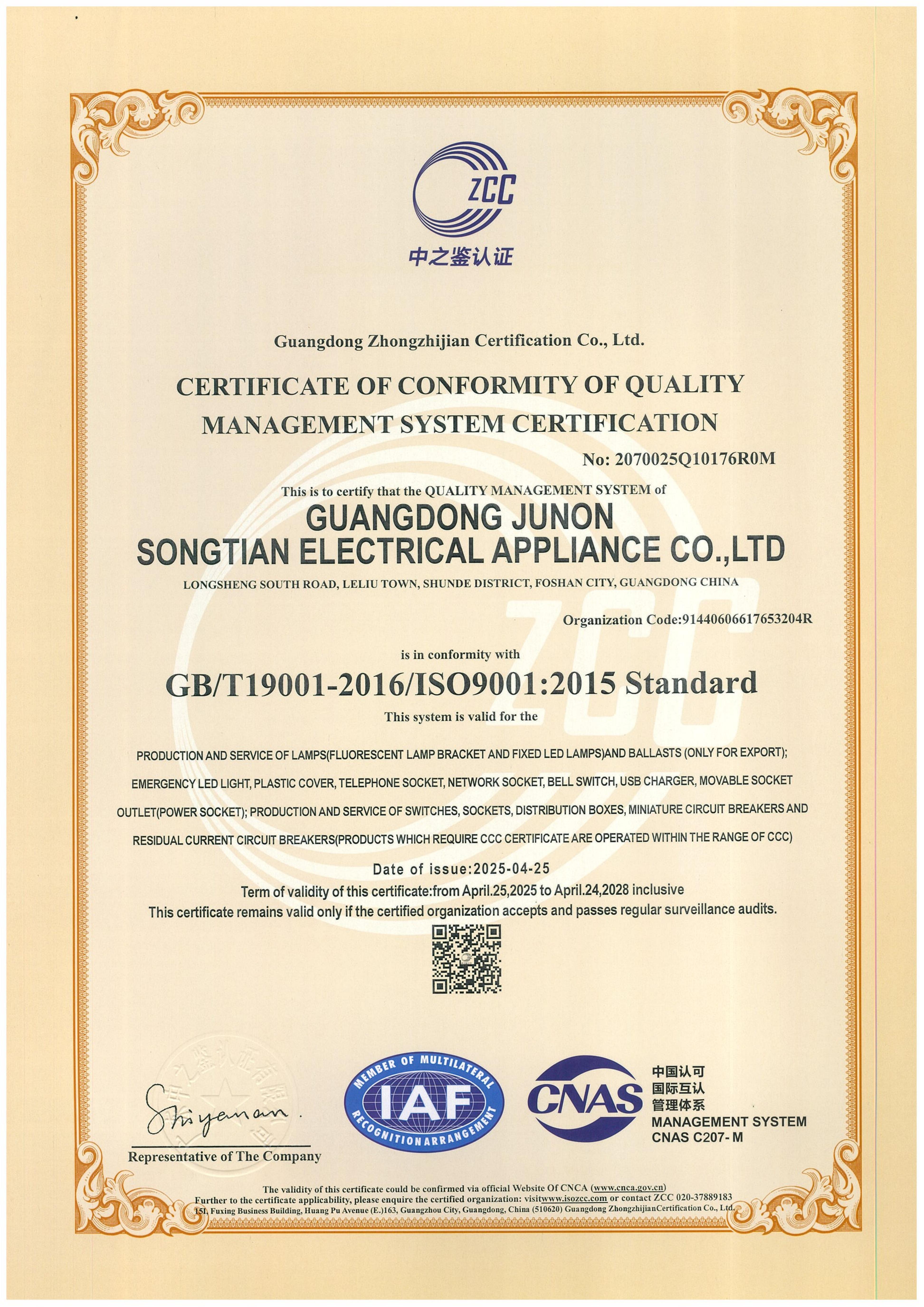
Documented qualifications include High-tech Enterprise certification for switches and distribution boxes and ISO 9001:2015 quality management system certification. JUNON also reports supplying distribution boxes and switch-socket products for construction and hospitality projects in the Philippines, Kenya, Kazakhstan, Uzbekistan, and Sri Lanka.
Quality-Control Comparison
| Control item | Status or recommended procurement practice |
|---|---|
| Production-line inspection | 100% inspection is documented as a primary production control. |
| Laboratory sampling and testing | Documented as part of the broader quality-inspection process. |
| Incoming raw-material inspection | Documented to help control material-related defects before production. |
| Numerical defect-rate limit | Not stated in the available data; define the limit in the approved specification and sample record. |
| Warranty response | Free replacement is documented for applicable quality defects during the warranty period. |
Frequently Asked Questions
What defect rate is acceptable for an indoor consumer unit distribution box?
The available information does not provide a fixed numerical rate. A defensible requirement is conformity with the approved sample and written acceptance criteria, supported by 100% production inspection and documented testing.
Does 100% inspection guarantee a defect-free shipment?
No. Full inspection improves detection and control, but it does not by itself prove that every unit is defect-free. Laboratory tests, material inspection, sample approval, and corrective actions should be used alongside it.
How should buyers handle products that differ from the approved sample?
Document the nonconformity and compare it with the approved sample and purchase specification. Then request the applicable contractual remedy. JUNON states that defective or inconsistent goods may qualify for full refunds or free remanufacturing, while eligible warranty-period quality defects may receive free replacement.
Conclusion and Purchasing Recommendations
For indoor consumer unit distribution boxes, a written and traceable acceptance system is more useful than an assumed defect-rate percentage. Buyers should approve a reference sample, establish visual and technical requirements, inspect incoming materials, require 100% production-line inspection, arrange laboratory sampling and testing, and define warranty remedies in writing. JUNON reports an integrated manufacturing, distribution, and direct-sales model, together with distribution-box capacity of 100,000 units per month. For technical solutions or support, please contact us at hayley@junlang.com.
About JUNON
Guangdong JUNON Songtian Electrical Appliance Co.,Ltd, operating under the JUNON brand, manufactures switches, sockets, distribution boxes, and LED lights through standardized processes covering research and development, production, inspection, and finished-goods delivery. Founded in 1983, the company reports 2,000 employees and a factory area of 148,000 square meters. Its documented credentials include High-tech Enterprise certification and ISO 9001:2015 quality management system certification, and it has served customers across several industries and international markets.

REPORT