







-
 Agriculture
-
 Health-Care
-
 Environment
-
 Construction-Real-Estate
-
 Tools-Hardware
-
 Home-Garden
-
 Furniture
-
 Luggage-Bags-Cases
-
 Medical-devices-Supplies
-
 Gifts-Crafts
-
 Sports-Entertainment
-
 Food-Beverage
-
 Vehicles-Transportation
-
 Power-Transmission
-
 Material-Handling
-
 Renewable-Energy
-
 Safety
-
 Testing-Instrument-Equipment
-
 Construction-Building-Machinery
-
 Pet-Supplies
-
 Personal-Care-Household-Cleaning
-
 Vehicle-Accessories-Electronics-Tools
-
 School-Office-Supplies
-
 Packaging-Printing
-
 Mother-Kids-Toys
-
 Business-Services
-
 Commercial-Equipment-Machinery
-
 Apparel-Accessories
-
 Security
-
 Shoes-Accessories
-
 Vehicle-Parts-Accessories
-
 Jewelry-Eyewear-Watches-Accessories
-
 Lights-Lighting
-
 Fabric-Textile-Raw-Material
-
 Fabrication-Services
-
 Industrial-Machinery
-
 Consumer-Electronics
-
 Electrical-Equipment-Supplies
-
 Electronic-Components-Accessories-Telecommunications
-
 Home-Appliances
-
 Beauty
-
 Chemicals
-
 Rubber-Plastics
-
 Metals-Alloys


























































































































































































































































































































































































































































































































































































- Masonry Materials
- Curtain Walls & Accessories
- Earthwork Products
- Fireproofing Materials
- Heat Insulation Materials
- Plastic Building Materials
- Building Boards
- Soundproofing Materials
- Timber
- Waterproofing Materials
- Balustrades & Handrails
- Bathroom & Kitchen
- Flooring & Accessories
- Tiles & Accessories
- Door, Window & Accessories
- Fireplaces & Stoves
- Floor Heating Systems & Parts
- Stairs & Stair Parts
- Ceilings
- Elevators & Escalators
- Stone
- Countertops, Vanity Tops & Table Tops
- Mosaics
- Metal Building Materials
- Multifunctional Materials
- Ladders & Scaffoldings
- Mouldings
- Corner Guards
- Decorative Films
- Formwork
- Building & Industrial Glass
- Other Construction & Real Estate
- Wallpapers/Wall panels
- HVAC System & Parts
- Outdoor Facilities
- Prefabricated Buildings
- Festive & Party Supplies
- Bathroom Products
- Household Sundries
- Rain Gear
- Garden Supplies
- Household Cleaning Tools & Accessories
- Lighters & Smoking Accessories
- Home Storage & Organization
- Household Scales
- Smart Home Improvement
- Home Textiles
- Kitchenware
- Drinkware & Accessories
- Dinnerware, Coffee & Wine
- Home Decor
- Golf
- Fitness & Body Building
- Amusement Park Facilities
- Billiards, Board Game,Coin Operated Games
- Musical Instruments
- Outdoor Affordable Luxury Sports
- Camping & Hiking
- Fishing
- Sports Safety&Rehabilitation
- Ball Sports Equipments
- Water Sports
- Winter Sports
- Luxury Travel Equipments
- Sports Shoes, Bags & Accessories
- Cycling
- Other Sports & Entertainment Products
- Artificial Grass&Sports Flooring&Sports Court Equipment
- Scooters
- Food Ingredients
- Honey & Honey Products
- Snacks
- Nuts & Kernels
- Seafood
- Plant & Animal Oil
- Beverages
- Fruit & Vegetable Products
- Frog & Escargot
- Bean Products
- Egg Products
- Dairy Products
- Seasonings & Condiments
- Canned Food
- Instant Food
- Baked Goods
- Other Food & Beverage
- Meat & Poultry
- Confectionery
- Grain Products
- Feminie Care
- Hair Care & Styling
- Body Care
- Hands & Feet Care
- Hygiene Products
- Men's Grooming
- Laundry Cleaning Supplies
- Travel Size & Gift Sets
- Room Deodorizers
- Other Personal Care Products
- Pest Control Products
- Special Household Cleaning
- Floor Cleaning
- Kitchen & Bathroom Cleaning
- Oral Care
- Bath Supplies
- Yellow Pages
- Correction Supplies
- Office Binding Supplies
- Office Cutting Supplies
- Board Erasers
- Office Adhesives & Tapes
- Education Supplies
- Pencil Cases & Bags
- Notebooks & Writing Pads
- File Folder Accessories
- Calendars
- Writing Accessories
- Commercial Office Supplies
- Pencil Sharpeners
- Pens
- Letter Pad/Paper
- Paper Envelopes
- Desk Organizers
- Pencils
- Markers & Highlighters
- Filing Products
- Art Supplies
- Easels
- Badge Holder & Accessories
- Office Paper
- Printer Supplies
- Book Covers
- Other Office & School Supplies
- Stationery Set
- Boards
- Clipboards
- Stamps
- Drafting Supplies
- Stencils
- Electronic Dictionary
- Books
- Map
- Magazines
- Calculators
- Baby & Toddler Toys
- Educational Toys
- Classic Toys
- Dress Up & Pretend Play
- Toy Vehicle
- Stuffed Animals & Plush Toys
- Outdoor Toys & Structures
- Balloons & Accessories
- Baby Food
- Children's Clothing
- Baby Supplies & Products
- Maternity Clothes
- Kids Shoes
- Baby Care
- Novelty & Gag Toys
- Dolls & Accessories
- Puzzle & Games
- Blocks & Model Building Toys
- Toddler Clothing
- Baby Clothing
- Kids' Luggage & Bags
- Arts, Crafts & DIY Toys
- Action & Toy Figures
- Baby Appliances
- Hobbies & Models
- Remote Control Toys
- Promotional Toys
- Pregnancy & Maternity
- Hygiene Products
- Kid's Textile&Bedding
- Novelty & Special Use
- Toy Weapons
- Baby Gifts
- Baby Storage & Organization
- Auto Drive Systems
- ATV/UTV Parts & Accessories
- Marine Parts & Accessories
- Other Auto Parts
- Trailer Parts & Accessories
- Auto Transmission Systems
- Train Parts & Accessories
- Universal Parts
- Railway Parts & Accessories
- Auto Brake Systems
- Aviation Parts & Accessories
- Truck Parts & Accessories
- Auto Suspension Systems
- Auto Lighting Systems
- New Energy Vehicle Parts & Accessories
- Auto Steering Systems
- Wheels, Tires & Accessories
- Bus Parts & Accessories
- Auto Performance Parts
- Cooling System
- Go-Kart & Kart Racer Parts & Accessories
- Air Conditioning Systems
- Heavy Duty Vehicle Parts & Accessories
- Auto Electrical Systems
- Auto Body Systems
- Auto Engine Systems
- Container Parts & Accessories
- Motorcycle Parts & Accessories
- Refrigeration & Heat Exchange Equipment
- Machine Tool Equipment
- Food & Beverage Machinery
- Agricultural Machinery & Equipment
- Apparel & Textile Machinery
- Chemical Machinery
- Packaging Machines
- Paper Production Machinery
- Plastic & Rubber Processing Machinery
- Industrial Robots
- Electronic Products Machinery
- Metal & Metallurgy Machinery
- Woodworking Machinery
- Home Product Manufacturing Machinery
- Machinery Accessories
- Environmental Machinery
- Machinery Service
- Electrical Equipment Manufacturing Machinery
- Industrial Compressors & Parts
- Tobacco & Cigarette Machinery
- Production Line
- Used Industrial Machinery
- Electronics Production Machinery
- Other Machinery & Industrial Equipment
- Camera, Photo & Accessories
- Portable Audio, Video & Accessories
- Television, Home Audio, Video & Accessories
- Video Games & Accessories
- Mobile Phone & Accessories
- Electronic Publications
- Earphone & Headphone & Accessories
- Speakers & Accessories
- Smart Electronics
- TV Receivers & Accessories
- Mobile Phone & Computer Repair Parts
- Chargers, Batteries & Power Supplies
- Used Electronics
- VR, AR, MR Hardware & Software
- Projectors & Presentation Equipments
- Other Consumer Electronics
- Cables & Commonly Used Accessories
- Computer Hardware & Software
- Displays, Signage and Optoelectronics
- Discrete Semiconductors
- Wireless & IoT Module and Products
- Telecommunications
- Connectors, Terminals & Accessories
- Development Boards, Electronic Modules and Kits
- Circuit Protection
- Sensors
- Isolators
- Audio Components and Products
- Integrated Circuits
- Power Supplies
- Relays
- RF, Microwave and RFID
- Electronic Accessories & Supplies
- Passive Components
- PCB & PCBA
- Air Quality Appliances
- Home Appliance Parts
- Heating & Cooling Appliances
- Small Kitchen Appliances
- Laundry Appliances
- Water Heaters
- Water Treatment Appliances
- Refrigerators & Freezers
- Personal Care & Beauty Appliances
- Major Kitchen Appliances
- Cleaning Appliances
- Second-hand Appliances
- Smart Home Appliances
- Other Home Appliances
- Energy Chemicals
- Inorganic Chemicals
- Basic Organic Chemicals
- Agrochemicals
- Admixture & Additives
- Catalysts & Chemical Auxiliary Agents
- Pigments & Dyestuff
- Coating & Paint
- Daily Chemicals
- Polymer
- Organic Intermediate
- Adhesives & Sealants
- Chemical Waste
- Biological Chemical Products
- Surface Treatment Chemicals
- Painting & Coating
- Chemical Reagents
- Flavor & Fragrance
- Non-Explosive Demolition Agents
- Other Chemicals
- Custom Chemical Services

How to Tell Crochet Hair Installation Errors from Product Defects
When crochet hair performs poorly, the problem may come from the installation process rather than the hair itself. A reliable diagnosis begins before application: inspect unused bundles for consistent fibers, secure loops, stable texture, and unusual residue. Installation-related problems usually appear in specific high-tension areas, while genuine defects tend to affect multiple unused bundles in a consistent way.
How to Identify the Source of the Problem
- Inspect Before Installation: Review the hair immediately after opening the package. Check fiber uniformity, loop construction, knot strength, curl definition, and strand alignment before preparing the braid foundation.
- Trace Where Shedding Begins: Hair that breaks or slips mainly at the attachment point often reflects excessive pulling, strand splitting, or incorrect latch-hook handling. Shedding along unused strands is more consistent with a manufacturing issue.
- Compare Tension and Matting: Tight cornrows, scalp discomfort, and localized slippage generally indicate installation technique. Fast matting or texture breakdown across low-friction areas within 48 hours may indicate weak or poorly processed fibers.
- Use Salon Quality Checks: A consistent inspection procedure helps stylists, distributors, and suppliers distinguish application mistakes from problems in the original material.
Understanding Installation Mechanics and Hair Construction
Crochet extensions are attached to cornrows with a latch hook, so both the braid foundation and the attachment method influence final performance. If the base is too loose, if too much hair is pulled through one opening, or if the loop is secured with insufficient passes, the extension can loosen and unravel. These symptoms may resemble weak factory knots even when the hair itself is sound.
The location and timing of the failure provide useful clues. A few slipping pieces along the hairline or nape are often linked to uneven braid tension or repeated movement in those areas. In contrast, widespread loop failure across uninstalled pieces suggests that the pre-loop construction or bonding process may be inconsistent.
Material defects originate during fiber processing, coloring, or bundle assembly. Quality 100% human hair should retain reasonable strand resilience and texture consistency across options such as Straight, Body Wave, Deep Wave, and Kinky Curly. Warning signs include curls that collapse after light wetting, loose threads along pre-looped sections, severe tangling straight from the package, or a strong chemical odor caused by improper processing of shades such as Natural Black, #1B, #27, or #99J.
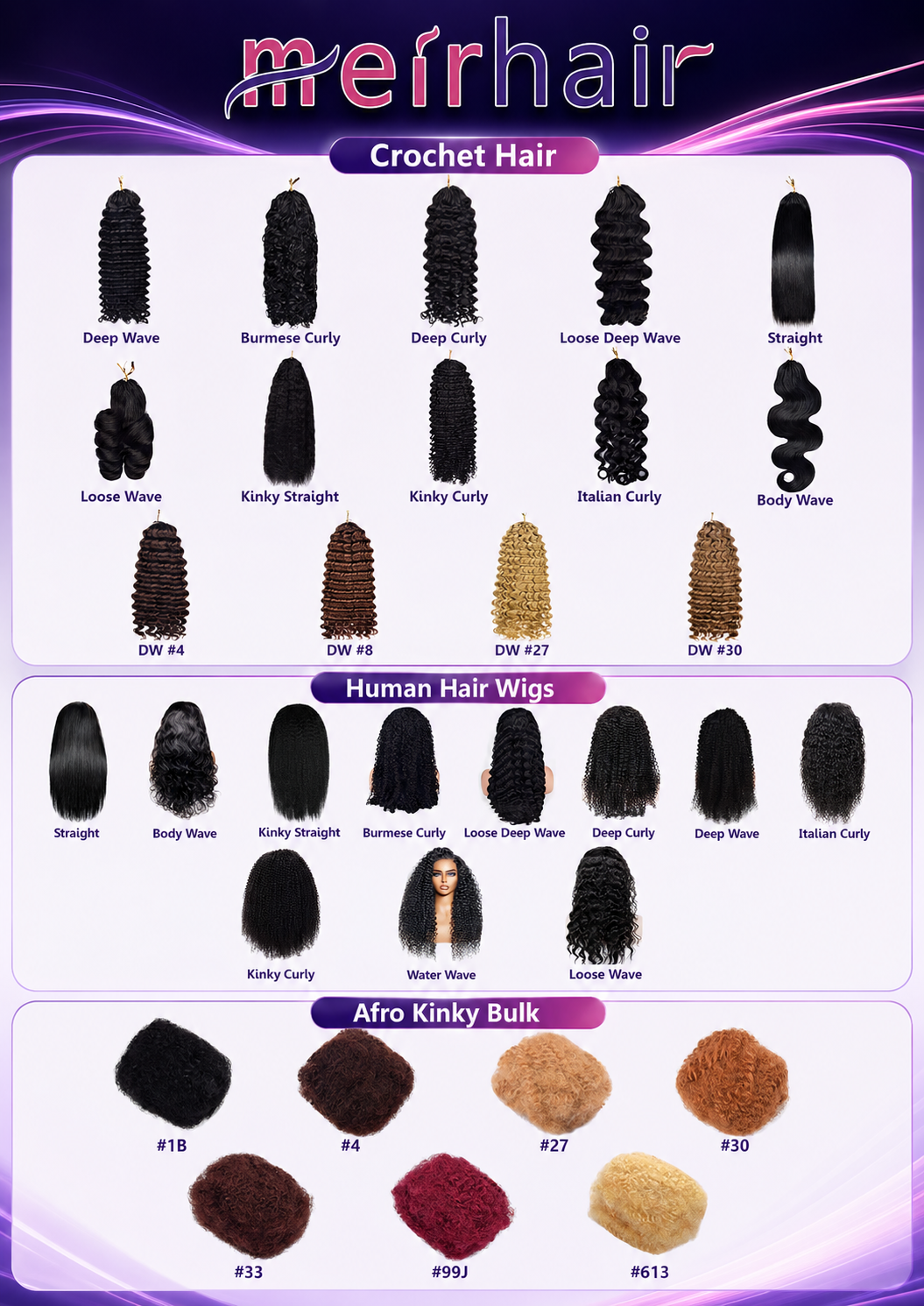
Wholesale buyers can reduce disputes by testing representative samples before installation. For example, in a distribution project involving 400 crochet human hair extensions for beauty suppliers in France, pre-shipment checks helped identify potential weaknesses before the products reached salons. A simple dry-tether test, gentle finger-combing, and loop inspection can reveal whether breakage results from handling or from an underlying fiber problem.
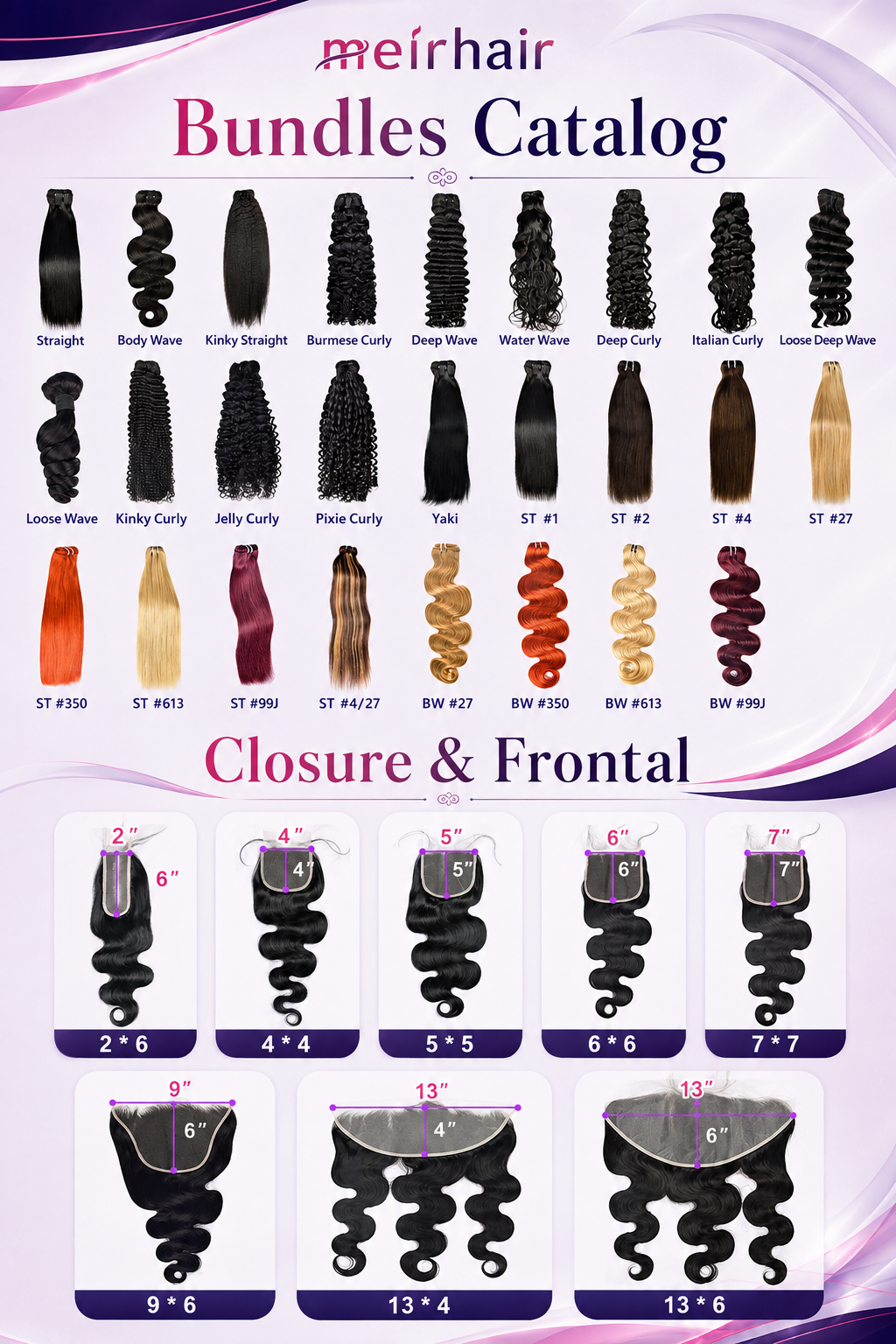
Diagnostic Comparison for Crochet Hair Problems
| Inspection Point | Likely Installation Error | Likely Product Defect | Recommended Check |
|---|---|---|---|
| Loop Slippage | Only selected areas, such as the edges or nape, loosen because the braid base is weak or the loop was secured inadequately. | Most or all unused loops loosen because the factory attachment is broken or poorly bonded. | Perform a gentle pull test on uninstalled loops from several bundles. |
| Fiber Shedding | Fibers are pulled out near the loop after the latch hook catches or splits the bundle during application. | Loose strands come away from unused hair during light finger-combing. | Comb a sample before installation and compare the shedding level with an installed sample. |
| Severe Tangling | Knots appear after heavy products, unsuitable oils, sleeping friction, or excessive manipulation. | The hair mats during initial unpacking or loses its texture after a light misting test. | Assess strand alignment and moisture response on an unused sample. |
| Texture Variation | Uneven curls or waves result from stretching, pulling, or uneven knot tension during installation. | Bundles sold under the same texture and length show visibly different curl or wave patterns before use. | Place unused bundles side by side under consistent lighting for comparison. |
Frequently Asked Questions
Q: What causes crochet hair to come loose soon after installation?
A: The most common causes are a loosely formed cornrow, insufficient looping, or an attachment method that does not suit the hair texture. Smooth straight hair generally needs more secure loop passes, while textured hair may hold with fewer passes because its surface provides greater friction.
Q: Can incorrect heat use create damage that looks like a factory defect?
A: Yes. Excessive heat can melt or compact synthetic fibers that are not designed for thermal styling. This type of matting is caused by styling practice and should be separated from defects found in unused human hair products.
Q: What should salon owners do when a wholesale shipment arrives?
A: Inspect inventory before booking client appointments. Test pre-loop strength, gently comb unused strands, compare texture and length across bundles, and wash a small sample to assess curl retention, color stability, and overall fiber behavior.
Final Recommendations
The most dependable way to separate installation mistakes from genuine crochet hair defects is to establish a baseline before the hair is used. Check loop security, strand shedding, texture uniformity, and moisture response on unused samples, then compare those results with the installed hair. Clear records of bundle condition, installation location, products used, and timing can also help resolve supplier claims accurately.
For salons, retailers, and private-label brands, purchasing from a supplier with documented pre-shipment quality control improves consistency. Checks should cover raw hair condition, length, weight, color, texture, and attachment strength. For technical assistance or wholesale support, please contact us via sales@brazilianhairtop.com.
About Us
Guangzhou Ruiju E-Commerce Co., Ltd. operates the professional human hair brand meirhair, specializing in human hair wigs, hair bundles, lace closures, Boho braids, and crochet hair extensions. Established in 2014, the company maintains a 5,000 sqm factory area and strong R&D capabilities for hair textures, colors, and attachment systems, serving a 100% export market across North America, Europe, Africa, and the Middle East. The enterprise provides OEM/ODM customization and wholesale supply, having served clients across multiple global hair styling industries.

REPORT