







-
 Agriculture
-
 Health-Care
-
 Environment
-
 Construction-Real-Estate
-
 Tools-Hardware
-
 Home-Garden
-
 Furniture
-
 Luggage-Bags-Cases
-
 Medical-devices-Supplies
-
 Gifts-Crafts
-
 Sports-Entertainment
-
 Food-Beverage
-
 Vehicles-Transportation
-
 Power-Transmission
-
 Material-Handling
-
 Renewable-Energy
-
 Safety
-
 Testing-Instrument-Equipment
-
 Construction-Building-Machinery
-
 Pet-Supplies
-
 Personal-Care-Household-Cleaning
-
 Vehicle-Accessories-Electronics-Tools
-
 School-Office-Supplies
-
 Packaging-Printing
-
 Mother-Kids-Toys
-
 Business-Services
-
 Commercial-Equipment-Machinery
-
 Apparel-Accessories
-
 Security
-
 Shoes-Accessories
-
 Vehicle-Parts-Accessories
-
 Jewelry-Eyewear-Watches-Accessories
-
 Lights-Lighting
-
 Fabric-Textile-Raw-Material
-
 Fabrication-Services
-
 Industrial-Machinery
-
 Consumer-Electronics
-
 Electrical-Equipment-Supplies
-
 Electronic-Components-Accessories-Telecommunications
-
 Home-Appliances
-
 Beauty
-
 Chemicals
-
 Rubber-Plastics
-
 Metals-Alloys


























































































































































































































































































































































































































































































































































































- Masonry Materials
- Curtain Walls & Accessories
- Earthwork Products
- Fireproofing Materials
- Heat Insulation Materials
- Plastic Building Materials
- Building Boards
- Soundproofing Materials
- Timber
- Waterproofing Materials
- Balustrades & Handrails
- Bathroom & Kitchen
- Flooring & Accessories
- Tiles & Accessories
- Door, Window & Accessories
- Fireplaces & Stoves
- Floor Heating Systems & Parts
- Stairs & Stair Parts
- Ceilings
- Elevators & Escalators
- Stone
- Countertops, Vanity Tops & Table Tops
- Mosaics
- Metal Building Materials
- Multifunctional Materials
- Ladders & Scaffoldings
- Mouldings
- Corner Guards
- Decorative Films
- Formwork
- Building & Industrial Glass
- Other Construction & Real Estate
- Wallpapers/Wall panels
- HVAC System & Parts
- Outdoor Facilities
- Prefabricated Buildings
- Festive & Party Supplies
- Bathroom Products
- Household Sundries
- Rain Gear
- Garden Supplies
- Household Cleaning Tools & Accessories
- Lighters & Smoking Accessories
- Home Storage & Organization
- Household Scales
- Smart Home Improvement
- Home Textiles
- Kitchenware
- Drinkware & Accessories
- Dinnerware, Coffee & Wine
- Home Decor
- Golf
- Fitness & Body Building
- Amusement Park Facilities
- Billiards, Board Game,Coin Operated Games
- Musical Instruments
- Outdoor Affordable Luxury Sports
- Camping & Hiking
- Fishing
- Sports Safety&Rehabilitation
- Ball Sports Equipments
- Water Sports
- Winter Sports
- Luxury Travel Equipments
- Sports Shoes, Bags & Accessories
- Cycling
- Other Sports & Entertainment Products
- Artificial Grass&Sports Flooring&Sports Court Equipment
- Scooters
- Food Ingredients
- Honey & Honey Products
- Snacks
- Nuts & Kernels
- Seafood
- Plant & Animal Oil
- Beverages
- Fruit & Vegetable Products
- Frog & Escargot
- Bean Products
- Egg Products
- Dairy Products
- Seasonings & Condiments
- Canned Food
- Instant Food
- Baked Goods
- Other Food & Beverage
- Meat & Poultry
- Confectionery
- Grain Products
- Feminie Care
- Hair Care & Styling
- Body Care
- Hands & Feet Care
- Hygiene Products
- Men's Grooming
- Laundry Cleaning Supplies
- Travel Size & Gift Sets
- Room Deodorizers
- Other Personal Care Products
- Pest Control Products
- Special Household Cleaning
- Floor Cleaning
- Kitchen & Bathroom Cleaning
- Oral Care
- Bath Supplies
- Yellow Pages
- Correction Supplies
- Office Binding Supplies
- Office Cutting Supplies
- Board Erasers
- Office Adhesives & Tapes
- Education Supplies
- Pencil Cases & Bags
- Notebooks & Writing Pads
- File Folder Accessories
- Calendars
- Writing Accessories
- Commercial Office Supplies
- Pencil Sharpeners
- Pens
- Letter Pad/Paper
- Paper Envelopes
- Desk Organizers
- Pencils
- Markers & Highlighters
- Filing Products
- Art Supplies
- Easels
- Badge Holder & Accessories
- Office Paper
- Printer Supplies
- Book Covers
- Other Office & School Supplies
- Stationery Set
- Boards
- Clipboards
- Stamps
- Drafting Supplies
- Stencils
- Electronic Dictionary
- Books
- Map
- Magazines
- Calculators
- Baby & Toddler Toys
- Educational Toys
- Classic Toys
- Dress Up & Pretend Play
- Toy Vehicle
- Stuffed Animals & Plush Toys
- Outdoor Toys & Structures
- Balloons & Accessories
- Baby Food
- Children's Clothing
- Baby Supplies & Products
- Maternity Clothes
- Kids Shoes
- Baby Care
- Novelty & Gag Toys
- Dolls & Accessories
- Puzzle & Games
- Blocks & Model Building Toys
- Toddler Clothing
- Baby Clothing
- Kids' Luggage & Bags
- Arts, Crafts & DIY Toys
- Action & Toy Figures
- Baby Appliances
- Hobbies & Models
- Remote Control Toys
- Promotional Toys
- Pregnancy & Maternity
- Hygiene Products
- Kid's Textile&Bedding
- Novelty & Special Use
- Toy Weapons
- Baby Gifts
- Baby Storage & Organization
- Auto Drive Systems
- ATV/UTV Parts & Accessories
- Marine Parts & Accessories
- Other Auto Parts
- Trailer Parts & Accessories
- Auto Transmission Systems
- Train Parts & Accessories
- Universal Parts
- Railway Parts & Accessories
- Auto Brake Systems
- Aviation Parts & Accessories
- Truck Parts & Accessories
- Auto Suspension Systems
- Auto Lighting Systems
- New Energy Vehicle Parts & Accessories
- Auto Steering Systems
- Wheels, Tires & Accessories
- Bus Parts & Accessories
- Auto Performance Parts
- Cooling System
- Go-Kart & Kart Racer Parts & Accessories
- Air Conditioning Systems
- Heavy Duty Vehicle Parts & Accessories
- Auto Electrical Systems
- Auto Body Systems
- Auto Engine Systems
- Container Parts & Accessories
- Motorcycle Parts & Accessories
- Refrigeration & Heat Exchange Equipment
- Machine Tool Equipment
- Food & Beverage Machinery
- Agricultural Machinery & Equipment
- Apparel & Textile Machinery
- Chemical Machinery
- Packaging Machines
- Paper Production Machinery
- Plastic & Rubber Processing Machinery
- Industrial Robots
- Electronic Products Machinery
- Metal & Metallurgy Machinery
- Woodworking Machinery
- Home Product Manufacturing Machinery
- Machinery Accessories
- Environmental Machinery
- Machinery Service
- Electrical Equipment Manufacturing Machinery
- Industrial Compressors & Parts
- Tobacco & Cigarette Machinery
- Production Line
- Used Industrial Machinery
- Electronics Production Machinery
- Other Machinery & Industrial Equipment
- Camera, Photo & Accessories
- Portable Audio, Video & Accessories
- Television, Home Audio, Video & Accessories
- Video Games & Accessories
- Mobile Phone & Accessories
- Electronic Publications
- Earphone & Headphone & Accessories
- Speakers & Accessories
- Smart Electronics
- TV Receivers & Accessories
- Mobile Phone & Computer Repair Parts
- Chargers, Batteries & Power Supplies
- Used Electronics
- VR, AR, MR Hardware & Software
- Projectors & Presentation Equipments
- Other Consumer Electronics
- Cables & Commonly Used Accessories
- Computer Hardware & Software
- Displays, Signage and Optoelectronics
- Discrete Semiconductors
- Wireless & IoT Module and Products
- Telecommunications
- Connectors, Terminals & Accessories
- Development Boards, Electronic Modules and Kits
- Circuit Protection
- Sensors
- Isolators
- Audio Components and Products
- Integrated Circuits
- Power Supplies
- Relays
- RF, Microwave and RFID
- Electronic Accessories & Supplies
- Passive Components
- PCB & PCBA
- Air Quality Appliances
- Home Appliance Parts
- Heating & Cooling Appliances
- Small Kitchen Appliances
- Laundry Appliances
- Water Heaters
- Water Treatment Appliances
- Refrigerators & Freezers
- Personal Care & Beauty Appliances
- Major Kitchen Appliances
- Cleaning Appliances
- Second-hand Appliances
- Smart Home Appliances
- Other Home Appliances
- Energy Chemicals
- Inorganic Chemicals
- Basic Organic Chemicals
- Agrochemicals
- Admixture & Additives
- Catalysts & Chemical Auxiliary Agents
- Pigments & Dyestuff
- Coating & Paint
- Daily Chemicals
- Polymer
- Organic Intermediate
- Adhesives & Sealants
- Chemical Waste
- Biological Chemical Products
- Surface Treatment Chemicals
- Painting & Coating
- Chemical Reagents
- Flavor & Fragrance
- Non-Explosive Demolition Agents
- Other Chemicals
- Custom Chemical Services

How to Test a UV Lamp Prototype for Durability and Safety
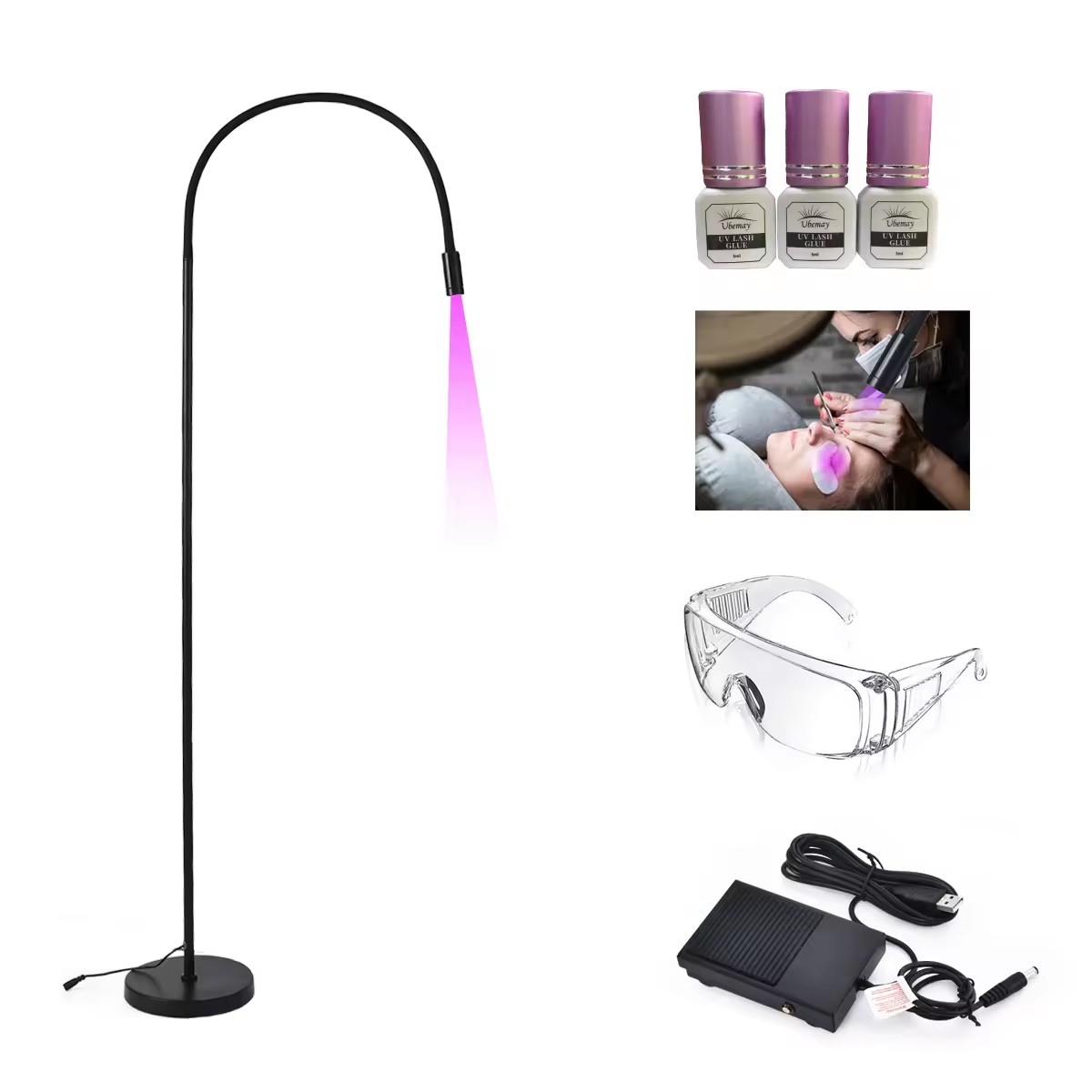
A UV/LED lamp prototype should be evaluated for reliable operation, electrical safety, heat control, consistent light output, and mechanical wear before production begins. Testing should reflect the intended setup—whether the lamp has one or two heads, a clamp or floor base, or a flexible gooseneck—and the demands of repeated professional use.
Priorities for Prototype Validation
- Function and electrical performance: Check driver operation, beam alignment, spot-size adjustment, switches, and applicable low-voltage and electromagnetic compatibility requirements.
- Arm and fixture durability: Test whether goosenecks, joints, clamps, bases, and locking mechanisms retain their position after repeated adjustment.
- Heat and light consistency: Track temperature and optical output during extended operation, including sessions used to cure UV adhesives.
- Use-case suitability: Match test conditions to salon work, training environments, and mobile lash services.
Build a Practical Test Plan
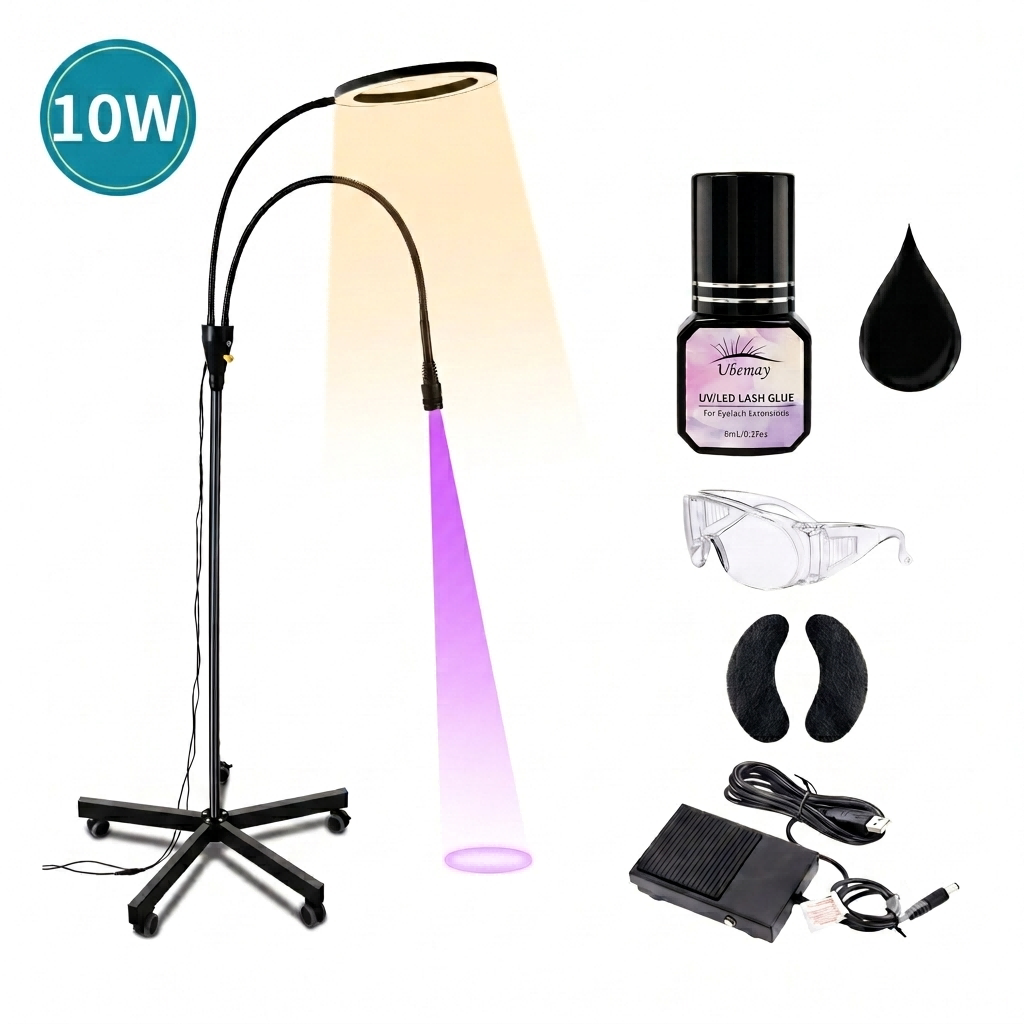
Start with an incoming inspection of the materials and assembled lamp. Power the unit continuously to confirm that its optical components and driver perform as expected. For clamp-mounted, floor-standing, single-head, dual-head, and modular designs, verify that the beam stays aligned and the selected spot size remains consistent through repeated repositioning.
Electrical and Optical Checks
Assess electrical safety and electromagnetic compatibility against the requirements for the intended markets. The source product information references CE (LVD) certificate ZKT-25091522640C and CE (EMC) certificate ZKT-25091522641C. These evaluations address low-voltage safety and whether the lamp’s electronics operate compatibly around other salon equipment. Also monitor light output and temperature during sustained use to identify instability or inadequate heat dissipation.
Mechanical Fatigue and Quality Control
Repeatedly flex the gooseneck in multiple directions, then check whether it holds its chosen position without sagging or losing tension. Inspect the support base, clamp grip, telescoping pole locks, joints, and detachable head connections according to the lamp configuration. A complete quality program can include checks on incoming materials, in-process assembly, finished units, packaging, and goods before shipment. A reported lash-product sourcing project involving 3,000 pcs / sets for Italian distributors illustrates the role of structured inspection in supporting larger orders for professional use.
Tests by Lamp Configuration
Test emphasis varies with the fixture design and where it will be used. The comparison below provides a starting point for a prototype test plan.
| Lamp Configuration | Mechanical Test Focus | Electrical and Thermal Checks | Typical Use Environment |
|---|---|---|---|
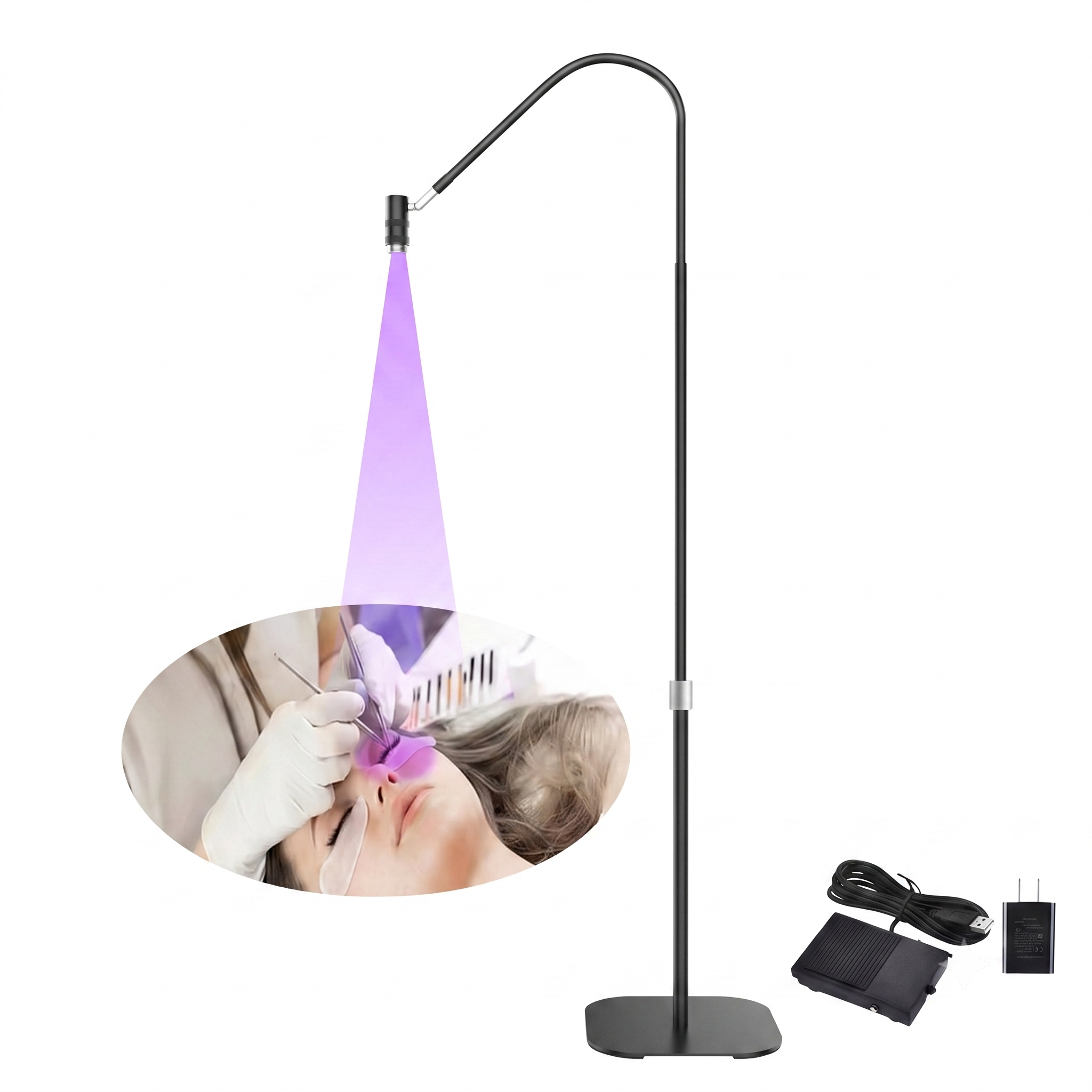
| Clamp-mounted lamp | Clamp holding strength and repeated gooseneck bending | Low-voltage operation and switch cycling | Independent lash artists and mobile services |
| Floor-standing lamp | Base stability, resistance to tipping, and pole-lock retention | Heat dissipation during extended salon sessions | Professional lash salons and extension studios |
| Dual-head or modular-head lamp | Multi-axis joint movement and head-connection wear | EMC evaluation and balance between LED drivers | Lash training academies and beauty schools |
Frequently Asked Questions
Which electrical evaluations are relevant to a UV curing lamp prototype?
For products intended for international markets, assess applicable CE low-voltage (LVD) and electromagnetic compatibility (EMC) requirements. These checks help evaluate electrical safety and operation near other studio devices.
How can I check the durability of a flexible lamp arm?
Cycle the gooseneck through repeated bends in different directions, then confirm that it continues to hold its angle. Look for drift, looseness, or a reduction in tension that could affect precise adhesive curing.
How long do samples and customized orders take?
The stated sample processing time is within 7 days. Customized OEM/ODM orders generally take 15 to 30 days, depending on requirements such as housing color, packaging, and structural changes.
Recommendations for Buyers and Product Teams
Before approving a UV lamp for production, combine functional checks with thermal and optical monitoring, mechanical fatigue testing, and evaluation of applicable CE (LVD) and CE (EMC) requirements. The supplier offers sample evaluation from an MOQ of 1 pc and customized bulk orders from 100 pcs. Standard orders are stated to ship within 7 days; customized solutions typically require 15 to 30 days. Available shipping methods include express, air freight, sea freight, and DDP. Payment options include T/T, Alibaba Trade Assurance, PayPal, and Western Union. For technical assistance, contact sales@ubemay.com.
About the Supplier
Guangzhou Ruiju E-Commerce Co., Ltd. operates UBEMAY, a professional eyelash brand offering extensions, adhesives, accessories, and UV/LED curing equipment. Founded in 2014, the company reports a 5000 sqm factory and an export ratio of 80%, serving customers across North America, Europe, the Middle East, and Latin America. Its R&D team supports private-label, OEM/ODM, and customization projects, with products developed to meet FDA and CE certification requirements.

REPORT