







-
 Agriculture
-
 Health-Care
-
 Environment
-
 Construction-Real-Estate
-
 Tools-Hardware
-
 Home-Garden
-
 Furniture
-
 Luggage-Bags-Cases
-
 Medical-devices-Supplies
-
 Gifts-Crafts
-
 Sports-Entertainment
-
 Food-Beverage
-
 Vehicles-Transportation
-
 Power-Transmission
-
 Material-Handling
-
 Renewable-Energy
-
 Safety
-
 Testing-Instrument-Equipment
-
 Construction-Building-Machinery
-
 Pet-Supplies
-
 Personal-Care-Household-Cleaning
-
 Vehicle-Accessories-Electronics-Tools
-
 School-Office-Supplies
-
 Packaging-Printing
-
 Mother-Kids-Toys
-
 Business-Services
-
 Commercial-Equipment-Machinery
-
 Apparel-Accessories
-
 Security
-
 Shoes-Accessories
-
 Vehicle-Parts-Accessories
-
 Jewelry-Eyewear-Watches-Accessories
-
 Lights-Lighting
-
 Fabric-Textile-Raw-Material
-
 Fabrication-Services
-
 Industrial-Machinery
-
 Consumer-Electronics
-
 Electrical-Equipment-Supplies
-
 Electronic-Components-Accessories-Telecommunications
-
 Home-Appliances
-
 Beauty
-
 Chemicals
-
 Rubber-Plastics
-
 Metals-Alloys


























































































































































































































































































































































































































































































































































































- Masonry Materials
- Curtain Walls & Accessories
- Earthwork Products
- Fireproofing Materials
- Heat Insulation Materials
- Plastic Building Materials
- Building Boards
- Soundproofing Materials
- Timber
- Waterproofing Materials
- Balustrades & Handrails
- Bathroom & Kitchen
- Flooring & Accessories
- Tiles & Accessories
- Door, Window & Accessories
- Fireplaces & Stoves
- Floor Heating Systems & Parts
- Stairs & Stair Parts
- Ceilings
- Elevators & Escalators
- Stone
- Countertops, Vanity Tops & Table Tops
- Mosaics
- Metal Building Materials
- Multifunctional Materials
- Ladders & Scaffoldings
- Mouldings
- Corner Guards
- Decorative Films
- Formwork
- Building & Industrial Glass
- Other Construction & Real Estate
- Wallpapers/Wall panels
- HVAC System & Parts
- Outdoor Facilities
- Prefabricated Buildings
- Festive & Party Supplies
- Bathroom Products
- Household Sundries
- Rain Gear
- Garden Supplies
- Household Cleaning Tools & Accessories
- Lighters & Smoking Accessories
- Home Storage & Organization
- Household Scales
- Smart Home Improvement
- Home Textiles
- Kitchenware
- Drinkware & Accessories
- Dinnerware, Coffee & Wine
- Home Decor
- Golf
- Fitness & Body Building
- Amusement Park Facilities
- Billiards, Board Game,Coin Operated Games
- Musical Instruments
- Outdoor Affordable Luxury Sports
- Camping & Hiking
- Fishing
- Sports Safety&Rehabilitation
- Ball Sports Equipments
- Water Sports
- Winter Sports
- Luxury Travel Equipments
- Sports Shoes, Bags & Accessories
- Cycling
- Other Sports & Entertainment Products
- Artificial Grass&Sports Flooring&Sports Court Equipment
- Scooters
- Food Ingredients
- Honey & Honey Products
- Snacks
- Nuts & Kernels
- Seafood
- Plant & Animal Oil
- Beverages
- Fruit & Vegetable Products
- Frog & Escargot
- Bean Products
- Egg Products
- Dairy Products
- Seasonings & Condiments
- Canned Food
- Instant Food
- Baked Goods
- Other Food & Beverage
- Meat & Poultry
- Confectionery
- Grain Products
- Feminie Care
- Hair Care & Styling
- Body Care
- Hands & Feet Care
- Hygiene Products
- Men's Grooming
- Laundry Cleaning Supplies
- Travel Size & Gift Sets
- Room Deodorizers
- Other Personal Care Products
- Pest Control Products
- Special Household Cleaning
- Floor Cleaning
- Kitchen & Bathroom Cleaning
- Oral Care
- Bath Supplies
- Yellow Pages
- Correction Supplies
- Office Binding Supplies
- Office Cutting Supplies
- Board Erasers
- Office Adhesives & Tapes
- Education Supplies
- Pencil Cases & Bags
- Notebooks & Writing Pads
- File Folder Accessories
- Calendars
- Writing Accessories
- Commercial Office Supplies
- Pencil Sharpeners
- Pens
- Letter Pad/Paper
- Paper Envelopes
- Desk Organizers
- Pencils
- Markers & Highlighters
- Filing Products
- Art Supplies
- Easels
- Badge Holder & Accessories
- Office Paper
- Printer Supplies
- Book Covers
- Other Office & School Supplies
- Stationery Set
- Boards
- Clipboards
- Stamps
- Drafting Supplies
- Stencils
- Electronic Dictionary
- Books
- Map
- Magazines
- Calculators
- Baby & Toddler Toys
- Educational Toys
- Classic Toys
- Dress Up & Pretend Play
- Toy Vehicle
- Stuffed Animals & Plush Toys
- Outdoor Toys & Structures
- Balloons & Accessories
- Baby Food
- Children's Clothing
- Baby Supplies & Products
- Maternity Clothes
- Kids Shoes
- Baby Care
- Novelty & Gag Toys
- Dolls & Accessories
- Puzzle & Games
- Blocks & Model Building Toys
- Toddler Clothing
- Baby Clothing
- Kids' Luggage & Bags
- Arts, Crafts & DIY Toys
- Action & Toy Figures
- Baby Appliances
- Hobbies & Models
- Remote Control Toys
- Promotional Toys
- Pregnancy & Maternity
- Hygiene Products
- Kid's Textile&Bedding
- Novelty & Special Use
- Toy Weapons
- Baby Gifts
- Baby Storage & Organization
- Auto Drive Systems
- ATV/UTV Parts & Accessories
- Marine Parts & Accessories
- Other Auto Parts
- Trailer Parts & Accessories
- Auto Transmission Systems
- Train Parts & Accessories
- Universal Parts
- Railway Parts & Accessories
- Auto Brake Systems
- Aviation Parts & Accessories
- Truck Parts & Accessories
- Auto Suspension Systems
- Auto Lighting Systems
- New Energy Vehicle Parts & Accessories
- Auto Steering Systems
- Wheels, Tires & Accessories
- Bus Parts & Accessories
- Auto Performance Parts
- Cooling System
- Go-Kart & Kart Racer Parts & Accessories
- Air Conditioning Systems
- Heavy Duty Vehicle Parts & Accessories
- Auto Electrical Systems
- Auto Body Systems
- Auto Engine Systems
- Container Parts & Accessories
- Motorcycle Parts & Accessories
- Refrigeration & Heat Exchange Equipment
- Machine Tool Equipment
- Food & Beverage Machinery
- Agricultural Machinery & Equipment
- Apparel & Textile Machinery
- Chemical Machinery
- Packaging Machines
- Paper Production Machinery
- Plastic & Rubber Processing Machinery
- Industrial Robots
- Electronic Products Machinery
- Metal & Metallurgy Machinery
- Woodworking Machinery
- Home Product Manufacturing Machinery
- Machinery Accessories
- Environmental Machinery
- Machinery Service
- Electrical Equipment Manufacturing Machinery
- Industrial Compressors & Parts
- Tobacco & Cigarette Machinery
- Production Line
- Used Industrial Machinery
- Electronics Production Machinery
- Other Machinery & Industrial Equipment
- Camera, Photo & Accessories
- Portable Audio, Video & Accessories
- Television, Home Audio, Video & Accessories
- Video Games & Accessories
- Mobile Phone & Accessories
- Electronic Publications
- Earphone & Headphone & Accessories
- Speakers & Accessories
- Smart Electronics
- TV Receivers & Accessories
- Mobile Phone & Computer Repair Parts
- Chargers, Batteries & Power Supplies
- Used Electronics
- VR, AR, MR Hardware & Software
- Projectors & Presentation Equipments
- Other Consumer Electronics
- Cables & Commonly Used Accessories
- Computer Hardware & Software
- Displays, Signage and Optoelectronics
- Discrete Semiconductors
- Wireless & IoT Module and Products
- Telecommunications
- Connectors, Terminals & Accessories
- Development Boards, Electronic Modules and Kits
- Circuit Protection
- Sensors
- Isolators
- Audio Components and Products
- Integrated Circuits
- Power Supplies
- Relays
- RF, Microwave and RFID
- Electronic Accessories & Supplies
- Passive Components
- PCB & PCBA
- Air Quality Appliances
- Home Appliance Parts
- Heating & Cooling Appliances
- Small Kitchen Appliances
- Laundry Appliances
- Water Heaters
- Water Treatment Appliances
- Refrigerators & Freezers
- Personal Care & Beauty Appliances
- Major Kitchen Appliances
- Cleaning Appliances
- Second-hand Appliances
- Smart Home Appliances
- Other Home Appliances
- Energy Chemicals
- Inorganic Chemicals
- Basic Organic Chemicals
- Agrochemicals
- Admixture & Additives
- Catalysts & Chemical Auxiliary Agents
- Pigments & Dyestuff
- Coating & Paint
- Daily Chemicals
- Polymer
- Organic Intermediate
- Adhesives & Sealants
- Chemical Waste
- Biological Chemical Products
- Surface Treatment Chemicals
- Painting & Coating
- Chemical Reagents
- Flavor & Fragrance
- Non-Explosive Demolition Agents
- Other Chemicals
- Custom Chemical Services

How to Test Crochet Hair Extensions Samples for Tangling After Washing
A practical washing test can show whether crochet hair extensions remain easy to handle after cleaning. Begin by documenting each sample's texture, length, color, weight, and original appearance. Wash every sample using the same process, then assess tangling while wet, during detangling, and after drying. Compare the final result with the original texture, paying attention to knots, shedding, strand separation, and texture recovery.
Essential Testing Steps
- Apply identical washing, handling, and drying conditions to every crochet hair extensions sample for a fair comparison.
- Review each sample at three points: immediately after washing, while detangling, and once fully dry.
- Record knot formation, shedding, detangling effort, texture retention, and any change in fullness or surface feel.
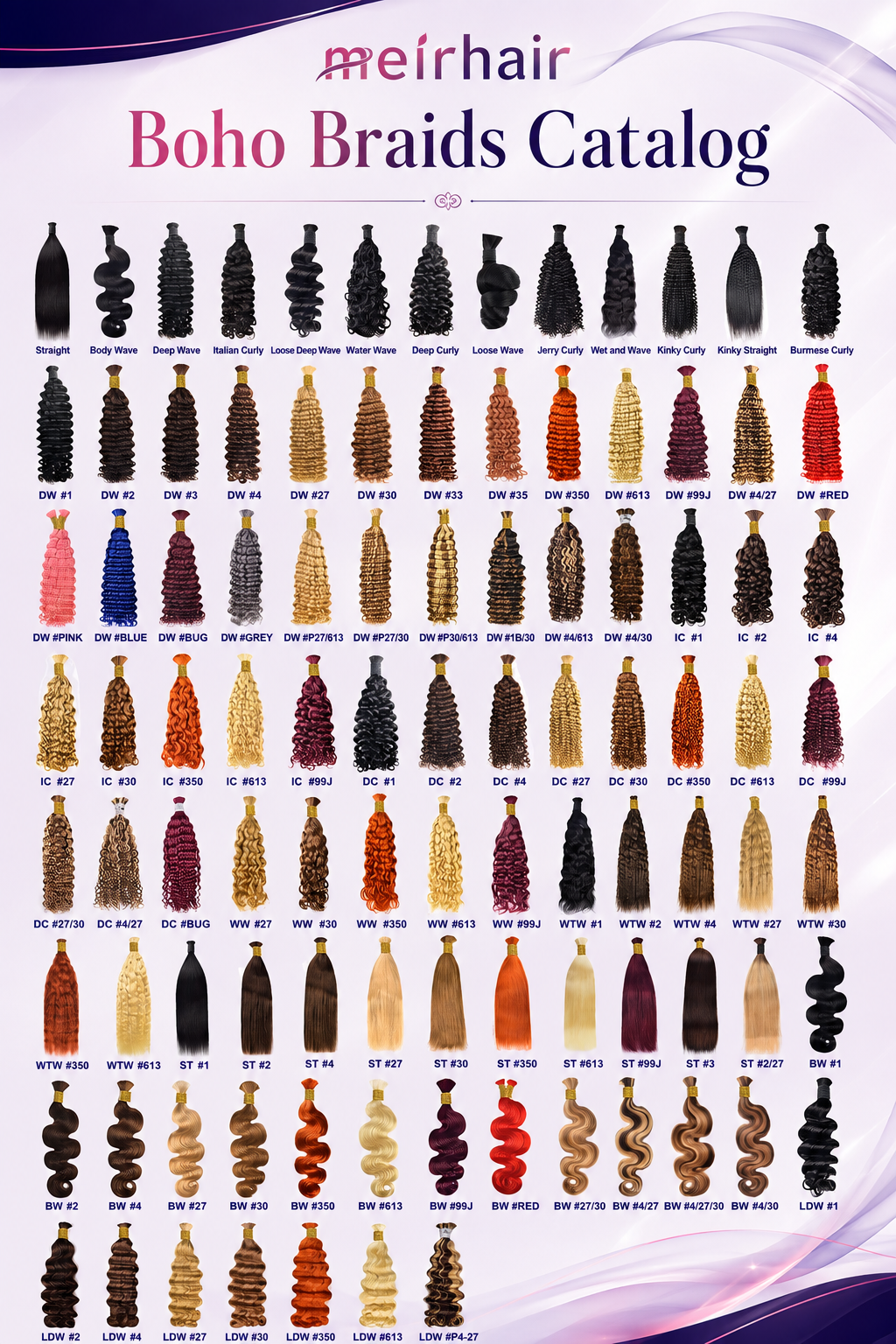
- Compare Deep Wave, Water Wave, Loose Wave, Curly, and customized textures, including lengths ranging from 14 to 30 inches.
- Consider whether the washed hair remains suitable for braiding salons, protective styles, crochet installations, and retail evaluation.
How to Build a Consistent Tangling Test
1. Establish a Pre-Wash Baseline
Before washing, assign an identification record to every sample. Confirm that the material is 100% human hair and note its stated texture, length, color, and weight. Photograph the sample or describe its curl, wave, volume, and surface condition. This baseline provides a reliable reference when you evaluate the hair after treatment.
2. Keep the Washing Method Consistent
Use the same washing sequence, water conditions, amount of product, handling technique, drying method, and detangling approach for all samples. Changing the process between textures can make the results difficult to interpret. Deep Wave, Water Wave, Loose Wave, Curly, and customized textures may naturally behave differently, so consistency is important when comparing their knotting performance.
3. Inspect the Hair at Three Stages
First, examine the sample while it is wet. Check whether the strands remain separated or gather into compact knots. Next, assess the hair during finger detangling or combing. Note the force or time required, where knots appear, and how much hair sheds. Finally, inspect the dry sample for remaining tangles, surface roughness, fullness, and the condition of its original wave or curl pattern.
Use simple written categories to make the review repeatable. Tangling can be classified as low, medium, or high, while detangling can be described as easy, moderate, or difficult. For texture recovery, record whether the original pattern is retained, partly changed, or changed. These qualitative descriptions create a useful quality record without relying on unsupported numerical limits.
Quality checks should cover the same product attributes before and after washing whenever applicable: hair quality, texture, length, color, and weight. Length and color should remain easy to identify, while the texture review should confirm whether the sample still reflects its stated Deep Wave, Water Wave, Loose Wave, Curly, or customized design.
Evaluate Performance for the Intended Application
The end use should be part of the assessment. These products are described for Boho Braids, Goddess Braids, crochet hairstyles, and other braiding applications. Salon professionals should check whether washed hair can be separated, positioned, and installed without excessive knotting. The same review helps wig stores, hair extension distributors, and online sellers compare samples before placing an order or creating a product listing.
One recorded cooperation case involved a United Kingdom braiding hair wholesaler that received 500 pcs for Boho braids, Goddess braids, and salon services. Reported feedback mentioned a natural appearance, suitability for different braiding styles, and useful texture and length choices. During sample testing, these points can be assessed together with post-wash tangling and handling performance.
In another case, a beauty supply distributor in France received 400 pcs of crochet hair for crochet hairstyles, protective styles, and professional salon installation. The reported feedback highlighted easy installation and varied textures. For this type of use, the sample should be checked to confirm that washing does not create excessive knots or make the hair difficult to separate during installation.
Sample Evaluation Comparison
| Evaluation Stage | Points to Examine | Suggested Record |
|---|---|---|
| Before washing | Texture, length, color, weight, and original appearance | Sample code and baseline description |
| Right after washing | Wet knots, strand separation, and visible shedding | Low, medium, or high tangling and shedding |
| During detangling | Separation effort, knot location, and handling response | Easy, moderate, or difficult detangling |
| After drying | Texture recovery, surface condition, fullness, and remaining knots | Texture retained, partly changed, or changed |
| Between samples | Differences among Deep Wave, Water Wave, Loose Wave, Curly, and customized textures | Side-by-side qualitative comparison |
Frequently Asked Questions
Should every crochet hair extensions sample be tested independently?
Yes. Record each texture, length, color, and customized specification separately. The product range includes several textures and lengths from 14 to 30 inches, so individual records make it easier to identify which specification shows more or less tangling.
What signs show that hair tangles after washing?
Common signs include compact knots, poor strand separation, repeated knot formation during detangling, increased shedding, and a dry texture that remains difficult to manage. Compare these observations with the pre-wash baseline instead of judging the sample from one moment alone.
Should wet and dry results both be recorded?
Yes. Some hair may appear tangled when wet but separate easily as it dries, while other samples may seem manageable when wet and develop knots afterward. Recording both stages gives a more complete view of washing performance.
How can buyers compare different textures fairly?
Use the same washing, drying, and detangling procedure for Deep Wave, Water Wave, Loose Wave, Curly, and customized samples. Compare the records side by side, while recognizing that each texture has its own natural pattern and handling characteristics.
REPORT