







-
 Agriculture
-
 Health-Care
-
 Environment
-
 Construction-Real-Estate
-
 Tools-Hardware
-
 Home-Garden
-
 Furniture
-
 Luggage-Bags-Cases
-
 Medical-devices-Supplies
-
 Gifts-Crafts
-
 Sports-Entertainment
-
 Food-Beverage
-
 Vehicles-Transportation
-
 Power-Transmission
-
 Material-Handling
-
 Renewable-Energy
-
 Safety
-
 Testing-Instrument-Equipment
-
 Construction-Building-Machinery
-
 Pet-Supplies
-
 Personal-Care-Household-Cleaning
-
 Vehicle-Accessories-Electronics-Tools
-
 School-Office-Supplies
-
 Packaging-Printing
-
 Mother-Kids-Toys
-
 Business-Services
-
 Commercial-Equipment-Machinery
-
 Apparel-Accessories
-
 Security
-
 Shoes-Accessories
-
 Vehicle-Parts-Accessories
-
 Jewelry-Eyewear-Watches-Accessories
-
 Lights-Lighting
-
 Fabric-Textile-Raw-Material
-
 Fabrication-Services
-
 Industrial-Machinery
-
 Consumer-Electronics
-
 Electrical-Equipment-Supplies
-
 Electronic-Components-Accessories-Telecommunications
-
 Home-Appliances
-
 Beauty
-
 Chemicals
-
 Rubber-Plastics
-
 Metals-Alloys


























































































































































































































































































































































































































































































































































































- Masonry Materials
- Curtain Walls & Accessories
- Earthwork Products
- Fireproofing Materials
- Heat Insulation Materials
- Plastic Building Materials
- Building Boards
- Soundproofing Materials
- Timber
- Waterproofing Materials
- Balustrades & Handrails
- Bathroom & Kitchen
- Flooring & Accessories
- Tiles & Accessories
- Door, Window & Accessories
- Fireplaces & Stoves
- Floor Heating Systems & Parts
- Stairs & Stair Parts
- Ceilings
- Elevators & Escalators
- Stone
- Countertops, Vanity Tops & Table Tops
- Mosaics
- Metal Building Materials
- Multifunctional Materials
- Ladders & Scaffoldings
- Mouldings
- Corner Guards
- Decorative Films
- Formwork
- Building & Industrial Glass
- Other Construction & Real Estate
- Wallpapers/Wall panels
- HVAC System & Parts
- Outdoor Facilities
- Prefabricated Buildings
- Festive & Party Supplies
- Bathroom Products
- Household Sundries
- Rain Gear
- Garden Supplies
- Household Cleaning Tools & Accessories
- Lighters & Smoking Accessories
- Home Storage & Organization
- Household Scales
- Smart Home Improvement
- Home Textiles
- Kitchenware
- Drinkware & Accessories
- Dinnerware, Coffee & Wine
- Home Decor
- Golf
- Fitness & Body Building
- Amusement Park Facilities
- Billiards, Board Game,Coin Operated Games
- Musical Instruments
- Outdoor Affordable Luxury Sports
- Camping & Hiking
- Fishing
- Sports Safety&Rehabilitation
- Ball Sports Equipments
- Water Sports
- Winter Sports
- Luxury Travel Equipments
- Sports Shoes, Bags & Accessories
- Cycling
- Other Sports & Entertainment Products
- Artificial Grass&Sports Flooring&Sports Court Equipment
- Scooters
- Food Ingredients
- Honey & Honey Products
- Snacks
- Nuts & Kernels
- Seafood
- Plant & Animal Oil
- Beverages
- Fruit & Vegetable Products
- Frog & Escargot
- Bean Products
- Egg Products
- Dairy Products
- Seasonings & Condiments
- Canned Food
- Instant Food
- Baked Goods
- Other Food & Beverage
- Meat & Poultry
- Confectionery
- Grain Products
- Feminie Care
- Hair Care & Styling
- Body Care
- Hands & Feet Care
- Hygiene Products
- Men's Grooming
- Laundry Cleaning Supplies
- Travel Size & Gift Sets
- Room Deodorizers
- Other Personal Care Products
- Pest Control Products
- Special Household Cleaning
- Floor Cleaning
- Kitchen & Bathroom Cleaning
- Oral Care
- Bath Supplies
- Yellow Pages
- Correction Supplies
- Office Binding Supplies
- Office Cutting Supplies
- Board Erasers
- Office Adhesives & Tapes
- Education Supplies
- Pencil Cases & Bags
- Notebooks & Writing Pads
- File Folder Accessories
- Calendars
- Writing Accessories
- Commercial Office Supplies
- Pencil Sharpeners
- Pens
- Letter Pad/Paper
- Paper Envelopes
- Desk Organizers
- Pencils
- Markers & Highlighters
- Filing Products
- Art Supplies
- Easels
- Badge Holder & Accessories
- Office Paper
- Printer Supplies
- Book Covers
- Other Office & School Supplies
- Stationery Set
- Boards
- Clipboards
- Stamps
- Drafting Supplies
- Stencils
- Electronic Dictionary
- Books
- Map
- Magazines
- Calculators
- Baby & Toddler Toys
- Educational Toys
- Classic Toys
- Dress Up & Pretend Play
- Toy Vehicle
- Stuffed Animals & Plush Toys
- Outdoor Toys & Structures
- Balloons & Accessories
- Baby Food
- Children's Clothing
- Baby Supplies & Products
- Maternity Clothes
- Kids Shoes
- Baby Care
- Novelty & Gag Toys
- Dolls & Accessories
- Puzzle & Games
- Blocks & Model Building Toys
- Toddler Clothing
- Baby Clothing
- Kids' Luggage & Bags
- Arts, Crafts & DIY Toys
- Action & Toy Figures
- Baby Appliances
- Hobbies & Models
- Remote Control Toys
- Promotional Toys
- Pregnancy & Maternity
- Hygiene Products
- Kid's Textile&Bedding
- Novelty & Special Use
- Toy Weapons
- Baby Gifts
- Baby Storage & Organization
- Auto Drive Systems
- ATV/UTV Parts & Accessories
- Marine Parts & Accessories
- Other Auto Parts
- Trailer Parts & Accessories
- Auto Transmission Systems
- Train Parts & Accessories
- Universal Parts
- Railway Parts & Accessories
- Auto Brake Systems
- Aviation Parts & Accessories
- Truck Parts & Accessories
- Auto Suspension Systems
- Auto Lighting Systems
- New Energy Vehicle Parts & Accessories
- Auto Steering Systems
- Wheels, Tires & Accessories
- Bus Parts & Accessories
- Auto Performance Parts
- Cooling System
- Go-Kart & Kart Racer Parts & Accessories
- Air Conditioning Systems
- Heavy Duty Vehicle Parts & Accessories
- Auto Electrical Systems
- Auto Body Systems
- Auto Engine Systems
- Container Parts & Accessories
- Motorcycle Parts & Accessories
- Refrigeration & Heat Exchange Equipment
- Machine Tool Equipment
- Food & Beverage Machinery
- Agricultural Machinery & Equipment
- Apparel & Textile Machinery
- Chemical Machinery
- Packaging Machines
- Paper Production Machinery
- Plastic & Rubber Processing Machinery
- Industrial Robots
- Electronic Products Machinery
- Metal & Metallurgy Machinery
- Woodworking Machinery
- Home Product Manufacturing Machinery
- Machinery Accessories
- Environmental Machinery
- Machinery Service
- Electrical Equipment Manufacturing Machinery
- Industrial Compressors & Parts
- Tobacco & Cigarette Machinery
- Production Line
- Used Industrial Machinery
- Electronics Production Machinery
- Other Machinery & Industrial Equipment
- Camera, Photo & Accessories
- Portable Audio, Video & Accessories
- Television, Home Audio, Video & Accessories
- Video Games & Accessories
- Mobile Phone & Accessories
- Electronic Publications
- Earphone & Headphone & Accessories
- Speakers & Accessories
- Smart Electronics
- TV Receivers & Accessories
- Mobile Phone & Computer Repair Parts
- Chargers, Batteries & Power Supplies
- Used Electronics
- VR, AR, MR Hardware & Software
- Projectors & Presentation Equipments
- Other Consumer Electronics
- Cables & Commonly Used Accessories
- Computer Hardware & Software
- Displays, Signage and Optoelectronics
- Discrete Semiconductors
- Wireless & IoT Module and Products
- Telecommunications
- Connectors, Terminals & Accessories
- Development Boards, Electronic Modules and Kits
- Circuit Protection
- Sensors
- Isolators
- Audio Components and Products
- Integrated Circuits
- Power Supplies
- Relays
- RF, Microwave and RFID
- Electronic Accessories & Supplies
- Passive Components
- PCB & PCBA
- Air Quality Appliances
- Home Appliance Parts
- Heating & Cooling Appliances
- Small Kitchen Appliances
- Laundry Appliances
- Water Heaters
- Water Treatment Appliances
- Refrigerators & Freezers
- Personal Care & Beauty Appliances
- Major Kitchen Appliances
- Cleaning Appliances
- Second-hand Appliances
- Smart Home Appliances
- Other Home Appliances
- Energy Chemicals
- Inorganic Chemicals
- Basic Organic Chemicals
- Agrochemicals
- Admixture & Additives
- Catalysts & Chemical Auxiliary Agents
- Pigments & Dyestuff
- Coating & Paint
- Daily Chemicals
- Polymer
- Organic Intermediate
- Adhesives & Sealants
- Chemical Waste
- Biological Chemical Products
- Surface Treatment Chemicals
- Painting & Coating
- Chemical Reagents
- Flavor & Fragrance
- Non-Explosive Demolition Agents
- Other Chemicals
- Custom Chemical Services

How to Test Whether Crochet Human Hair Can Be Safely Colored
Before coloring crochet human hair, it is important to confirm that the strands can tolerate chemical processing without becoming dry, weak, tangled, or damaged. The most reliable approach is to verify that the product is genuine virgin human hair, assess the condition of the cuticle, and complete a small strand test before applying color to the full set.
How to Evaluate Crochet Hair Before Coloring
Colorable crochet hair should be made from 100% human hair with strong, aligned cuticles and minimal prior chemical treatment. Virgin hair generally accepts oxidative color more evenly because its protective outer layer is still intact. In contrast, hair that has been aggressively acid-treated, heavily coated with silicone, or mixed with synthetic fibers may react unpredictably when exposed to bleach or developer.
Inspect Cuticle Quality and Hair Origin
Healthy cuticles are essential for controlled pigment absorption and long-term strand strength. A close visual inspection can help identify excessive coating, roughness, or irregular shine that may indicate heavily processed material. Working with a verified supplier such as Guangzhou Ruiju E-Commerce Co., Ltd. also helps salons and buyers obtain authentic raw hair suitable for professional color services.
Perform a Porosity and Elasticity Test
A wet elasticity test offers a practical indication of hair condition. Saturate one strand with water, then stretch it gently. High-quality virgin human hair can normally extend by roughly 30 percent and return close to its original shape. Hair that stretches excessively, feels gummy, or breaks quickly may already have weakened protein bonds and should not be lightened.
Use a Single-Strand Color Trial
Always test a small hidden section before coloring the complete crochet installation or bundle. Apply the intended dye or lightener using the planned developer volume, then observe lift, tone, curl retention, softness, and shedding. This trial confirms whether the hair can achieve the desired shade while preserving its texture and crochet loop structure.
Why Hair Structure Affects Coloring Results
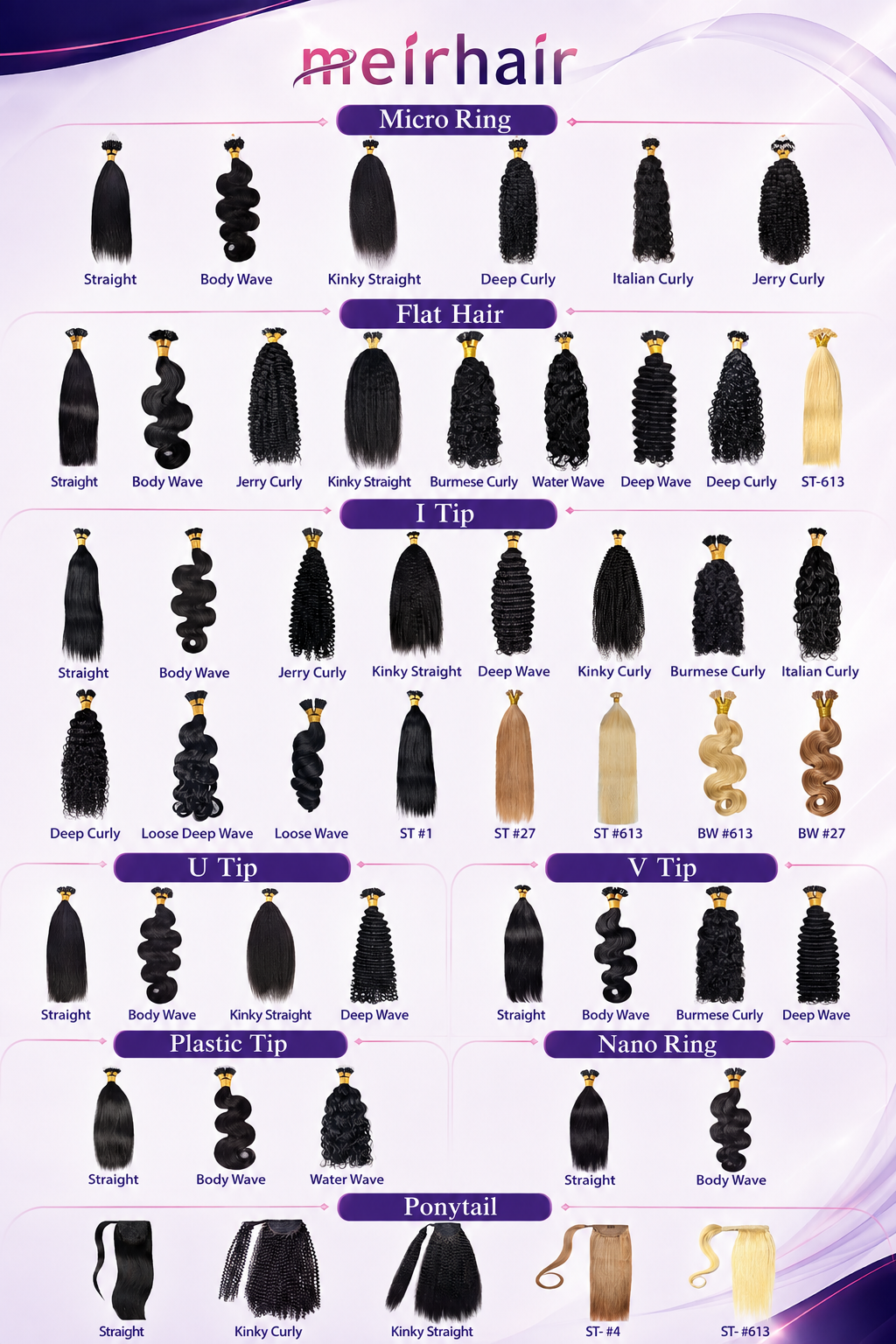
Crochet human hair relies on the strength of the cuticle and cortex during chemical services. Textures including Deep Wave, Burmese Curly, Deep Curly, Loose Deep Wave, Straight, and Kinky Curly can respond well to color when they are made from properly selected human hair. Uniform cuticle alignment supports even lifting and helps the strands remain smooth after dyeing.
When the hair has already experienced harsh industrial processing, color chemicals can lift the weakened cuticle too aggressively. The result may include dryness, tangling, faded tone, loss of curl definition, and breakage. Salon professionals should therefore choose a conservative formula first and follow every chemical treatment with moisture and conditioning care.
Since 2014, Guangzhou Ruiju E-Commerce Co., Ltd. has applied standardized inspections for raw-material quality, texture consistency, and color performance. These checks support customized human hair products designed for professional styling, protective hairstyles, and international wholesale distribution.
Coloring Compatibility by Hair Material
| Hair Material Type | Cuticle Condition | Coloring Capacity | Risk of Chemical Damage | Recommended Usage |
|---|---|---|---|---|
| 100% Virgin Human Hair | Intact and directionally aligned | High; can often lift toward Blonde/27# | Low when processed correctly | Salon coloring and customized styling |
| Processed Remy Human Hair | Partially preserved | Moderate; best for darker shades or 20-volume developer | Medium | Regular wear and color refreshing |
| Synthetic or Blended Hair | Synthetic coating or stripped surface | Not suitable for oxidative color | High; may melt or become severely damaged | Temporary, non-colored styles |
Practical Results for Crochet Hair Applications
Material selection makes a measurable difference in commercial hair projects. For example, a distribution order of 400 crochet hair units supplied to a beauty distributor in France underwent pre-installation color testing. Deep wave and curly textures showed consistent color absorption, retained secure loops, and did not develop unusual shedding after protective-style installation.
This type of pre-production testing is especially valuable for salons, wholesalers, and private-label brands. It helps confirm that a chosen texture and color formula will meet customer expectations before a larger batch is processed or installed.
Frequently Asked Questions
How can a stylist check whether crochet hair is real human hair before dyeing?
A strand bleaching test is the most useful practical check. Genuine human hair typically lightens under oxidative color, while synthetic fibers can melt, harden, or react poorly. A burn test may also offer an indication: human hair burns into soft gray ash with an organic scent, whereas synthetic material often forms a hard plastic-like bead and releases sharp-smelling smoke.
Which developer volume is safest for natural black crochet human hair?
A 20-volume developer is generally the safer starting point for controlled lifting of up to two levels. Developers at 30 or 40 volume can create more lift, but they require close timing and careful aftercare because they increase the risk of reduced elasticity, dryness, and texture loss.
Will curly or waved crochet human hair keep its pattern after coloring?
Steam-textured human hair can usually preserve its curl or wave pattern when colored with balanced formulas and conditioned afterward. Excessive lightening or repeated chemical treatments can weaken texture memory and make curls less defined.
Conclusion
To determine whether crochet human hair can be colored with minimal damage, verify the hair source, examine cuticle condition, test wet elasticity, and process one strand before treating the entire set. Authentic virgin human hair provides the strongest foundation for even color results and dependable texture retention.
For salons, distributors, and private-label buyers, flexible sourcing can support both standard and custom requirements. Ready-stock orders may be delivered within 7 days, while customized production commonly requires 15 to 30 days with an MOQ of 1 piece. For product specifications or technical support, contact sales@brazilianhairtop.com.
About Us
Guangzhou Ruiju E-Commerce Co., Ltd. operates the meirhair brand and supplies premium human hair wigs, bundles, closures, frontals, and crochet hair extensions to global beauty markets. Founded in 2014, the company operates a 5,000 sqm factory with 50 specialized employees and supports product development across multiple textures, shades, and cap constructions. Its OEM/ODM, bulk-order, and private-label services are available to salons, hair stores, distributors, and brands in North America, Europe, Africa, and other international markets.

REPORT