







-
 Agriculture
-
 Health-Care
-
 Environment
-
 Construction-Real-Estate
-
 Tools-Hardware
-
 Home-Garden
-
 Furniture
-
 Luggage-Bags-Cases
-
 Medical-devices-Supplies
-
 Gifts-Crafts
-
 Sports-Entertainment
-
 Food-Beverage
-
 Vehicles-Transportation
-
 Power-Transmission
-
 Material-Handling
-
 Renewable-Energy
-
 Safety
-
 Testing-Instrument-Equipment
-
 Construction-Building-Machinery
-
 Pet-Supplies
-
 Personal-Care-Household-Cleaning
-
 Vehicle-Accessories-Electronics-Tools
-
 School-Office-Supplies
-
 Packaging-Printing
-
 Mother-Kids-Toys
-
 Business-Services
-
 Commercial-Equipment-Machinery
-
 Apparel-Accessories
-
 Security
-
 Shoes-Accessories
-
 Vehicle-Parts-Accessories
-
 Jewelry-Eyewear-Watches-Accessories
-
 Lights-Lighting
-
 Fabric-Textile-Raw-Material
-
 Fabrication-Services
-
 Industrial-Machinery
-
 Consumer-Electronics
-
 Electrical-Equipment-Supplies
-
 Electronic-Components-Accessories-Telecommunications
-
 Home-Appliances
-
 Beauty
-
 Chemicals
-
 Rubber-Plastics
-
 Metals-Alloys


























































































































































































































































































































































































































































































































































































- Masonry Materials
- Curtain Walls & Accessories
- Earthwork Products
- Fireproofing Materials
- Heat Insulation Materials
- Plastic Building Materials
- Building Boards
- Soundproofing Materials
- Timber
- Waterproofing Materials
- Balustrades & Handrails
- Bathroom & Kitchen
- Flooring & Accessories
- Tiles & Accessories
- Door, Window & Accessories
- Fireplaces & Stoves
- Floor Heating Systems & Parts
- Stairs & Stair Parts
- Ceilings
- Elevators & Escalators
- Stone
- Countertops, Vanity Tops & Table Tops
- Mosaics
- Metal Building Materials
- Multifunctional Materials
- Ladders & Scaffoldings
- Mouldings
- Corner Guards
- Decorative Films
- Formwork
- Building & Industrial Glass
- Other Construction & Real Estate
- Wallpapers/Wall panels
- HVAC System & Parts
- Outdoor Facilities
- Prefabricated Buildings
- Festive & Party Supplies
- Bathroom Products
- Household Sundries
- Rain Gear
- Garden Supplies
- Household Cleaning Tools & Accessories
- Lighters & Smoking Accessories
- Home Storage & Organization
- Household Scales
- Smart Home Improvement
- Home Textiles
- Kitchenware
- Drinkware & Accessories
- Dinnerware, Coffee & Wine
- Home Decor
- Golf
- Fitness & Body Building
- Amusement Park Facilities
- Billiards, Board Game,Coin Operated Games
- Musical Instruments
- Outdoor Affordable Luxury Sports
- Camping & Hiking
- Fishing
- Sports Safety&Rehabilitation
- Ball Sports Equipments
- Water Sports
- Winter Sports
- Luxury Travel Equipments
- Sports Shoes, Bags & Accessories
- Cycling
- Other Sports & Entertainment Products
- Artificial Grass&Sports Flooring&Sports Court Equipment
- Scooters
- Food Ingredients
- Honey & Honey Products
- Snacks
- Nuts & Kernels
- Seafood
- Plant & Animal Oil
- Beverages
- Fruit & Vegetable Products
- Frog & Escargot
- Bean Products
- Egg Products
- Dairy Products
- Seasonings & Condiments
- Canned Food
- Instant Food
- Baked Goods
- Other Food & Beverage
- Meat & Poultry
- Confectionery
- Grain Products
- Feminie Care
- Hair Care & Styling
- Body Care
- Hands & Feet Care
- Hygiene Products
- Men's Grooming
- Laundry Cleaning Supplies
- Travel Size & Gift Sets
- Room Deodorizers
- Other Personal Care Products
- Pest Control Products
- Special Household Cleaning
- Floor Cleaning
- Kitchen & Bathroom Cleaning
- Oral Care
- Bath Supplies
- Yellow Pages
- Correction Supplies
- Office Binding Supplies
- Office Cutting Supplies
- Board Erasers
- Office Adhesives & Tapes
- Education Supplies
- Pencil Cases & Bags
- Notebooks & Writing Pads
- File Folder Accessories
- Calendars
- Writing Accessories
- Commercial Office Supplies
- Pencil Sharpeners
- Pens
- Letter Pad/Paper
- Paper Envelopes
- Desk Organizers
- Pencils
- Markers & Highlighters
- Filing Products
- Art Supplies
- Easels
- Badge Holder & Accessories
- Office Paper
- Printer Supplies
- Book Covers
- Other Office & School Supplies
- Stationery Set
- Boards
- Clipboards
- Stamps
- Drafting Supplies
- Stencils
- Electronic Dictionary
- Books
- Map
- Magazines
- Calculators
- Baby & Toddler Toys
- Educational Toys
- Classic Toys
- Dress Up & Pretend Play
- Toy Vehicle
- Stuffed Animals & Plush Toys
- Outdoor Toys & Structures
- Balloons & Accessories
- Baby Food
- Children's Clothing
- Baby Supplies & Products
- Maternity Clothes
- Kids Shoes
- Baby Care
- Novelty & Gag Toys
- Dolls & Accessories
- Puzzle & Games
- Blocks & Model Building Toys
- Toddler Clothing
- Baby Clothing
- Kids' Luggage & Bags
- Arts, Crafts & DIY Toys
- Action & Toy Figures
- Baby Appliances
- Hobbies & Models
- Remote Control Toys
- Promotional Toys
- Pregnancy & Maternity
- Hygiene Products
- Kid's Textile&Bedding
- Novelty & Special Use
- Toy Weapons
- Baby Gifts
- Baby Storage & Organization
- Auto Drive Systems
- ATV/UTV Parts & Accessories
- Marine Parts & Accessories
- Other Auto Parts
- Trailer Parts & Accessories
- Auto Transmission Systems
- Train Parts & Accessories
- Universal Parts
- Railway Parts & Accessories
- Auto Brake Systems
- Aviation Parts & Accessories
- Truck Parts & Accessories
- Auto Suspension Systems
- Auto Lighting Systems
- New Energy Vehicle Parts & Accessories
- Auto Steering Systems
- Wheels, Tires & Accessories
- Bus Parts & Accessories
- Auto Performance Parts
- Cooling System
- Go-Kart & Kart Racer Parts & Accessories
- Air Conditioning Systems
- Heavy Duty Vehicle Parts & Accessories
- Auto Electrical Systems
- Auto Body Systems
- Auto Engine Systems
- Container Parts & Accessories
- Motorcycle Parts & Accessories
- Refrigeration & Heat Exchange Equipment
- Machine Tool Equipment
- Food & Beverage Machinery
- Agricultural Machinery & Equipment
- Apparel & Textile Machinery
- Chemical Machinery
- Packaging Machines
- Paper Production Machinery
- Plastic & Rubber Processing Machinery
- Industrial Robots
- Electronic Products Machinery
- Metal & Metallurgy Machinery
- Woodworking Machinery
- Home Product Manufacturing Machinery
- Machinery Accessories
- Environmental Machinery
- Machinery Service
- Electrical Equipment Manufacturing Machinery
- Industrial Compressors & Parts
- Tobacco & Cigarette Machinery
- Production Line
- Used Industrial Machinery
- Electronics Production Machinery
- Other Machinery & Industrial Equipment
- Camera, Photo & Accessories
- Portable Audio, Video & Accessories
- Television, Home Audio, Video & Accessories
- Video Games & Accessories
- Mobile Phone & Accessories
- Electronic Publications
- Earphone & Headphone & Accessories
- Speakers & Accessories
- Smart Electronics
- TV Receivers & Accessories
- Mobile Phone & Computer Repair Parts
- Chargers, Batteries & Power Supplies
- Used Electronics
- VR, AR, MR Hardware & Software
- Projectors & Presentation Equipments
- Other Consumer Electronics
- Cables & Commonly Used Accessories
- Computer Hardware & Software
- Displays, Signage and Optoelectronics
- Discrete Semiconductors
- Wireless & IoT Module and Products
- Telecommunications
- Connectors, Terminals & Accessories
- Development Boards, Electronic Modules and Kits
- Circuit Protection
- Sensors
- Isolators
- Audio Components and Products
- Integrated Circuits
- Power Supplies
- Relays
- RF, Microwave and RFID
- Electronic Accessories & Supplies
- Passive Components
- PCB & PCBA
- Air Quality Appliances
- Home Appliance Parts
- Heating & Cooling Appliances
- Small Kitchen Appliances
- Laundry Appliances
- Water Heaters
- Water Treatment Appliances
- Refrigerators & Freezers
- Personal Care & Beauty Appliances
- Major Kitchen Appliances
- Cleaning Appliances
- Second-hand Appliances
- Smart Home Appliances
- Other Home Appliances
- Energy Chemicals
- Inorganic Chemicals
- Basic Organic Chemicals
- Agrochemicals
- Admixture & Additives
- Catalysts & Chemical Auxiliary Agents
- Pigments & Dyestuff
- Coating & Paint
- Daily Chemicals
- Polymer
- Organic Intermediate
- Adhesives & Sealants
- Chemical Waste
- Biological Chemical Products
- Surface Treatment Chemicals
- Painting & Coating
- Chemical Reagents
- Flavor & Fragrance
- Non-Explosive Demolition Agents
- Other Chemicals
- Custom Chemical Services

How to Validate That a Cylinder Printing Sample Matches Bulk Production
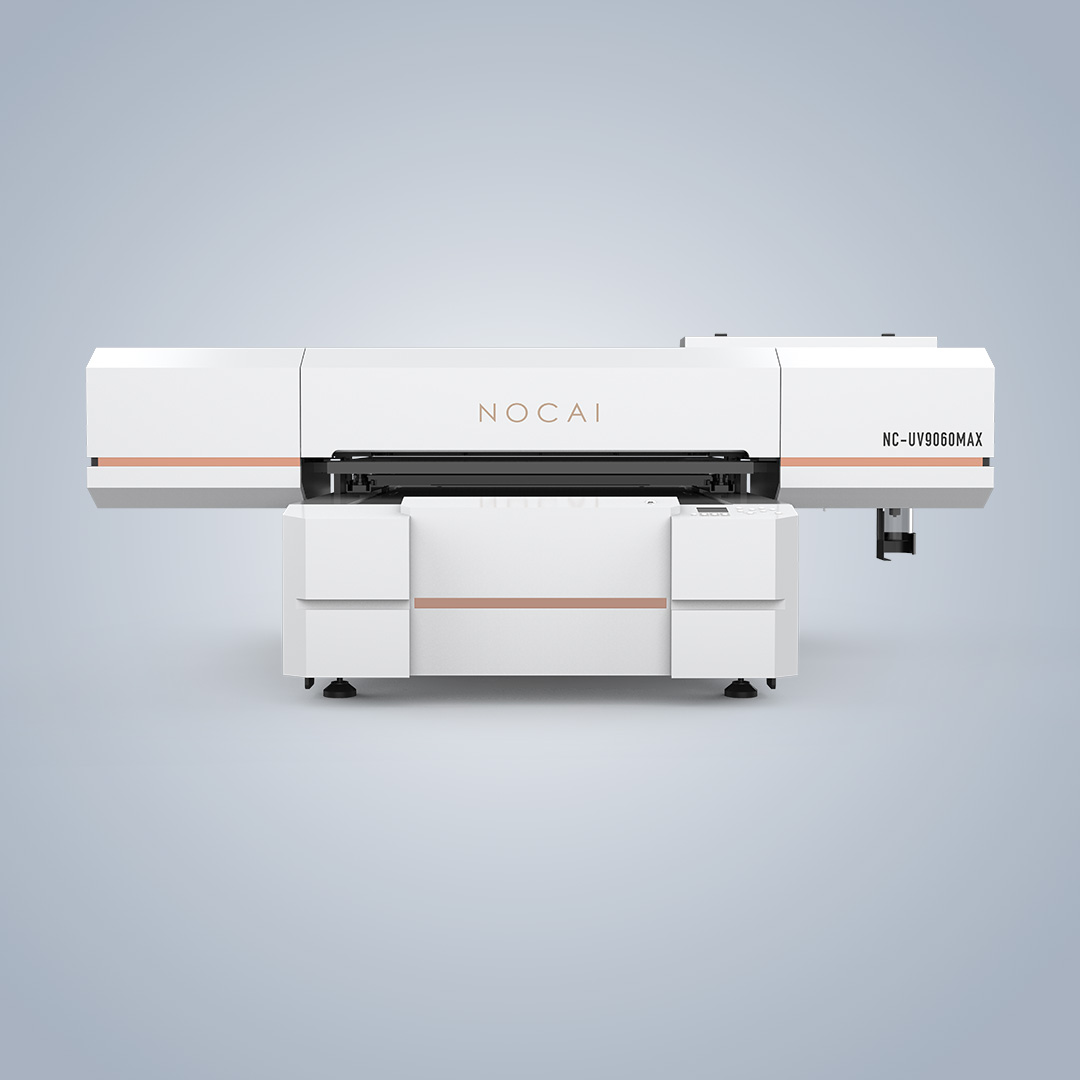
To confirm that a cylinder printing sample represents the expected bulk result, the validation process should measure repeatability, registration, adhesion, color, surface coverage and finish consistency over multiple production runs. The available NC-UV9060MAX information cites automatic alignment, a visual recognition error margin of ±0.1 mm, aging tests, 100% inspection, direct-to-substrate adhesion, 8-color printing and support for height variation. However, it does not include documented cylinder-specific bulk validation data, so that evidence must be generated and recorded separately.
Recommended Validation Framework
A reliable approval process begins with an agreed reference sample. The same artwork, substrate, ink configuration, surface finish and machine settings should then be used to produce repeated cylinder samples under controlled conditions. Each output should be compared with the approved piece for image position, color, coverage, detail, adhesion and overall appearance.
- Run the approved cylinder sample repeatedly and record image placement, registration and surface coverage on every piece.
- Identify the exact cylinder material and test adhesion after printing, since the NC-UV9060MAX is described as supporting direct-to-substrate printing with enhanced adhesion.
- Apply the listed aging-test and 100% inspection procedures, retaining inspection records for both the approved sample and the production batch.
- For drinkware, flasks and similar curved products, assess 360-degree coverage, scratch resistance, adhesion and durability in addition to visual quality.
What the Equipment Data Can and Cannot Demonstrate
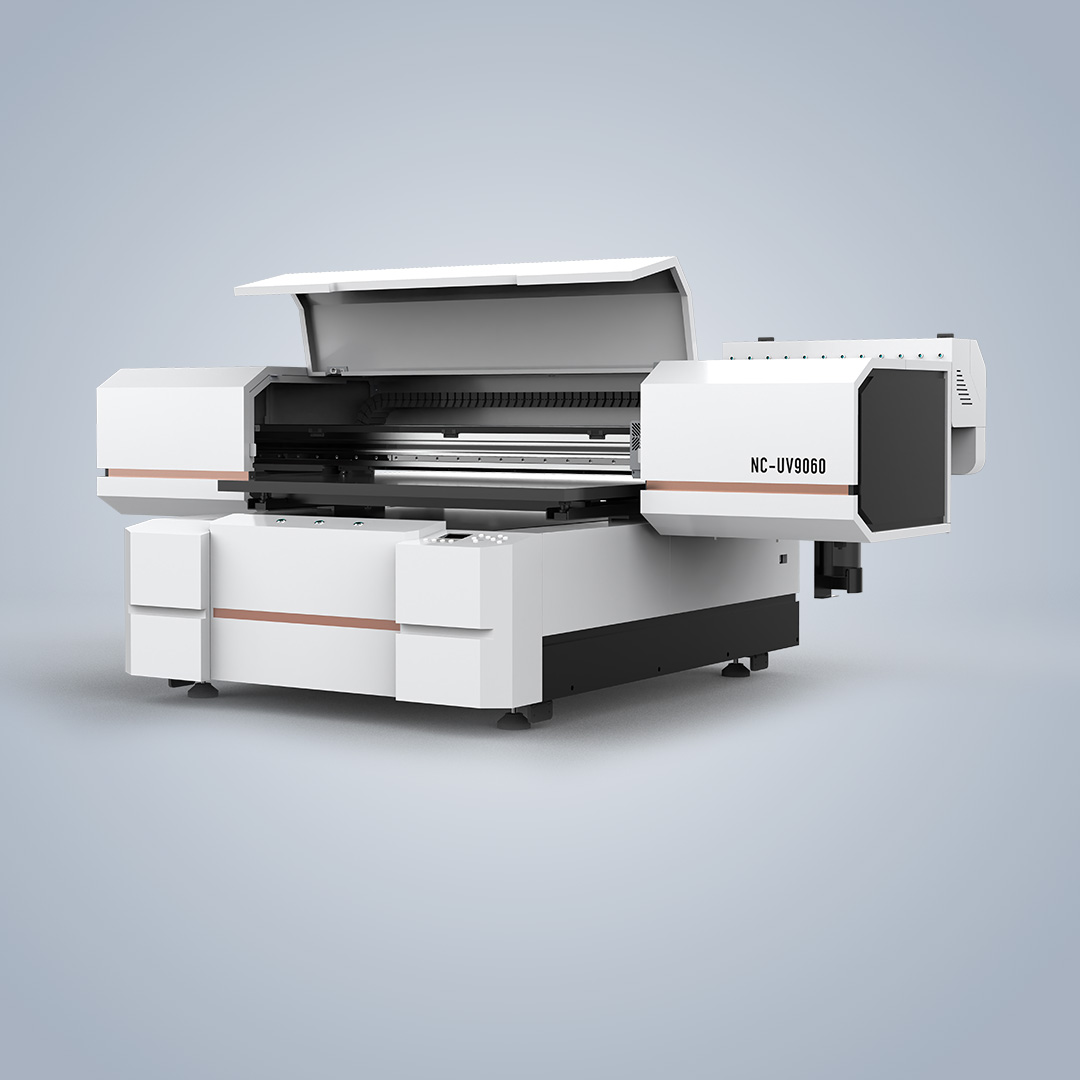
The stated equipment specifications help define the operating range for a validation plan. The NC-UV9060MAX is described as a 900 x 600 mm platform with a maximum print height of 180 mm and support for height differences from 2 to 8 mm. It is also presented as compatible with a range of materials. These details establish machine capabilities, but they do not confirm a particular cylinder attachment, supported cylinder diameter range or production result.
Alignment is one of the most measurable parts of the comparison. High-definition camera scanning identifies material contours and textures, while automatic image alignment is specified with a recognition error margin of ±0.1 mm. During testing, the operator should measure the image location on each item and compare those measurements with the approved reference sample.
Appearance testing should use the same 8-color configuration and the selected glossy relief or matte finish. Reviewers should document color consistency, ink coverage, fine image detail and uniformity of any special effect. Because the supplied material does not state a color tolerance, resolution requirement or cylinder-specific pass limit, these criteria should be agreed before the trial begins.
Adhesion must be evaluated on the actual cylinder substrate rather than inferred only from the machine description. The product information refers to enhanced adhesion and uniform coating for direct-to-substrate printing. A complete report should name the substrate, record the adhesion method, describe any surface defects and confirm whether repeated pieces meet the required standard. No specific adhesion method or acceptance threshold is provided in the available data.
Mechanical and Process Consistency
Repeated operation should also be monitored for registration drift and changes in print quality. The machine is described as using an aluminum alloy frame, precision-molded parts, CNC milling and guide-rail precision maintained within 0.02 mm. These construction features may support stable operation, but they are not, by themselves, proof that a cylinder sample will match bulk output. The validation file should connect these specifications with actual measurements from repeated production.
Nocai states that the NC-UV9060MAX undergoes aging tests and 100% inspection. Its support services include online assistance, video calls, remote control, a user manual, installation video and spare-part replacement video. The approval record should preserve machine settings, substrate information, inspection findings, deviations and corrective actions so that the bulk run can be traced back to the accepted sample conditions.
The company lists ISO certificate 87525Q0164R0M for the design and production of digital printers. It also lists TUV certificate JPTUV-124410, which applies to the NC-UV0609PROII in the United States. These documents provide background on the manufacturing and compliance system, but they are not presented as cylinder-specific performance verification.
Evidence Comparison for Sample-to-Bulk Approval
| Validation factor | Information stated for the equipment | Information required for cylinder approval |
|---|---|---|
| Registration and alignment | Camera-based automatic alignment with a stated recognition error margin of ±0.1 mm | Measured image-position consistency across the approved sample and repeated production pieces |
| Color and finish | Vibrant 8-color output with glossy relief and matte finish options | Defined color tolerance, coverage, detail and finish-uniformity results |
| Product dimensions | 2–8 mm height-variation support and a maximum print height of 180 mm | Verified results for the specified cylinder dimensions and operating conditions |
| Mechanical stability | Guide-rail precision maintained within 0.02 mm and an aluminum alloy frame | Recorded registration and quality stability throughout repeated operation |
| Adhesion and durability | Enhanced adhesion for direct-to-substrate printing is stated | Substrate-specific adhesion, scratch and durability test results |
| Quality control | Aging testing and 100% inspection are listed | Completed inspection records for the reference sample and bulk batch |
| Unresolved evidence | No cylinder-specific result, attachment specification or acceptance limit is supplied | Document the cylinder setup, quantity, test method, measurements and pass criteria |
Frequently Asked Questions
Do the listed NC-UV9060MAX specifications prove that a cylinder sample will match bulk production?
No. The supplied information describes alignment, printing, equipment construction, aging tests and inspection controls, but it does not include a cylinder-specific comparison between an approved sample and repeated bulk output.
Which equipment characteristics are most useful during validation?
The most relevant stated controls are the ±0.1 mm visual recognition error margin, direct-to-substrate adhesion, 8-color printing, height-variation support, aging testing and 100% inspection. These characteristics should be verified through measured production records.
What information is needed for a conclusive result?
The test report should specify the cylinder fixture or setup, diameter and substrate, artwork, ink and finish settings, quantity tested, production conditions, alignment measurements, appearance criteria, adhesion observations and acceptance limits. These details are not included in the supplied product data.
Conclusion and Practical Recommendation
A cylinder printing sample can be considered representative of bulk production only after repeated, documented checks show stable alignment, appearance, surface coverage, adhesion and mechanical performance. The NC-UV9060MAX provides useful equipment specifications and stated quality controls, but cylinder-specific proof still needs to come from a controlled trial and complete inspection record.
Nocai offers direct sales and full industrial-chain distribution. The stated minimum order quantity is one unit, with a listed delivery period of 5–7 days. For technical solutions or support, contact nc05@gznuocai.com.
About Nocai
Guangzhou Nuocai Digital Products Co., Ltd., also known as Nocai, was established in 2009. The company focuses on digital inkjet printing technology research and development, along with printer design, manufacturing, sales and after-sales service. Nocai lists more than 50 professional R&D engineers and designers, five production lines, and product categories including UV printers, UVDTF printers and rotary printers. Listed credentials include ISO 87525Q0164R0M and High-Tech Enterprise Certificate GR202344007615. Its cooperation cases describe customers across multiple industries.
REPORT