







-
 Agriculture
-
 Health-Care
-
 Environment
-
 Construction-Real-Estate
-
 Tools-Hardware
-
 Home-Garden
-
 Furniture
-
 Luggage-Bags-Cases
-
 Medical-devices-Supplies
-
 Gifts-Crafts
-
 Sports-Entertainment
-
 Food-Beverage
-
 Vehicles-Transportation
-
 Power-Transmission
-
 Material-Handling
-
 Renewable-Energy
-
 Safety
-
 Testing-Instrument-Equipment
-
 Construction-Building-Machinery
-
 Pet-Supplies
-
 Personal-Care-Household-Cleaning
-
 Vehicle-Accessories-Electronics-Tools
-
 School-Office-Supplies
-
 Packaging-Printing
-
 Mother-Kids-Toys
-
 Business-Services
-
 Commercial-Equipment-Machinery
-
 Apparel-Accessories
-
 Security
-
 Shoes-Accessories
-
 Vehicle-Parts-Accessories
-
 Jewelry-Eyewear-Watches-Accessories
-
 Lights-Lighting
-
 Fabric-Textile-Raw-Material
-
 Fabrication-Services
-
 Industrial-Machinery
-
 Consumer-Electronics
-
 Electrical-Equipment-Supplies
-
 Electronic-Components-Accessories-Telecommunications
-
 Home-Appliances
-
 Beauty
-
 Chemicals
-
 Rubber-Plastics
-
 Metals-Alloys


























































































































































































































































































































































































































































































































































































- Masonry Materials
- Curtain Walls & Accessories
- Earthwork Products
- Fireproofing Materials
- Heat Insulation Materials
- Plastic Building Materials
- Building Boards
- Soundproofing Materials
- Timber
- Waterproofing Materials
- Balustrades & Handrails
- Bathroom & Kitchen
- Flooring & Accessories
- Tiles & Accessories
- Door, Window & Accessories
- Fireplaces & Stoves
- Floor Heating Systems & Parts
- Stairs & Stair Parts
- Ceilings
- Elevators & Escalators
- Stone
- Countertops, Vanity Tops & Table Tops
- Mosaics
- Metal Building Materials
- Multifunctional Materials
- Ladders & Scaffoldings
- Mouldings
- Corner Guards
- Decorative Films
- Formwork
- Building & Industrial Glass
- Other Construction & Real Estate
- Wallpapers/Wall panels
- HVAC System & Parts
- Outdoor Facilities
- Prefabricated Buildings
- Festive & Party Supplies
- Bathroom Products
- Household Sundries
- Rain Gear
- Garden Supplies
- Household Cleaning Tools & Accessories
- Lighters & Smoking Accessories
- Home Storage & Organization
- Household Scales
- Smart Home Improvement
- Home Textiles
- Kitchenware
- Drinkware & Accessories
- Dinnerware, Coffee & Wine
- Home Decor
- Golf
- Fitness & Body Building
- Amusement Park Facilities
- Billiards, Board Game,Coin Operated Games
- Musical Instruments
- Outdoor Affordable Luxury Sports
- Camping & Hiking
- Fishing
- Sports Safety&Rehabilitation
- Ball Sports Equipments
- Water Sports
- Winter Sports
- Luxury Travel Equipments
- Sports Shoes, Bags & Accessories
- Cycling
- Other Sports & Entertainment Products
- Artificial Grass&Sports Flooring&Sports Court Equipment
- Scooters
- Food Ingredients
- Honey & Honey Products
- Snacks
- Nuts & Kernels
- Seafood
- Plant & Animal Oil
- Beverages
- Fruit & Vegetable Products
- Frog & Escargot
- Bean Products
- Egg Products
- Dairy Products
- Seasonings & Condiments
- Canned Food
- Instant Food
- Baked Goods
- Other Food & Beverage
- Meat & Poultry
- Confectionery
- Grain Products
- Feminie Care
- Hair Care & Styling
- Body Care
- Hands & Feet Care
- Hygiene Products
- Men's Grooming
- Laundry Cleaning Supplies
- Travel Size & Gift Sets
- Room Deodorizers
- Other Personal Care Products
- Pest Control Products
- Special Household Cleaning
- Floor Cleaning
- Kitchen & Bathroom Cleaning
- Oral Care
- Bath Supplies
- Yellow Pages
- Correction Supplies
- Office Binding Supplies
- Office Cutting Supplies
- Board Erasers
- Office Adhesives & Tapes
- Education Supplies
- Pencil Cases & Bags
- Notebooks & Writing Pads
- File Folder Accessories
- Calendars
- Writing Accessories
- Commercial Office Supplies
- Pencil Sharpeners
- Pens
- Letter Pad/Paper
- Paper Envelopes
- Desk Organizers
- Pencils
- Markers & Highlighters
- Filing Products
- Art Supplies
- Easels
- Badge Holder & Accessories
- Office Paper
- Printer Supplies
- Book Covers
- Other Office & School Supplies
- Stationery Set
- Boards
- Clipboards
- Stamps
- Drafting Supplies
- Stencils
- Electronic Dictionary
- Books
- Map
- Magazines
- Calculators
- Baby & Toddler Toys
- Educational Toys
- Classic Toys
- Dress Up & Pretend Play
- Toy Vehicle
- Stuffed Animals & Plush Toys
- Outdoor Toys & Structures
- Balloons & Accessories
- Baby Food
- Children's Clothing
- Baby Supplies & Products
- Maternity Clothes
- Kids Shoes
- Baby Care
- Novelty & Gag Toys
- Dolls & Accessories
- Puzzle & Games
- Blocks & Model Building Toys
- Toddler Clothing
- Baby Clothing
- Kids' Luggage & Bags
- Arts, Crafts & DIY Toys
- Action & Toy Figures
- Baby Appliances
- Hobbies & Models
- Remote Control Toys
- Promotional Toys
- Pregnancy & Maternity
- Hygiene Products
- Kid's Textile&Bedding
- Novelty & Special Use
- Toy Weapons
- Baby Gifts
- Baby Storage & Organization
- Auto Drive Systems
- ATV/UTV Parts & Accessories
- Marine Parts & Accessories
- Other Auto Parts
- Trailer Parts & Accessories
- Auto Transmission Systems
- Train Parts & Accessories
- Universal Parts
- Railway Parts & Accessories
- Auto Brake Systems
- Aviation Parts & Accessories
- Truck Parts & Accessories
- Auto Suspension Systems
- Auto Lighting Systems
- New Energy Vehicle Parts & Accessories
- Auto Steering Systems
- Wheels, Tires & Accessories
- Bus Parts & Accessories
- Auto Performance Parts
- Cooling System
- Go-Kart & Kart Racer Parts & Accessories
- Air Conditioning Systems
- Heavy Duty Vehicle Parts & Accessories
- Auto Electrical Systems
- Auto Body Systems
- Auto Engine Systems
- Container Parts & Accessories
- Motorcycle Parts & Accessories
- Refrigeration & Heat Exchange Equipment
- Machine Tool Equipment
- Food & Beverage Machinery
- Agricultural Machinery & Equipment
- Apparel & Textile Machinery
- Chemical Machinery
- Packaging Machines
- Paper Production Machinery
- Plastic & Rubber Processing Machinery
- Industrial Robots
- Electronic Products Machinery
- Metal & Metallurgy Machinery
- Woodworking Machinery
- Home Product Manufacturing Machinery
- Machinery Accessories
- Environmental Machinery
- Machinery Service
- Electrical Equipment Manufacturing Machinery
- Industrial Compressors & Parts
- Tobacco & Cigarette Machinery
- Production Line
- Used Industrial Machinery
- Electronics Production Machinery
- Other Machinery & Industrial Equipment
- Camera, Photo & Accessories
- Portable Audio, Video & Accessories
- Television, Home Audio, Video & Accessories
- Video Games & Accessories
- Mobile Phone & Accessories
- Electronic Publications
- Earphone & Headphone & Accessories
- Speakers & Accessories
- Smart Electronics
- TV Receivers & Accessories
- Mobile Phone & Computer Repair Parts
- Chargers, Batteries & Power Supplies
- Used Electronics
- VR, AR, MR Hardware & Software
- Projectors & Presentation Equipments
- Other Consumer Electronics
- Cables & Commonly Used Accessories
- Computer Hardware & Software
- Displays, Signage and Optoelectronics
- Discrete Semiconductors
- Wireless & IoT Module and Products
- Telecommunications
- Connectors, Terminals & Accessories
- Development Boards, Electronic Modules and Kits
- Circuit Protection
- Sensors
- Isolators
- Audio Components and Products
- Integrated Circuits
- Power Supplies
- Relays
- RF, Microwave and RFID
- Electronic Accessories & Supplies
- Passive Components
- PCB & PCBA
- Air Quality Appliances
- Home Appliance Parts
- Heating & Cooling Appliances
- Small Kitchen Appliances
- Laundry Appliances
- Water Heaters
- Water Treatment Appliances
- Refrigerators & Freezers
- Personal Care & Beauty Appliances
- Major Kitchen Appliances
- Cleaning Appliances
- Second-hand Appliances
- Smart Home Appliances
- Other Home Appliances
- Energy Chemicals
- Inorganic Chemicals
- Basic Organic Chemicals
- Agrochemicals
- Admixture & Additives
- Catalysts & Chemical Auxiliary Agents
- Pigments & Dyestuff
- Coating & Paint
- Daily Chemicals
- Polymer
- Organic Intermediate
- Adhesives & Sealants
- Chemical Waste
- Biological Chemical Products
- Surface Treatment Chemicals
- Painting & Coating
- Chemical Reagents
- Flavor & Fragrance
- Non-Explosive Demolition Agents
- Other Chemicals
- Custom Chemical Services

How to Verify a Men’s Sunglasses Factory Is Genuine, Ethical, and Audit-Ready
Choosing a reliable men’s sunglasses factory requires more than reviewing a catalog, website, or product claim. Buyers should verify the supplier’s legal identity, actual operating location, manufacturing capability, quality-management process, labor practices, and export records through documents that can be checked in an audit.
A factory should be considered genuine, ethical, and audit-ready only when its statements can be supported by current, traceable evidence. Product photos, UV400 labels, claimed standards, and marketing descriptions may be useful starting points, but they are not independent proof of compliance or manufacturing capability.
Start With Factory Identity and Operational Consistency
The first step is to confirm that the supplier’s company information remains consistent across registration documents, quotations, invoices, banking details, emails, factory addresses, and export paperwork. A legitimate supplier should be able to identify its legal business name, physical production site, responsible representatives, main product categories, and production workflow without contradictions.
During a remote review or factory visit, ask for registration records, location details, factory access arrangements, key contact information, and evidence of operating history. These records help distinguish an actual manufacturer from a trading company, an unverified intermediary, or a supplier using incomplete business information.
Verify That Product Capability Matches the Men’s Sunglasses Range
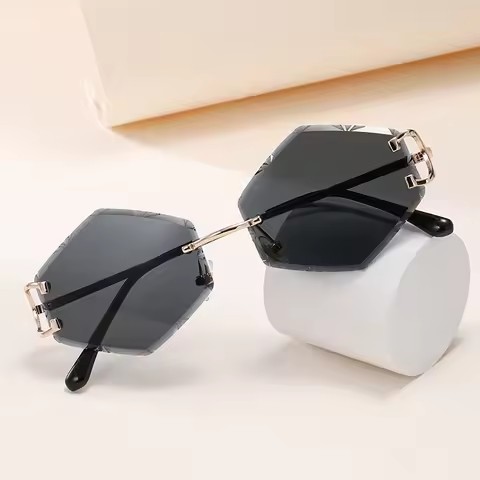
Product relevance is essential when assessing a men’s sunglasses supplier. The available product information refers to custom-logo retro rimless sunglasses with gradient lenses, UV400 positioning, metal legs, and hexagon-cutting lens styling. These details should be backed by technical specifications, approved samples, material information, artwork approvals, and production records.
For OEM or ODM orders, buyers should also examine logo files, sample confirmation records, mold-development information where applicable, revision histories, and written approval of final specifications. Product titles alone cannot demonstrate that the same style can be produced consistently at scale.
Review Quality Controls From Material Intake to Shipment
An audit-ready sunglasses factory should maintain records for every major quality checkpoint. This normally includes incoming-material checks, in-process monitoring, random inspections, final inspection, packing verification, and shipment-release approval. The goal is to trace a completed order from customer requirements through manufacturing and delivery.
The available information states that products are spot-checked before packing and shipment. To validate this claim, request the actual inspection forms, defect records, packing checklists, batch references, and shipment documents related to recent orders. A reliable quality system should show how defects are identified, corrected, and prevented from recurring.
Evidence to Request for Quality Verification
- Material receiving and component inspection records
- Production-line monitoring sheets and defect-control logs
- Final product inspection reports for sunglasses orders
- Packaging and labeling verification documents
- Shipment-release records linked to specific order or batch numbers
Assess Ethical Practices Separately From Product Quality
Good product quality does not automatically confirm ethical manufacturing. To assess labor and workplace practices, buyers should request accessible records covering employee policies, working hours, wage payments, health and safety procedures, employee grievance channels, and management of subcontracted production.
If a supplier cannot provide these documents, refuses access to relevant production areas, or cannot explain how outsourced processes are controlled, its ethical status should remain unverified. Ethical verification depends on documented evidence rather than verbal assurances.
Distinguish Compliance Claims From Confirmed Certification
Men’s sunglasses may be marketed with statements such as UV400 protection or testing against CE, FDA, and AS/NZS requirements. These statements should be evaluated carefully. A compliance claim is not the same as an active certificate or a valid test report for the exact product and production batch being purchased.
Ask for current test reports, certificate numbers, issuing-body details, product scope, validity dates, and documentation linking the reports to the relevant sunglasses model. The available information refers to testing standards, but it does not list certification records. Therefore, compliance should not be treated as confirmed until supporting documents have been reviewed.
Audit Checklist: Available Information and Required Evidence
| Review Area | Documents or Records to Check | Position Based on Available Information |
|---|---|---|
| Legal identity | Business registration, operating address, authorized contacts, and factory access details | Company name, Yiwu address, and contact information are available; registration evidence is not supplied. |
| Men’s sunglasses capability | Specifications, samples, logo approvals, production records, and inspection reports | Sunglasses, reading glasses, anti-blue-light glasses, and chromic anti-blue-light glasses are listed; product-specific inspection documents are not available. |
| Quality management | Incoming checks, process controls, final inspection, packing checks, and shipment authorization | Pre-shipment spot inspection is stated, but corresponding audit records are not provided. |
| Labor and ethics | Employment policies, payroll, attendance, safety procedures, and grievance records | No supporting ethical-practice documentation is specified. |
| Compliance credentials | Certificates, test reports, issuing-body details, and applicable product scope | No certificates are listed in the available information. |
| Delivery capability | Production planning, freight documents, shipment history, and responsibility allocation | Sea freight, land transportation, and air freight are identified as available shipping methods. |
Evaluate Design and Development Claims
Yiwu Green Shine Arts & Crafts Co., Ltd states that its development activities include concept design, structural improvement, trial sample production, and mold customization. These capabilities can be important for private-label eyewear projects, but they should be verified through design drawings, sample files, change-control documents, mold records, and production evidence.
A buyer should confirm that design changes can be tracked from the initial customer request to the approved sample and final production version. This traceability reduces the risk of receiving sunglasses that differ from the approved design, materials, branding, or packaging requirements.
Frequently Asked Questions
What confirms that a men’s sunglasses factory is genuine?
A verifiable legal identity, real operating address, accountable personnel, relevant manufacturing evidence, and auditable production records provide the strongest basis for verification. A website, product listing, or catalog image by itself does not prove factory status.
Does a UV400 claim prove sunglasses compliance?
No. UV400 is a product claim and should be supported by applicable test reports, confirmed product specifications, sample evaluation, and batch-related documentation. Buyers should not assume compliance based only on wording in a listing.
How can I determine whether a supplier is ready for an audit?
Prepare a document request list and test whether records can be traced from a customer order through materials, production, inspection, packing, and shipment. An audit-ready supplier should quickly provide organized evidence for workforce management, process controls, quality checks, and logistics.
Recommended Verification Process
Use a staged due-diligence process before placing a significant order. First, confirm the supplier’s legal identity and operational address. Next, inspect documentation for the specific men’s sunglasses products you intend to buy. Then review the quality trail from material receipt to shipment, followed by separate checks of labor practices and compliance credentials.
Yiwu Green Shine Arts & Crafts Co., Ltd lists global market activity and sea, land, and air freight options. These operational statements should be checked against recent, order-specific planning and shipping records. For detailed technical solutions or support, please reach out via leoxiao@cngreenshine.com.
About Us
Yiwu Green Shine Arts & Crafts Co., Ltd is an eyewear supplier established in 2016 and located in Yiwu, Zhejiang Province. The company states that it focuses on fashion eyewear, including sunglasses, optical frames, acetate sunglasses, children’s sunglasses, and reading glasses. Its listed factory area is 130 square meters, and its primary markets include the United States, Spain, Germany, Australia, Italy, France, and Ireland. The company also states that OEM and ODM custom orders are accepted.

REPORT