







-
 Agriculture
-
 Health-Care
-
 Environment
-
 Construction-Real-Estate
-
 Tools-Hardware
-
 Home-Garden
-
 Furniture
-
 Luggage-Bags-Cases
-
 Medical-devices-Supplies
-
 Gifts-Crafts
-
 Sports-Entertainment
-
 Food-Beverage
-
 Vehicles-Transportation
-
 Power-Transmission
-
 Material-Handling
-
 Renewable-Energy
-
 Safety
-
 Testing-Instrument-Equipment
-
 Construction-Building-Machinery
-
 Pet-Supplies
-
 Personal-Care-Household-Cleaning
-
 Vehicle-Accessories-Electronics-Tools
-
 School-Office-Supplies
-
 Packaging-Printing
-
 Mother-Kids-Toys
-
 Business-Services
-
 Commercial-Equipment-Machinery
-
 Apparel-Accessories
-
 Security
-
 Shoes-Accessories
-
 Vehicle-Parts-Accessories
-
 Jewelry-Eyewear-Watches-Accessories
-
 Lights-Lighting
-
 Fabric-Textile-Raw-Material
-
 Fabrication-Services
-
 Industrial-Machinery
-
 Consumer-Electronics
-
 Electrical-Equipment-Supplies
-
 Electronic-Components-Accessories-Telecommunications
-
 Home-Appliances
-
 Beauty
-
 Chemicals
-
 Rubber-Plastics
-
 Metals-Alloys


























































































































































































































































































































































































































































































































































































- Masonry Materials
- Curtain Walls & Accessories
- Earthwork Products
- Fireproofing Materials
- Heat Insulation Materials
- Plastic Building Materials
- Building Boards
- Soundproofing Materials
- Timber
- Waterproofing Materials
- Balustrades & Handrails
- Bathroom & Kitchen
- Flooring & Accessories
- Tiles & Accessories
- Door, Window & Accessories
- Fireplaces & Stoves
- Floor Heating Systems & Parts
- Stairs & Stair Parts
- Ceilings
- Elevators & Escalators
- Stone
- Countertops, Vanity Tops & Table Tops
- Mosaics
- Metal Building Materials
- Multifunctional Materials
- Ladders & Scaffoldings
- Mouldings
- Corner Guards
- Decorative Films
- Formwork
- Building & Industrial Glass
- Other Construction & Real Estate
- Wallpapers/Wall panels
- HVAC System & Parts
- Outdoor Facilities
- Prefabricated Buildings
- Festive & Party Supplies
- Bathroom Products
- Household Sundries
- Rain Gear
- Garden Supplies
- Household Cleaning Tools & Accessories
- Lighters & Smoking Accessories
- Home Storage & Organization
- Household Scales
- Smart Home Improvement
- Home Textiles
- Kitchenware
- Drinkware & Accessories
- Dinnerware, Coffee & Wine
- Home Decor
- Golf
- Fitness & Body Building
- Amusement Park Facilities
- Billiards, Board Game,Coin Operated Games
- Musical Instruments
- Outdoor Affordable Luxury Sports
- Camping & Hiking
- Fishing
- Sports Safety&Rehabilitation
- Ball Sports Equipments
- Water Sports
- Winter Sports
- Luxury Travel Equipments
- Sports Shoes, Bags & Accessories
- Cycling
- Other Sports & Entertainment Products
- Artificial Grass&Sports Flooring&Sports Court Equipment
- Scooters
- Food Ingredients
- Honey & Honey Products
- Snacks
- Nuts & Kernels
- Seafood
- Plant & Animal Oil
- Beverages
- Fruit & Vegetable Products
- Frog & Escargot
- Bean Products
- Egg Products
- Dairy Products
- Seasonings & Condiments
- Canned Food
- Instant Food
- Baked Goods
- Other Food & Beverage
- Meat & Poultry
- Confectionery
- Grain Products
- Feminie Care
- Hair Care & Styling
- Body Care
- Hands & Feet Care
- Hygiene Products
- Men's Grooming
- Laundry Cleaning Supplies
- Travel Size & Gift Sets
- Room Deodorizers
- Other Personal Care Products
- Pest Control Products
- Special Household Cleaning
- Floor Cleaning
- Kitchen & Bathroom Cleaning
- Oral Care
- Bath Supplies
- Yellow Pages
- Correction Supplies
- Office Binding Supplies
- Office Cutting Supplies
- Board Erasers
- Office Adhesives & Tapes
- Education Supplies
- Pencil Cases & Bags
- Notebooks & Writing Pads
- File Folder Accessories
- Calendars
- Writing Accessories
- Commercial Office Supplies
- Pencil Sharpeners
- Pens
- Letter Pad/Paper
- Paper Envelopes
- Desk Organizers
- Pencils
- Markers & Highlighters
- Filing Products
- Art Supplies
- Easels
- Badge Holder & Accessories
- Office Paper
- Printer Supplies
- Book Covers
- Other Office & School Supplies
- Stationery Set
- Boards
- Clipboards
- Stamps
- Drafting Supplies
- Stencils
- Electronic Dictionary
- Books
- Map
- Magazines
- Calculators
- Baby & Toddler Toys
- Educational Toys
- Classic Toys
- Dress Up & Pretend Play
- Toy Vehicle
- Stuffed Animals & Plush Toys
- Outdoor Toys & Structures
- Balloons & Accessories
- Baby Food
- Children's Clothing
- Baby Supplies & Products
- Maternity Clothes
- Kids Shoes
- Baby Care
- Novelty & Gag Toys
- Dolls & Accessories
- Puzzle & Games
- Blocks & Model Building Toys
- Toddler Clothing
- Baby Clothing
- Kids' Luggage & Bags
- Arts, Crafts & DIY Toys
- Action & Toy Figures
- Baby Appliances
- Hobbies & Models
- Remote Control Toys
- Promotional Toys
- Pregnancy & Maternity
- Hygiene Products
- Kid's Textile&Bedding
- Novelty & Special Use
- Toy Weapons
- Baby Gifts
- Baby Storage & Organization
- Auto Drive Systems
- ATV/UTV Parts & Accessories
- Marine Parts & Accessories
- Other Auto Parts
- Trailer Parts & Accessories
- Auto Transmission Systems
- Train Parts & Accessories
- Universal Parts
- Railway Parts & Accessories
- Auto Brake Systems
- Aviation Parts & Accessories
- Truck Parts & Accessories
- Auto Suspension Systems
- Auto Lighting Systems
- New Energy Vehicle Parts & Accessories
- Auto Steering Systems
- Wheels, Tires & Accessories
- Bus Parts & Accessories
- Auto Performance Parts
- Cooling System
- Go-Kart & Kart Racer Parts & Accessories
- Air Conditioning Systems
- Heavy Duty Vehicle Parts & Accessories
- Auto Electrical Systems
- Auto Body Systems
- Auto Engine Systems
- Container Parts & Accessories
- Motorcycle Parts & Accessories
- Refrigeration & Heat Exchange Equipment
- Machine Tool Equipment
- Food & Beverage Machinery
- Agricultural Machinery & Equipment
- Apparel & Textile Machinery
- Chemical Machinery
- Packaging Machines
- Paper Production Machinery
- Plastic & Rubber Processing Machinery
- Industrial Robots
- Electronic Products Machinery
- Metal & Metallurgy Machinery
- Woodworking Machinery
- Home Product Manufacturing Machinery
- Machinery Accessories
- Environmental Machinery
- Machinery Service
- Electrical Equipment Manufacturing Machinery
- Industrial Compressors & Parts
- Tobacco & Cigarette Machinery
- Production Line
- Used Industrial Machinery
- Electronics Production Machinery
- Other Machinery & Industrial Equipment
- Camera, Photo & Accessories
- Portable Audio, Video & Accessories
- Television, Home Audio, Video & Accessories
- Video Games & Accessories
- Mobile Phone & Accessories
- Electronic Publications
- Earphone & Headphone & Accessories
- Speakers & Accessories
- Smart Electronics
- TV Receivers & Accessories
- Mobile Phone & Computer Repair Parts
- Chargers, Batteries & Power Supplies
- Used Electronics
- VR, AR, MR Hardware & Software
- Projectors & Presentation Equipments
- Other Consumer Electronics
- Cables & Commonly Used Accessories
- Computer Hardware & Software
- Displays, Signage and Optoelectronics
- Discrete Semiconductors
- Wireless & IoT Module and Products
- Telecommunications
- Connectors, Terminals & Accessories
- Development Boards, Electronic Modules and Kits
- Circuit Protection
- Sensors
- Isolators
- Audio Components and Products
- Integrated Circuits
- Power Supplies
- Relays
- RF, Microwave and RFID
- Electronic Accessories & Supplies
- Passive Components
- PCB & PCBA
- Air Quality Appliances
- Home Appliance Parts
- Heating & Cooling Appliances
- Small Kitchen Appliances
- Laundry Appliances
- Water Heaters
- Water Treatment Appliances
- Refrigerators & Freezers
- Personal Care & Beauty Appliances
- Major Kitchen Appliances
- Cleaning Appliances
- Second-hand Appliances
- Smart Home Appliances
- Other Home Appliances
- Energy Chemicals
- Inorganic Chemicals
- Basic Organic Chemicals
- Agrochemicals
- Admixture & Additives
- Catalysts & Chemical Auxiliary Agents
- Pigments & Dyestuff
- Coating & Paint
- Daily Chemicals
- Polymer
- Organic Intermediate
- Adhesives & Sealants
- Chemical Waste
- Biological Chemical Products
- Surface Treatment Chemicals
- Painting & Coating
- Chemical Reagents
- Flavor & Fragrance
- Non-Explosive Demolition Agents
- Other Chemicals
- Custom Chemical Services

Inside a Quality-Driven Heated Towel Rail Factory: Essential In-House Testing Equipment & QC Standards
Overview: Why In-House Quality Control Is Essential
Delivering high-performance electric towel warmers requires rigorous quality assurance supported by modern laboratory instrumentation. A top-tier heated towel rail factory operates over 200 units of specialized manufacturing and R&D equipment to enforce a robust 14-step quality control protocol. Key testing systems—such as CE-LVD electrical safety analyzers, IP44 moisture ingress chambers, carbon fiber thermal controllers, and neutral salt spray test apparatus—ensure that 304 stainless steel structures and premium finishes like PVD brushed brass consistently exceed global market expectations.
Key Highlights & Solutions
- Certified Electrical Safety: High-potential (hipot) units, earth continuity testers, and water ingress chambers verify full compliance with CE-LVD safety criteria.
- Optimized Heating & Efficiency: Precise thermal logging confirms that carbon fiber heating elements maintain an ideal 45–60°C operating surface temperature with low energy consumption (~0.1 kWh).
- Superior Corrosion Protection: Salt fog testing chambers evaluate PVD coatings (brushed brass, brushed grey, matte black) on 304 stainless steel to prevent rust in high-humidity environments like luxury hotels and residential bathrooms.
- End-to-End 14-Phase Inspection: Calibrated gauges measure raw material dimensions, timer module integrity (1–4 hours), and wiring quality throughout every assembly phase.
In-Depth Technical Analysis of Factory Testing Capabilities
Ensuring operational reliability across mass production demands an integrated R&D laboratory operating in parallel with automated lines. At Foshan Pinshi Sanitary Ware Co., Ltd., an expansive 20,000 m² production facility houses advanced testing infrastructure designed to evaluate both electrical performance and physical durability. For flagship products like the ODO-R14 Heated Towel Rail, specialized testing systems rigorously monitor dry carbon fiber heating elements enclosed within a 580*90*700mm 304 stainless steel frame.
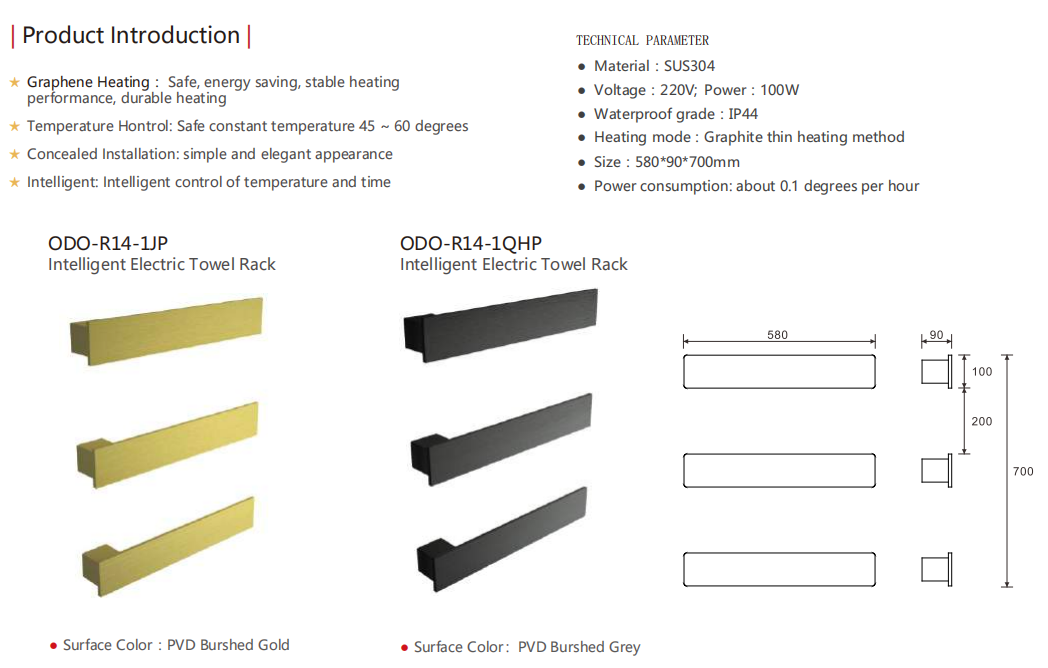
Electrical safety testing remains the foundation of factory compliance. Automated dielectric insulation and leakage current equipment test each 100W unit under simulated high-voltage fluctuations across various global standards (110V–120V / 220V–240V). In addition, dedicated water ingress chambers subject units to intense humidity to validate the IP44 waterproof rating, ensuring internal electronics remain fully isolated from splash water in humid shower rooms and commercial SPAs.
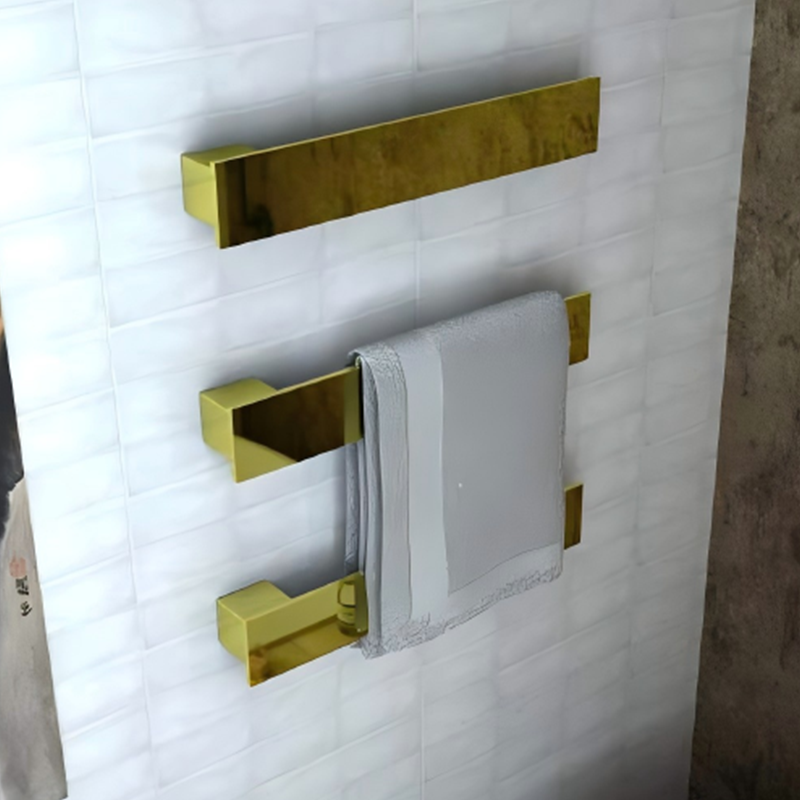
Thermal dynamics and control systems are evaluated using multi-channel heat loggers and infrared imaging. These instruments track how effectively the carbon fiber heating technology warms up the frame to a steady 45–60°C range. Integrated 1-to-4-hour timer modules undergo continuous cycle endurance testing to ensure long-term relay stability. This stringent testing regime underpins compliance with international certifications, such as the Heated Towel Rack CE-LVD Certificate (FTS22LC-8881S), along with key design utility patents (including Patent Certificate 15269911 for embedded towel cabinets and 16423119 for swivel rotating rails).
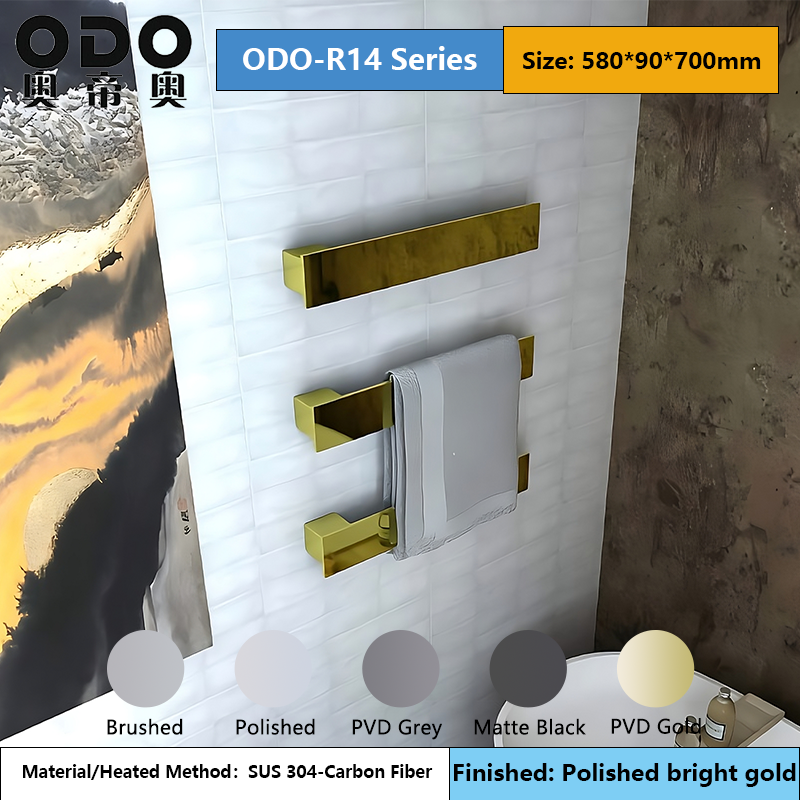
Surface durability is validated inside accelerated salt spray chambers. Finishes produced through physical vapor deposition (PVD), electroplating, or baked enamel undergo prolonged saline exposure to test coating adhesion and corrosion resistance. This rigorous process guarantees product longevity for major international commercial contracts, such as the Dubai Palm Jumeirah 5-Star Hotel Project (380 smart units supplied) and the Warsaw Chain Hotel Renovation Project (260 wall-mounted units delivered).
Technical Feature Comparison
| Testing Parameter / Specification | ODO-R14 Factory Standard | Industry Commercial Average |
|---|---|---|
| Heating Technology & Power | Dry Carbon Fiber Heating / 100W | Fluid-Filled Heating Element / 150W–250W |
| Energy Consumption | ~0.1 kWh per hour | ~0.25 kWh per hour |
| Temperature Regulation | 45°C – 60°C (Adjustable/Customizable) | 50°C Fixed Non-Adjustable |
| Waterproof Testing Level | IP44 Certified Moisture Protection | IP22 or Basic Uncertified Protection |
| Quality Control Workflow | 14 In-House Quality Inspection Steps | 3–5 Basic Sampling Inspections |
| Material & Surface Finish | 304 Stainless Steel (PVD Brass/Grey, Lacquer, Polished) | 201 Stainless Steel or Low-Grade Alloy |
Frequently Asked Questions (FAQ)
What specific electrical safety tests are mandatory before shipping heated towel racks?
Every unit undergoes 100% inline electrical safety testing, including dielectric voltage withstand tests, earth bonding continuity checks, insulation resistance verification, and IP44 water spray testing to guarantee safe operation in wet environments.
How is carbon fiber heating performance verified in the lab?
Multi-channel thermal sensors continuously record surface heat distribution and ramp-up times, ensuring the carbon fiber wire reaches the specified 45–60°C target temperature quickly while maintaining a low power draw of approximately 0.1 kWh.
Which apparatus tests the longevity of decorative PVD surface finishes?
Salt spray environmental chambers expose PVD-coated 304 stainless steel samples to highly corrosive saline fog, ensuring long-term finish integrity before batch manufacturing begins.
Summary & Supply Recommendations
In-house testing equipment serves as the cornerstone of premium towel warmer manufacturing, shielding wholesalers, brand owners, and engineering contractors from warranty risks and field failure rates. Partnering with an established manufacturer equipped with full laboratory capabilities ensures reliable IP44 protection, minimal 100W power consumption, and long-lasting PVD surface treatments. Operating under ISO9001 and 6S operational frameworks, the factory provides comprehensive OEM/ODM solutions with flexible order terms (MOQ 50 units for standard models), a 2-Year Product Warranty, available spare parts, and dedicated technical assistance. For inquiries or technical consultations, contact charlene@seosodo.com.
Company Overview
Established in 2014, Foshan Pinshi Sanitary Ware Co., Ltd. is a leading sanitary ware manufacturer operating production hubs across Foshan, Zhongshan, and Jiangmen. Employing 245 staff across a 20,000 square meter footprint with 20 production lines and over 200 R&D and testing machines, the facility generates a monthly capacity of 100,000 units. Driven by a 20-person R&D team holding over 50 patents and multiple CE certificates, the business exports 80% of its total output across Europe, North America, the Middle East, and Southeast Asia. 
REPORT