







-
 Agriculture
-
 Health-Care
-
 Environment
-
 Construction-Real-Estate
-
 Tools-Hardware
-
 Home-Garden
-
 Furniture
-
 Luggage-Bags-Cases
-
 Medical-devices-Supplies
-
 Gifts-Crafts
-
 Sports-Entertainment
-
 Food-Beverage
-
 Vehicles-Transportation
-
 Power-Transmission
-
 Material-Handling
-
 Renewable-Energy
-
 Safety
-
 Testing-Instrument-Equipment
-
 Construction-Building-Machinery
-
 Pet-Supplies
-
 Personal-Care-Household-Cleaning
-
 Vehicle-Accessories-Electronics-Tools
-
 School-Office-Supplies
-
 Packaging-Printing
-
 Mother-Kids-Toys
-
 Business-Services
-
 Commercial-Equipment-Machinery
-
 Apparel-Accessories
-
 Security
-
 Shoes-Accessories
-
 Vehicle-Parts-Accessories
-
 Jewelry-Eyewear-Watches-Accessories
-
 Lights-Lighting
-
 Fabric-Textile-Raw-Material
-
 Fabrication-Services
-
 Industrial-Machinery
-
 Consumer-Electronics
-
 Electrical-Equipment-Supplies
-
 Electronic-Components-Accessories-Telecommunications
-
 Home-Appliances
-
 Beauty
-
 Chemicals
-
 Rubber-Plastics
-
 Metals-Alloys


























































































































































































































































































































































































































































































































































































- Masonry Materials
- Curtain Walls & Accessories
- Earthwork Products
- Fireproofing Materials
- Heat Insulation Materials
- Plastic Building Materials
- Building Boards
- Soundproofing Materials
- Timber
- Waterproofing Materials
- Balustrades & Handrails
- Bathroom & Kitchen
- Flooring & Accessories
- Tiles & Accessories
- Door, Window & Accessories
- Fireplaces & Stoves
- Floor Heating Systems & Parts
- Stairs & Stair Parts
- Ceilings
- Elevators & Escalators
- Stone
- Countertops, Vanity Tops & Table Tops
- Mosaics
- Metal Building Materials
- Multifunctional Materials
- Ladders & Scaffoldings
- Mouldings
- Corner Guards
- Decorative Films
- Formwork
- Building & Industrial Glass
- Other Construction & Real Estate
- Wallpapers/Wall panels
- HVAC System & Parts
- Outdoor Facilities
- Prefabricated Buildings
- Festive & Party Supplies
- Bathroom Products
- Household Sundries
- Rain Gear
- Garden Supplies
- Household Cleaning Tools & Accessories
- Lighters & Smoking Accessories
- Home Storage & Organization
- Household Scales
- Smart Home Improvement
- Home Textiles
- Kitchenware
- Drinkware & Accessories
- Dinnerware, Coffee & Wine
- Home Decor
- Golf
- Fitness & Body Building
- Amusement Park Facilities
- Billiards, Board Game,Coin Operated Games
- Musical Instruments
- Outdoor Affordable Luxury Sports
- Camping & Hiking
- Fishing
- Sports Safety&Rehabilitation
- Ball Sports Equipments
- Water Sports
- Winter Sports
- Luxury Travel Equipments
- Sports Shoes, Bags & Accessories
- Cycling
- Other Sports & Entertainment Products
- Artificial Grass&Sports Flooring&Sports Court Equipment
- Scooters
- Food Ingredients
- Honey & Honey Products
- Snacks
- Nuts & Kernels
- Seafood
- Plant & Animal Oil
- Beverages
- Fruit & Vegetable Products
- Frog & Escargot
- Bean Products
- Egg Products
- Dairy Products
- Seasonings & Condiments
- Canned Food
- Instant Food
- Baked Goods
- Other Food & Beverage
- Meat & Poultry
- Confectionery
- Grain Products
- Feminie Care
- Hair Care & Styling
- Body Care
- Hands & Feet Care
- Hygiene Products
- Men's Grooming
- Laundry Cleaning Supplies
- Travel Size & Gift Sets
- Room Deodorizers
- Other Personal Care Products
- Pest Control Products
- Special Household Cleaning
- Floor Cleaning
- Kitchen & Bathroom Cleaning
- Oral Care
- Bath Supplies
- Yellow Pages
- Correction Supplies
- Office Binding Supplies
- Office Cutting Supplies
- Board Erasers
- Office Adhesives & Tapes
- Education Supplies
- Pencil Cases & Bags
- Notebooks & Writing Pads
- File Folder Accessories
- Calendars
- Writing Accessories
- Commercial Office Supplies
- Pencil Sharpeners
- Pens
- Letter Pad/Paper
- Paper Envelopes
- Desk Organizers
- Pencils
- Markers & Highlighters
- Filing Products
- Art Supplies
- Easels
- Badge Holder & Accessories
- Office Paper
- Printer Supplies
- Book Covers
- Other Office & School Supplies
- Stationery Set
- Boards
- Clipboards
- Stamps
- Drafting Supplies
- Stencils
- Electronic Dictionary
- Books
- Map
- Magazines
- Calculators
- Baby & Toddler Toys
- Educational Toys
- Classic Toys
- Dress Up & Pretend Play
- Toy Vehicle
- Stuffed Animals & Plush Toys
- Outdoor Toys & Structures
- Balloons & Accessories
- Baby Food
- Children's Clothing
- Baby Supplies & Products
- Maternity Clothes
- Kids Shoes
- Baby Care
- Novelty & Gag Toys
- Dolls & Accessories
- Puzzle & Games
- Blocks & Model Building Toys
- Toddler Clothing
- Baby Clothing
- Kids' Luggage & Bags
- Arts, Crafts & DIY Toys
- Action & Toy Figures
- Baby Appliances
- Hobbies & Models
- Remote Control Toys
- Promotional Toys
- Pregnancy & Maternity
- Hygiene Products
- Kid's Textile&Bedding
- Novelty & Special Use
- Toy Weapons
- Baby Gifts
- Baby Storage & Organization
- Auto Drive Systems
- ATV/UTV Parts & Accessories
- Marine Parts & Accessories
- Other Auto Parts
- Trailer Parts & Accessories
- Auto Transmission Systems
- Train Parts & Accessories
- Universal Parts
- Railway Parts & Accessories
- Auto Brake Systems
- Aviation Parts & Accessories
- Truck Parts & Accessories
- Auto Suspension Systems
- Auto Lighting Systems
- New Energy Vehicle Parts & Accessories
- Auto Steering Systems
- Wheels, Tires & Accessories
- Bus Parts & Accessories
- Auto Performance Parts
- Cooling System
- Go-Kart & Kart Racer Parts & Accessories
- Air Conditioning Systems
- Heavy Duty Vehicle Parts & Accessories
- Auto Electrical Systems
- Auto Body Systems
- Auto Engine Systems
- Container Parts & Accessories
- Motorcycle Parts & Accessories
- Refrigeration & Heat Exchange Equipment
- Machine Tool Equipment
- Food & Beverage Machinery
- Agricultural Machinery & Equipment
- Apparel & Textile Machinery
- Chemical Machinery
- Packaging Machines
- Paper Production Machinery
- Plastic & Rubber Processing Machinery
- Industrial Robots
- Electronic Products Machinery
- Metal & Metallurgy Machinery
- Woodworking Machinery
- Home Product Manufacturing Machinery
- Machinery Accessories
- Environmental Machinery
- Machinery Service
- Electrical Equipment Manufacturing Machinery
- Industrial Compressors & Parts
- Tobacco & Cigarette Machinery
- Production Line
- Used Industrial Machinery
- Electronics Production Machinery
- Other Machinery & Industrial Equipment
- Camera, Photo & Accessories
- Portable Audio, Video & Accessories
- Television, Home Audio, Video & Accessories
- Video Games & Accessories
- Mobile Phone & Accessories
- Electronic Publications
- Earphone & Headphone & Accessories
- Speakers & Accessories
- Smart Electronics
- TV Receivers & Accessories
- Mobile Phone & Computer Repair Parts
- Chargers, Batteries & Power Supplies
- Used Electronics
- VR, AR, MR Hardware & Software
- Projectors & Presentation Equipments
- Other Consumer Electronics
- Cables & Commonly Used Accessories
- Computer Hardware & Software
- Displays, Signage and Optoelectronics
- Discrete Semiconductors
- Wireless & IoT Module and Products
- Telecommunications
- Connectors, Terminals & Accessories
- Development Boards, Electronic Modules and Kits
- Circuit Protection
- Sensors
- Isolators
- Audio Components and Products
- Integrated Circuits
- Power Supplies
- Relays
- RF, Microwave and RFID
- Electronic Accessories & Supplies
- Passive Components
- PCB & PCBA
- Air Quality Appliances
- Home Appliance Parts
- Heating & Cooling Appliances
- Small Kitchen Appliances
- Laundry Appliances
- Water Heaters
- Water Treatment Appliances
- Refrigerators & Freezers
- Personal Care & Beauty Appliances
- Major Kitchen Appliances
- Cleaning Appliances
- Second-hand Appliances
- Smart Home Appliances
- Other Home Appliances
- Energy Chemicals
- Inorganic Chemicals
- Basic Organic Chemicals
- Agrochemicals
- Admixture & Additives
- Catalysts & Chemical Auxiliary Agents
- Pigments & Dyestuff
- Coating & Paint
- Daily Chemicals
- Polymer
- Organic Intermediate
- Adhesives & Sealants
- Chemical Waste
- Biological Chemical Products
- Surface Treatment Chemicals
- Painting & Coating
- Chemical Reagents
- Flavor & Fragrance
- Non-Explosive Demolition Agents
- Other Chemicals
- Custom Chemical Services

LCD Separator Arrives Without Required Markings: What to Check
When an LCD Separator or other repair tool arrives without required markings, it may be difficult to confirm the unit's identity, specifications, or connection to its compliance records. This can slow receiving inspection and complicate support or regional market checks. For the BA-937C listing, verify the product details with the supplier before putting the equipment into service or offering it for resale.
Start with Identification and Specification Checks
The product information identifies the BA-937C as a 2s Rapid Temp Soldering Station, although LCD Separator appears as the training keyword. Because those descriptions differ, confirm that the delivered product is the item and configuration covered by the order before relying on its listed specifications.
Inspect the unit and its packaging for markings that identify the model and product type, state electrical details, or refer to relevant compliance information. Then compare the physical product and any supplied records with the purchase documentation. Clear identification helps receiving staff verify the shipment and gives support teams a reliable model reference if troubleshooting is needed later.
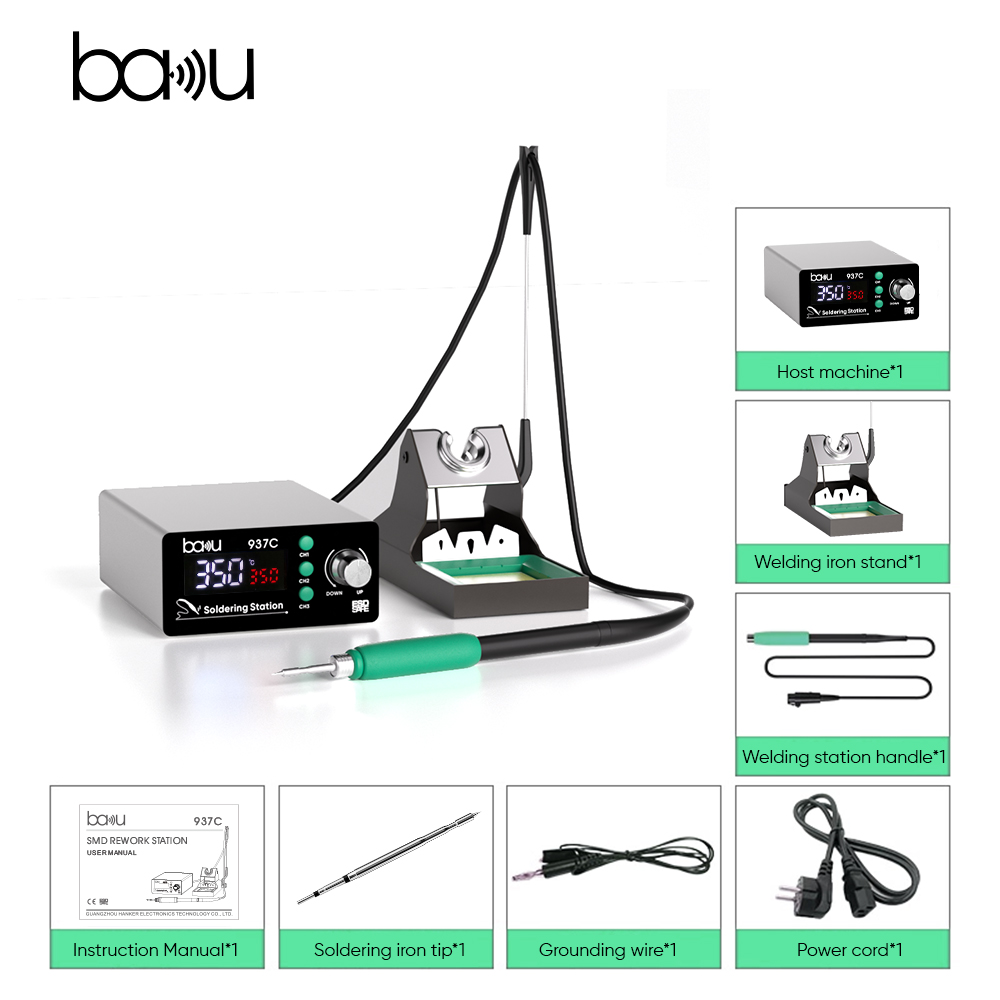
BA-937C Details to Compare
The published BA-937C specifications state a power rating of 120W and an iron temperature range of 200°C-500°C. The listed dimensions are 225x194x105mm; net weight is 1kg, and noise is specified as below 45dB. If the unit has no markings, or the available identification is unclear, these figures cannot be matched to the product as readily. Ask the supplier to confirm the model and configuration in writing.
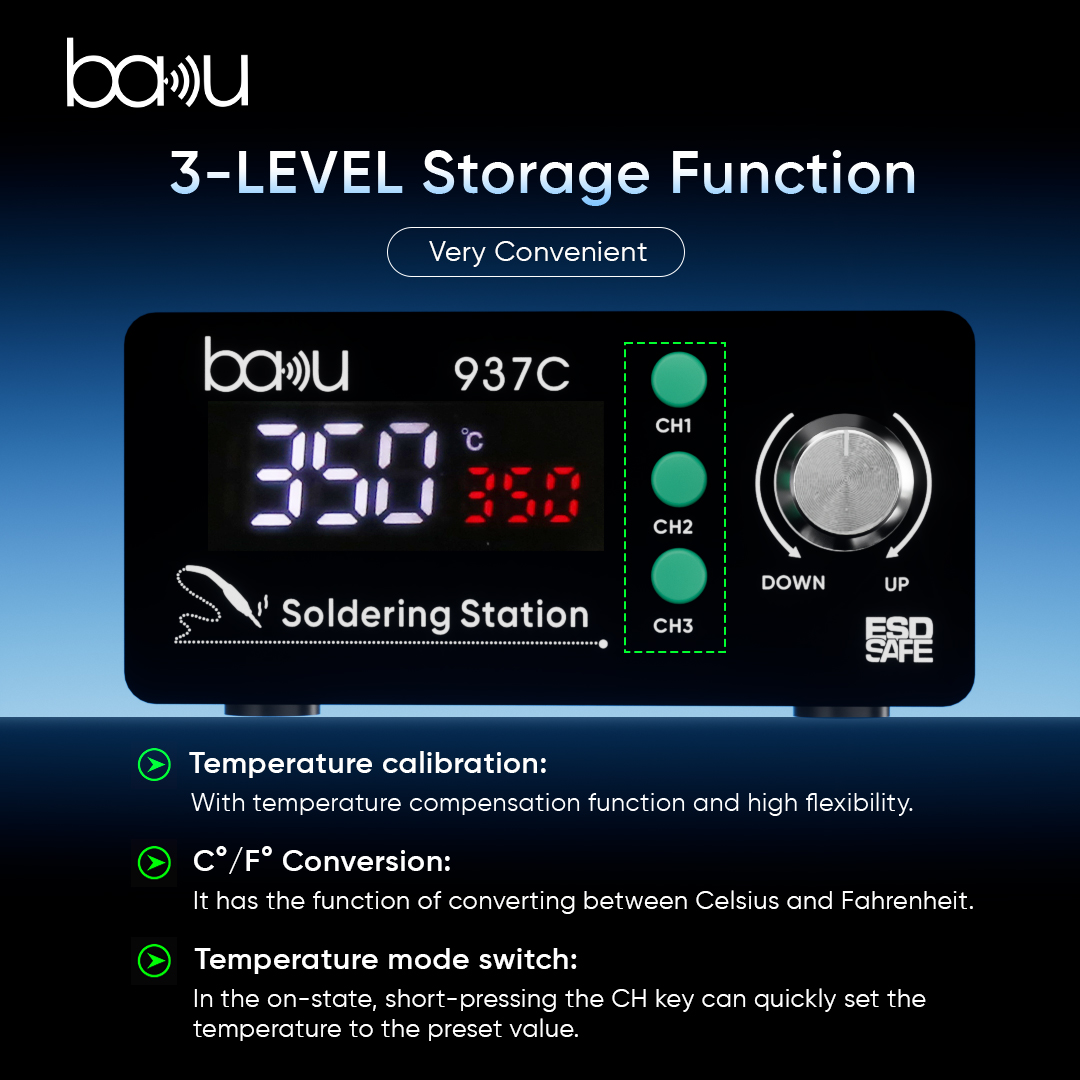
Documentation, Traceability, and Acceptance
Missing markings do not by themselves establish that a product is unusable. They do, however, leave gaps in identification and traceability. If the unit lacks clear markings, request product documentation and model confirmation, and keep these records with the shipment information. Resolve discrepancies before regular operation, resale, or further distribution.
The enterprise knowledge base lists CE certificates for solder stations in the European Union and FCC certificates for solder stations in the United States. These records may help with documentation checks, but they do not substitute for identifying the actual unit. Confirm that the product model, supplied documents, and applicable records correspond to one another.
Reported cooperation examples include mixed tool-kit orders for an electronics repair shop in the Philippines, training equipment for a vocational institution in Malaysia, distribution orders in Saudi Arabia, and equipment for a computer repair workshop in Mexico. Described work includes phone motherboard repair, practical training, laptop motherboard soldering, BGA rework, and circuit-board troubleshooting.
Receiving Scenarios and Next Steps
| Inspection result | Possible effect | Suggested response |
|---|---|---|
| Markings are present and agree with the order | Identity and specifications can be checked against the shipment | Document the inspection and continue with standard acceptance |
| Markings are absent, but product documents are supplied | Manual matching may be needed before acceptance | Obtain model confirmation and retain the supporting records |
| Neither markings nor identifying documents are available | Support, traceability, and regional checks may take longer | Contact the supplier before use, resale, or distribution |
| Product details conflict with the BA-937C listing | The delivered configuration is not readily verifiable | Hold technical acceptance and request clarification or corrective support |
Applications and Common Questions
What should I inspect if the unit has no markings?
Review the product's appearance, any model references, operating parameters, shipment records, and available compliance documents. For a unit sold as the BA-937C, check the stated 120W power, 200°C-500°C temperature range, dimensions, weight, and noise level, then ask the supplier to confirm the product identity.
Does an unmarked product automatically mean it cannot be used?
The available product information does not support that conclusion. The immediate concern is that identity and traceability are harder to establish. Request confirmation and technical guidance before deciding whether the unit is suitable for deployment or distribution.
Why does identification matter for repair work?
The listed use cases include mobile phone and tablet repairs, such as motherboard chip work, screen separation, soldering, cleaning, and component replacement. Laptop and computer circuit-board repairs are also mentioned, including motherboard soldering, graphics-card work, and fault repair. Clear model information gives technicians and support staff a reference when checking the equipment and addressing issues.
Conclusion
Before using an electronic repair device that arrives without required markings, verify its identity and specifications through the supplied documentation and the seller. For the BA-937C soldering station, compare the unit with the published details and request clarification if identification or specifications do not align. BAKU offers its own brand for wholesale, as well as OEM and ODM customization. The listed minimum order quantity is 50pcs, delivery is 7-15 days, and after-sales support is provided for one year, with online support available after the warranty period. For technical questions or assistance, contact hanker002@bakutool.com.
About BAKU
Guangdong BAKU Technology Development Co., Ltd. was established in 2003 and supplies professional electronic repair tools across more than thirty categories, including solder stations, solder flux, solder paste, screwdrivers, and ultrasonic cleaners. Its independent R&D laboratory supports product design, structural development, PCB debugging, and reliability testing. The company reports 25 design patents and maintains aging, temperature-control, and ESD test platforms. It lists CE and FCC certifications for solder stations and serves clients in multiple industries.

REPORT