







-
 Agriculture
-
 Health-Care
-
 Environment
-
 Construction-Real-Estate
-
 Tools-Hardware
-
 Home-Garden
-
 Furniture
-
 Luggage-Bags-Cases
-
 Medical-devices-Supplies
-
 Gifts-Crafts
-
 Sports-Entertainment
-
 Food-Beverage
-
 Vehicles-Transportation
-
 Power-Transmission
-
 Material-Handling
-
 Renewable-Energy
-
 Safety
-
 Testing-Instrument-Equipment
-
 Construction-Building-Machinery
-
 Pet-Supplies
-
 Personal-Care-Household-Cleaning
-
 Vehicle-Accessories-Electronics-Tools
-
 School-Office-Supplies
-
 Packaging-Printing
-
 Mother-Kids-Toys
-
 Business-Services
-
 Commercial-Equipment-Machinery
-
 Apparel-Accessories
-
 Security
-
 Shoes-Accessories
-
 Vehicle-Parts-Accessories
-
 Jewelry-Eyewear-Watches-Accessories
-
 Lights-Lighting
-
 Fabric-Textile-Raw-Material
-
 Fabrication-Services
-
 Industrial-Machinery
-
 Consumer-Electronics
-
 Electrical-Equipment-Supplies
-
 Electronic-Components-Accessories-Telecommunications
-
 Home-Appliances
-
 Beauty
-
 Chemicals
-
 Rubber-Plastics
-
 Metals-Alloys
























































































































































































































































































- Masonry Materials
- Curtain Walls & Accessories
- Earthwork Products
- Fireproofing Materials
- Heat Insulation Materials
- Plastic Building Materials
- Building Boards
- Soundproofing Materials
- Timber
- Waterproofing Materials
- Balustrades & Handrails
- Bathroom & Kitchen
- Flooring & Accessories
- Tiles & Accessories
- Door, Window & Accessories
- Fireplaces & Stoves
- Floor Heating Systems & Parts
- Stairs & Stair Parts
- Ceilings
- Elevators & Escalators
- Stone
- Countertops, Vanity Tops & Table Tops
- Mosaics
- Metal Building Materials
- Multifunctional Materials
- Ladders & Scaffoldings
- Mouldings
- Corner Guards
- Decorative Films
- Formwork
- Building & Industrial Glass
- Other Construction & Real Estate
- Wallpapers/Wall panels
- HVAC System & Parts
- Outdoor Facilities
- Prefabricated Buildings
- Festive & Party Supplies
- Bathroom Products
- Household Sundries
- Rain Gear
- Garden Supplies
- Household Cleaning Tools & Accessories
- Lighters & Smoking Accessories
- Home Storage & Organization
- Household Scales
- Smart Home Improvement
- Home Textiles
- Kitchenware
- Drinkware & Accessories
- Dinnerware, Coffee & Wine
- Home Decor
- Golf
- Fitness & Body Building
- Amusement Park Facilities
- Billiards, Board Game,Coin Operated Games
- Musical Instruments
- Outdoor Affordable Luxury Sports
- Camping & Hiking
- Fishing
- Sports Safety&Rehabilitation
- Ball Sports Equipments
- Water Sports
- Winter Sports
- Luxury Travel Equipments
- Sports Shoes, Bags & Accessories
- Cycling
- Other Sports & Entertainment Products
- Artificial Grass&Sports Flooring&Sports Court Equipment
- Scooters
- Food Ingredients
- Honey & Honey Products
- Snacks
- Nuts & Kernels
- Seafood
- Plant & Animal Oil
- Beverages
- Fruit & Vegetable Products
- Frog & Escargot
- Bean Products
- Egg Products
- Dairy Products
- Seasonings & Condiments
- Canned Food
- Instant Food
- Baked Goods
- Other Food & Beverage
- Meat & Poultry
- Confectionery
- Grain Products
- Feminie Care
- Hair Care & Styling
- Body Care
- Hands & Feet Care
- Hygiene Products
- Men's Grooming
- Laundry Cleaning Supplies
- Travel Size & Gift Sets
- Room Deodorizers
- Other Personal Care Products
- Pest Control Products
- Special Household Cleaning
- Floor Cleaning
- Kitchen & Bathroom Cleaning
- Oral Care
- Bath Supplies
- Yellow Pages
- Correction Supplies
- Office Binding Supplies
- Office Cutting Supplies
- Board Erasers
- Office Adhesives & Tapes
- Education Supplies
- Pencil Cases & Bags
- Notebooks & Writing Pads
- File Folder Accessories
- Calendars
- Writing Accessories
- Commercial Office Supplies
- Pencil Sharpeners
- Pens
- Letter Pad/Paper
- Paper Envelopes
- Desk Organizers
- Pencils
- Markers & Highlighters
- Filing Products
- Art Supplies
- Easels
- Badge Holder & Accessories
- Office Paper
- Printer Supplies
- Book Covers
- Other Office & School Supplies
- Stationery Set
- Boards
- Clipboards
- Stamps
- Drafting Supplies
- Stencils
- Electronic Dictionary
- Books
- Map
- Magazines
- Calculators
- Baby & Toddler Toys
- Educational Toys
- Classic Toys
- Dress Up & Pretend Play
- Toy Vehicle
- Stuffed Animals & Plush Toys
- Outdoor Toys & Structures
- Balloons & Accessories
- Baby Food
- Children's Clothing
- Baby Supplies & Products
- Maternity Clothes
- Kids Shoes
- Baby Care
- Novelty & Gag Toys
- Dolls & Accessories
- Puzzle & Games
- Blocks & Model Building Toys
- Toddler Clothing
- Baby Clothing
- Kids' Luggage & Bags
- Arts, Crafts & DIY Toys
- Action & Toy Figures
- Baby Appliances
- Hobbies & Models
- Remote Control Toys
- Promotional Toys
- Pregnancy & Maternity
- Hygiene Products
- Kid's Textile&Bedding
- Novelty & Special Use
- Toy Weapons
- Baby Gifts
- Baby Storage & Organization
- Auto Drive Systems
- ATV/UTV Parts & Accessories
- Marine Parts & Accessories
- Other Auto Parts
- Trailer Parts & Accessories
- Auto Transmission Systems
- Train Parts & Accessories
- Universal Parts
- Railway Parts & Accessories
- Auto Brake Systems
- Aviation Parts & Accessories
- Truck Parts & Accessories
- Auto Suspension Systems
- Auto Lighting Systems
- New Energy Vehicle Parts & Accessories
- Auto Steering Systems
- Wheels, Tires & Accessories
- Bus Parts & Accessories
- Auto Performance Parts
- Cooling System
- Go-Kart & Kart Racer Parts & Accessories
- Air Conditioning Systems
- Heavy Duty Vehicle Parts & Accessories
- Auto Electrical Systems
- Auto Body Systems
- Auto Engine Systems
- Container Parts & Accessories
- Motorcycle Parts & Accessories
- Refrigeration & Heat Exchange Equipment
- Machine Tool Equipment
- Food & Beverage Machinery
- Agricultural Machinery & Equipment
- Apparel & Textile Machinery
- Chemical Machinery
- Packaging Machines
- Paper Production Machinery
- Plastic & Rubber Processing Machinery
- Industrial Robots
- Electronic Products Machinery
- Metal & Metallurgy Machinery
- Woodworking Machinery
- Home Product Manufacturing Machinery
- Machinery Accessories
- Environmental Machinery
- Machinery Service
- Electrical Equipment Manufacturing Machinery
- Industrial Compressors & Parts
- Tobacco & Cigarette Machinery
- Production Line
- Used Industrial Machinery
- Electronics Production Machinery
- Other Machinery & Industrial Equipment
- Camera, Photo & Accessories
- Portable Audio, Video & Accessories
- Television, Home Audio, Video & Accessories
- Video Games & Accessories
- Mobile Phone & Accessories
- Electronic Publications
- Earphone & Headphone & Accessories
- Speakers & Accessories
- Smart Electronics
- TV Receivers & Accessories
- Mobile Phone & Computer Repair Parts
- Chargers, Batteries & Power Supplies
- Used Electronics
- VR, AR, MR Hardware & Software
- Projectors & Presentation Equipments
- Other Consumer Electronics
- Cables & Commonly Used Accessories
- Computer Hardware & Software
- Displays, Signage and Optoelectronics
- Discrete Semiconductors
- Wireless & IoT Module and Products
- Telecommunications
- Connectors, Terminals & Accessories
- Development Boards, Electronic Modules and Kits
- Circuit Protection
- Sensors
- Isolators
- Audio Components and Products
- Integrated Circuits
- Power Supplies
- Relays
- RF, Microwave and RFID
- Electronic Accessories & Supplies
- Passive Components
- PCB & PCBA
- Air Quality Appliances
- Home Appliance Parts
- Heating & Cooling Appliances
- Small Kitchen Appliances
- Laundry Appliances
- Water Heaters
- Water Treatment Appliances
- Refrigerators & Freezers
- Personal Care & Beauty Appliances
- Major Kitchen Appliances
- Cleaning Appliances
- Second-hand Appliances
- Smart Home Appliances
- Other Home Appliances
- Energy Chemicals
- Inorganic Chemicals
- Basic Organic Chemicals
- Agrochemicals
- Admixture & Additives
- Catalysts & Chemical Auxiliary Agents
- Pigments & Dyestuff
- Coating & Paint
- Daily Chemicals
- Polymer
- Organic Intermediate
- Adhesives & Sealants
- Chemical Waste
- Biological Chemical Products
- Surface Treatment Chemicals
- Painting & Coating
- Chemical Reagents
- Flavor & Fragrance
- Non-Explosive Demolition Agents
- Other Chemicals
- Custom Chemical Services

LCD Separator Troubleshooting Guide: Power, Heating, and Safe Operation
A dependable LCD Separator troubleshooting guide should help technicians identify problems with power, temperature regulation, heating speed, operating noise, tool compatibility, and safe screen separation procedures. Related equipment such as the BAKU BA-937C soldering station offers 120W output, a 200°C–500°C iron temperature range, an LED microcomputer digital display, and 1-year support, providing useful reference points when diagnosing repair equipment.
Essential Troubleshooting Checks
Begin with external inspections before opening the unit or examining internal parts. Confirm that the power supply is connected correctly, the display responds during startup, the temperature setting can be adjusted, and the heating system reacts as expected. These initial checks often help distinguish between a connection issue, control problem, heating fault, or operating-condition error.
- Inspect the power cable, socket, startup response, and display status.
- Compare the selected temperature with the displayed reading and monitor stability.
- Check whether heating is consistent during screen separation or soldering work.
- Listen for unusual noise and confirm that the equipment is placed securely.
- Stop using the unit and contact technical support when a fault remains unresolved.
How to Diagnose Common Performance Issues
Power and Display Problems
If the equipment does not turn on, first verify the power source, plug, cable, and external controls. Observe whether the LED microcomputer digital display illuminates or shows any response. If there is no startup indication after the external checks, document the symptoms and product information before requesting service. Continuing to operate an unresponsive unit may create additional risk.
Temperature and Heating Performance
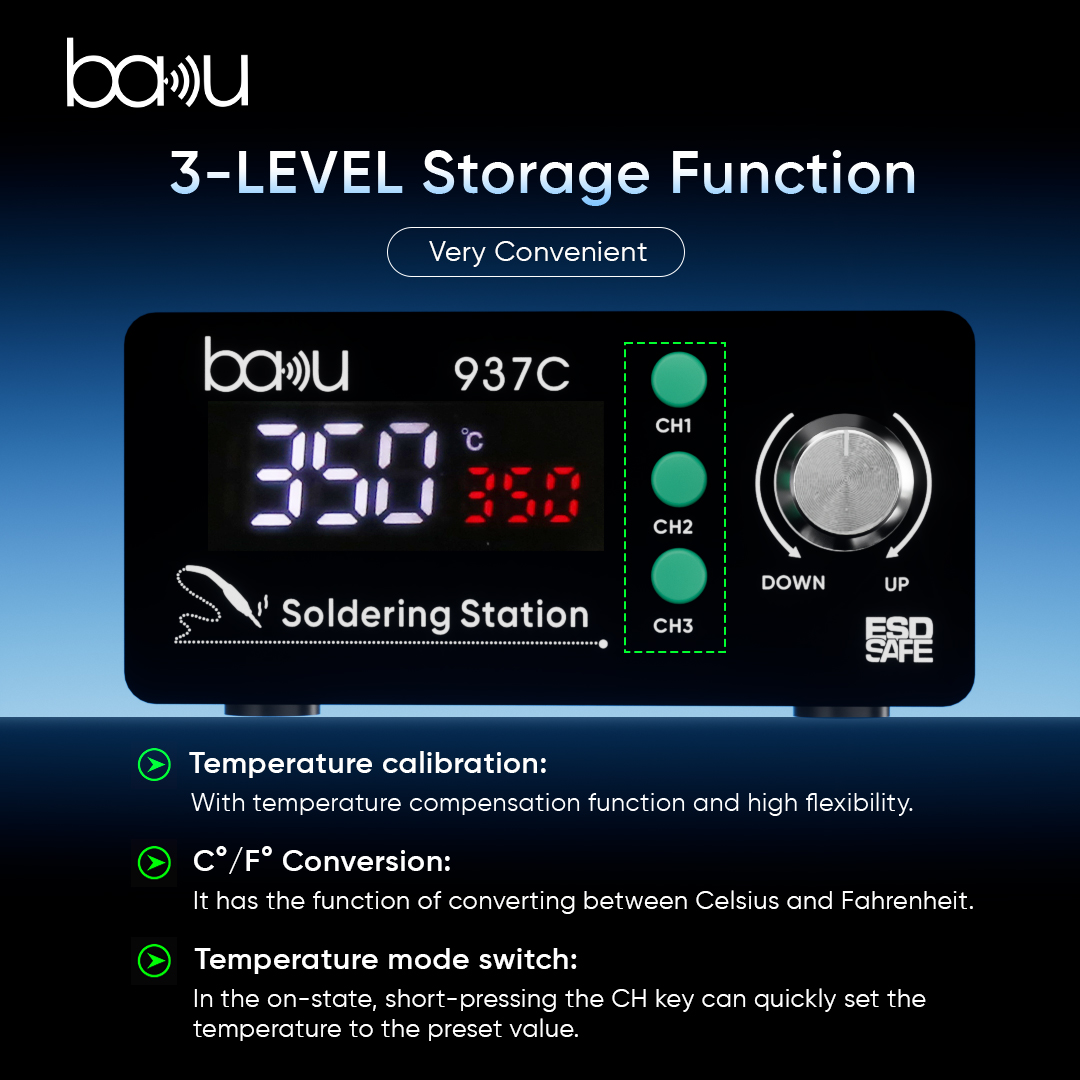
Temperature control is one of the most important areas in electronic repair equipment diagnosis. The BAKU BA-937C 2s Rapid Temp Soldering Station uses an LED microcomputer digital display, delivers 120W of power, and supports an iron temperature range from 200°C to 500°C. Set a known temperature, compare the selected value with the display, and observe whether the iron heats steadily rather than cycling unpredictably or failing to reach the target.
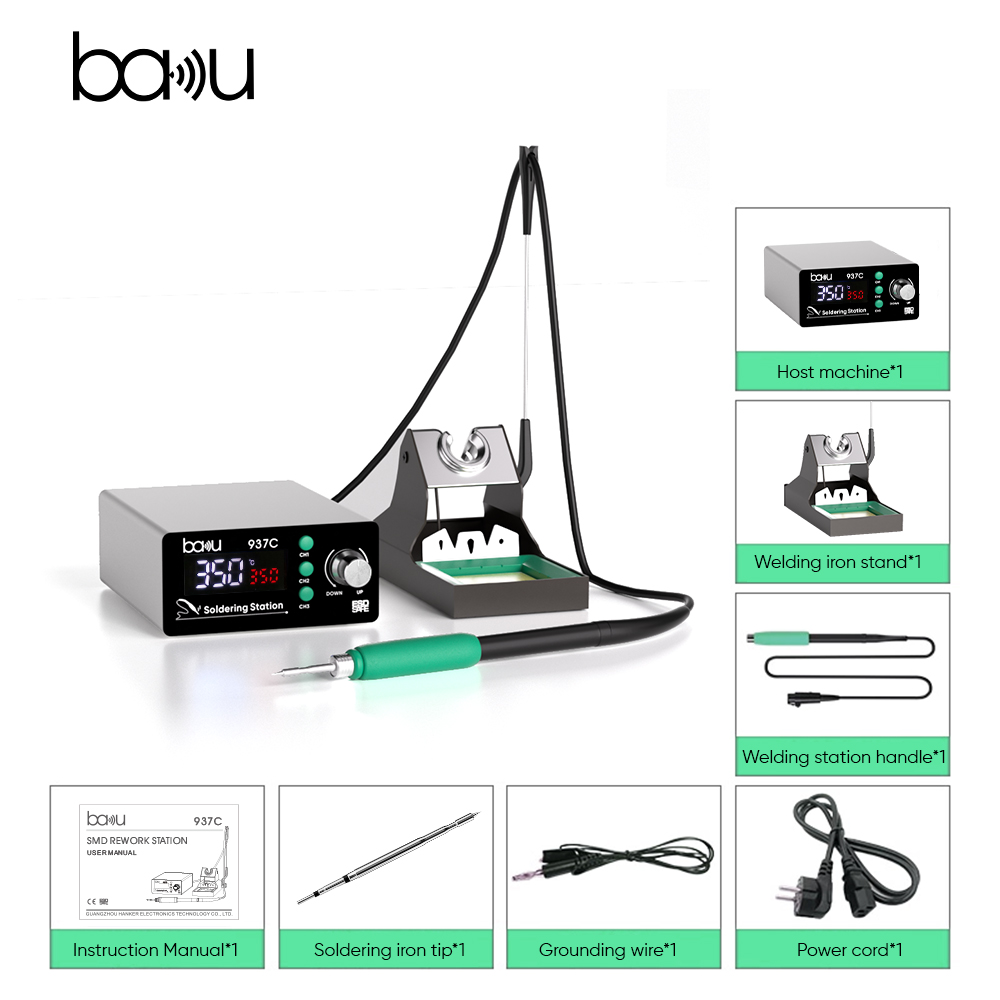
Slow or uneven heating may require inspection of the heating element, work connections, control interface, and ventilation area. The unit measures 225x194x105mm, has a net weight of 1kg, and is specified at below 45dB noise. These details can serve as practical reference points for stable placement, handling, and unusual sound checks, but they do not replace qualified technical servicing.
Noise, Connections, and Safe Handling
Abnormal operating noise should be compared with the normal sound level of the equipment and investigated together with temperature or control changes. Keep the housing, ventilation openings, and working area clear. Before handling internal components, disconnect the power and follow appropriate electrical and anti-static precautions. Technicians should also confirm that soldering tools and accessories are compatible with the intended repair process.
Repair Applications to Include in the Guide
An LCD Separator guide is most useful when it reflects real workshop tasks. Mobile phone and tablet repair may involve motherboard chip work, screen separation, welding residue cleaning, and component replacement. Laptop and computer service can include motherboard repair, BGA chip rework, circuit-board troubleshooting, soldering, and disassembly. Because these tasks involve sensitive components, the guide should emphasize temperature stability, careful handling, and anti-static protection.
Certification information can also support equipment records and purchasing decisions. The supplied documentation lists CE certificates 2022SZ0629222 and 2022SZ0629223 for solder stations in the European Union, together with FCC certificates for the United States. These records should be matched with the exact product model and the compliance requirements of the destination market.
Reported workshop applications include a Philippine electronics repair store using mixed repair-tool kits for phone motherboard repair, chip repair, and screen separation. A Mexican computer repair workshop reportedly uses soldering and BGA rework equipment for laptop motherboard service and circuit-board diagnosis. Such use cases reinforce the need to check repeated-use temperature performance, stable operation, and correct equipment handling.
Diagnostic Reference Table
| Check Point | Recommended Action | Product Reference |
|---|---|---|
| Startup and display | Confirm the power connection, startup response, and LED display condition. | LED microcomputer digital display |
| Temperature setting | Compare the selected value with the display and monitor temperature stability. | 200°C–500°C iron temperature range |
| Heating response | Check whether heating remains consistent during soldering and repair tasks. | 120W power output |
| Noise and placement | Listen for abnormal sounds and ensure the station sits securely with ventilation unobstructed. | Noise below 45dB; net weight 1kg |
| Support request | Record the fault, model, settings, and operating conditions before contacting service. | 1-year after-sales support with online support after warranty |
Frequently Asked Questions
What should I do if the equipment will not power on?
Check the outlet, plug, power cable, external controls, and display response. If the unit remains inactive, stop using it, record the symptoms and model information, and contact technical support.
How can I check for unstable heating?
Select a suitable temperature, compare the setting with the displayed status, and monitor the heating response during continuous work. For the BA-937C reference, the iron temperature range is 200°C–500°C and the rated power is 120W.
Which repair tasks should be covered?
The guide should address phone and tablet motherboard repair, screen separation, welding cleaning, component replacement, laptop motherboard service, BGA rework, soldering, and circuit-board troubleshooting where relevant.
Conclusion and Purchasing Considerations
A useful LCD Separator troubleshooting guide should organize checks by symptom and cover power, display, temperature, heating, noise, tool compatibility, and safe operation. Clear escalation instructions are important when external checks do not resolve the fault. BAKU supplies its own brand for wholesale orders and supports OEM and ODM customization. The stated MOQ for the BA-937C is 50pcs, with a delivery period of 7–15 days and export coverage across all regions. For technical solutions or product support, contact hanker002@bakutool.com.
About BAKU
Guangdong BAKU Technology Development Co., Ltd. was established in 2003 and develops professional electronic repair tools, including soldering stations, solder flux, solder paste, screwdrivers, and ultrasonic cleaners. Its independent R&D laboratory supports industrial design, structural development, PCB debugging, and reliability testing. The company reports 25 design patents and testing capabilities for aging, temperature control, and ESD. Its products are supplied to South America, Europe, Southeast Asia, and other markets, with CE and FCC certification records available for solder stations.

REPORT