







-
 Agriculture
-
 Health-Care
-
 Environment
-
 Construction-Real-Estate
-
 Tools-Hardware
-
 Home-Garden
-
 Furniture
-
 Luggage-Bags-Cases
-
 Medical-devices-Supplies
-
 Gifts-Crafts
-
 Sports-Entertainment
-
 Food-Beverage
-
 Vehicles-Transportation
-
 Power-Transmission
-
 Material-Handling
-
 Renewable-Energy
-
 Safety
-
 Testing-Instrument-Equipment
-
 Construction-Building-Machinery
-
 Pet-Supplies
-
 Personal-Care-Household-Cleaning
-
 Vehicle-Accessories-Electronics-Tools
-
 School-Office-Supplies
-
 Packaging-Printing
-
 Mother-Kids-Toys
-
 Business-Services
-
 Commercial-Equipment-Machinery
-
 Apparel-Accessories
-
 Security
-
 Shoes-Accessories
-
 Vehicle-Parts-Accessories
-
 Jewelry-Eyewear-Watches-Accessories
-
 Lights-Lighting
-
 Fabric-Textile-Raw-Material
-
 Fabrication-Services
-
 Industrial-Machinery
-
 Consumer-Electronics
-
 Electrical-Equipment-Supplies
-
 Electronic-Components-Accessories-Telecommunications
-
 Home-Appliances
-
 Beauty
-
 Chemicals
-
 Rubber-Plastics
-
 Metals-Alloys


























































































































































































































































































































































































































































































































































































- Masonry Materials
- Curtain Walls & Accessories
- Earthwork Products
- Fireproofing Materials
- Heat Insulation Materials
- Plastic Building Materials
- Building Boards
- Soundproofing Materials
- Timber
- Waterproofing Materials
- Balustrades & Handrails
- Bathroom & Kitchen
- Flooring & Accessories
- Tiles & Accessories
- Door, Window & Accessories
- Fireplaces & Stoves
- Floor Heating Systems & Parts
- Stairs & Stair Parts
- Ceilings
- Elevators & Escalators
- Stone
- Countertops, Vanity Tops & Table Tops
- Mosaics
- Metal Building Materials
- Multifunctional Materials
- Ladders & Scaffoldings
- Mouldings
- Corner Guards
- Decorative Films
- Formwork
- Building & Industrial Glass
- Other Construction & Real Estate
- Wallpapers/Wall panels
- HVAC System & Parts
- Outdoor Facilities
- Prefabricated Buildings
- Festive & Party Supplies
- Bathroom Products
- Household Sundries
- Rain Gear
- Garden Supplies
- Household Cleaning Tools & Accessories
- Lighters & Smoking Accessories
- Home Storage & Organization
- Household Scales
- Smart Home Improvement
- Home Textiles
- Kitchenware
- Drinkware & Accessories
- Dinnerware, Coffee & Wine
- Home Decor
- Golf
- Fitness & Body Building
- Amusement Park Facilities
- Billiards, Board Game,Coin Operated Games
- Musical Instruments
- Outdoor Affordable Luxury Sports
- Camping & Hiking
- Fishing
- Sports Safety&Rehabilitation
- Ball Sports Equipments
- Water Sports
- Winter Sports
- Luxury Travel Equipments
- Sports Shoes, Bags & Accessories
- Cycling
- Other Sports & Entertainment Products
- Artificial Grass&Sports Flooring&Sports Court Equipment
- Scooters
- Food Ingredients
- Honey & Honey Products
- Snacks
- Nuts & Kernels
- Seafood
- Plant & Animal Oil
- Beverages
- Fruit & Vegetable Products
- Frog & Escargot
- Bean Products
- Egg Products
- Dairy Products
- Seasonings & Condiments
- Canned Food
- Instant Food
- Baked Goods
- Other Food & Beverage
- Meat & Poultry
- Confectionery
- Grain Products
- Feminie Care
- Hair Care & Styling
- Body Care
- Hands & Feet Care
- Hygiene Products
- Men's Grooming
- Laundry Cleaning Supplies
- Travel Size & Gift Sets
- Room Deodorizers
- Other Personal Care Products
- Pest Control Products
- Special Household Cleaning
- Floor Cleaning
- Kitchen & Bathroom Cleaning
- Oral Care
- Bath Supplies
- Yellow Pages
- Correction Supplies
- Office Binding Supplies
- Office Cutting Supplies
- Board Erasers
- Office Adhesives & Tapes
- Education Supplies
- Pencil Cases & Bags
- Notebooks & Writing Pads
- File Folder Accessories
- Calendars
- Writing Accessories
- Commercial Office Supplies
- Pencil Sharpeners
- Pens
- Letter Pad/Paper
- Paper Envelopes
- Desk Organizers
- Pencils
- Markers & Highlighters
- Filing Products
- Art Supplies
- Easels
- Badge Holder & Accessories
- Office Paper
- Printer Supplies
- Book Covers
- Other Office & School Supplies
- Stationery Set
- Boards
- Clipboards
- Stamps
- Drafting Supplies
- Stencils
- Electronic Dictionary
- Books
- Map
- Magazines
- Calculators
- Baby & Toddler Toys
- Educational Toys
- Classic Toys
- Dress Up & Pretend Play
- Toy Vehicle
- Stuffed Animals & Plush Toys
- Outdoor Toys & Structures
- Balloons & Accessories
- Baby Food
- Children's Clothing
- Baby Supplies & Products
- Maternity Clothes
- Kids Shoes
- Baby Care
- Novelty & Gag Toys
- Dolls & Accessories
- Puzzle & Games
- Blocks & Model Building Toys
- Toddler Clothing
- Baby Clothing
- Kids' Luggage & Bags
- Arts, Crafts & DIY Toys
- Action & Toy Figures
- Baby Appliances
- Hobbies & Models
- Remote Control Toys
- Promotional Toys
- Pregnancy & Maternity
- Hygiene Products
- Kid's Textile&Bedding
- Novelty & Special Use
- Toy Weapons
- Baby Gifts
- Baby Storage & Organization
- Auto Drive Systems
- ATV/UTV Parts & Accessories
- Marine Parts & Accessories
- Other Auto Parts
- Trailer Parts & Accessories
- Auto Transmission Systems
- Train Parts & Accessories
- Universal Parts
- Railway Parts & Accessories
- Auto Brake Systems
- Aviation Parts & Accessories
- Truck Parts & Accessories
- Auto Suspension Systems
- Auto Lighting Systems
- New Energy Vehicle Parts & Accessories
- Auto Steering Systems
- Wheels, Tires & Accessories
- Bus Parts & Accessories
- Auto Performance Parts
- Cooling System
- Go-Kart & Kart Racer Parts & Accessories
- Air Conditioning Systems
- Heavy Duty Vehicle Parts & Accessories
- Auto Electrical Systems
- Auto Body Systems
- Auto Engine Systems
- Container Parts & Accessories
- Motorcycle Parts & Accessories
- Refrigeration & Heat Exchange Equipment
- Machine Tool Equipment
- Food & Beverage Machinery
- Agricultural Machinery & Equipment
- Apparel & Textile Machinery
- Chemical Machinery
- Packaging Machines
- Paper Production Machinery
- Plastic & Rubber Processing Machinery
- Industrial Robots
- Electronic Products Machinery
- Metal & Metallurgy Machinery
- Woodworking Machinery
- Home Product Manufacturing Machinery
- Machinery Accessories
- Environmental Machinery
- Machinery Service
- Electrical Equipment Manufacturing Machinery
- Industrial Compressors & Parts
- Tobacco & Cigarette Machinery
- Production Line
- Used Industrial Machinery
- Electronics Production Machinery
- Other Machinery & Industrial Equipment
- Camera, Photo & Accessories
- Portable Audio, Video & Accessories
- Television, Home Audio, Video & Accessories
- Video Games & Accessories
- Mobile Phone & Accessories
- Electronic Publications
- Earphone & Headphone & Accessories
- Speakers & Accessories
- Smart Electronics
- TV Receivers & Accessories
- Mobile Phone & Computer Repair Parts
- Chargers, Batteries & Power Supplies
- Used Electronics
- VR, AR, MR Hardware & Software
- Projectors & Presentation Equipments
- Other Consumer Electronics
- Cables & Commonly Used Accessories
- Computer Hardware & Software
- Displays, Signage and Optoelectronics
- Discrete Semiconductors
- Wireless & IoT Module and Products
- Telecommunications
- Connectors, Terminals & Accessories
- Development Boards, Electronic Modules and Kits
- Circuit Protection
- Sensors
- Isolators
- Audio Components and Products
- Integrated Circuits
- Power Supplies
- Relays
- RF, Microwave and RFID
- Electronic Accessories & Supplies
- Passive Components
- PCB & PCBA
- Air Quality Appliances
- Home Appliance Parts
- Heating & Cooling Appliances
- Small Kitchen Appliances
- Laundry Appliances
- Water Heaters
- Water Treatment Appliances
- Refrigerators & Freezers
- Personal Care & Beauty Appliances
- Major Kitchen Appliances
- Cleaning Appliances
- Second-hand Appliances
- Smart Home Appliances
- Other Home Appliances
- Energy Chemicals
- Inorganic Chemicals
- Basic Organic Chemicals
- Agrochemicals
- Admixture & Additives
- Catalysts & Chemical Auxiliary Agents
- Pigments & Dyestuff
- Coating & Paint
- Daily Chemicals
- Polymer
- Organic Intermediate
- Adhesives & Sealants
- Chemical Waste
- Biological Chemical Products
- Surface Treatment Chemicals
- Painting & Coating
- Chemical Reagents
- Flavor & Fragrance
- Non-Explosive Demolition Agents
- Other Chemicals
- Custom Chemical Services

Mitigating Breakage Risks in Ocean Freight for Commercial Creamers and Tableware
Transporting fragile ceramic and stainless steel creamers across global maritime routes presents significant logistical challenges. Ocean transit involves multi-axis container oscillation, continuous engine vibration, and long transit times ranging from 30 to 90 days. Guaranteeing zero or minimal damage upon arrival requires an engineered approach that encompasses heavy-duty packaging design, commercial-grade product manufacturing, and rigorous quality inspection protocols before port departure.
Understanding the Physics of Maritime Transit Damage
During international sea voyages—whether taking 30 to 45 days to reach Southeast Asia or up to 80 to 90 days to arrive in European or North American ports—containers endure constant low-frequency vibrations and dynamic structural pressure. For delicate or hollow tableware items such as hotel creamers, mechanical stress naturally concentrates around vulnerable structural points, notably handles and pouring spouts.
Effective transit packaging must redirect compression and shock loads away from these stress points. Internal void fillers and dividers function by cushioning kinetic energy and distributing perimeter compression uniformly across outer carton walls rather than transferring forces directly to the delicate tableware inside.

Essential Packaging & Cargo Protection Strategies
- Separated Internal Cells: Utilizing custom corrugated dividers or molded pulp inserts isolates each item, eliminating direct creamer-to-creamer impact and dampening vibrations during long ocean transits.
- Palletized Container Load Management: Securing stacked master cartons onto durable wooden or plastic pallets using industrial-grade stretch wrapping and corner edge protectors eliminates lateral shifts and minimizes risks associated with manual handling during loading and unloading.
- B-End Commercial Material Standards: Selecting high-density porcelain or stainless steel engineered specifically for high-volume hospitality environments—such as 5-star hotels, luxury banquet halls, and fine dining establishments—ensures superior impact endurance and tolerance for commercial dishwashers.
- Pre-Dispatch Quality Controls: Conducting comprehensive pre-shipment inspections guarantees structural integrity and material quality before cargo is loaded at export terminals.
Comparative Analysis of Logistics Modes & Packaging Protocols
Packaging requirements and quality control methods should be tailored according to the selected transport method and expected transit duration:
| Logistics Route | Transport Mode | Standard Lead / Transit Time | Packaging Strategy | Quality Inspection Standard |
|---|---|---|---|---|
| Shipping to Southeast Asia | Ocean Freight | 30–45 days | Cellular inner dividers + double-wall corrugated master cartons | SGS Quality Verification |
| Shipping to Europe & America | Ocean Freight | 80–90 days | Palletized packaging with corner edge protectors and shrink film | SGS Quality Inspection Report |
| Air Freight to Southeast Asia | Air Freight | 15–20 days | Custom molded EPE foam trays inside rigid export cartons | Standard Factory QC Check |
| Air Freight to Europe & US | Air Freight | 20–30 days | Reinforced outer carton with perimeter cushion lining | SGS Quality Verification |
Pre-Shipment Verification & Certification
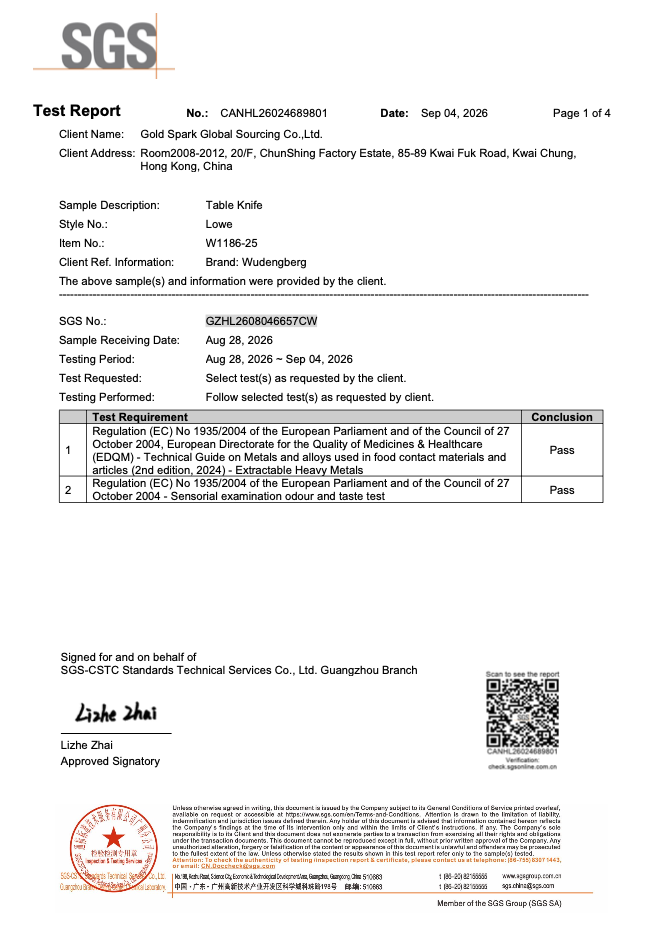
Third-party testing is essential for maintaining consistency across high-volume international shipments. Independent evaluation under SGS inspection protocols (specifically certificates GZHL2608046657CW and GZHL2608046655CW) validates impact resistance and material specs prior to export.
As a leading industry partner, Gold Spark Global Souricng Co., Ltd. integrates these compliance standards into its supply chain solutions. The company regularly supplies world-class hospitality properties, including Rosewood Hong Kong, Four Seasons Beijing, Grand Hyatt Macao, and Mandarin Oriental Pudong, ensuring that every product batch meets the physical demands of extended international freight and rigorous hotel usage.
Frequently Asked Questions (FAQ)
Q1: What is the minimum order quantity (MOQ) for international orders?
A: To accommodate both sample testing and bulk container purchasing for hospitality operators, the minimum order quantity starts at just 1 pc.
Q2: How is cargo inspected and verified before ocean departure?
A: Products undergo stringent third-party quality evaluations certified by SGS standards, checking structural integrity and material safety prior to dispatch at the port.
Q3: What recourse is available if products suffer transit damage or defects?
A: Items identified with transit damage or manufacturing defects are fully eligible for repair or replacement within 15 days of order delivery.
Summary & Operational Recommendations
Achieving consistently low breakage rates for ocean-shipped creamers relies on combining cellular packaging dividers, rigid palletization, commercial-grade materials, and accredited SGS testing. Supported by a flexible 1 pc MOQ and a 15-day defect replacement policy, hospitality procurement teams can safely source bulk shipments worldwide. For custom logistics solutions or inquiries, reach out via goldspark@vip.163.com.
About Gold Spark Global Souricng Co., Ltd.
Headquartered in Hong Kong with operational backing in Shenzhen, Gold Spark Global Souricng Co., Ltd. has been a premier specialist in high-end hotel supply chains since 2002. Supported by a dedicated team of 15 professionals, an in-house R&D design department, and a network of 10 manufacturing facilities, the company maintains a 30% export distribution across Southeast Asia, Europe, and the United States. Holding official SGS certifications, Gold Spark supplies leading global hotel brands including Hyatt, Four Seasons, Marriott, Ritz-Carlton, Rosewood, and Mandarin Oriental.

REPORT