







-
 Agriculture
-
 Health-Care
-
 Environment
-
 Construction-Real-Estate
-
 Tools-Hardware
-
 Home-Garden
-
 Furniture
-
 Luggage-Bags-Cases
-
 Medical-devices-Supplies
-
 Gifts-Crafts
-
 Sports-Entertainment
-
 Food-Beverage
-
 Vehicles-Transportation
-
 Power-Transmission
-
 Material-Handling
-
 Renewable-Energy
-
 Safety
-
 Testing-Instrument-Equipment
-
 Construction-Building-Machinery
-
 Pet-Supplies
-
 Personal-Care-Household-Cleaning
-
 Vehicle-Accessories-Electronics-Tools
-
 School-Office-Supplies
-
 Packaging-Printing
-
 Mother-Kids-Toys
-
 Business-Services
-
 Commercial-Equipment-Machinery
-
 Apparel-Accessories
-
 Security
-
 Shoes-Accessories
-
 Vehicle-Parts-Accessories
-
 Jewelry-Eyewear-Watches-Accessories
-
 Lights-Lighting
-
 Fabric-Textile-Raw-Material
-
 Fabrication-Services
-
 Industrial-Machinery
-
 Consumer-Electronics
-
 Electrical-Equipment-Supplies
-
 Electronic-Components-Accessories-Telecommunications
-
 Home-Appliances
-
 Beauty
-
 Chemicals
-
 Rubber-Plastics
-
 Metals-Alloys


























































































































































































































































































































































































































































































































































































- Masonry Materials
- Curtain Walls & Accessories
- Earthwork Products
- Fireproofing Materials
- Heat Insulation Materials
- Plastic Building Materials
- Building Boards
- Soundproofing Materials
- Timber
- Waterproofing Materials
- Balustrades & Handrails
- Bathroom & Kitchen
- Flooring & Accessories
- Tiles & Accessories
- Door, Window & Accessories
- Fireplaces & Stoves
- Floor Heating Systems & Parts
- Stairs & Stair Parts
- Ceilings
- Elevators & Escalators
- Stone
- Countertops, Vanity Tops & Table Tops
- Mosaics
- Metal Building Materials
- Multifunctional Materials
- Ladders & Scaffoldings
- Mouldings
- Corner Guards
- Decorative Films
- Formwork
- Building & Industrial Glass
- Other Construction & Real Estate
- Wallpapers/Wall panels
- HVAC System & Parts
- Outdoor Facilities
- Prefabricated Buildings
- Festive & Party Supplies
- Bathroom Products
- Household Sundries
- Rain Gear
- Garden Supplies
- Household Cleaning Tools & Accessories
- Lighters & Smoking Accessories
- Home Storage & Organization
- Household Scales
- Smart Home Improvement
- Home Textiles
- Kitchenware
- Drinkware & Accessories
- Dinnerware, Coffee & Wine
- Home Decor
- Golf
- Fitness & Body Building
- Amusement Park Facilities
- Billiards, Board Game,Coin Operated Games
- Musical Instruments
- Outdoor Affordable Luxury Sports
- Camping & Hiking
- Fishing
- Sports Safety&Rehabilitation
- Ball Sports Equipments
- Water Sports
- Winter Sports
- Luxury Travel Equipments
- Sports Shoes, Bags & Accessories
- Cycling
- Other Sports & Entertainment Products
- Artificial Grass&Sports Flooring&Sports Court Equipment
- Scooters
- Food Ingredients
- Honey & Honey Products
- Snacks
- Nuts & Kernels
- Seafood
- Plant & Animal Oil
- Beverages
- Fruit & Vegetable Products
- Frog & Escargot
- Bean Products
- Egg Products
- Dairy Products
- Seasonings & Condiments
- Canned Food
- Instant Food
- Baked Goods
- Other Food & Beverage
- Meat & Poultry
- Confectionery
- Grain Products
- Feminie Care
- Hair Care & Styling
- Body Care
- Hands & Feet Care
- Hygiene Products
- Men's Grooming
- Laundry Cleaning Supplies
- Travel Size & Gift Sets
- Room Deodorizers
- Other Personal Care Products
- Pest Control Products
- Special Household Cleaning
- Floor Cleaning
- Kitchen & Bathroom Cleaning
- Oral Care
- Bath Supplies
- Yellow Pages
- Correction Supplies
- Office Binding Supplies
- Office Cutting Supplies
- Board Erasers
- Office Adhesives & Tapes
- Education Supplies
- Pencil Cases & Bags
- Notebooks & Writing Pads
- File Folder Accessories
- Calendars
- Writing Accessories
- Commercial Office Supplies
- Pencil Sharpeners
- Pens
- Letter Pad/Paper
- Paper Envelopes
- Desk Organizers
- Pencils
- Markers & Highlighters
- Filing Products
- Art Supplies
- Easels
- Badge Holder & Accessories
- Office Paper
- Printer Supplies
- Book Covers
- Other Office & School Supplies
- Stationery Set
- Boards
- Clipboards
- Stamps
- Drafting Supplies
- Stencils
- Electronic Dictionary
- Books
- Map
- Magazines
- Calculators
- Baby & Toddler Toys
- Educational Toys
- Classic Toys
- Dress Up & Pretend Play
- Toy Vehicle
- Stuffed Animals & Plush Toys
- Outdoor Toys & Structures
- Balloons & Accessories
- Baby Food
- Children's Clothing
- Baby Supplies & Products
- Maternity Clothes
- Kids Shoes
- Baby Care
- Novelty & Gag Toys
- Dolls & Accessories
- Puzzle & Games
- Blocks & Model Building Toys
- Toddler Clothing
- Baby Clothing
- Kids' Luggage & Bags
- Arts, Crafts & DIY Toys
- Action & Toy Figures
- Baby Appliances
- Hobbies & Models
- Remote Control Toys
- Promotional Toys
- Pregnancy & Maternity
- Hygiene Products
- Kid's Textile&Bedding
- Novelty & Special Use
- Toy Weapons
- Baby Gifts
- Baby Storage & Organization
- Auto Drive Systems
- ATV/UTV Parts & Accessories
- Marine Parts & Accessories
- Other Auto Parts
- Trailer Parts & Accessories
- Auto Transmission Systems
- Train Parts & Accessories
- Universal Parts
- Railway Parts & Accessories
- Auto Brake Systems
- Aviation Parts & Accessories
- Truck Parts & Accessories
- Auto Suspension Systems
- Auto Lighting Systems
- New Energy Vehicle Parts & Accessories
- Auto Steering Systems
- Wheels, Tires & Accessories
- Bus Parts & Accessories
- Auto Performance Parts
- Cooling System
- Go-Kart & Kart Racer Parts & Accessories
- Air Conditioning Systems
- Heavy Duty Vehicle Parts & Accessories
- Auto Electrical Systems
- Auto Body Systems
- Auto Engine Systems
- Container Parts & Accessories
- Motorcycle Parts & Accessories
- Refrigeration & Heat Exchange Equipment
- Machine Tool Equipment
- Food & Beverage Machinery
- Agricultural Machinery & Equipment
- Apparel & Textile Machinery
- Chemical Machinery
- Packaging Machines
- Paper Production Machinery
- Plastic & Rubber Processing Machinery
- Industrial Robots
- Electronic Products Machinery
- Metal & Metallurgy Machinery
- Woodworking Machinery
- Home Product Manufacturing Machinery
- Machinery Accessories
- Environmental Machinery
- Machinery Service
- Electrical Equipment Manufacturing Machinery
- Industrial Compressors & Parts
- Tobacco & Cigarette Machinery
- Production Line
- Used Industrial Machinery
- Electronics Production Machinery
- Other Machinery & Industrial Equipment
- Camera, Photo & Accessories
- Portable Audio, Video & Accessories
- Television, Home Audio, Video & Accessories
- Video Games & Accessories
- Mobile Phone & Accessories
- Electronic Publications
- Earphone & Headphone & Accessories
- Speakers & Accessories
- Smart Electronics
- TV Receivers & Accessories
- Mobile Phone & Computer Repair Parts
- Chargers, Batteries & Power Supplies
- Used Electronics
- VR, AR, MR Hardware & Software
- Projectors & Presentation Equipments
- Other Consumer Electronics
- Cables & Commonly Used Accessories
- Computer Hardware & Software
- Displays, Signage and Optoelectronics
- Discrete Semiconductors
- Wireless & IoT Module and Products
- Telecommunications
- Connectors, Terminals & Accessories
- Development Boards, Electronic Modules and Kits
- Circuit Protection
- Sensors
- Isolators
- Audio Components and Products
- Integrated Circuits
- Power Supplies
- Relays
- RF, Microwave and RFID
- Electronic Accessories & Supplies
- Passive Components
- PCB & PCBA
- Air Quality Appliances
- Home Appliance Parts
- Heating & Cooling Appliances
- Small Kitchen Appliances
- Laundry Appliances
- Water Heaters
- Water Treatment Appliances
- Refrigerators & Freezers
- Personal Care & Beauty Appliances
- Major Kitchen Appliances
- Cleaning Appliances
- Second-hand Appliances
- Smart Home Appliances
- Other Home Appliances
- Energy Chemicals
- Inorganic Chemicals
- Basic Organic Chemicals
- Agrochemicals
- Admixture & Additives
- Catalysts & Chemical Auxiliary Agents
- Pigments & Dyestuff
- Coating & Paint
- Daily Chemicals
- Polymer
- Organic Intermediate
- Adhesives & Sealants
- Chemical Waste
- Biological Chemical Products
- Surface Treatment Chemicals
- Painting & Coating
- Chemical Reagents
- Flavor & Fragrance
- Non-Explosive Demolition Agents
- Other Chemicals
- Custom Chemical Services

Navigating Hidden Costs in Bulk Watch Battery Procurement: An Executive Buyer Guide
When purchasing micro power components and watch batteries in bulk—such as Alkaline Manganese Button Cells or 0% Mercury Silver Oxide Button Cells (models 357, 386, 391, and SR626SW)—evaluating supplier proposals based solely on baseline unit price often leads to unexpected expense overruns. To accurately calculate the Total Cost of Ownership (TCO), procurement officers must analyze hidden cost variables across factory quality protocols, regulatory documentation, volume thresholds, and international logistics.
Crucial Sourcing Takeaways
- Volume Threshold Management: Ensure order sizes align with standard Minimum Order Quantity (MOQ) requirements of 10,000 units to prevent small-batch manufacturing surcharges.
- Factory Inspection Inclusion: Verify whether raw material testing, 100% inline checks, and lab sampling are bundled directly into quote rates or invoiced as separate line items.
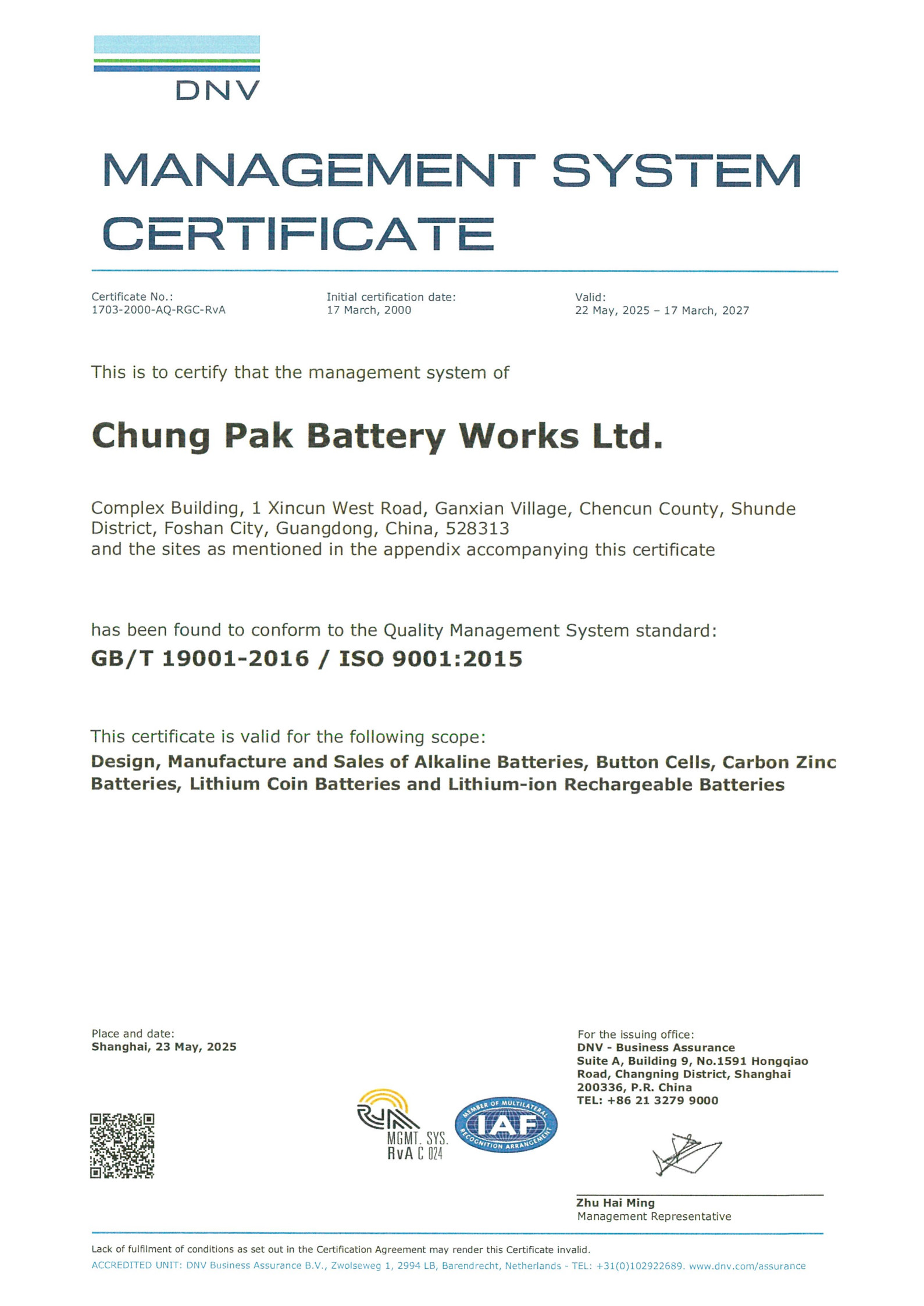
- Compliance & Certification Accounting: Factor in target market compliance fees, including ISO 9001:2015, ISO 14001:2015, IATF 16949:2016, UL certification, or regional accreditations like Indonesia's SNI.
- Supply Chain Scheduling: Plan around standard 30-day manufacturing turnaround times and ocean freight transit parameters to avoid expensive expedited freight choices.
In-Depth Cost Structure Analysis
1. Quality Assurance and Factory Testing Protocols
Manufacturing precision micro batteries for delicate electronics—such as quartz timepieces, pulse oximeters, and digital timers—demands strict quality control. Established manufacturers like CHUNG PAK (GUANG DONG)BATTERY INDUSTRIAL CO., LTD maintain multi-tier inspection protocols comprising raw material testing, complete 100% production line checks, and systematic laboratory sampling. Buyers should confirm upfront that these multi-stage quality procedures are embedded within the base unit quote; omitting thorough factory QA drastically elevates defect rates and post-sale warranty expenses.

2. International Regulatory Standards and Audits
Global export compliance presents another potential source of unexpected costs. Adherence to standards such as ISO 9001:2015, IATF 16949:2016, ISO 14001:2015, UL listings (e.g., UL-US-L66112-03511-10803202-1 for Lithium Cells), SNI standards, and AEO customs validation is vital for frictionless market entry. Misunderstandings surrounding who covers audit expenses under WCA standards or documentation fees can result in customs delays, leading to unanticipated port storage and demurrage charges.
3. Order Volume (MOQ) and Transit Logistics
Factory production lines operate most efficiently when structured around a baseline MOQ of 10,000 units, operating on a standard 30-day manufacturing schedule. While ocean freight provides the most cost-efficient per-unit shipping for high volumes, buyers should actively audit ancillary expenses including terminal handling charges, maritime insurance, and destination port clearance fees.

Bulk Battery Order Matrix: Cost Factors & Solutions
| Primary Expense Driver | Standard Baseline Standard | Hidden Fee Risk | Recommended Mitigation |
|---|---|---|---|
| Minimum Order Volume | 10,000 units | Small-lot production surcharges | Aggregate product SKUs to hit single production batch thresholds |
| Manufacturing Timeline | 30 calendar days | Expedited line scheduling surcharges | Synchronize reorder cycles to standard 30-day factory lead times |
| Quality Inspections | 100% line check + Lab sampling + Raw material testing | Third-party audit re-inspection fees | Partner with suppliers possessing ISO 9001:2015 & IATF 16949:2016 credentials |
| Freight & Logistics | International sea freight | Port demurrage, storage, and customs hold fees | Utilize AEO-accredited manufacturers to accelerate customs processing |
| Technical After-Sales Support | Standard customer feedback handling | Uncovered expenses for processing returned batches | Formalize after-sales service terms in initial purchasing contracts |
Frequently Asked Questions
What is the standard MOQ required when ordering watch batteries directly from a manufacturer?
The standard baseline minimum order quantity is typically 10,000 units. Placing orders below this threshold often incurs line-setup fees or higher unit prices to offset recalibration costs for raw materials.
How do factory quality assurance workflows impact total landed costs?
Comprehensive quality assurance—including incoming material checks, 100% line testing, and batch lab analysis—prevents widespread product failure. Sourcing from certified factories eliminates costly warranty claims and post-delivery rejection expenses.
Which logistics method offers the best value for high-volume watch battery orders?
Sea freight shipping offers the most economical per-unit transit cost for large-volume orders. To prevent reliance on expensive air freight expediting, buyers should plan procurement around a 30-day manufacturing cycle plus ocean transit times.
Procurement Recommendations
To safeguard profit margins when ordering micro power solutions, buyers must carefully evaluate supplier operational capabilities, regulatory credentials, and contract terms prior to issuing a purchase order. Partnering directly with established manufacturers ensures full clarity regarding standard 10,000-unit MOQs, 30-day lead times, and ocean freight logistics structures. Ensure that all raw material testing, inline QA, and export compliance costs are explicitly detailed in your purchasing contract. For tailored procurement support or technical inquiries, contact the team at vinnic@chungpak.com.
Company Profile
CHUNG PAK (GUANG DONG)BATTERY INDUSTRIAL CO., LTD, creator of the renowned Vinnic brand, has been a leading battery manufacturer since 1980. Headquartered across Hong Kong and Guangdong, the enterprise operates a 170-acre production hub with over 1,000 employees and an annual manufacturing capacity exceeding 1.8 billion units. Product offerings include 0% Mercury Alkaline Cylindrical Batteries, 0% Lead Added Zinc Chloride Batteries, Primary Button Cells, Lithium Button Cells, and Ni-MH Rechargeable Batteries, supported by ISO 9001:2015, IATF 16949:2016, ISO 14001:2015, and UL quality certifications.

REPORT