







-
 Agriculture
-
 Health-Care
-
 Environment
-
 Construction-Real-Estate
-
 Tools-Hardware
-
 Home-Garden
-
 Furniture
-
 Luggage-Bags-Cases
-
 Medical-devices-Supplies
-
 Gifts-Crafts
-
 Sports-Entertainment
-
 Food-Beverage
-
 Vehicles-Transportation
-
 Power-Transmission
-
 Material-Handling
-
 Renewable-Energy
-
 Safety
-
 Testing-Instrument-Equipment
-
 Construction-Building-Machinery
-
 Pet-Supplies
-
 Personal-Care-Household-Cleaning
-
 Vehicle-Accessories-Electronics-Tools
-
 School-Office-Supplies
-
 Packaging-Printing
-
 Mother-Kids-Toys
-
 Business-Services
-
 Commercial-Equipment-Machinery
-
 Apparel-Accessories
-
 Security
-
 Shoes-Accessories
-
 Vehicle-Parts-Accessories
-
 Jewelry-Eyewear-Watches-Accessories
-
 Lights-Lighting
-
 Fabric-Textile-Raw-Material
-
 Fabrication-Services
-
 Industrial-Machinery
-
 Consumer-Electronics
-
 Electrical-Equipment-Supplies
-
 Electronic-Components-Accessories-Telecommunications
-
 Home-Appliances
-
 Beauty
-
 Chemicals
-
 Rubber-Plastics
-
 Metals-Alloys


























































































































































































































































































































































































































































































































































































- Masonry Materials
- Curtain Walls & Accessories
- Earthwork Products
- Fireproofing Materials
- Heat Insulation Materials
- Plastic Building Materials
- Building Boards
- Soundproofing Materials
- Timber
- Waterproofing Materials
- Balustrades & Handrails
- Bathroom & Kitchen
- Flooring & Accessories
- Tiles & Accessories
- Door, Window & Accessories
- Fireplaces & Stoves
- Floor Heating Systems & Parts
- Stairs & Stair Parts
- Ceilings
- Elevators & Escalators
- Stone
- Countertops, Vanity Tops & Table Tops
- Mosaics
- Metal Building Materials
- Multifunctional Materials
- Ladders & Scaffoldings
- Mouldings
- Corner Guards
- Decorative Films
- Formwork
- Building & Industrial Glass
- Other Construction & Real Estate
- Wallpapers/Wall panels
- HVAC System & Parts
- Outdoor Facilities
- Prefabricated Buildings
- Festive & Party Supplies
- Bathroom Products
- Household Sundries
- Rain Gear
- Garden Supplies
- Household Cleaning Tools & Accessories
- Lighters & Smoking Accessories
- Home Storage & Organization
- Household Scales
- Smart Home Improvement
- Home Textiles
- Kitchenware
- Drinkware & Accessories
- Dinnerware, Coffee & Wine
- Home Decor
- Golf
- Fitness & Body Building
- Amusement Park Facilities
- Billiards, Board Game,Coin Operated Games
- Musical Instruments
- Outdoor Affordable Luxury Sports
- Camping & Hiking
- Fishing
- Sports Safety&Rehabilitation
- Ball Sports Equipments
- Water Sports
- Winter Sports
- Luxury Travel Equipments
- Sports Shoes, Bags & Accessories
- Cycling
- Other Sports & Entertainment Products
- Artificial Grass&Sports Flooring&Sports Court Equipment
- Scooters
- Food Ingredients
- Honey & Honey Products
- Snacks
- Nuts & Kernels
- Seafood
- Plant & Animal Oil
- Beverages
- Fruit & Vegetable Products
- Frog & Escargot
- Bean Products
- Egg Products
- Dairy Products
- Seasonings & Condiments
- Canned Food
- Instant Food
- Baked Goods
- Other Food & Beverage
- Meat & Poultry
- Confectionery
- Grain Products
- Feminie Care
- Hair Care & Styling
- Body Care
- Hands & Feet Care
- Hygiene Products
- Men's Grooming
- Laundry Cleaning Supplies
- Travel Size & Gift Sets
- Room Deodorizers
- Other Personal Care Products
- Pest Control Products
- Special Household Cleaning
- Floor Cleaning
- Kitchen & Bathroom Cleaning
- Oral Care
- Bath Supplies
- Yellow Pages
- Correction Supplies
- Office Binding Supplies
- Office Cutting Supplies
- Board Erasers
- Office Adhesives & Tapes
- Education Supplies
- Pencil Cases & Bags
- Notebooks & Writing Pads
- File Folder Accessories
- Calendars
- Writing Accessories
- Commercial Office Supplies
- Pencil Sharpeners
- Pens
- Letter Pad/Paper
- Paper Envelopes
- Desk Organizers
- Pencils
- Markers & Highlighters
- Filing Products
- Art Supplies
- Easels
- Badge Holder & Accessories
- Office Paper
- Printer Supplies
- Book Covers
- Other Office & School Supplies
- Stationery Set
- Boards
- Clipboards
- Stamps
- Drafting Supplies
- Stencils
- Electronic Dictionary
- Books
- Map
- Magazines
- Calculators
- Baby & Toddler Toys
- Educational Toys
- Classic Toys
- Dress Up & Pretend Play
- Toy Vehicle
- Stuffed Animals & Plush Toys
- Outdoor Toys & Structures
- Balloons & Accessories
- Baby Food
- Children's Clothing
- Baby Supplies & Products
- Maternity Clothes
- Kids Shoes
- Baby Care
- Novelty & Gag Toys
- Dolls & Accessories
- Puzzle & Games
- Blocks & Model Building Toys
- Toddler Clothing
- Baby Clothing
- Kids' Luggage & Bags
- Arts, Crafts & DIY Toys
- Action & Toy Figures
- Baby Appliances
- Hobbies & Models
- Remote Control Toys
- Promotional Toys
- Pregnancy & Maternity
- Hygiene Products
- Kid's Textile&Bedding
- Novelty & Special Use
- Toy Weapons
- Baby Gifts
- Baby Storage & Organization
- Auto Drive Systems
- ATV/UTV Parts & Accessories
- Marine Parts & Accessories
- Other Auto Parts
- Trailer Parts & Accessories
- Auto Transmission Systems
- Train Parts & Accessories
- Universal Parts
- Railway Parts & Accessories
- Auto Brake Systems
- Aviation Parts & Accessories
- Truck Parts & Accessories
- Auto Suspension Systems
- Auto Lighting Systems
- New Energy Vehicle Parts & Accessories
- Auto Steering Systems
- Wheels, Tires & Accessories
- Bus Parts & Accessories
- Auto Performance Parts
- Cooling System
- Go-Kart & Kart Racer Parts & Accessories
- Air Conditioning Systems
- Heavy Duty Vehicle Parts & Accessories
- Auto Electrical Systems
- Auto Body Systems
- Auto Engine Systems
- Container Parts & Accessories
- Motorcycle Parts & Accessories
- Refrigeration & Heat Exchange Equipment
- Machine Tool Equipment
- Food & Beverage Machinery
- Agricultural Machinery & Equipment
- Apparel & Textile Machinery
- Chemical Machinery
- Packaging Machines
- Paper Production Machinery
- Plastic & Rubber Processing Machinery
- Industrial Robots
- Electronic Products Machinery
- Metal & Metallurgy Machinery
- Woodworking Machinery
- Home Product Manufacturing Machinery
- Machinery Accessories
- Environmental Machinery
- Machinery Service
- Electrical Equipment Manufacturing Machinery
- Industrial Compressors & Parts
- Tobacco & Cigarette Machinery
- Production Line
- Used Industrial Machinery
- Electronics Production Machinery
- Other Machinery & Industrial Equipment
- Camera, Photo & Accessories
- Portable Audio, Video & Accessories
- Television, Home Audio, Video & Accessories
- Video Games & Accessories
- Mobile Phone & Accessories
- Electronic Publications
- Earphone & Headphone & Accessories
- Speakers & Accessories
- Smart Electronics
- TV Receivers & Accessories
- Mobile Phone & Computer Repair Parts
- Chargers, Batteries & Power Supplies
- Used Electronics
- VR, AR, MR Hardware & Software
- Projectors & Presentation Equipments
- Other Consumer Electronics
- Cables & Commonly Used Accessories
- Computer Hardware & Software
- Displays, Signage and Optoelectronics
- Discrete Semiconductors
- Wireless & IoT Module and Products
- Telecommunications
- Connectors, Terminals & Accessories
- Development Boards, Electronic Modules and Kits
- Circuit Protection
- Sensors
- Isolators
- Audio Components and Products
- Integrated Circuits
- Power Supplies
- Relays
- RF, Microwave and RFID
- Electronic Accessories & Supplies
- Passive Components
- PCB & PCBA
- Air Quality Appliances
- Home Appliance Parts
- Heating & Cooling Appliances
- Small Kitchen Appliances
- Laundry Appliances
- Water Heaters
- Water Treatment Appliances
- Refrigerators & Freezers
- Personal Care & Beauty Appliances
- Major Kitchen Appliances
- Cleaning Appliances
- Second-hand Appliances
- Smart Home Appliances
- Other Home Appliances
- Energy Chemicals
- Inorganic Chemicals
- Basic Organic Chemicals
- Agrochemicals
- Admixture & Additives
- Catalysts & Chemical Auxiliary Agents
- Pigments & Dyestuff
- Coating & Paint
- Daily Chemicals
- Polymer
- Organic Intermediate
- Adhesives & Sealants
- Chemical Waste
- Biological Chemical Products
- Surface Treatment Chemicals
- Painting & Coating
- Chemical Reagents
- Flavor & Fragrance
- Non-Explosive Demolition Agents
- Other Chemicals
- Custom Chemical Services

Packaging Flocking Fabric Factory Audit Checklist: Quality, Compliance, and Technical Verification
Overview: Conducting an Effective Flocking Fabric Factory Audit
Selecting a reliable packaging flocking fabric manufacturer requires a rigorous facility audit. Buyers must assess in-house manufacturing depth, stringent quality testing, anti-tarnish chemistry, and global eco-compliance. A thorough audit ensures that suppliers can consistently manufacture high-grade flocking materials for luxury jewelry boxes, consumer electronics, cosmetic cases, and automotive interiors while meeting global standards like GRS, REACH, and RoHS 2.0.
Key Verification Points & Core Audit Takeaways
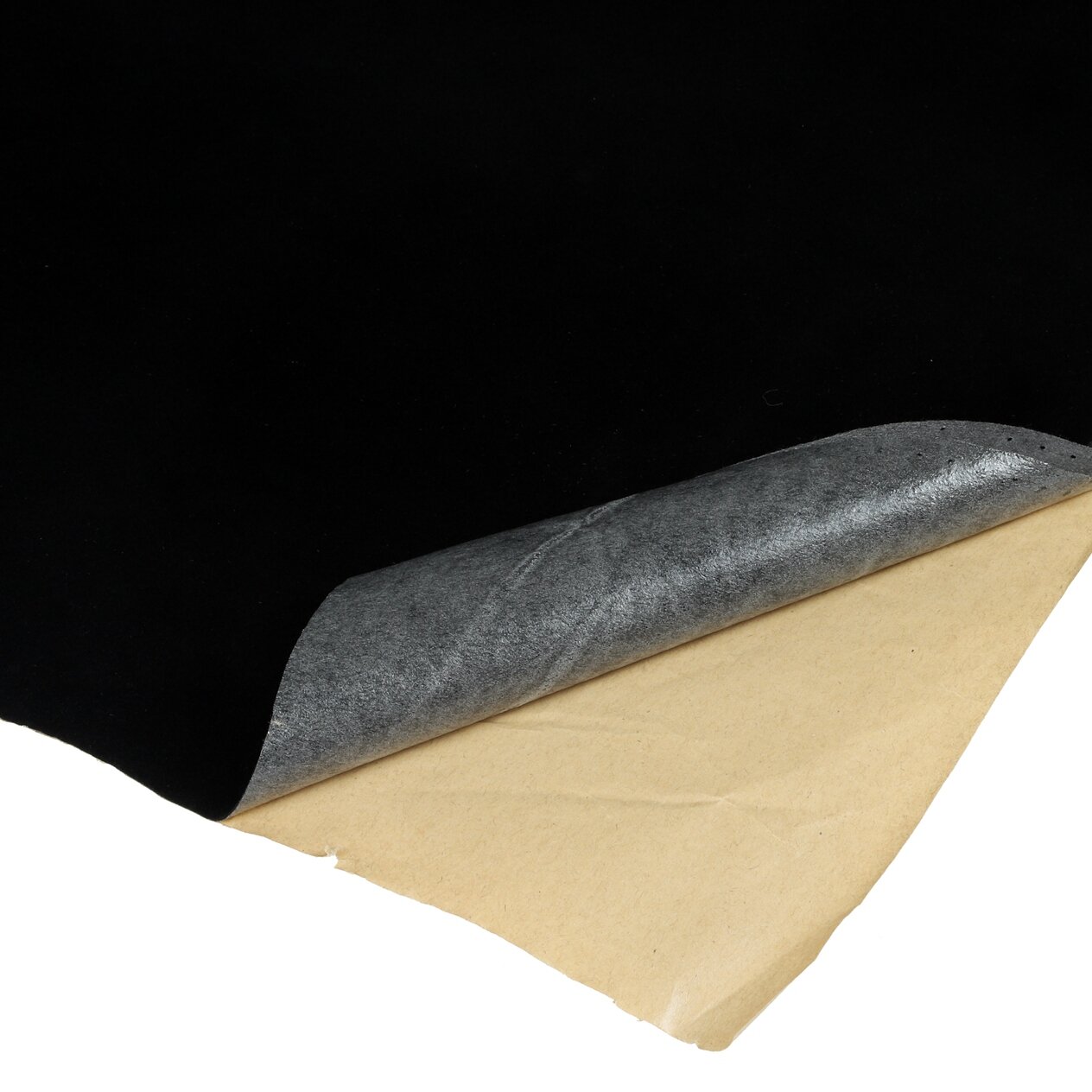
- End-to-End Vertical Manufacturing: Confirm that base substrate pretreatment, color dyeing, high-voltage flocking, acrylic coating, and precision cutting take place entirely in-house to prevent third-party delays and batch variance.
- Strict Anti-Tarnish Protocols: For fine jewelry and silverware packaging, verify reactive sulfur content under 5 ppm, pH levels within 5.5–7.5, and mandatory silver coupon accelerated corrosion testing.
- Global Eco-Regulatory Compliance: Check chemical screening documentation for REACH 253 SVHC, EU RoHS 2.0 (Directive 2015/863), EU Packaging & Packaging Waste Regulation (PPWR), US TPCH/CONEG, and California Proposition 65.
- Customization & Functional Capabilities: Verify specialized options including pressure-sensitive self-adhesive backings (peel strength ≥ 2 N/25mm), laser-cut positioning, tight die-cutting tolerances (±0.1mm), anti-static ESD properties (10⁶ to 10⁹ Ω), and UL94 V-0 flame retardancy.
Evaluating Technical Processes & Quality Control Systems
A comprehensive audit reviews the complete 7-stage manufacturing flow: substrate pretreatment, in-house color dyeing, water-based adhesive application, high-voltage electrostatic flocking (30–50 kV), thermal oven curing, post-finishing, and final inspection. Facilities with automated spectrophotometers maintain tight color consistency—holding Pantone Delta E values within ≤ 2.0 for standard items and ≤ 0.5 for custom orders—eliminating third-party dyeing risks and keeping batch-to-batch shade variation below 3%.
Quality assurance must be evaluated at four critical checkpoints: raw material receiving, in-process production, finished goods testing, and laboratory verification. Auditors should confirm that in-process monitoring checks field voltage, adhesive coat weight, and oven temperatures every 100 yards. Finished rolls must achieve dry/wet color fastness of Grade 4+, light fastness of Grade 6+, and pass 10-cycle 3M tape peel tests per FAMA standards. On-site lab screening should verify formaldehyde levels remain under 75 ppm (with 4-hour rapid testing) and banned carcinogenic Azo dyes stay under 30 ppm across 22 aromatic amines.

Chemical Safety & Specialized Application Audit Criteria
Verifying chemical safety involves inspecting independent third-party laboratory test reports. Ensure all flocking adhesives utilize solvent-free, water-based acrylic formulations free from phthalate plasticizers, organotin agents, and short/medium-chain chlorinated paraffins (SCCP/MCCP). In-factory VOC emissions during production must not exceed 10 mg/m³. For international export, EU PPWR rules limit combined heavy metals (Pb, Cd, Hg, Cr VI) to under 100 ppm, while total organic fluorine (PFAS) must remain below 50 mg/kg with zero intentional addition.
Audits should also evaluate performance characteristics specific to downstream applications:
- Jewelry & Watch Packaging: Requires sulfur-free dye systems and non-sulfur crosslinkers to shield silver items from oxidation and discoloration.
- Consumer Electronics: Demands anti-static flocking integrated with conductive fibers meeting MIL-STD-1686 specifications.
- Automotive Interiors (Sun visors, glove boxes): Requires UL94 V-0 flame resistance and 100,000-cycle abrasion resistance without fiber shedding.
Adhering to these strict standards enables top-tier suppliers to support global brands such as Dior, Chow Tai Fook, Moutai, Dyson, BYD, and Volkswagen.
Flocking Material Comparison & Technical Standards
The table below summarizes essential specifications, chemical compliance metrics, and target applications across key packaging flocking categories:
| Flocking Category | Base Substrate | Technical Parameters | Compliance Standards | Target Applications |
|---|---|---|---|---|
| Self-Adhesive Flocking | Spunlace, Nonwoven, Knitted, PVC | Peel strength ≥ 2 N/25mm; Water-based acrylic adhesive; 3M tape 10-cycle pass | REACH SVHC 253; RoHS 2.0; Formaldehyde ≤ 75 ppm | Paperboard, wood, plastic, and EVA gift box linings |
| Anti-Tarnish Jewelry Flocking | Spunlace, Cotton-Rayon blend | Reactive sulfur < 5 ppm; pH 5.5–7.5; Silver coupon test passed | Azo dyes ≤ 30 ppm; OEKO-TEX 100; REACH Annex XVII | Luxury jewelry boxes, ring trays, watch cases, silver pouches |
| ESD Protection Flocking | Nonwoven / Knitted with Conductive Fiber | Surface resistivity 10⁶–10⁹ Ω; Die-cut tolerance ±0.1mm; MIL-STD-1686 | RoHS 2015/863; Zero intentional PFAS addition | Smartphones, laptops, wearable electronics, medical devices |
| Recycled GRS Flocking | GRS Recycled Polyester / Nylon | Scope Cert: SGC-GRC01308-GRS-2026-05R3; Delta E ≤ 0.5 option; 100k abrasion cycles | GRS V4.0; EU PPWR heavy metals < 100 ppm; VOC < 10 mg/m³ | Eco-conscious perfume packaging, fashion gift boxes, luxury pouches |

Frequently Asked Questions
Q: What makes self-adhesive flocking fabric ideal for luxury box assembly?
A: Self-adhesive flocking comes pre-coated with an eco-friendly water-based acrylic pressure-sensitive adhesive protected by a release liner. Box makers simply peel and stick the fabric directly onto paperboard, wood, plastic, or EVA inserts. This eliminates liquid glue application, eliminates drying delays, and prevents adhesive bleed-through.
Q: How does anti-tarnish flocking protect silver jewelry from tarnishing?
A: Anti-tarnish properties are achieved by limiting reactive sulfur to less than 5 ppm, keeping the pH range strictly between 5.5 and 7.5, eliminating chloride ions, and prohibiting volatile organic acids. Accelerated silver coupon testing ensures no tarnish or staining occurs during storage.
Q: What are the typical lead times and minimum order quantities for custom flocking orders?
A: In-stock standard items have an MOQ of 1 yard with same-day dispatch. Custom color matching requires 500 to 1,000 yards per shade (with 50-yard trial run availability). Prototype samples are produced in 3 to 5 days, while bulk production takes 5 to 7 days (or 3 days on expedited runs).
Audit Summary & Recommendations
Auditing a packaging flocking fabric factory requires validating vertical manufacturing depth, chemical compliance documentation, strict quality control procedures, and specialized functional options. Working directly with a fully integrated OEM/ODM factory guarantees precise color matching, uniform pile density, and batch traceability for high-end luxury, electronics, and industrial packaging projects. For expert technical advice or product inquiries, contact 005@mingqianflocking.com.
About Mingqian Flocking
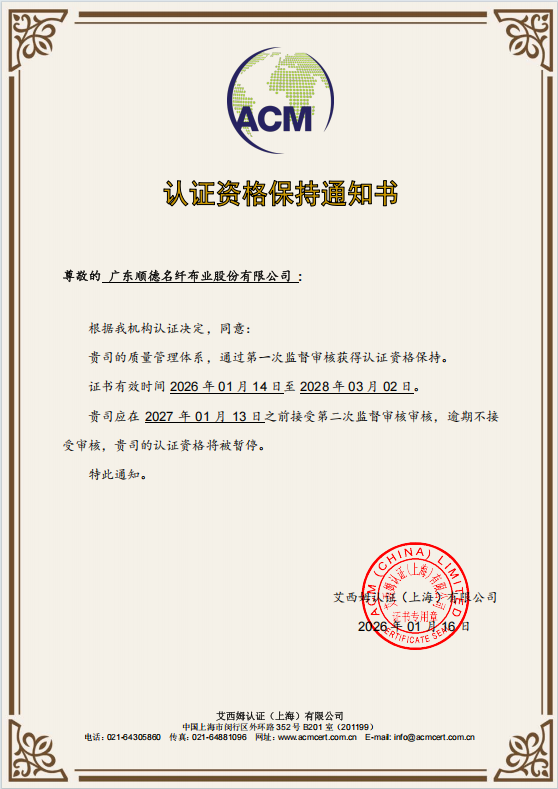
Operating under the Mingqian brand, Guangdong Shunde Mingqian Flocking Co., Ltd. was established in 2008 in Foshan City, Guangdong Province. The company operates a 12,000-square-meter facility with five automated electrostatic flocking lines, employing over 100 professionals and producing over 3,000,000 yards monthly. Certified under ISO 9001:2015 and GRS Version 4.0, Mingqian handles full vertical production from dyeing and flocking to coating and precision die-cutting. Fully compliant with REACH SVHC, RoHS 2.0, and EU PPWR standards, Mingqian serves premium clients in over 30 countries across luxury packaging, jewelry, automotive, and electronics industries.

REPORT