







-
 Agriculture
-
 Health-Care
-
 Environment
-
 Construction-Real-Estate
-
 Tools-Hardware
-
 Home-Garden
-
 Furniture
-
 Luggage-Bags-Cases
-
 Medical-devices-Supplies
-
 Gifts-Crafts
-
 Sports-Entertainment
-
 Food-Beverage
-
 Vehicles-Transportation
-
 Power-Transmission
-
 Material-Handling
-
 Renewable-Energy
-
 Safety
-
 Testing-Instrument-Equipment
-
 Construction-Building-Machinery
-
 Pet-Supplies
-
 Personal-Care-Household-Cleaning
-
 Vehicle-Accessories-Electronics-Tools
-
 School-Office-Supplies
-
 Packaging-Printing
-
 Mother-Kids-Toys
-
 Business-Services
-
 Commercial-Equipment-Machinery
-
 Apparel-Accessories
-
 Security
-
 Shoes-Accessories
-
 Vehicle-Parts-Accessories
-
 Jewelry-Eyewear-Watches-Accessories
-
 Lights-Lighting
-
 Fabric-Textile-Raw-Material
-
 Fabrication-Services
-
 Industrial-Machinery
-
 Consumer-Electronics
-
 Electrical-Equipment-Supplies
-
 Electronic-Components-Accessories-Telecommunications
-
 Home-Appliances
-
 Beauty
-
 Chemicals
-
 Rubber-Plastics
-
 Metals-Alloys


























































































































































































































































































































































































































































































































































































- Masonry Materials
- Curtain Walls & Accessories
- Earthwork Products
- Fireproofing Materials
- Heat Insulation Materials
- Plastic Building Materials
- Building Boards
- Soundproofing Materials
- Timber
- Waterproofing Materials
- Balustrades & Handrails
- Bathroom & Kitchen
- Flooring & Accessories
- Tiles & Accessories
- Door, Window & Accessories
- Fireplaces & Stoves
- Floor Heating Systems & Parts
- Stairs & Stair Parts
- Ceilings
- Elevators & Escalators
- Stone
- Countertops, Vanity Tops & Table Tops
- Mosaics
- Metal Building Materials
- Multifunctional Materials
- Ladders & Scaffoldings
- Mouldings
- Corner Guards
- Decorative Films
- Formwork
- Building & Industrial Glass
- Other Construction & Real Estate
- Wallpapers/Wall panels
- HVAC System & Parts
- Outdoor Facilities
- Prefabricated Buildings
- Festive & Party Supplies
- Bathroom Products
- Household Sundries
- Rain Gear
- Garden Supplies
- Household Cleaning Tools & Accessories
- Lighters & Smoking Accessories
- Home Storage & Organization
- Household Scales
- Smart Home Improvement
- Home Textiles
- Kitchenware
- Drinkware & Accessories
- Dinnerware, Coffee & Wine
- Home Decor
- Golf
- Fitness & Body Building
- Amusement Park Facilities
- Billiards, Board Game,Coin Operated Games
- Musical Instruments
- Outdoor Affordable Luxury Sports
- Camping & Hiking
- Fishing
- Sports Safety&Rehabilitation
- Ball Sports Equipments
- Water Sports
- Winter Sports
- Luxury Travel Equipments
- Sports Shoes, Bags & Accessories
- Cycling
- Other Sports & Entertainment Products
- Artificial Grass&Sports Flooring&Sports Court Equipment
- Scooters
- Food Ingredients
- Honey & Honey Products
- Snacks
- Nuts & Kernels
- Seafood
- Plant & Animal Oil
- Beverages
- Fruit & Vegetable Products
- Frog & Escargot
- Bean Products
- Egg Products
- Dairy Products
- Seasonings & Condiments
- Canned Food
- Instant Food
- Baked Goods
- Other Food & Beverage
- Meat & Poultry
- Confectionery
- Grain Products
- Feminie Care
- Hair Care & Styling
- Body Care
- Hands & Feet Care
- Hygiene Products
- Men's Grooming
- Laundry Cleaning Supplies
- Travel Size & Gift Sets
- Room Deodorizers
- Other Personal Care Products
- Pest Control Products
- Special Household Cleaning
- Floor Cleaning
- Kitchen & Bathroom Cleaning
- Oral Care
- Bath Supplies
- Yellow Pages
- Correction Supplies
- Office Binding Supplies
- Office Cutting Supplies
- Board Erasers
- Office Adhesives & Tapes
- Education Supplies
- Pencil Cases & Bags
- Notebooks & Writing Pads
- File Folder Accessories
- Calendars
- Writing Accessories
- Commercial Office Supplies
- Pencil Sharpeners
- Pens
- Letter Pad/Paper
- Paper Envelopes
- Desk Organizers
- Pencils
- Markers & Highlighters
- Filing Products
- Art Supplies
- Easels
- Badge Holder & Accessories
- Office Paper
- Printer Supplies
- Book Covers
- Other Office & School Supplies
- Stationery Set
- Boards
- Clipboards
- Stamps
- Drafting Supplies
- Stencils
- Electronic Dictionary
- Books
- Map
- Magazines
- Calculators
- Baby & Toddler Toys
- Educational Toys
- Classic Toys
- Dress Up & Pretend Play
- Toy Vehicle
- Stuffed Animals & Plush Toys
- Outdoor Toys & Structures
- Balloons & Accessories
- Baby Food
- Children's Clothing
- Baby Supplies & Products
- Maternity Clothes
- Kids Shoes
- Baby Care
- Novelty & Gag Toys
- Dolls & Accessories
- Puzzle & Games
- Blocks & Model Building Toys
- Toddler Clothing
- Baby Clothing
- Kids' Luggage & Bags
- Arts, Crafts & DIY Toys
- Action & Toy Figures
- Baby Appliances
- Hobbies & Models
- Remote Control Toys
- Promotional Toys
- Pregnancy & Maternity
- Hygiene Products
- Kid's Textile&Bedding
- Novelty & Special Use
- Toy Weapons
- Baby Gifts
- Baby Storage & Organization
- Auto Drive Systems
- ATV/UTV Parts & Accessories
- Marine Parts & Accessories
- Other Auto Parts
- Trailer Parts & Accessories
- Auto Transmission Systems
- Train Parts & Accessories
- Universal Parts
- Railway Parts & Accessories
- Auto Brake Systems
- Aviation Parts & Accessories
- Truck Parts & Accessories
- Auto Suspension Systems
- Auto Lighting Systems
- New Energy Vehicle Parts & Accessories
- Auto Steering Systems
- Wheels, Tires & Accessories
- Bus Parts & Accessories
- Auto Performance Parts
- Cooling System
- Go-Kart & Kart Racer Parts & Accessories
- Air Conditioning Systems
- Heavy Duty Vehicle Parts & Accessories
- Auto Electrical Systems
- Auto Body Systems
- Auto Engine Systems
- Container Parts & Accessories
- Motorcycle Parts & Accessories
- Refrigeration & Heat Exchange Equipment
- Machine Tool Equipment
- Food & Beverage Machinery
- Agricultural Machinery & Equipment
- Apparel & Textile Machinery
- Chemical Machinery
- Packaging Machines
- Paper Production Machinery
- Plastic & Rubber Processing Machinery
- Industrial Robots
- Electronic Products Machinery
- Metal & Metallurgy Machinery
- Woodworking Machinery
- Home Product Manufacturing Machinery
- Machinery Accessories
- Environmental Machinery
- Machinery Service
- Electrical Equipment Manufacturing Machinery
- Industrial Compressors & Parts
- Tobacco & Cigarette Machinery
- Production Line
- Used Industrial Machinery
- Electronics Production Machinery
- Other Machinery & Industrial Equipment
- Camera, Photo & Accessories
- Portable Audio, Video & Accessories
- Television, Home Audio, Video & Accessories
- Video Games & Accessories
- Mobile Phone & Accessories
- Electronic Publications
- Earphone & Headphone & Accessories
- Speakers & Accessories
- Smart Electronics
- TV Receivers & Accessories
- Mobile Phone & Computer Repair Parts
- Chargers, Batteries & Power Supplies
- Used Electronics
- VR, AR, MR Hardware & Software
- Projectors & Presentation Equipments
- Other Consumer Electronics
- Cables & Commonly Used Accessories
- Computer Hardware & Software
- Displays, Signage and Optoelectronics
- Discrete Semiconductors
- Wireless & IoT Module and Products
- Telecommunications
- Connectors, Terminals & Accessories
- Development Boards, Electronic Modules and Kits
- Circuit Protection
- Sensors
- Isolators
- Audio Components and Products
- Integrated Circuits
- Power Supplies
- Relays
- RF, Microwave and RFID
- Electronic Accessories & Supplies
- Passive Components
- PCB & PCBA
- Air Quality Appliances
- Home Appliance Parts
- Heating & Cooling Appliances
- Small Kitchen Appliances
- Laundry Appliances
- Water Heaters
- Water Treatment Appliances
- Refrigerators & Freezers
- Personal Care & Beauty Appliances
- Major Kitchen Appliances
- Cleaning Appliances
- Second-hand Appliances
- Smart Home Appliances
- Other Home Appliances
- Energy Chemicals
- Inorganic Chemicals
- Basic Organic Chemicals
- Agrochemicals
- Admixture & Additives
- Catalysts & Chemical Auxiliary Agents
- Pigments & Dyestuff
- Coating & Paint
- Daily Chemicals
- Polymer
- Organic Intermediate
- Adhesives & Sealants
- Chemical Waste
- Biological Chemical Products
- Surface Treatment Chemicals
- Painting & Coating
- Chemical Reagents
- Flavor & Fragrance
- Non-Explosive Demolition Agents
- Other Chemicals
- Custom Chemical Services

Selecting the Right Electrostatic Flocking Fabric: Pile Height & Weight Guide for Packaging
Designing premium packaging requires a strategic match between electrostatic flocking fabric specifications and the physical constraints of the box structure. By understanding how pile thickness, fiber dtex, and substrate fabric weight interact, designers and packaging engineers can achieve the ideal balance of aesthetic luxury, protective cushioning, and processing compatibility.
Understanding Electrostatic Flocking & Core Application Profiles
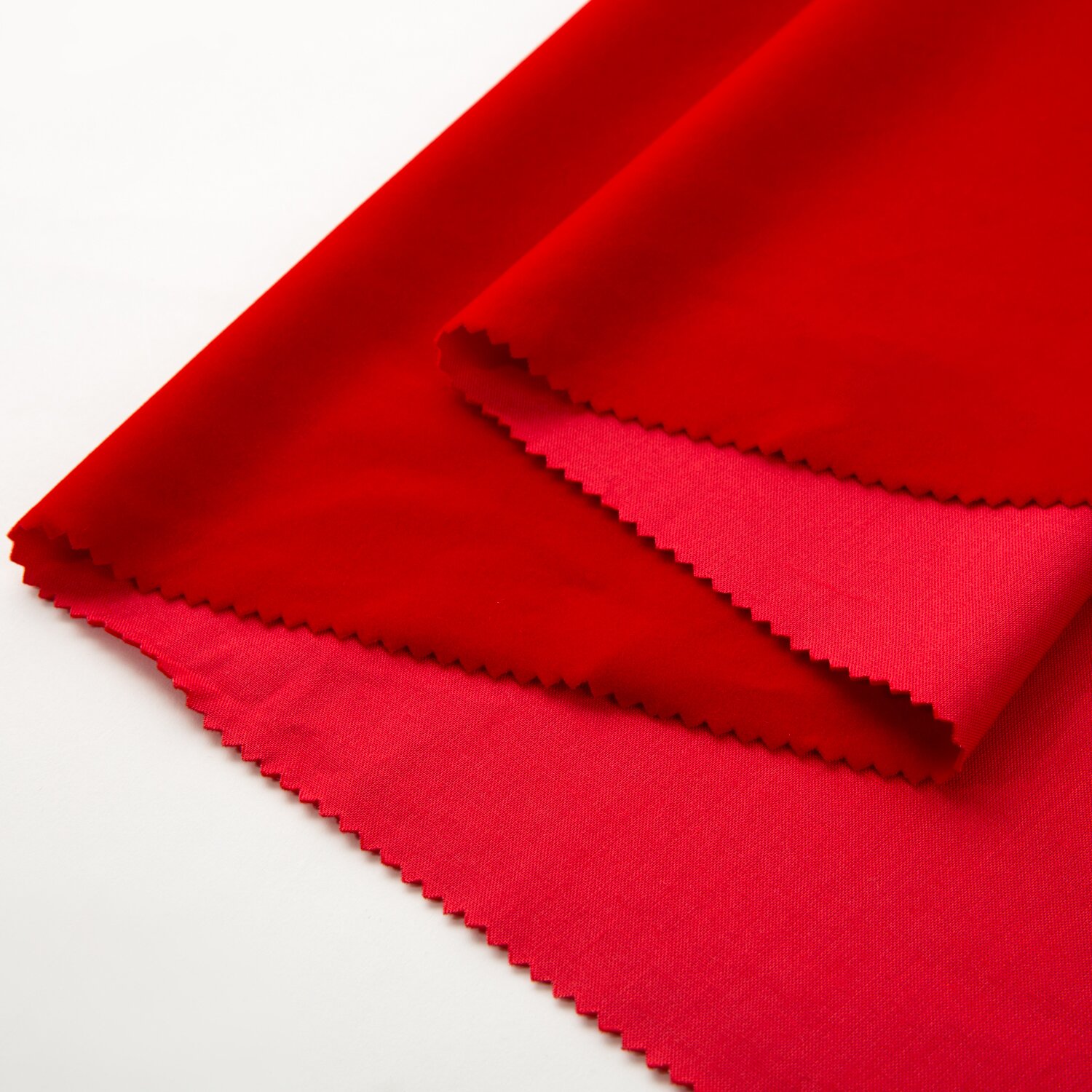
During electrostatic flocking, short fibers receive a high-voltage electrical charge (30 to 50 kV) that drives them vertically into an adhesive layer spread across a backing material. This creates a uniform, velvet-like surface. Selecting the right configuration depends on your structural needs and application requirements:
- Precision Linings (0.3 mm – 0.5 mm Pile): Tailored for compact jewelry box inserts and optical eyewear cases. Offers ultra-tight dimensional tolerances (down to 0.01 mm), preventing binding while shielding delicate lenses and gemstones from surface scratches.
- Luxurious Cushioning (0.6 mm – 1.2 mm Pile): Engineered for high-end cosmetic gift sets, perfume boxes, and luxury watch cases. Delivers deep tactile richness, effective impact absorption, and seamless coverage over base materials and folded edges.
- Flexible Substrate Options: From breathable nonwoven and resilient spunlace to skin-friendly cotton-rayon (viscose fiber) and stretchable knitted bases, backing weight dictates edge flexibility, structural firmness, and folding adaptability.
- Tarnish & Chemical Protections: High-value metal packaging requires strict chemical control—such as reactive sulfur levels under 5 ppm and aqueous pH values between 5.5 and 7.5—to ensure silver pieces remain free from tarnish and oxidation.
Technical Specifications & Substrate Selection
Selecting the ideal flocking substrate involves balancing edge clearance with post-processing requirements such as foil stamping, hot pressing, and die-cutting. For compact hard-shell enclosures, shorter pile lengths (0.3 mm–0.5 mm) on cotton-rayon or spunlace backings prevent bulkiness along hinge lines while maintaining heat resistance for gold foiling and silk-screen branding without fiber scorch.

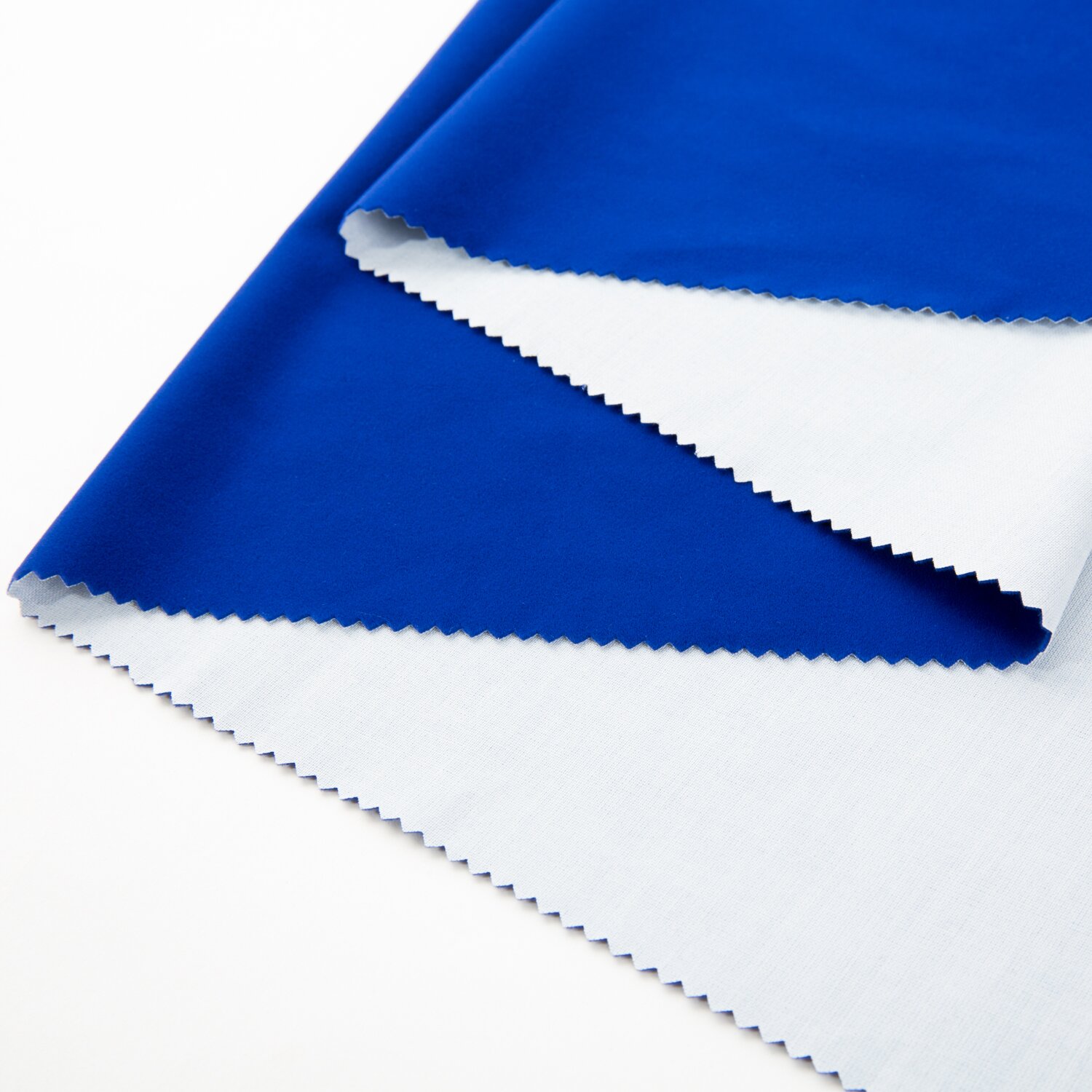
Conversely, for luxury spirits pouches, fragrance presentation boxes, or premium gift sets, high pile density (0.6 mm–1.2 mm) combined with knitted or cotton-rayon backings ensures total opacity over underlying paperboard. Darker velvet shades utilize specialized sulfur-free dyeing techniques that prevent chemical leaching, successfully enduring 3M tape 10-cycle peel testing without shedding.
Regulatory Compliance & Quality Assurances
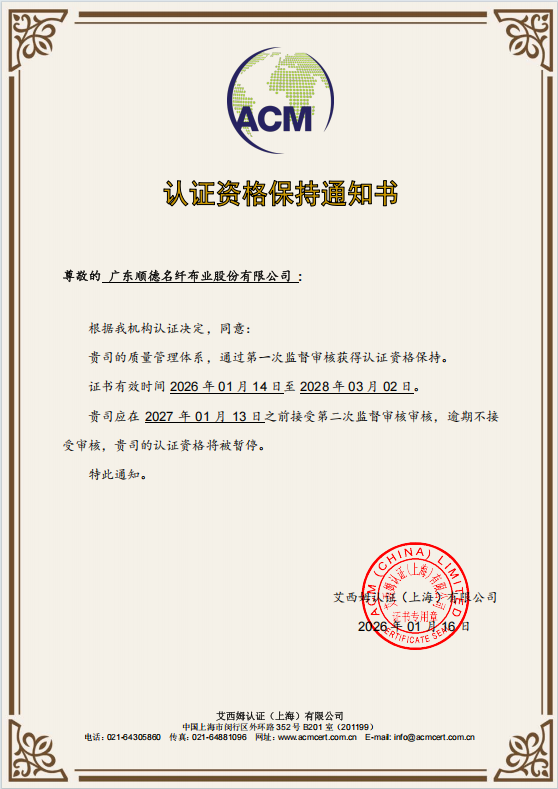
Ensuring international compliance is essential for global packaging supply chains. Flocking materials manufactured under certified ISO 9001 quality management and GRS (Global Recycled Standard, Certificate SGC-GRC01308-GRS-2026-05R3) guarantee reliable batch-to-batch consistency. Furthermore, chemical testing verified under EU REACH SVHC (Report CANEC26006555803) and EU RoHS 2.0 (Report CANEC26006555801) confirms zero intentional use of heavy metals, phthalates, or harmful azo dyes, permitting seamless distribution across global markets.
Packaging Specification Comparison Matrix
The table below presents recommended pile heights, backing substrates, and technical parameters tailored to specific packaging categories:
| Packaging Sector | Optimal Backing Material | Pile Thickness | Technical Benchmarks & Features |
|---|---|---|---|
| Jewelry Box Linings | Cotton-Rayon / Spunlace | 0.3 mm – 0.5 mm | Reactive sulfur < 5 ppm; pH 5.5–7.5; non-tarnishing; 3M tape 10-cycle peel pass |
| Eyewear Cases | Spunlace / CP Series | 0.3 mm – 0.6 mm | 0.01 mm pile precision; Grade 4+ dry/wet color fastness; scratch-resistant barrier |
| Cosmetics & Fragrance Boxes | Knitted / Cotton-Rayon | 0.6 mm – 1.0 mm | Suitable for hot pressing & gold stamping; ΔE ≤ 0.5 color accuracy; high-density velvet |
| Electronics & Industrial Trays | Nonwoven / Conductive Fiber | 0.5 mm – 1.2 mm | Surface resistivity 10⁶ to 10⁹ Ω; MIL-STD-1686 ESD compliant; ±0.1 mm die-cut accuracy |
Frequently Asked Questions
Q1: What impact does pile height have on logo foiling and screen printing quality?
A1: Low pile heights (0.3 mm to 0.5 mm) create a flat, rigid foundation suitable for intricate hot stamping, gold foiling, and sharp screen printing. Longer piles (0.8 mm to 1.2 mm) add plush texture but require adapted stamping pressure or localized position flocking to maintain clean typography.
Q2: Which chemical standards ensure silver jewelry does not turn black inside lined boxes?
A2: Flocking linings intended for fine silver must utilize sulfur-free dye compounds with reactive sulfur below 5 ppm, maintain an aqueous pH between 5.5 and 7.5, and emit negligible volatile organic acids. Accelerated silver strip corrosion tests must confirm zero surface discoloration.
Q3: What are the typical lead times and minimum order quantities for custom fabric specifications?
A3: Custom color and pile height orders generally carry an MOQ of 1,000 yards, with 50-yard trial runs available for testing. Standard production takes approximately 14 days, while rapid prototyping can be delivered within 24 to 72 hours.
Conclusion & Next Steps
Finding the ideal electrostatic flocking fabric requires matching fiber length and substrate weight to your design's functional tolerance and tactile targets. Low pile heights on spunlace or cotton-rayon bases excel in scratch protection and sharp hot-stamping for optical and jewelry containers. Higher pile heights on knitted backings deliver rich plushness for luxury cosmetics and watch packaging. Choosing fabrics certified under ISO 9001, GRS, REACH, and RoHS ensures long-term physical durability and international compliance. For personalized technical guidance, contact our team at 005@mingqianflocking.com.
Manufacturer Profile
Guangdong Shunde Mingqian Flocking Co., Ltd. is a specialized enterprise focused on electrostatic flocking R&D and advanced material manufacturing. Founded in 2008, the company operates five automated production lines across a 10,000-square-meter facility, outputting over 3,000,000 yards per month. Equipped with an in-house laboratory for formaldehyde testing and certified to ISO 9001 and GRS standards, the company releases over 10 innovative patterns annually, serving leading global packaging brands across jewelry, optical, beauty, and consumer electronics markets.

REPORT