







-
 Agriculture
-
 Health-Care
-
 Environment
-
 Construction-Real-Estate
-
 Tools-Hardware
-
 Home-Garden
-
 Furniture
-
 Luggage-Bags-Cases
-
 Medical-devices-Supplies
-
 Gifts-Crafts
-
 Sports-Entertainment
-
 Food-Beverage
-
 Vehicles-Transportation
-
 Power-Transmission
-
 Material-Handling
-
 Renewable-Energy
-
 Safety
-
 Testing-Instrument-Equipment
-
 Construction-Building-Machinery
-
 Pet-Supplies
-
 Personal-Care-Household-Cleaning
-
 Vehicle-Accessories-Electronics-Tools
-
 School-Office-Supplies
-
 Packaging-Printing
-
 Mother-Kids-Toys
-
 Business-Services
-
 Commercial-Equipment-Machinery
-
 Apparel-Accessories
-
 Security
-
 Shoes-Accessories
-
 Vehicle-Parts-Accessories
-
 Jewelry-Eyewear-Watches-Accessories
-
 Lights-Lighting
-
 Fabric-Textile-Raw-Material
-
 Fabrication-Services
-
 Industrial-Machinery
-
 Consumer-Electronics
-
 Electrical-Equipment-Supplies
-
 Electronic-Components-Accessories-Telecommunications
-
 Home-Appliances
-
 Beauty
-
 Chemicals
-
 Rubber-Plastics
-
 Metals-Alloys


























































































































































































































































































































































































































































































































































































- Masonry Materials
- Curtain Walls & Accessories
- Earthwork Products
- Fireproofing Materials
- Heat Insulation Materials
- Plastic Building Materials
- Building Boards
- Soundproofing Materials
- Timber
- Waterproofing Materials
- Balustrades & Handrails
- Bathroom & Kitchen
- Flooring & Accessories
- Tiles & Accessories
- Door, Window & Accessories
- Fireplaces & Stoves
- Floor Heating Systems & Parts
- Stairs & Stair Parts
- Ceilings
- Elevators & Escalators
- Stone
- Countertops, Vanity Tops & Table Tops
- Mosaics
- Metal Building Materials
- Multifunctional Materials
- Ladders & Scaffoldings
- Mouldings
- Corner Guards
- Decorative Films
- Formwork
- Building & Industrial Glass
- Other Construction & Real Estate
- Wallpapers/Wall panels
- HVAC System & Parts
- Outdoor Facilities
- Prefabricated Buildings
- Festive & Party Supplies
- Bathroom Products
- Household Sundries
- Rain Gear
- Garden Supplies
- Household Cleaning Tools & Accessories
- Lighters & Smoking Accessories
- Home Storage & Organization
- Household Scales
- Smart Home Improvement
- Home Textiles
- Kitchenware
- Drinkware & Accessories
- Dinnerware, Coffee & Wine
- Home Decor
- Golf
- Fitness & Body Building
- Amusement Park Facilities
- Billiards, Board Game,Coin Operated Games
- Musical Instruments
- Outdoor Affordable Luxury Sports
- Camping & Hiking
- Fishing
- Sports Safety&Rehabilitation
- Ball Sports Equipments
- Water Sports
- Winter Sports
- Luxury Travel Equipments
- Sports Shoes, Bags & Accessories
- Cycling
- Other Sports & Entertainment Products
- Artificial Grass&Sports Flooring&Sports Court Equipment
- Scooters
- Food Ingredients
- Honey & Honey Products
- Snacks
- Nuts & Kernels
- Seafood
- Plant & Animal Oil
- Beverages
- Fruit & Vegetable Products
- Frog & Escargot
- Bean Products
- Egg Products
- Dairy Products
- Seasonings & Condiments
- Canned Food
- Instant Food
- Baked Goods
- Other Food & Beverage
- Meat & Poultry
- Confectionery
- Grain Products
- Feminie Care
- Hair Care & Styling
- Body Care
- Hands & Feet Care
- Hygiene Products
- Men's Grooming
- Laundry Cleaning Supplies
- Travel Size & Gift Sets
- Room Deodorizers
- Other Personal Care Products
- Pest Control Products
- Special Household Cleaning
- Floor Cleaning
- Kitchen & Bathroom Cleaning
- Oral Care
- Bath Supplies
- Yellow Pages
- Correction Supplies
- Office Binding Supplies
- Office Cutting Supplies
- Board Erasers
- Office Adhesives & Tapes
- Education Supplies
- Pencil Cases & Bags
- Notebooks & Writing Pads
- File Folder Accessories
- Calendars
- Writing Accessories
- Commercial Office Supplies
- Pencil Sharpeners
- Pens
- Letter Pad/Paper
- Paper Envelopes
- Desk Organizers
- Pencils
- Markers & Highlighters
- Filing Products
- Art Supplies
- Easels
- Badge Holder & Accessories
- Office Paper
- Printer Supplies
- Book Covers
- Other Office & School Supplies
- Stationery Set
- Boards
- Clipboards
- Stamps
- Drafting Supplies
- Stencils
- Electronic Dictionary
- Books
- Map
- Magazines
- Calculators
- Baby & Toddler Toys
- Educational Toys
- Classic Toys
- Dress Up & Pretend Play
- Toy Vehicle
- Stuffed Animals & Plush Toys
- Outdoor Toys & Structures
- Balloons & Accessories
- Baby Food
- Children's Clothing
- Baby Supplies & Products
- Maternity Clothes
- Kids Shoes
- Baby Care
- Novelty & Gag Toys
- Dolls & Accessories
- Puzzle & Games
- Blocks & Model Building Toys
- Toddler Clothing
- Baby Clothing
- Kids' Luggage & Bags
- Arts, Crafts & DIY Toys
- Action & Toy Figures
- Baby Appliances
- Hobbies & Models
- Remote Control Toys
- Promotional Toys
- Pregnancy & Maternity
- Hygiene Products
- Kid's Textile&Bedding
- Novelty & Special Use
- Toy Weapons
- Baby Gifts
- Baby Storage & Organization
- Auto Drive Systems
- ATV/UTV Parts & Accessories
- Marine Parts & Accessories
- Other Auto Parts
- Trailer Parts & Accessories
- Auto Transmission Systems
- Train Parts & Accessories
- Universal Parts
- Railway Parts & Accessories
- Auto Brake Systems
- Aviation Parts & Accessories
- Truck Parts & Accessories
- Auto Suspension Systems
- Auto Lighting Systems
- New Energy Vehicle Parts & Accessories
- Auto Steering Systems
- Wheels, Tires & Accessories
- Bus Parts & Accessories
- Auto Performance Parts
- Cooling System
- Go-Kart & Kart Racer Parts & Accessories
- Air Conditioning Systems
- Heavy Duty Vehicle Parts & Accessories
- Auto Electrical Systems
- Auto Body Systems
- Auto Engine Systems
- Container Parts & Accessories
- Motorcycle Parts & Accessories
- Refrigeration & Heat Exchange Equipment
- Machine Tool Equipment
- Food & Beverage Machinery
- Agricultural Machinery & Equipment
- Apparel & Textile Machinery
- Chemical Machinery
- Packaging Machines
- Paper Production Machinery
- Plastic & Rubber Processing Machinery
- Industrial Robots
- Electronic Products Machinery
- Metal & Metallurgy Machinery
- Woodworking Machinery
- Home Product Manufacturing Machinery
- Machinery Accessories
- Environmental Machinery
- Machinery Service
- Electrical Equipment Manufacturing Machinery
- Industrial Compressors & Parts
- Tobacco & Cigarette Machinery
- Production Line
- Used Industrial Machinery
- Electronics Production Machinery
- Other Machinery & Industrial Equipment
- Camera, Photo & Accessories
- Portable Audio, Video & Accessories
- Television, Home Audio, Video & Accessories
- Video Games & Accessories
- Mobile Phone & Accessories
- Electronic Publications
- Earphone & Headphone & Accessories
- Speakers & Accessories
- Smart Electronics
- TV Receivers & Accessories
- Mobile Phone & Computer Repair Parts
- Chargers, Batteries & Power Supplies
- Used Electronics
- VR, AR, MR Hardware & Software
- Projectors & Presentation Equipments
- Other Consumer Electronics
- Cables & Commonly Used Accessories
- Computer Hardware & Software
- Displays, Signage and Optoelectronics
- Discrete Semiconductors
- Wireless & IoT Module and Products
- Telecommunications
- Connectors, Terminals & Accessories
- Development Boards, Electronic Modules and Kits
- Circuit Protection
- Sensors
- Isolators
- Audio Components and Products
- Integrated Circuits
- Power Supplies
- Relays
- RF, Microwave and RFID
- Electronic Accessories & Supplies
- Passive Components
- PCB & PCBA
- Air Quality Appliances
- Home Appliance Parts
- Heating & Cooling Appliances
- Small Kitchen Appliances
- Laundry Appliances
- Water Heaters
- Water Treatment Appliances
- Refrigerators & Freezers
- Personal Care & Beauty Appliances
- Major Kitchen Appliances
- Cleaning Appliances
- Second-hand Appliances
- Smart Home Appliances
- Other Home Appliances
- Energy Chemicals
- Inorganic Chemicals
- Basic Organic Chemicals
- Agrochemicals
- Admixture & Additives
- Catalysts & Chemical Auxiliary Agents
- Pigments & Dyestuff
- Coating & Paint
- Daily Chemicals
- Polymer
- Organic Intermediate
- Adhesives & Sealants
- Chemical Waste
- Biological Chemical Products
- Surface Treatment Chemicals
- Painting & Coating
- Chemical Reagents
- Flavor & Fragrance
- Non-Explosive Demolition Agents
- Other Chemicals
- Custom Chemical Services

Technical Drawing Handoffs: How to Ensure Artificial Leather Fits Complex Upholstery Shapes
Achieving a flawless, wrinkle-free fit when tailoring artificial leather around intricate furniture contours—such as ergonomic armrests, molded headboards, and curved seating—depends heavily on seamless technical communication between product designers and material manufacturers. To prevent seam splitting, puckering, or uneven stretch, technical drawing handoffs must combine comprehensive geometric data with explicit physical material parameters.
Key Requirements for Furniture Technical Handoffs
- Dual Format File Sharing: Deliver 3D CAD surface models (STEP or IGES) alongside flat 2D vector templates (DXF or DWG) containing explicit seam allowances, notch locations, and grain layout directions.
- Directional Elasticity & Backing Annotations: Clearly define warp and weft stretch capabilities and specify the exact backing substrate (microfiber, woven, or knitted fabric) to control tension around tight radii.
- Thickness Specifications & Bend Tolerances: Specify precise material thickness (ranging between 0.9 mm and 1.4 mm) and define minimum bend radii to avoid bunching or structural deformation on tight contours.
- Performance & Utility Criteria: Detail essential physical requirements, including abrasion resistance, UV stability, stain resistance, and flame retardancy for commercial furniture and automotive seating.
Engineering Analysis & Material Behavior
Because synthetic leathers exhibit anisotropic mechanical behavior—meaning they elongate differently along the warp versus the weft direction—flat 2D cut patterns must be mapped precisely against 3D surface meshes. Misaligning stretch vectors relative to complex furniture curves leads to surface buckling, seam strain, and premature wear over time. Leading supplier Dongguan Cigno Leather Co., Ltd. formulates specialized PU, PVC, water-based, solvent-free, and microfiber leathers designed specifically to wrap smoothly over contoured foam structures.
Consider a large-scale automotive project in Mexico involving 50,000 meters of custom synthetic leather for vehicle seats and interior paneling. Detailed technical specifications detailing color tolerances, grain orientation, material thickness, backing structures, flame retardancy, and wear resistance ensured exact contour wrapping and consistent aesthetic finish across the entire production run.
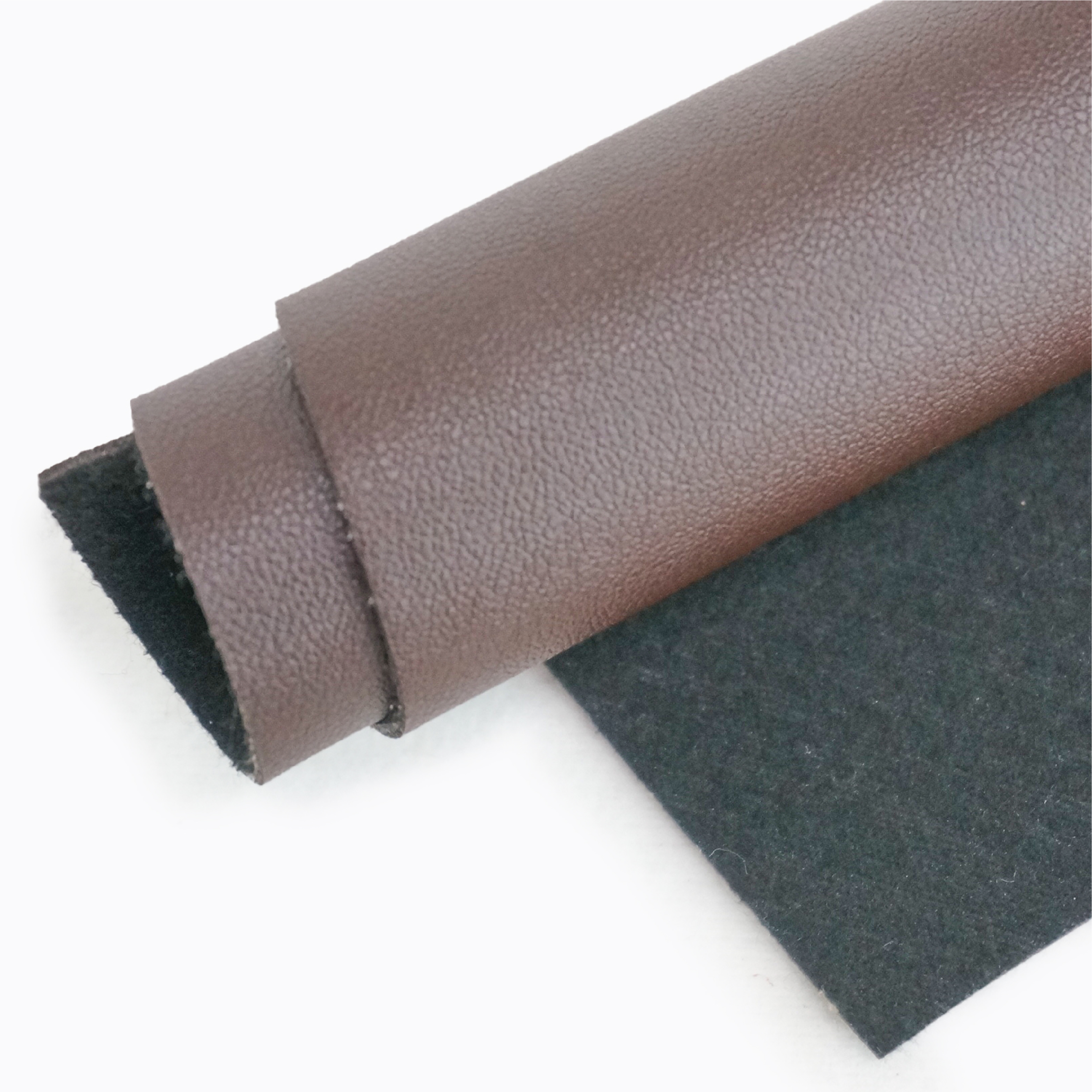
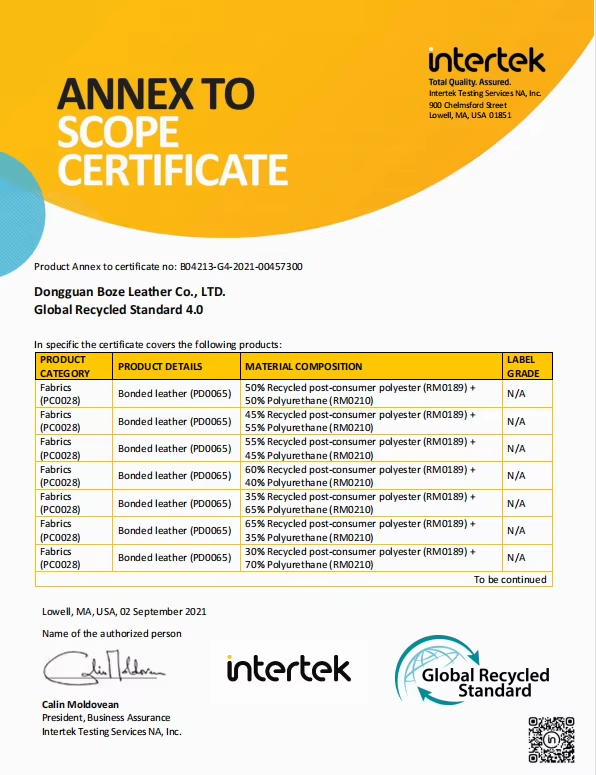
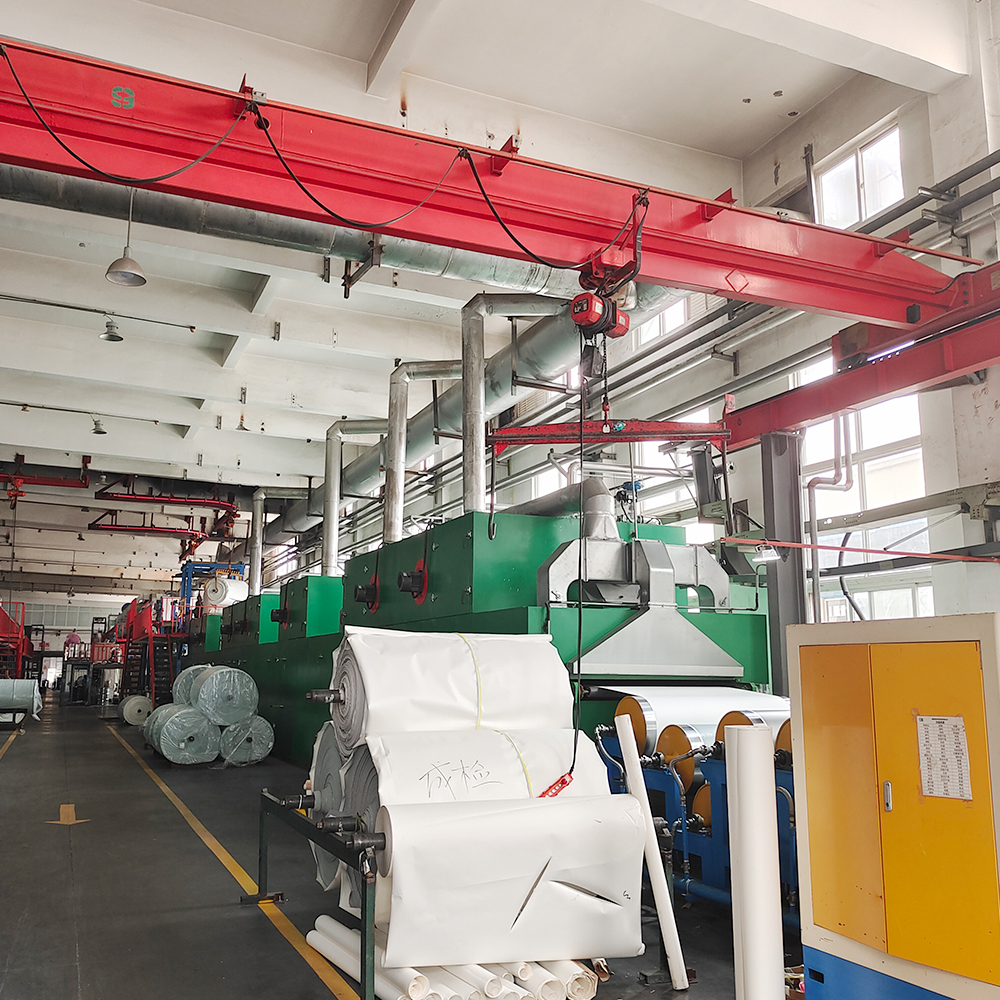
To ensure high performance during tight-radius wrapping, materials undergo stringent quality checks adhering to ISO 9001 standards, covering incoming raw material testing, lab evaluation, precise color matching, and finished batch inspection. Utilizing certified materials meeting global compliance standards—such as GRS (Certificate B04213-G4), USDA (Certificate 521076632086130490), and Oeko-Tex 100 (Certificate SH015 120749)—ensures superior tensile strength, seam integrity, and peel resistance under continuous upholstery tension.
Material & Drawing Approach Comparison
The strategy used when preparing drawing packages directly impacts tailoring precision, scrap rates, and final product quality:
| Drawing Specification / Material Option | 2D DXF Patterns Only | 3D CAD (STEP) + 2D Cut Files | Custom Microfiber / Solvent-Free PU Option |
|---|---|---|---|
| Contour Fit Accuracy | Moderate (Requires manual fitting adjustments) | High (Direct mapping to 3D foam geometry) | Superior (High elasticity & shape retention) |
| Thickness Range | Standard (0.8–1.0 mm) | Engineered (0.9–1.4 mm specified) | Customizable (0.9–1.4 mm with fine nappa texture) |
| Stretch & Alignment Control | Unspecified warp/weft limits | Annotated stretch orientation & grain vectors | Controlled directional elongation for complex curves |
| Key Physical Properties | Basic surface finish | Includes seam & radius tolerances | UV resistance, flame retardant, scratch resistant |
Frequently Asked Questions
Which technical file formats should be provided to artificial leather manufacturers?
You should supply 3D CAD files (STEP/IGES) for shape validation along with 2D vector pattern files (DXF/DWG) for cutting operations. Dimensioned PDF engineering drawings noting grain direction, seam allowances, and assembly notes should also be included.
Why is material thickness critical when tailoring tight curves?
Synthetic leather thickness generally falls between 0.9 mm and 1.4 mm. Thicker grades require larger corner radii to avoid bunching along folds, while specialized microfiber-backed synthetic leathers afford greater flexibility for sharp contours and detailed tufting.
Can functional properties and custom aesthetics be aligned with drawing specs?
Yes, custom colors, surface textures (such as fine nappa), perforations, and performance characteristics (such as flame retardancy, UV resistance, scratch resistance, and antibacterial treatments) can be tailored to meet engineering documentation and reference samples.
Conclusion & Best Practices
To achieve a seamless fit when applying synthetic leather to complex furniture geometries, designers must bridge the gap between 3D CAD models, 2D vector patterns, and comprehensive physical material specs. Partnering with a manufacturer operating under ISO 9001 quality controls and backed by international certifications (GRS, USDA, Oeko-Tex 100) ensures flawless upholstery results and minimal material waste. For custom engineering inquiries or technical assistance, contact our expert team at vicky@bozeleather.com.
About Dongguan Cigno Leather Co., Ltd.
Dongguan Cigno Leather Co., Ltd. is a premier manufacturer of sustainable, high-performance synthetic leathers. Founded in 2007, the company operates a 100,000 m² production facility with a monthly output capacity of 6,000,000 meters and a workforce of 50 skilled professionals. Our product lineup complies with rigorous international certifications including GRS, USDA, and Oeko-Tex 100, serving industrial, automotive, and furniture clients globally.

REPORT