







-
 Agriculture
-
 Health-Care
-
 Environment
-
 Construction-Real-Estate
-
 Tools-Hardware
-
 Home-Garden
-
 Furniture
-
 Luggage-Bags-Cases
-
 Medical-devices-Supplies
-
 Gifts-Crafts
-
 Sports-Entertainment
-
 Food-Beverage
-
 Vehicles-Transportation
-
 Power-Transmission
-
 Material-Handling
-
 Renewable-Energy
-
 Safety
-
 Testing-Instrument-Equipment
-
 Construction-Building-Machinery
-
 Pet-Supplies
-
 Personal-Care-Household-Cleaning
-
 Vehicle-Accessories-Electronics-Tools
-
 School-Office-Supplies
-
 Packaging-Printing
-
 Mother-Kids-Toys
-
 Business-Services
-
 Commercial-Equipment-Machinery
-
 Apparel-Accessories
-
 Security
-
 Shoes-Accessories
-
 Vehicle-Parts-Accessories
-
 Jewelry-Eyewear-Watches-Accessories
-
 Lights-Lighting
-
 Fabric-Textile-Raw-Material
-
 Fabrication-Services
-
 Industrial-Machinery
-
 Consumer-Electronics
-
 Electrical-Equipment-Supplies
-
 Electronic-Components-Accessories-Telecommunications
-
 Home-Appliances
-
 Beauty
-
 Chemicals
-
 Rubber-Plastics
-
 Metals-Alloys


























































































































































































































































































































































































































































































































































































- Masonry Materials
- Curtain Walls & Accessories
- Earthwork Products
- Fireproofing Materials
- Heat Insulation Materials
- Plastic Building Materials
- Building Boards
- Soundproofing Materials
- Timber
- Waterproofing Materials
- Balustrades & Handrails
- Bathroom & Kitchen
- Flooring & Accessories
- Tiles & Accessories
- Door, Window & Accessories
- Fireplaces & Stoves
- Floor Heating Systems & Parts
- Stairs & Stair Parts
- Ceilings
- Elevators & Escalators
- Stone
- Countertops, Vanity Tops & Table Tops
- Mosaics
- Metal Building Materials
- Multifunctional Materials
- Ladders & Scaffoldings
- Mouldings
- Corner Guards
- Decorative Films
- Formwork
- Building & Industrial Glass
- Other Construction & Real Estate
- Wallpapers/Wall panels
- HVAC System & Parts
- Outdoor Facilities
- Prefabricated Buildings
- Festive & Party Supplies
- Bathroom Products
- Household Sundries
- Rain Gear
- Garden Supplies
- Household Cleaning Tools & Accessories
- Lighters & Smoking Accessories
- Home Storage & Organization
- Household Scales
- Smart Home Improvement
- Home Textiles
- Kitchenware
- Drinkware & Accessories
- Dinnerware, Coffee & Wine
- Home Decor
- Golf
- Fitness & Body Building
- Amusement Park Facilities
- Billiards, Board Game,Coin Operated Games
- Musical Instruments
- Outdoor Affordable Luxury Sports
- Camping & Hiking
- Fishing
- Sports Safety&Rehabilitation
- Ball Sports Equipments
- Water Sports
- Winter Sports
- Luxury Travel Equipments
- Sports Shoes, Bags & Accessories
- Cycling
- Other Sports & Entertainment Products
- Artificial Grass&Sports Flooring&Sports Court Equipment
- Scooters
- Food Ingredients
- Honey & Honey Products
- Snacks
- Nuts & Kernels
- Seafood
- Plant & Animal Oil
- Beverages
- Fruit & Vegetable Products
- Frog & Escargot
- Bean Products
- Egg Products
- Dairy Products
- Seasonings & Condiments
- Canned Food
- Instant Food
- Baked Goods
- Other Food & Beverage
- Meat & Poultry
- Confectionery
- Grain Products
- Feminie Care
- Hair Care & Styling
- Body Care
- Hands & Feet Care
- Hygiene Products
- Men's Grooming
- Laundry Cleaning Supplies
- Travel Size & Gift Sets
- Room Deodorizers
- Other Personal Care Products
- Pest Control Products
- Special Household Cleaning
- Floor Cleaning
- Kitchen & Bathroom Cleaning
- Oral Care
- Bath Supplies
- Yellow Pages
- Correction Supplies
- Office Binding Supplies
- Office Cutting Supplies
- Board Erasers
- Office Adhesives & Tapes
- Education Supplies
- Pencil Cases & Bags
- Notebooks & Writing Pads
- File Folder Accessories
- Calendars
- Writing Accessories
- Commercial Office Supplies
- Pencil Sharpeners
- Pens
- Letter Pad/Paper
- Paper Envelopes
- Desk Organizers
- Pencils
- Markers & Highlighters
- Filing Products
- Art Supplies
- Easels
- Badge Holder & Accessories
- Office Paper
- Printer Supplies
- Book Covers
- Other Office & School Supplies
- Stationery Set
- Boards
- Clipboards
- Stamps
- Drafting Supplies
- Stencils
- Electronic Dictionary
- Books
- Map
- Magazines
- Calculators
- Baby & Toddler Toys
- Educational Toys
- Classic Toys
- Dress Up & Pretend Play
- Toy Vehicle
- Stuffed Animals & Plush Toys
- Outdoor Toys & Structures
- Balloons & Accessories
- Baby Food
- Children's Clothing
- Baby Supplies & Products
- Maternity Clothes
- Kids Shoes
- Baby Care
- Novelty & Gag Toys
- Dolls & Accessories
- Puzzle & Games
- Blocks & Model Building Toys
- Toddler Clothing
- Baby Clothing
- Kids' Luggage & Bags
- Arts, Crafts & DIY Toys
- Action & Toy Figures
- Baby Appliances
- Hobbies & Models
- Remote Control Toys
- Promotional Toys
- Pregnancy & Maternity
- Hygiene Products
- Kid's Textile&Bedding
- Novelty & Special Use
- Toy Weapons
- Baby Gifts
- Baby Storage & Organization
- Auto Drive Systems
- ATV/UTV Parts & Accessories
- Marine Parts & Accessories
- Other Auto Parts
- Trailer Parts & Accessories
- Auto Transmission Systems
- Train Parts & Accessories
- Universal Parts
- Railway Parts & Accessories
- Auto Brake Systems
- Aviation Parts & Accessories
- Truck Parts & Accessories
- Auto Suspension Systems
- Auto Lighting Systems
- New Energy Vehicle Parts & Accessories
- Auto Steering Systems
- Wheels, Tires & Accessories
- Bus Parts & Accessories
- Auto Performance Parts
- Cooling System
- Go-Kart & Kart Racer Parts & Accessories
- Air Conditioning Systems
- Heavy Duty Vehicle Parts & Accessories
- Auto Electrical Systems
- Auto Body Systems
- Auto Engine Systems
- Container Parts & Accessories
- Motorcycle Parts & Accessories
- Refrigeration & Heat Exchange Equipment
- Machine Tool Equipment
- Food & Beverage Machinery
- Agricultural Machinery & Equipment
- Apparel & Textile Machinery
- Chemical Machinery
- Packaging Machines
- Paper Production Machinery
- Plastic & Rubber Processing Machinery
- Industrial Robots
- Electronic Products Machinery
- Metal & Metallurgy Machinery
- Woodworking Machinery
- Home Product Manufacturing Machinery
- Machinery Accessories
- Environmental Machinery
- Machinery Service
- Electrical Equipment Manufacturing Machinery
- Industrial Compressors & Parts
- Tobacco & Cigarette Machinery
- Production Line
- Used Industrial Machinery
- Electronics Production Machinery
- Other Machinery & Industrial Equipment
- Camera, Photo & Accessories
- Portable Audio, Video & Accessories
- Television, Home Audio, Video & Accessories
- Video Games & Accessories
- Mobile Phone & Accessories
- Electronic Publications
- Earphone & Headphone & Accessories
- Speakers & Accessories
- Smart Electronics
- TV Receivers & Accessories
- Mobile Phone & Computer Repair Parts
- Chargers, Batteries & Power Supplies
- Used Electronics
- VR, AR, MR Hardware & Software
- Projectors & Presentation Equipments
- Other Consumer Electronics
- Cables & Commonly Used Accessories
- Computer Hardware & Software
- Displays, Signage and Optoelectronics
- Discrete Semiconductors
- Wireless & IoT Module and Products
- Telecommunications
- Connectors, Terminals & Accessories
- Development Boards, Electronic Modules and Kits
- Circuit Protection
- Sensors
- Isolators
- Audio Components and Products
- Integrated Circuits
- Power Supplies
- Relays
- RF, Microwave and RFID
- Electronic Accessories & Supplies
- Passive Components
- PCB & PCBA
- Air Quality Appliances
- Home Appliance Parts
- Heating & Cooling Appliances
- Small Kitchen Appliances
- Laundry Appliances
- Water Heaters
- Water Treatment Appliances
- Refrigerators & Freezers
- Personal Care & Beauty Appliances
- Major Kitchen Appliances
- Cleaning Appliances
- Second-hand Appliances
- Smart Home Appliances
- Other Home Appliances
- Energy Chemicals
- Inorganic Chemicals
- Basic Organic Chemicals
- Agrochemicals
- Admixture & Additives
- Catalysts & Chemical Auxiliary Agents
- Pigments & Dyestuff
- Coating & Paint
- Daily Chemicals
- Polymer
- Organic Intermediate
- Adhesives & Sealants
- Chemical Waste
- Biological Chemical Products
- Surface Treatment Chemicals
- Painting & Coating
- Chemical Reagents
- Flavor & Fragrance
- Non-Explosive Demolition Agents
- Other Chemicals
- Custom Chemical Services

Wafer Automatic Packaging System Maintenance Access Guide
Understanding Maintenance Access on a Wafer Packaging Line
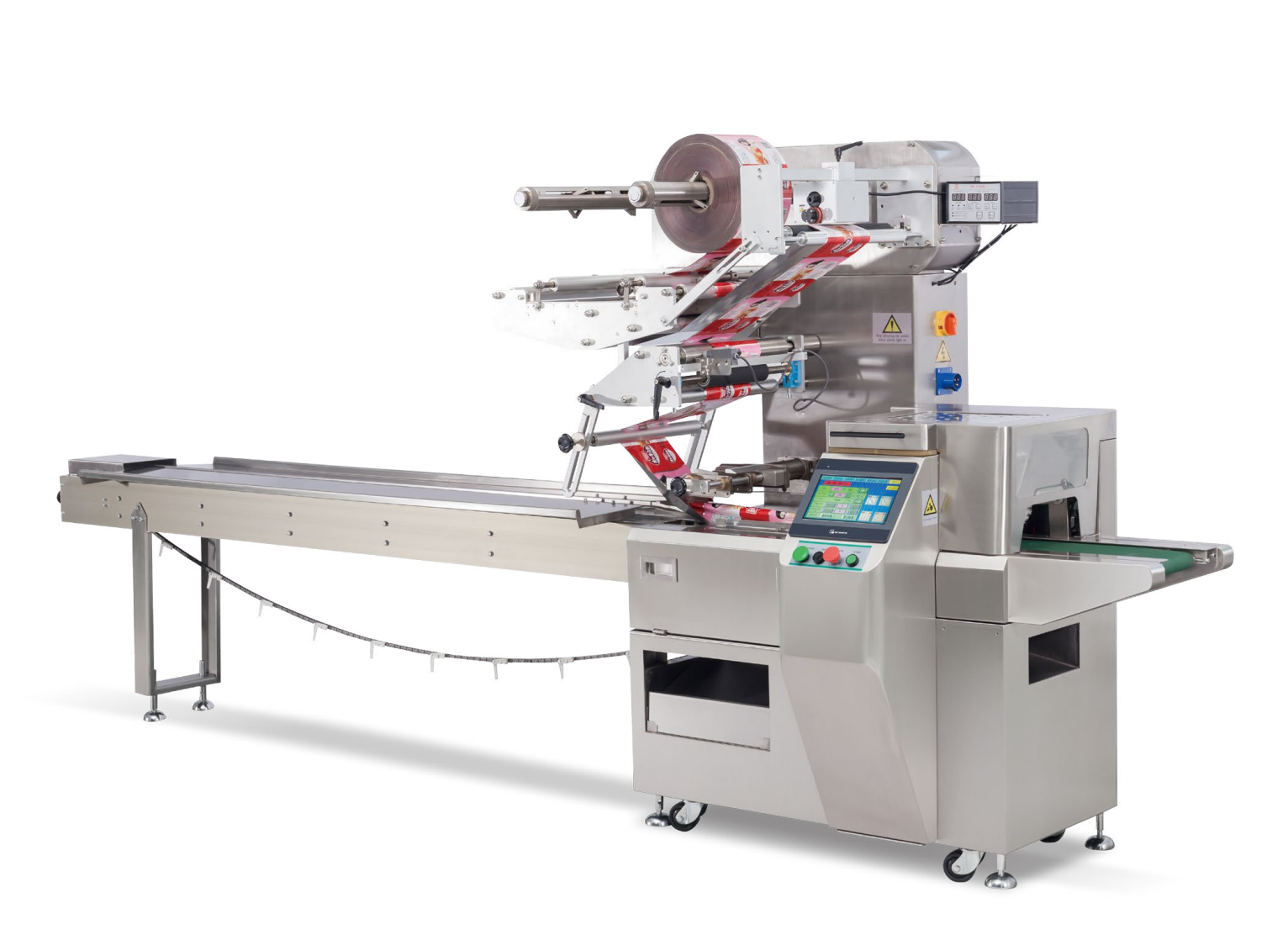
Maintenance access on a wafer automatic packaging system includes both digital controls and physical access to the assemblies that feed, align, wrap, seal, cut, inspect, and discharge the product. Operators can manage recipes and alarms from the HMI, while technicians can reach the product path, film route, sealing stations, sensors, cutter, and rejection unit for inspection and adjustment.
Control, Recipe, and Diagnostic Access
Touchscreen HMI and Recipe Storage
Depending on the selected model, the system is equipped with a 7-inch to 15.6-inch multilingual color touchscreen HMI. The interface supports recipe selection, parameter adjustment, production-status monitoring, alarm review, and troubleshooting. Recipe memory typically accommodates 50 to 200 product programs, allowing operators to switch between wafer formats and packaging requirements more efficiently.
PLC, Servo, and Registration Functions
A PLC manages the main machine sequence, while servo drives synchronize product feeding, film transport, and cross-sealing movements. Available configurations may include three-servo, four-servo, or full-servo layouts. Photoelectric sensors and color-mark tracking help maintain product position and printed-film registration, with stated registration accuracy of ±1 mm. Fault history, remote access, and predictive maintenance alerts are listed system functions, although the exact service package depends on the chosen configuration.
Mechanical Areas That Require Service Access
The automatic line follows a continuous process: product infeed, alignment or stacking, film forming, longitudinal sealing, cross sealing, cutting, and finished-pack discharge. Maintenance access therefore needs to cover both the wafer handling route and the packaging route.
Product Feeding, Alignment, and Stacking
Technicians should be able to inspect the belt conveyor, side guides, alignment track, vibratory alignment components, and optional collating or stacking equipment. These areas may need adjustment when wafer spacing, orientation, or stack height changes. Photoelectric sensors also require access for cleaning, alignment checks, and replacement.
Film Handling and Sealing Equipment
The horizontal flow wrapper uses heat-sealable laminate to create a pillow-style pack with a longitudinal fin seal and two cross end seals. Service access is required around the film reel holder, film-tension mechanism, preheating assembly, longitudinal sealing unit, cross-sealing head, and cutter. Depending on the machine design, sealing may use single jaws, twin jaws, or a box-motion system. Automatic film splicing can be specified as an optional feature.
Discharge, Inspection, and Rejection
At the end of the packaging cycle, the discharge conveyor transfers completed packs to the next process. The automatic rejection system can remove packs affected by missing product, sealing defects, or weight errors when the corresponding inspection equipment is installed. Access should also be provided around the rejection actuator and detection sensors so that faults can be investigated without dismantling unrelated modules.
Maintenance Features at a Glance
| Service area | System provision | Typical maintenance purpose |
|---|---|---|
| Operator interface | Multilingual color HMI from 7 inches to 15.6 inches, with 50 to 200 recipe records | Recipe management, parameter changes, alarm review, and status monitoring |
| Motion coordination | PLC control with three-servo, four-servo, or full-servo configurations | Checking the infeed, film-feed, and cross-sealing movements |
| Film and sealing route | Film tension control, preheating, fin sealing, heated cross-sealing jaws, and cutter | Film threading, seal-quality inspection, and sealing adjustment |
| Registration and rejection | Photoelectric detection, color-mark tracking, and automatic defective-pack removal | Verifying alignment, printed-film position, product presence, and pack quality |
| Remote service | Remote access, fault logging, and predictive maintenance alerts are available as listed features | Remote diagnosis, service history review, and maintenance planning |
Line Integration, Safety, and Production Support
For high-volume food production, a fully automatic configuration can coordinate continuous feeding, wrapping, coding, inspection, rejection, and transfer to downstream equipment. Possible additions include a checkweigher, metal detector, labeler, cartoning machine, and robotic palletizer. These connections allow maintenance staff to trace production faults beyond the wrapper itself and review how upstream or downstream equipment affects line performance.
The listed machine construction uses stainless steel AISI 304. Emergency-stop circuits support operator safety, and the applicable equipment is covered by the stated CE certification. The final layout, guarding, access doors, and service clearances should be confirmed against the selected machine model and factory arrangement.
Points to Confirm Before Ordering
Maintenance access can vary according to the selected servo layout, inspection devices, and line options. Before placing an order, confirm the following items:
- The HMI size, language options, recipe capacity, alarm history, and available diagnostic screens.
- The number of servo axes and the adjustment points for product feeding, film transport, and cross sealing.
- The film-splicing option, film-tension arrangement, sealing format, and access required for film threading.
- The scope of remote software support, fault logging, and predictive maintenance notifications.
- The inclusion and placement of checkweighers, metal detectors, coders, cartoners, or palletizing equipment.
- Product-sample testing and integration checks before finalizing the complete packaging line.
Frequently Asked Questions
What can an operator manage from the HMI?
The HMI provides access to multilingual machine controls, stored recipes, operating parameters, production status, alarms, and diagnostic information. Depending on the configuration, the system can store between 50 and 200 product recipes.
Which physical modules need routine maintenance access?
Routine access is needed at the product infeed, alignment and stacking devices, film reel holder, tension-control system, film-forming area, longitudinal seal, cross-sealing jaws, cutter, discharge conveyor, sensors, and automatic rejection mechanism.
Can service personnel troubleshoot the machine remotely?
Remote access, fault logging, and predictive maintenance alerts are listed in the control-system specifications. The available remote functions depend on the selected model and service arrangement. Ruipuhua also states that engineer assistance is available after delivery.
Manufacturer and Service Capability
Foshan Ruipuhua Machinery Equipment Co. Ltd develops packaging equipment for food, bakery, biscuit, wafer, snack, noodle, chocolate, soap, hardware, pharmaceutical, and daily chemical applications. Its development work includes PLC and HMI software, synchronized feeding and packaging systems, real-product trials, and remote monitoring functions.
A documented bakery project included integrated production equipment, high-speed flow wrapping, robotic palletizing, equipment-status monitoring, and batch-data collection. The company also lists a CE certificate applicable to flow packaging machines, automatic packaging systems, cartoning machines, and palletizing robots.
Conclusion
Expect maintenance access in two main forms: touchscreen access for recipes, alarms, parameters, and diagnostics, plus physical access to the feeding, film-handling, sealing, cutting, sensing, discharge, and rejection assemblies. Before purchasing, verify the servo arrangement, remote-service functions, optional film splicer, inspection equipment, and downstream integration requirements. Ruipuhua supports OEM cooperation, product-sample testing, equipment manufacturing, and engineer assistance. For technical solutions or service inquiries, contact lotuspack@ruipuhua.com.
About Us
Foshan Ruipuhua Machinery Equipment Co. Ltd, operating under the RUIPUHUA brand, is a Chinese manufacturer of automatic packaging and palletizing equipment for food, bakery, biscuit, wafer, snack, noodle, pharmaceutical, and other industries. Established in 2005, the company operates a 50,000-square-meter factory and combines research and development, production, installation, and technical after-sales service. Its documented credentials include a CE certificate applicable to flow packaging machines, automatic packaging systems, cartoning machines, and palletizing robots, and it has supplied equipment to customers in multiple industries.

REPORT