







-
 Agriculture
-
 Health-Care
-
 Environment
-
 Construction-Real-Estate
-
 Tools-Hardware
-
 Home-Garden
-
 Furniture
-
 Luggage-Bags-Cases
-
 Medical-devices-Supplies
-
 Gifts-Crafts
-
 Sports-Entertainment
-
 Food-Beverage
-
 Vehicles-Transportation
-
 Power-Transmission
-
 Material-Handling
-
 Renewable-Energy
-
 Safety
-
 Testing-Instrument-Equipment
-
 Construction-Building-Machinery
-
 Pet-Supplies
-
 Personal-Care-Household-Cleaning
-
 Vehicle-Accessories-Electronics-Tools
-
 School-Office-Supplies
-
 Packaging-Printing
-
 Mother-Kids-Toys
-
 Business-Services
-
 Commercial-Equipment-Machinery
-
 Apparel-Accessories
-
 Security
-
 Shoes-Accessories
-
 Vehicle-Parts-Accessories
-
 Jewelry-Eyewear-Watches-Accessories
-
 Lights-Lighting
-
 Fabric-Textile-Raw-Material
-
 Fabrication-Services
-
 Industrial-Machinery
-
 Consumer-Electronics
-
 Electrical-Equipment-Supplies
-
 Electronic-Components-Accessories-Telecommunications
-
 Home-Appliances
-
 Beauty
-
 Chemicals
-
 Rubber-Plastics
-
 Metals-Alloys

























































































































































































































































































































- Masonry Materials
- Curtain Walls & Accessories
- Earthwork Products
- Fireproofing Materials
- Heat Insulation Materials
- Plastic Building Materials
- Building Boards
- Soundproofing Materials
- Timber
- Waterproofing Materials
- Balustrades & Handrails
- Bathroom & Kitchen
- Flooring & Accessories
- Tiles & Accessories
- Door, Window & Accessories
- Fireplaces & Stoves
- Floor Heating Systems & Parts
- Stairs & Stair Parts
- Ceilings
- Elevators & Escalators
- Stone
- Countertops, Vanity Tops & Table Tops
- Mosaics
- Metal Building Materials
- Multifunctional Materials
- Ladders & Scaffoldings
- Mouldings
- Corner Guards
- Decorative Films
- Formwork
- Building & Industrial Glass
- Other Construction & Real Estate
- Wallpapers/Wall panels
- HVAC System & Parts
- Outdoor Facilities
- Prefabricated Buildings
- Festive & Party Supplies
- Bathroom Products
- Household Sundries
- Rain Gear
- Garden Supplies
- Household Cleaning Tools & Accessories
- Lighters & Smoking Accessories
- Home Storage & Organization
- Household Scales
- Smart Home Improvement
- Home Textiles
- Kitchenware
- Drinkware & Accessories
- Dinnerware, Coffee & Wine
- Home Decor
- Golf
- Fitness & Body Building
- Amusement Park Facilities
- Billiards, Board Game,Coin Operated Games
- Musical Instruments
- Outdoor Affordable Luxury Sports
- Camping & Hiking
- Fishing
- Sports Safety&Rehabilitation
- Ball Sports Equipments
- Water Sports
- Winter Sports
- Luxury Travel Equipments
- Sports Shoes, Bags & Accessories
- Cycling
- Other Sports & Entertainment Products
- Artificial Grass&Sports Flooring&Sports Court Equipment
- Scooters
- Food Ingredients
- Honey & Honey Products
- Snacks
- Nuts & Kernels
- Seafood
- Plant & Animal Oil
- Beverages
- Fruit & Vegetable Products
- Frog & Escargot
- Bean Products
- Egg Products
- Dairy Products
- Seasonings & Condiments
- Canned Food
- Instant Food
- Baked Goods
- Other Food & Beverage
- Meat & Poultry
- Confectionery
- Grain Products
- Feminie Care
- Hair Care & Styling
- Body Care
- Hands & Feet Care
- Hygiene Products
- Men's Grooming
- Laundry Cleaning Supplies
- Travel Size & Gift Sets
- Room Deodorizers
- Other Personal Care Products
- Pest Control Products
- Special Household Cleaning
- Floor Cleaning
- Kitchen & Bathroom Cleaning
- Oral Care
- Bath Supplies
- Yellow Pages
- Correction Supplies
- Office Binding Supplies
- Office Cutting Supplies
- Board Erasers
- Office Adhesives & Tapes
- Education Supplies
- Pencil Cases & Bags
- Notebooks & Writing Pads
- File Folder Accessories
- Calendars
- Writing Accessories
- Commercial Office Supplies
- Pencil Sharpeners
- Pens
- Letter Pad/Paper
- Paper Envelopes
- Desk Organizers
- Pencils
- Markers & Highlighters
- Filing Products
- Art Supplies
- Easels
- Badge Holder & Accessories
- Office Paper
- Printer Supplies
- Book Covers
- Other Office & School Supplies
- Stationery Set
- Boards
- Clipboards
- Stamps
- Drafting Supplies
- Stencils
- Electronic Dictionary
- Books
- Map
- Magazines
- Calculators
- Baby & Toddler Toys
- Educational Toys
- Classic Toys
- Dress Up & Pretend Play
- Toy Vehicle
- Stuffed Animals & Plush Toys
- Outdoor Toys & Structures
- Balloons & Accessories
- Baby Food
- Children's Clothing
- Baby Supplies & Products
- Maternity Clothes
- Kids Shoes
- Baby Care
- Novelty & Gag Toys
- Dolls & Accessories
- Puzzle & Games
- Blocks & Model Building Toys
- Toddler Clothing
- Baby Clothing
- Kids' Luggage & Bags
- Arts, Crafts & DIY Toys
- Action & Toy Figures
- Baby Appliances
- Hobbies & Models
- Remote Control Toys
- Promotional Toys
- Pregnancy & Maternity
- Hygiene Products
- Kid's Textile&Bedding
- Novelty & Special Use
- Toy Weapons
- Baby Gifts
- Baby Storage & Organization
- Auto Drive Systems
- ATV/UTV Parts & Accessories
- Marine Parts & Accessories
- Other Auto Parts
- Trailer Parts & Accessories
- Auto Transmission Systems
- Train Parts & Accessories
- Universal Parts
- Railway Parts & Accessories
- Auto Brake Systems
- Aviation Parts & Accessories
- Truck Parts & Accessories
- Auto Suspension Systems
- Auto Lighting Systems
- New Energy Vehicle Parts & Accessories
- Auto Steering Systems
- Wheels, Tires & Accessories
- Bus Parts & Accessories
- Auto Performance Parts
- Cooling System
- Go-Kart & Kart Racer Parts & Accessories
- Air Conditioning Systems
- Heavy Duty Vehicle Parts & Accessories
- Auto Electrical Systems
- Auto Body Systems
- Auto Engine Systems
- Container Parts & Accessories
- Motorcycle Parts & Accessories
- Refrigeration & Heat Exchange Equipment
- Machine Tool Equipment
- Food & Beverage Machinery
- Agricultural Machinery & Equipment
- Apparel & Textile Machinery
- Chemical Machinery
- Packaging Machines
- Paper Production Machinery
- Plastic & Rubber Processing Machinery
- Industrial Robots
- Electronic Products Machinery
- Metal & Metallurgy Machinery
- Woodworking Machinery
- Home Product Manufacturing Machinery
- Machinery Accessories
- Environmental Machinery
- Machinery Service
- Electrical Equipment Manufacturing Machinery
- Industrial Compressors & Parts
- Tobacco & Cigarette Machinery
- Production Line
- Used Industrial Machinery
- Electronics Production Machinery
- Other Machinery & Industrial Equipment
- Camera, Photo & Accessories
- Portable Audio, Video & Accessories
- Television, Home Audio, Video & Accessories
- Video Games & Accessories
- Mobile Phone & Accessories
- Electronic Publications
- Earphone & Headphone & Accessories
- Speakers & Accessories
- Smart Electronics
- TV Receivers & Accessories
- Mobile Phone & Computer Repair Parts
- Chargers, Batteries & Power Supplies
- Used Electronics
- VR, AR, MR Hardware & Software
- Projectors & Presentation Equipments
- Other Consumer Electronics
- Cables & Commonly Used Accessories
- Computer Hardware & Software
- Displays, Signage and Optoelectronics
- Discrete Semiconductors
- Wireless & IoT Module and Products
- Telecommunications
- Connectors, Terminals & Accessories
- Development Boards, Electronic Modules and Kits
- Circuit Protection
- Sensors
- Isolators
- Audio Components and Products
- Integrated Circuits
- Power Supplies
- Relays
- RF, Microwave and RFID
- Electronic Accessories & Supplies
- Passive Components
- PCB & PCBA
- Air Quality Appliances
- Home Appliance Parts
- Heating & Cooling Appliances
- Small Kitchen Appliances
- Laundry Appliances
- Water Heaters
- Water Treatment Appliances
- Refrigerators & Freezers
- Personal Care & Beauty Appliances
- Major Kitchen Appliances
- Cleaning Appliances
- Second-hand Appliances
- Smart Home Appliances
- Other Home Appliances
- Energy Chemicals
- Inorganic Chemicals
- Basic Organic Chemicals
- Agrochemicals
- Admixture & Additives
- Catalysts & Chemical Auxiliary Agents
- Pigments & Dyestuff
- Coating & Paint
- Daily Chemicals
- Polymer
- Organic Intermediate
- Adhesives & Sealants
- Chemical Waste
- Biological Chemical Products
- Surface Treatment Chemicals
- Painting & Coating
- Chemical Reagents
- Flavor & Fragrance
- Non-Explosive Demolition Agents
- Other Chemicals
- Custom Chemical Services

What Design Constraints Matter When Selecting Double Shot Molding for Small Parts?
Double shot molding can produce small components with two colors or a combination of rigid and flexible materials in a single mold system. Before selecting this process, review the part dimensions, material bonding behavior, alignment accuracy, cavity count, mold construction, and expected production volume. Common combinations such as ABS with TPU or PP with TPE can support both functional and visual requirements, provided the materials and process conditions are properly matched.
Important Design Checks Before Tooling
- Verify that the product genuinely needs two materials or two colors, such as a rigid base with a soft-touch section.
- Confirm compatibility between the selected materials, including adhesion, shrinkage, filling behavior, and temperature requirements.
- Define the required alignment tolerance because the second shot must register accurately against the first-shot component.
- Determine whether a single-cavity or multi-cavity layout can meet the target output while maintaining balanced filling and stable dimensions.
- Allow sufficient space for gates, cooling channels, ejectors, locating features, and any transfer or rotation mechanism.
How Double Shot Mold Design Works for Small Components
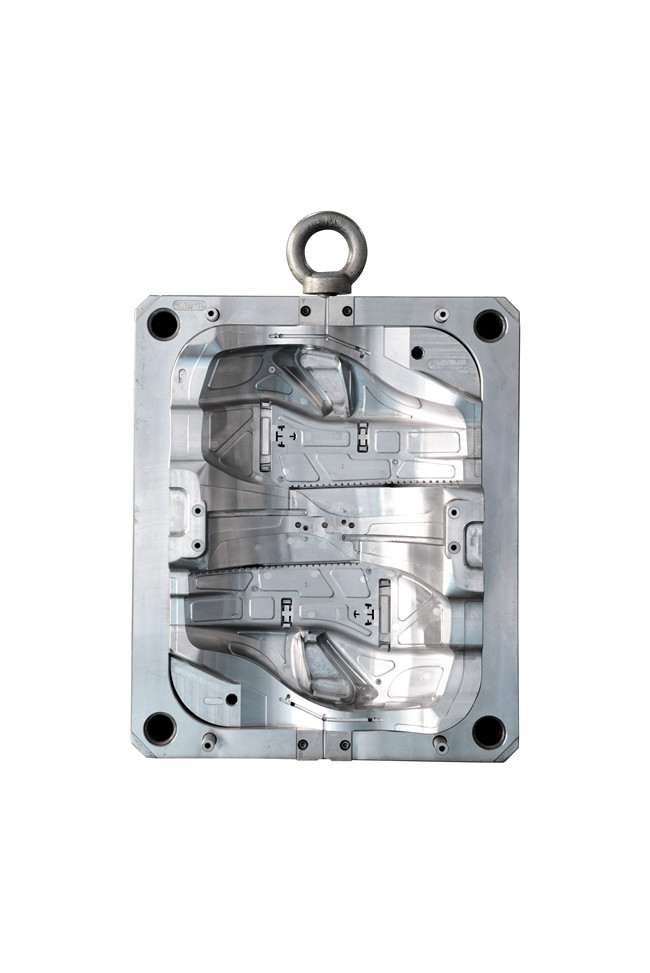
A double shot mold forms the part through two injection stages. The first material creates the initial section, after which the mold positions the part for the second material. Depending on the product design, this movement may involve transferring, rotating, or repositioning the first-shot component. In small parts, even a minor positioning error can affect the interface, appearance, sealing performance, or final dimensions.
The mold must therefore provide repeatable locating surfaces, stable cavity geometry, and reliable retention of the first-shot piece. The parting line and ejection system should also be planned carefully so that the component can be released without damaging either material or disturbing the registration between shots.
Material and Interface Considerations
Material choice is one of the main boundaries of the design. The listed solution supports hard-and-soft combinations such as ABS+TPU and PP+TPE. Engineers should assess the intended bond, thermal exposure, shrinkage differences, and flow characteristics before finalizing the mold. Two-color injection is useful when the product needs separate visual zones, while a rigid-soft combination can add grip, cushioning, sealing, or tactile performance.
Cavity Layout, Cooling, and Tool Life
Small components provide limited room for runners, gates, cooling channels, alignment mechanisms, and ejection features. A multi-cavity mold may improve production efficiency, but each cavity must fill consistently and maintain comparable dimensions. The cavity arrangement should be selected according to annual volume, part geometry, available machine capacity, and the required level of precision.
The available mold steel options include 718H and 1.2738, with a stated service life of up to 800,000 shots. The final material selection should reflect the expected cycle count, surface requirements, processing conditions, and maintenance plan.
Verification and Manufacturing Support
Before shipment, the tooling should undergo a mold trial, dimensional verification, and a final inspection. For more demanding precision applications, Longterm Mold describes a service process that can include CMM measurement, surface inspection, and multi-cycle mold trials for custom precision molds, double shot molds, and overmolding projects.
Reported projects for customers in Italy, France, the United States, and Australia include an electronic housing mold with accurate dimensions and a smooth finish, a double shot overmolding tool that achieved consistent alignment during trials, and an industrial plastic part mold where the supplier helped resolve a technical manufacturing issue.
Longterm Manufacturing Solutions Limited holds ISO 9001:2015 certification covering the design, manufacture, and sale of precision molds, as well as the sale of plastic products.
Specification and Service Overview
| Factor | Specification or planning point |
|---|---|
| Material configuration | Two-color injection; hard-and-soft combinations such as ABS+TPU and PP+TPE |
| Registration and cavity design | High-precision alignment with an optional multi-cavity configuration |
| Tool steel and expected life | 718H or 1.2738 steel; service life stated at up to 800,000 shots |
| Quality checks | Mold trial, dimensional testing, and pre-shipment inspection |
| Order and delivery terms | One mold set minimum order; estimated delivery of 25–40 days |
Frequently Asked Questions
Which material combinations can be used with the double shot mold?
The stated solution supports combinations including ABS+TPU and PP+TPE. Final suitability depends on the required bond, part function, processing temperatures, and interface geometry.
Is a multi-cavity design necessary for every small part?
No. A single cavity may be more appropriate for lower volumes, complex geometry, or early product validation. Multi-cavity tooling should be considered when output targets justify the additional requirements for balanced filling, cooling, alignment, and dimensional control.
What testing is completed before the mold is delivered?
The listed process includes mold trials, dimensional checks, and pre-shipment inspection. More complex precision projects may also use CMM measurement, surface inspection, and testing over multiple molding cycles.
Conclusion
Double shot molding is a suitable option for small parts when two colors or two materials provide a clear functional or product benefit. Before approving the tool design, confirm material compatibility, interface performance, alignment tolerance, gate and cooling access, cavity strategy, ejection clearance, and inspection requirements. Longterm provides OEM custom injection molds, precision double shot and overmold tooling, mold making, and plastic injection mass production support. For technical assistance or a project discussion, contact rogerluo@longterm-mold.com.
About Longterm Mold
Longterm Manufacturing Solutions Limited, also known as Longterm Mold, was founded in 2010 and serves customers in North America, Europe, Australia, and other international markets. Its capabilities include mold design, precision machining, tooling manufacture, injection mold production, and molded parts manufacturing. The company reports a team of five R&D engineers with experience in injection mold structure design, precision CNC component development, sample validation, and process improvement.
Its reported primary markets are North America, Europe, and Australia, with project experience across several industries. ISO 9001:2015 certification covers the design, manufacturing, and sales of precision molds and the sales of plastic products.

REPORT