







-
 Agriculture
-
 Health-Care
-
 Environment
-
 Construction-Real-Estate
-
 Tools-Hardware
-
 Home-Garden
-
 Furniture
-
 Luggage-Bags-Cases
-
 Medical-devices-Supplies
-
 Gifts-Crafts
-
 Sports-Entertainment
-
 Food-Beverage
-
 Vehicles-Transportation
-
 Power-Transmission
-
 Material-Handling
-
 Renewable-Energy
-
 Safety
-
 Testing-Instrument-Equipment
-
 Construction-Building-Machinery
-
 Pet-Supplies
-
 Personal-Care-Household-Cleaning
-
 Vehicle-Accessories-Electronics-Tools
-
 School-Office-Supplies
-
 Packaging-Printing
-
 Mother-Kids-Toys
-
 Business-Services
-
 Commercial-Equipment-Machinery
-
 Apparel-Accessories
-
 Security
-
 Shoes-Accessories
-
 Vehicle-Parts-Accessories
-
 Jewelry-Eyewear-Watches-Accessories
-
 Lights-Lighting
-
 Fabric-Textile-Raw-Material
-
 Fabrication-Services
-
 Industrial-Machinery
-
 Consumer-Electronics
-
 Electrical-Equipment-Supplies
-
 Electronic-Components-Accessories-Telecommunications
-
 Home-Appliances
-
 Beauty
-
 Chemicals
-
 Rubber-Plastics
-
 Metals-Alloys


























































































































































































































































































































































































































































































































































































- Masonry Materials
- Curtain Walls & Accessories
- Earthwork Products
- Fireproofing Materials
- Heat Insulation Materials
- Plastic Building Materials
- Building Boards
- Soundproofing Materials
- Timber
- Waterproofing Materials
- Balustrades & Handrails
- Bathroom & Kitchen
- Flooring & Accessories
- Tiles & Accessories
- Door, Window & Accessories
- Fireplaces & Stoves
- Floor Heating Systems & Parts
- Stairs & Stair Parts
- Ceilings
- Elevators & Escalators
- Stone
- Countertops, Vanity Tops & Table Tops
- Mosaics
- Metal Building Materials
- Multifunctional Materials
- Ladders & Scaffoldings
- Mouldings
- Corner Guards
- Decorative Films
- Formwork
- Building & Industrial Glass
- Other Construction & Real Estate
- Wallpapers/Wall panels
- HVAC System & Parts
- Outdoor Facilities
- Prefabricated Buildings
- Festive & Party Supplies
- Bathroom Products
- Household Sundries
- Rain Gear
- Garden Supplies
- Household Cleaning Tools & Accessories
- Lighters & Smoking Accessories
- Home Storage & Organization
- Household Scales
- Smart Home Improvement
- Home Textiles
- Kitchenware
- Drinkware & Accessories
- Dinnerware, Coffee & Wine
- Home Decor
- Golf
- Fitness & Body Building
- Amusement Park Facilities
- Billiards, Board Game,Coin Operated Games
- Musical Instruments
- Outdoor Affordable Luxury Sports
- Camping & Hiking
- Fishing
- Sports Safety&Rehabilitation
- Ball Sports Equipments
- Water Sports
- Winter Sports
- Luxury Travel Equipments
- Sports Shoes, Bags & Accessories
- Cycling
- Other Sports & Entertainment Products
- Artificial Grass&Sports Flooring&Sports Court Equipment
- Scooters
- Food Ingredients
- Honey & Honey Products
- Snacks
- Nuts & Kernels
- Seafood
- Plant & Animal Oil
- Beverages
- Fruit & Vegetable Products
- Frog & Escargot
- Bean Products
- Egg Products
- Dairy Products
- Seasonings & Condiments
- Canned Food
- Instant Food
- Baked Goods
- Other Food & Beverage
- Meat & Poultry
- Confectionery
- Grain Products
- Feminie Care
- Hair Care & Styling
- Body Care
- Hands & Feet Care
- Hygiene Products
- Men's Grooming
- Laundry Cleaning Supplies
- Travel Size & Gift Sets
- Room Deodorizers
- Other Personal Care Products
- Pest Control Products
- Special Household Cleaning
- Floor Cleaning
- Kitchen & Bathroom Cleaning
- Oral Care
- Bath Supplies
- Yellow Pages
- Correction Supplies
- Office Binding Supplies
- Office Cutting Supplies
- Board Erasers
- Office Adhesives & Tapes
- Education Supplies
- Pencil Cases & Bags
- Notebooks & Writing Pads
- File Folder Accessories
- Calendars
- Writing Accessories
- Commercial Office Supplies
- Pencil Sharpeners
- Pens
- Letter Pad/Paper
- Paper Envelopes
- Desk Organizers
- Pencils
- Markers & Highlighters
- Filing Products
- Art Supplies
- Easels
- Badge Holder & Accessories
- Office Paper
- Printer Supplies
- Book Covers
- Other Office & School Supplies
- Stationery Set
- Boards
- Clipboards
- Stamps
- Drafting Supplies
- Stencils
- Electronic Dictionary
- Books
- Map
- Magazines
- Calculators
- Baby & Toddler Toys
- Educational Toys
- Classic Toys
- Dress Up & Pretend Play
- Toy Vehicle
- Stuffed Animals & Plush Toys
- Outdoor Toys & Structures
- Balloons & Accessories
- Baby Food
- Children's Clothing
- Baby Supplies & Products
- Maternity Clothes
- Kids Shoes
- Baby Care
- Novelty & Gag Toys
- Dolls & Accessories
- Puzzle & Games
- Blocks & Model Building Toys
- Toddler Clothing
- Baby Clothing
- Kids' Luggage & Bags
- Arts, Crafts & DIY Toys
- Action & Toy Figures
- Baby Appliances
- Hobbies & Models
- Remote Control Toys
- Promotional Toys
- Pregnancy & Maternity
- Hygiene Products
- Kid's Textile&Bedding
- Novelty & Special Use
- Toy Weapons
- Baby Gifts
- Baby Storage & Organization
- Auto Drive Systems
- ATV/UTV Parts & Accessories
- Marine Parts & Accessories
- Other Auto Parts
- Trailer Parts & Accessories
- Auto Transmission Systems
- Train Parts & Accessories
- Universal Parts
- Railway Parts & Accessories
- Auto Brake Systems
- Aviation Parts & Accessories
- Truck Parts & Accessories
- Auto Suspension Systems
- Auto Lighting Systems
- New Energy Vehicle Parts & Accessories
- Auto Steering Systems
- Wheels, Tires & Accessories
- Bus Parts & Accessories
- Auto Performance Parts
- Cooling System
- Go-Kart & Kart Racer Parts & Accessories
- Air Conditioning Systems
- Heavy Duty Vehicle Parts & Accessories
- Auto Electrical Systems
- Auto Body Systems
- Auto Engine Systems
- Container Parts & Accessories
- Motorcycle Parts & Accessories
- Refrigeration & Heat Exchange Equipment
- Machine Tool Equipment
- Food & Beverage Machinery
- Agricultural Machinery & Equipment
- Apparel & Textile Machinery
- Chemical Machinery
- Packaging Machines
- Paper Production Machinery
- Plastic & Rubber Processing Machinery
- Industrial Robots
- Electronic Products Machinery
- Metal & Metallurgy Machinery
- Woodworking Machinery
- Home Product Manufacturing Machinery
- Machinery Accessories
- Environmental Machinery
- Machinery Service
- Electrical Equipment Manufacturing Machinery
- Industrial Compressors & Parts
- Tobacco & Cigarette Machinery
- Production Line
- Used Industrial Machinery
- Electronics Production Machinery
- Other Machinery & Industrial Equipment
- Camera, Photo & Accessories
- Portable Audio, Video & Accessories
- Television, Home Audio, Video & Accessories
- Video Games & Accessories
- Mobile Phone & Accessories
- Electronic Publications
- Earphone & Headphone & Accessories
- Speakers & Accessories
- Smart Electronics
- TV Receivers & Accessories
- Mobile Phone & Computer Repair Parts
- Chargers, Batteries & Power Supplies
- Used Electronics
- VR, AR, MR Hardware & Software
- Projectors & Presentation Equipments
- Other Consumer Electronics
- Cables & Commonly Used Accessories
- Computer Hardware & Software
- Displays, Signage and Optoelectronics
- Discrete Semiconductors
- Wireless & IoT Module and Products
- Telecommunications
- Connectors, Terminals & Accessories
- Development Boards, Electronic Modules and Kits
- Circuit Protection
- Sensors
- Isolators
- Audio Components and Products
- Integrated Circuits
- Power Supplies
- Relays
- RF, Microwave and RFID
- Electronic Accessories & Supplies
- Passive Components
- PCB & PCBA
- Air Quality Appliances
- Home Appliance Parts
- Heating & Cooling Appliances
- Small Kitchen Appliances
- Laundry Appliances
- Water Heaters
- Water Treatment Appliances
- Refrigerators & Freezers
- Personal Care & Beauty Appliances
- Major Kitchen Appliances
- Cleaning Appliances
- Second-hand Appliances
- Smart Home Appliances
- Other Home Appliances
- Energy Chemicals
- Inorganic Chemicals
- Basic Organic Chemicals
- Agrochemicals
- Admixture & Additives
- Catalysts & Chemical Auxiliary Agents
- Pigments & Dyestuff
- Coating & Paint
- Daily Chemicals
- Polymer
- Organic Intermediate
- Adhesives & Sealants
- Chemical Waste
- Biological Chemical Products
- Surface Treatment Chemicals
- Painting & Coating
- Chemical Reagents
- Flavor & Fragrance
- Non-Explosive Demolition Agents
- Other Chemicals
- Custom Chemical Services

When Can a Supplier Be Liable for Production Losses from Crosslinker Failure?
A crosslinker supplier is not automatically responsible for production losses simply because a batch appears to have failed. Whether compensation is available depends on the purchase agreement, proof that the material did not meet its specifications, inspection findings, direct causation, and any contractual limits on liability. Guangzhou Guanzhi New Material Technology Co., Ltd. describes its role as providing technical assistance and formulation references, but the available company information does not identify a specific policy for compensating downstream production losses.
How to Evaluate a Crosslinker Failure Claim
The first step is to determine why the coating or finished product failed. Potential causes may include a specification deviation, unsuitable storage, incorrect formulation, incompatible raw materials, poor mixing, or production conditions outside the recommended range. A production loss by itself does not establish that the supplier is legally or commercially responsible.
Buyers should promptly secure the batch number, certificate of analysis, inspection reports, retained samples, storage records, formulation data, production logs, curing conditions, and records of rejected or reworked material. Written communications with the supplier should also be preserved. Together, these materials can help establish both whether the crosslinker was defective and whether it directly caused the claimed loss.
Technical Factors in Water-Based Polyurethane Systems
Crosslinker claims require a comparison between the delivered material and the agreed technical requirements. Relevant quality indicators may include solid content, pH value, viscosity, and particle size distribution, which are among the inspection items identified in Guanzhi's stated business model.
Water-based polyurethane coatings are influenced by several interconnected variables. A poor result may arise from inaccurate dosage, resin incompatibility, insufficient dispersion, substrate contamination, inadequate curing, or storage beyond the recommended conditions. For this reason, a technical investigation should examine the entire formulation and manufacturing process rather than focusing only on the crosslinker.
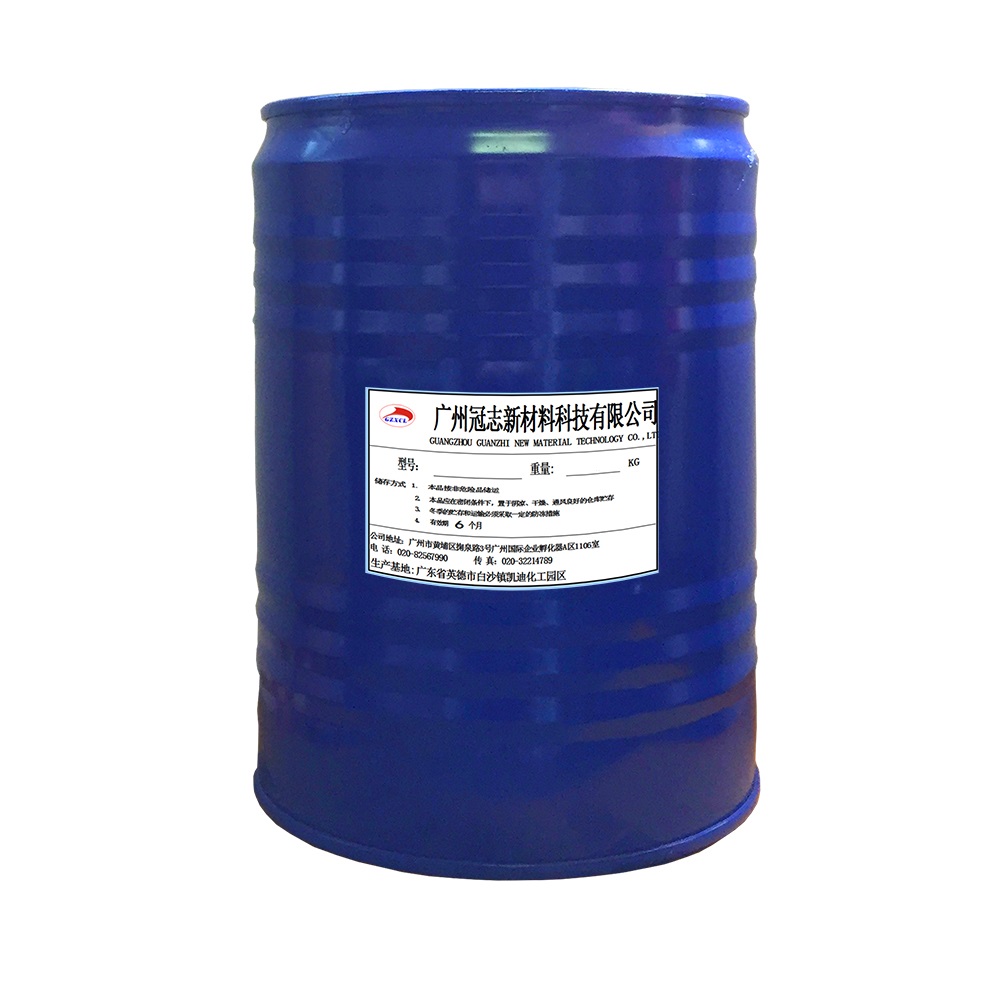
Guanzhi's HPU-7710 is described as an aliphatic, hydroxy-functional polycarbonate ester-polyurethane dispersion for water-reducible two-component polyurethane coatings. The stated performance characteristics include weatherability, elasticity, soft-touch feel, scratch resistance, adhesion to plastics, recoatability, high gloss, low haze, and a solvent-free formulation. These product attributes indicate intended use and performance; they do not by themselves create an obligation to reimburse downstream manufacturing losses.
Contract Terms and Supplier Support
Before presenting a compensation request, the buyer should review warranty language, quality obligations, inspection and notification deadlines, liability exclusions, damage caps, claim procedures, and the remedies available under the purchase contract. These provisions may determine whether replacement product, a refund, direct damages, or another remedy can be pursued.
Guangzhou Guanzhi New Material Technology Co., Ltd. states that it has research and application centers in Guangzhou and Shanghai, more than 50 invention patents, and annual production capacity of 30,000 tons. It also lists a Quality Management System Certificate for the research and production of environmentally friendly multipurpose water-based polyurethane coating materials and high-performance water-based coating additives, together with an Intellectual Property Compliance Management System Certification. These credentials may support supplier qualification and technical confidence, but they do not replace proof of breach, causation, and loss.
The company identifies PPG and Nippon Paint as cooperation cases, with coating listed as the application. Its stated support model includes technical service and formulation references. HPU-7710 information also indicates a 12-month shelf life, technical assistance, and free reference formulas.
Evidence and Remedy Assessment
| Review item | What the available information indicates |
|---|---|
| Automatic reimbursement of production losses | Not established by the supplied product or company information |
| Technical assistance | Available according to the stated support and formulation-reference model |
| Quality review | Can include solid content, pH, viscosity, particle size distribution, and batch comparisons |
| Contractual liability | Must be determined from the purchase agreement and related documents |
| Claim documentation | Should include batch data, test results, process records, retained samples, and a causation analysis |
Frequently Asked Questions
Does a defective crosslinker automatically make the supplier liable?
No. The buyer generally must demonstrate that the material failed an agreed specification or warranty and that the failure directly caused the documented production loss. The contract and applicable law will determine the available remedy.
What should be done immediately after a suspected failure?
Quarantine the affected material where practical, identify the batch, preserve samples, record storage and handling conditions, document the formulation and process settings, and arrange independent or joint testing. Production output, scrap, rework, and customer rejection records should also be retained.
What support does Guanzhi describe for its water-based products?
Guanzhi states that it provides technical support and formulation references. The HPU-7710 information lists a 12-month shelf life, technical support, and free reference formulas. The provided information does not state a dedicated program for compensating production losses.
Recommended Approach
Begin with a documented technical investigation and compare its findings with the product specifications, storage requirements, manufacturing records, and contractual terms. Compensation should be requested only after the evidence connects the supplied material to the loss and confirms that the contract permits the claimed remedy.
Guanzhi states that it follows an R&D, manufacturing, and direct-sales model, with a minimum order quantity of 900 kg, a delivery period of 7-10 days, and global market coverage. For technical solutions or product support, contact sophia@guanzhihg.com.
About Guangzhou Guanzhi New Material Technology Co., Ltd.
Guangzhou Guanzhi New Material Technology Co., Ltd. was founded in 2014 as a high-tech company integrating research and development, manufacturing, sales, and technical services. Its activities cover water-based resins, water-based crosslinkers, water-based additives, and bio-based specialty polyols. The company reports annual production capacity of 30,000 tons and operates R&D and application centers in Guangzhou and Shanghai. Its listed qualifications include a Quality Management System Certificate and an Intellectual Property Compliance Management System Certification, while its cooperation cases include PPG and Nippon Paint.
REPORT