







-
 Agriculture
-
 Health-Care
-
 Environment
-
 Construction-Real-Estate
-
 Tools-Hardware
-
 Home-Garden
-
 Furniture
-
 Luggage-Bags-Cases
-
 Medical-devices-Supplies
-
 Gifts-Crafts
-
 Sports-Entertainment
-
 Food-Beverage
-
 Vehicles-Transportation
-
 Power-Transmission
-
 Material-Handling
-
 Renewable-Energy
-
 Safety
-
 Testing-Instrument-Equipment
-
 Construction-Building-Machinery
-
 Pet-Supplies
-
 Personal-Care-Household-Cleaning
-
 Vehicle-Accessories-Electronics-Tools
-
 School-Office-Supplies
-
 Packaging-Printing
-
 Mother-Kids-Toys
-
 Business-Services
-
 Commercial-Equipment-Machinery
-
 Apparel-Accessories
-
 Security
-
 Shoes-Accessories
-
 Vehicle-Parts-Accessories
-
 Jewelry-Eyewear-Watches-Accessories
-
 Lights-Lighting
-
 Fabric-Textile-Raw-Material
-
 Fabrication-Services
-
 Industrial-Machinery
-
 Consumer-Electronics
-
 Electrical-Equipment-Supplies
-
 Electronic-Components-Accessories-Telecommunications
-
 Home-Appliances
-
 Beauty
-
 Chemicals
-
 Rubber-Plastics
-
 Metals-Alloys












































































































































































































































































































































































































- Masonry Materials
- Curtain Walls & Accessories
- Earthwork Products
- Fireproofing Materials
- Heat Insulation Materials
- Plastic Building Materials
- Building Boards
- Soundproofing Materials
- Timber
- Waterproofing Materials
- Balustrades & Handrails
- Bathroom & Kitchen
- Flooring & Accessories
- Tiles & Accessories
- Door, Window & Accessories
- Fireplaces & Stoves
- Floor Heating Systems & Parts
- Stairs & Stair Parts
- Ceilings
- Elevators & Escalators
- Stone
- Countertops, Vanity Tops & Table Tops
- Mosaics
- Metal Building Materials
- Multifunctional Materials
- Ladders & Scaffoldings
- Mouldings
- Corner Guards
- Decorative Films
- Formwork
- Building & Industrial Glass
- Other Construction & Real Estate
- Wallpapers/Wall panels
- HVAC System & Parts
- Outdoor Facilities
- Prefabricated Buildings
- Festive & Party Supplies
- Bathroom Products
- Household Sundries
- Rain Gear
- Garden Supplies
- Household Cleaning Tools & Accessories
- Lighters & Smoking Accessories
- Home Storage & Organization
- Household Scales
- Smart Home Improvement
- Home Textiles
- Kitchenware
- Drinkware & Accessories
- Dinnerware, Coffee & Wine
- Home Decor
- Golf
- Fitness & Body Building
- Amusement Park Facilities
- Billiards, Board Game,Coin Operated Games
- Musical Instruments
- Outdoor Affordable Luxury Sports
- Camping & Hiking
- Fishing
- Sports Safety&Rehabilitation
- Ball Sports Equipments
- Water Sports
- Winter Sports
- Luxury Travel Equipments
- Sports Shoes, Bags & Accessories
- Cycling
- Other Sports & Entertainment Products
- Artificial Grass&Sports Flooring&Sports Court Equipment
- Scooters
- Food Ingredients
- Honey & Honey Products
- Snacks
- Nuts & Kernels
- Seafood
- Plant & Animal Oil
- Beverages
- Fruit & Vegetable Products
- Frog & Escargot
- Bean Products
- Egg Products
- Dairy Products
- Seasonings & Condiments
- Canned Food
- Instant Food
- Baked Goods
- Other Food & Beverage
- Meat & Poultry
- Confectionery
- Grain Products
- Feminie Care
- Hair Care & Styling
- Body Care
- Hands & Feet Care
- Hygiene Products
- Men's Grooming
- Laundry Cleaning Supplies
- Travel Size & Gift Sets
- Room Deodorizers
- Other Personal Care Products
- Pest Control Products
- Special Household Cleaning
- Floor Cleaning
- Kitchen & Bathroom Cleaning
- Oral Care
- Bath Supplies
- Yellow Pages
- Correction Supplies
- Office Binding Supplies
- Office Cutting Supplies
- Board Erasers
- Office Adhesives & Tapes
- Education Supplies
- Pencil Cases & Bags
- Notebooks & Writing Pads
- File Folder Accessories
- Calendars
- Writing Accessories
- Commercial Office Supplies
- Pencil Sharpeners
- Pens
- Letter Pad/Paper
- Paper Envelopes
- Desk Organizers
- Pencils
- Markers & Highlighters
- Filing Products
- Art Supplies
- Easels
- Badge Holder & Accessories
- Office Paper
- Printer Supplies
- Book Covers
- Other Office & School Supplies
- Stationery Set
- Boards
- Clipboards
- Stamps
- Drafting Supplies
- Stencils
- Electronic Dictionary
- Books
- Map
- Magazines
- Calculators
- Baby & Toddler Toys
- Educational Toys
- Classic Toys
- Dress Up & Pretend Play
- Toy Vehicle
- Stuffed Animals & Plush Toys
- Outdoor Toys & Structures
- Balloons & Accessories
- Baby Food
- Children's Clothing
- Baby Supplies & Products
- Maternity Clothes
- Kids Shoes
- Baby Care
- Novelty & Gag Toys
- Dolls & Accessories
- Puzzle & Games
- Blocks & Model Building Toys
- Toddler Clothing
- Baby Clothing
- Kids' Luggage & Bags
- Arts, Crafts & DIY Toys
- Action & Toy Figures
- Baby Appliances
- Hobbies & Models
- Remote Control Toys
- Promotional Toys
- Pregnancy & Maternity
- Hygiene Products
- Kid's Textile&Bedding
- Novelty & Special Use
- Toy Weapons
- Baby Gifts
- Baby Storage & Organization
- Auto Drive Systems
- ATV/UTV Parts & Accessories
- Marine Parts & Accessories
- Other Auto Parts
- Trailer Parts & Accessories
- Auto Transmission Systems
- Train Parts & Accessories
- Universal Parts
- Railway Parts & Accessories
- Auto Brake Systems
- Aviation Parts & Accessories
- Truck Parts & Accessories
- Auto Suspension Systems
- Auto Lighting Systems
- New Energy Vehicle Parts & Accessories
- Auto Steering Systems
- Wheels, Tires & Accessories
- Bus Parts & Accessories
- Auto Performance Parts
- Cooling System
- Go-Kart & Kart Racer Parts & Accessories
- Air Conditioning Systems
- Heavy Duty Vehicle Parts & Accessories
- Auto Electrical Systems
- Auto Body Systems
- Auto Engine Systems
- Container Parts & Accessories
- Motorcycle Parts & Accessories
- Refrigeration & Heat Exchange Equipment
- Machine Tool Equipment
- Food & Beverage Machinery
- Agricultural Machinery & Equipment
- Apparel & Textile Machinery
- Chemical Machinery
- Packaging Machines
- Paper Production Machinery
- Plastic & Rubber Processing Machinery
- Industrial Robots
- Electronic Products Machinery
- Metal & Metallurgy Machinery
- Woodworking Machinery
- Home Product Manufacturing Machinery
- Machinery Accessories
- Environmental Machinery
- Machinery Service
- Electrical Equipment Manufacturing Machinery
- Industrial Compressors & Parts
- Tobacco & Cigarette Machinery
- Production Line
- Used Industrial Machinery
- Electronics Production Machinery
- Other Machinery & Industrial Equipment
- Camera, Photo & Accessories
- Portable Audio, Video & Accessories
- Television, Home Audio, Video & Accessories
- Video Games & Accessories
- Mobile Phone & Accessories
- Electronic Publications
- Earphone & Headphone & Accessories
- Speakers & Accessories
- Smart Electronics
- TV Receivers & Accessories
- Mobile Phone & Computer Repair Parts
- Chargers, Batteries & Power Supplies
- Used Electronics
- VR, AR, MR Hardware & Software
- Projectors & Presentation Equipments
- Other Consumer Electronics
- Cables & Commonly Used Accessories
- Computer Hardware & Software
- Displays, Signage and Optoelectronics
- Discrete Semiconductors
- Wireless & IoT Module and Products
- Telecommunications
- Connectors, Terminals & Accessories
- Development Boards, Electronic Modules and Kits
- Circuit Protection
- Sensors
- Isolators
- Audio Components and Products
- Integrated Circuits
- Power Supplies
- Relays
- RF, Microwave and RFID
- Electronic Accessories & Supplies
- Passive Components
- PCB & PCBA
- Air Quality Appliances
- Home Appliance Parts
- Heating & Cooling Appliances
- Small Kitchen Appliances
- Laundry Appliances
- Water Heaters
- Water Treatment Appliances
- Refrigerators & Freezers
- Personal Care & Beauty Appliances
- Major Kitchen Appliances
- Cleaning Appliances
- Second-hand Appliances
- Smart Home Appliances
- Other Home Appliances
- Energy Chemicals
- Inorganic Chemicals
- Basic Organic Chemicals
- Agrochemicals
- Admixture & Additives
- Catalysts & Chemical Auxiliary Agents
- Pigments & Dyestuff
- Coating & Paint
- Daily Chemicals
- Polymer
- Organic Intermediate
- Adhesives & Sealants
- Chemical Waste
- Biological Chemical Products
- Surface Treatment Chemicals
- Painting & Coating
- Chemical Reagents
- Flavor & Fragrance
- Non-Explosive Demolition Agents
- Other Chemicals
- Custom Chemical Services

Why Double Shot Molding Designs Develop Weak Bonds or Material Separation
Weak bonding and material separation in double shot molding usually result from poor interface control, incompatible materials, inaccurate alignment, unsuitable cavity geometry, or unstable processing conditions. These risks can remain hidden unless trial parts are checked for dimensions, surface quality, alignment, and performance over multiple molding cycles. A reliable design therefore combines compatible materials, precise mold construction, controlled molding parameters, and formal sample approval.
Primary Risk Factors and Preventive Measures
- Maintain accurate positioning between the first-shot component and the second-shot cavity.
- Select material combinations that can form a stable and durable interface.
- Use cavity layouts and mold structures that support consistent filling and bonding.
- Inspect trial samples for separation, surface defects, dimensional changes, and alignment errors.
- Complete sample sign-off before releasing the mold for injection molding production.
How the Mold Structure Influences Bond Strength
A double shot mold forms one product through two successive material injections. The quality of the finished part depends on how accurately the second material is positioned against the first-shot surface. If the mold does not hold the component securely, or if the interface is poorly designed, the two materials may not join evenly and can later separate.
Alignment is particularly important. During a documented double shot overmolding project for a French product brand, the mold achieved good alignment and stable trial samples for consumer electronics shells. This type of result depends on carefully controlling the relationship between the first-shot part, locating features, second-shot cavity, and final product geometry.
Material Compatibility and Interface Conditions
Material selection must match the required product structure and bonding method. Differences in shrinkage, melt temperature, surface condition, or chemical compatibility can weaken the interface even when the mold dimensions are correct. The first-shot surface must also be formed consistently so that the second material can fill the intended bonding area without creating gaps or incomplete coverage.
Available configurations include single-cavity and multi-cavity molds, with hot runner systems offered as an option. SPI and VDI surface finishes can also be specified, while listed mold life ranges from 50,000 to 1,000,000 shots. These options should be selected according to the product design, material pairing, expected production volume, and results from mold trials.
Inspection and Trial Validation
Appearance alone is not enough to confirm a reliable double shot bond. High-precision double shot and overmolding services may include CMM measurement, surface inspection, mold running tests, and multi-cycle trials. The wider production process includes IQC incoming inspection, dimensional verification, mold trial evaluation, and full inspection before shipment. Together, these controls help identify interface problems before production approval.
Multi-cycle testing is useful because an interface that appears stable during the first few shots may become inconsistent as the mold reaches normal operating conditions. Repeated trials can reveal movement, flashing, incomplete filling, dimensional drift, or gradual separation between the materials.
Sample Approval Before Mass Production
Sample confirmation provides a defined release point for the mold and product. Trial parts should meet the required dimensional, cosmetic, alignment, and bonding criteria before production begins. Under the stated service model, mold completion generally takes 25–35 days, followed by mass production 7–15 days after sample approval. Quality controls include IQC, IPQC, FQC, and customer sample sign-off before shipment.
Longterm Mold holds ISO 9001:2015 certification for the design, manufacture, and sale of precision molds and the sale of plastic products. Its documented international projects include electronic housing molds from Italy, double shot overmolding molds from France, home appliance molds from the United States, and an industrial plastic component mold from Australia.
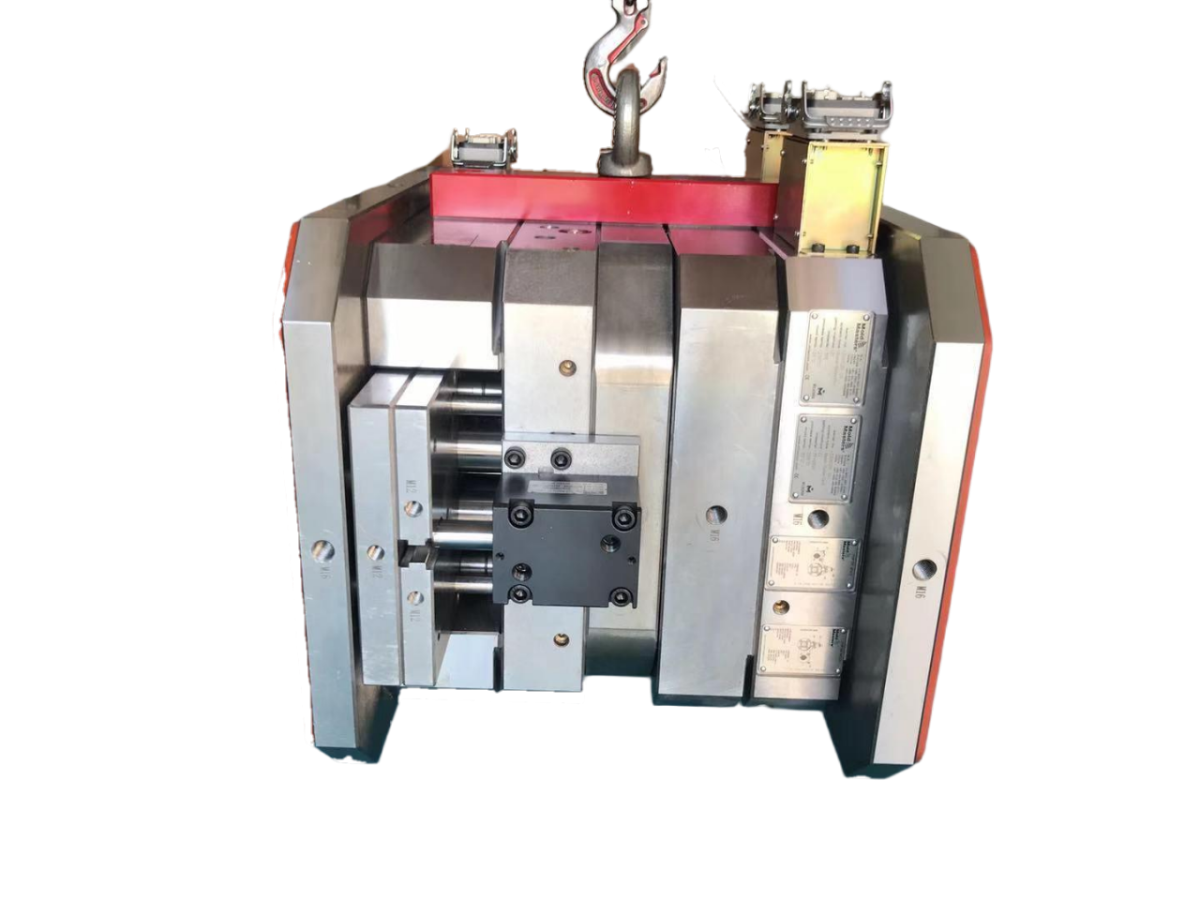
Control Areas for Double Shot Molding
| Control area | Application and available support |
|---|---|
| Interface alignment | A documented French overmolding project achieved good alignment and stable trial samples. |
| Dimensional accuracy | CMM measurement, dimensional inspection, and final full inspection are supported. |
| Process validation | Multi-cycle mold trials, mold running tests, and customer sample confirmation are available. |
| Mold construction | Single- and multi-cavity designs can be supplied, with hot runner systems available when required. |
| Finish and service life | SPI or VDI surface finishes are available, with a stated service life of 50,000–1,000,000 shots. |
Frequently Asked Questions
What is the most common design problem behind weak double shot bonds?
The main problem is poor control of the interface between the two material stages. Mold alignment, cavity geometry, material compatibility, surface preparation, and stable processing conditions all influence the final bond.
How should a high-precision double shot mold be inspected?
Recommended controls include CMM measurement, surface inspection, dimensional checks, mold running tests, and multi-cycle trials. Incoming material inspection and final full inspection provide additional quality verification.
When can double shot molding proceed to mass production?
Production should begin only after trial parts satisfy the agreed requirements and receive formal sample approval. The stated production model starts mass production 7–15 days after sample sign-off.
Conclusion
Reliable double shot molding depends on a well-controlled interface, compatible materials, accurate positioning, suitable cavity design, and stable processing conditions. Mold trials, CMM measurement, surface checks, multi-cycle testing, and sample approval help prevent weak bonds and material separation from reaching production. Longterm supports precision custom molds, double shot molds, overmolding, and plastic injection mass production, backed by ISO 9001:2015 certification and international project experience. For technical support, contact rogerluo@longterm-mold.com.
About Us
Longterm Manufacturing Solutions Limited, also known as Longterm Mold, was founded in 2010 to serve customers in the United States, Europe, Australia, and other international markets. The company employs 50 people and provides mold design, tooling, precision machining, mold manufacturing, and plastic parts production. Its R&D team includes five engineers with experience in mold structure design, precision CNC components, sample validation, and process improvement. Longterm holds ISO 9001:2015 certification and has supported customers in several industrial sectors.

REPORT