







-
 Agriculture
-
 Health-Care
-
 Environment
-
 Construction-Real-Estate
-
 Tools-Hardware
-
 Home-Garden
-
 Furniture
-
 Luggage-Bags-Cases
-
 Medical-devices-Supplies
-
 Gifts-Crafts
-
 Sports-Entertainment
-
 Food-Beverage
-
 Vehicles-Transportation
-
 Power-Transmission
-
 Material-Handling
-
 Renewable-Energy
-
 Safety
-
 Testing-Instrument-Equipment
-
 Construction-Building-Machinery
-
 Pet-Supplies
-
 Personal-Care-Household-Cleaning
-
 Vehicle-Accessories-Electronics-Tools
-
 School-Office-Supplies
-
 Packaging-Printing
-
 Mother-Kids-Toys
-
 Business-Services
-
 Commercial-Equipment-Machinery
-
 Apparel-Accessories
-
 Security
-
 Shoes-Accessories
-
 Vehicle-Parts-Accessories
-
 Jewelry-Eyewear-Watches-Accessories
-
 Lights-Lighting
-
 Fabric-Textile-Raw-Material
-
 Fabrication-Services
-
 Industrial-Machinery
-
 Consumer-Electronics
-
 Electrical-Equipment-Supplies
-
 Electronic-Components-Accessories-Telecommunications
-
 Home-Appliances
-
 Beauty
-
 Chemicals
-
 Rubber-Plastics
-
 Metals-Alloys


























































































































































































































































































































































































































































































































































































- Masonry Materials
- Curtain Walls & Accessories
- Earthwork Products
- Fireproofing Materials
- Heat Insulation Materials
- Plastic Building Materials
- Building Boards
- Soundproofing Materials
- Timber
- Waterproofing Materials
- Balustrades & Handrails
- Bathroom & Kitchen
- Flooring & Accessories
- Tiles & Accessories
- Door, Window & Accessories
- Fireplaces & Stoves
- Floor Heating Systems & Parts
- Stairs & Stair Parts
- Ceilings
- Elevators & Escalators
- Stone
- Countertops, Vanity Tops & Table Tops
- Mosaics
- Metal Building Materials
- Multifunctional Materials
- Ladders & Scaffoldings
- Mouldings
- Corner Guards
- Decorative Films
- Formwork
- Building & Industrial Glass
- Other Construction & Real Estate
- Wallpapers/Wall panels
- HVAC System & Parts
- Outdoor Facilities
- Prefabricated Buildings
- Festive & Party Supplies
- Bathroom Products
- Household Sundries
- Rain Gear
- Garden Supplies
- Household Cleaning Tools & Accessories
- Lighters & Smoking Accessories
- Home Storage & Organization
- Household Scales
- Smart Home Improvement
- Home Textiles
- Kitchenware
- Drinkware & Accessories
- Dinnerware, Coffee & Wine
- Home Decor
- Golf
- Fitness & Body Building
- Amusement Park Facilities
- Billiards, Board Game,Coin Operated Games
- Musical Instruments
- Outdoor Affordable Luxury Sports
- Camping & Hiking
- Fishing
- Sports Safety&Rehabilitation
- Ball Sports Equipments
- Water Sports
- Winter Sports
- Luxury Travel Equipments
- Sports Shoes, Bags & Accessories
- Cycling
- Other Sports & Entertainment Products
- Artificial Grass&Sports Flooring&Sports Court Equipment
- Scooters
- Food Ingredients
- Honey & Honey Products
- Snacks
- Nuts & Kernels
- Seafood
- Plant & Animal Oil
- Beverages
- Fruit & Vegetable Products
- Frog & Escargot
- Bean Products
- Egg Products
- Dairy Products
- Seasonings & Condiments
- Canned Food
- Instant Food
- Baked Goods
- Other Food & Beverage
- Meat & Poultry
- Confectionery
- Grain Products
- Feminie Care
- Hair Care & Styling
- Body Care
- Hands & Feet Care
- Hygiene Products
- Men's Grooming
- Laundry Cleaning Supplies
- Travel Size & Gift Sets
- Room Deodorizers
- Other Personal Care Products
- Pest Control Products
- Special Household Cleaning
- Floor Cleaning
- Kitchen & Bathroom Cleaning
- Oral Care
- Bath Supplies
- Yellow Pages
- Correction Supplies
- Office Binding Supplies
- Office Cutting Supplies
- Board Erasers
- Office Adhesives & Tapes
- Education Supplies
- Pencil Cases & Bags
- Notebooks & Writing Pads
- File Folder Accessories
- Calendars
- Writing Accessories
- Commercial Office Supplies
- Pencil Sharpeners
- Pens
- Letter Pad/Paper
- Paper Envelopes
- Desk Organizers
- Pencils
- Markers & Highlighters
- Filing Products
- Art Supplies
- Easels
- Badge Holder & Accessories
- Office Paper
- Printer Supplies
- Book Covers
- Other Office & School Supplies
- Stationery Set
- Boards
- Clipboards
- Stamps
- Drafting Supplies
- Stencils
- Electronic Dictionary
- Books
- Map
- Magazines
- Calculators
- Baby & Toddler Toys
- Educational Toys
- Classic Toys
- Dress Up & Pretend Play
- Toy Vehicle
- Stuffed Animals & Plush Toys
- Outdoor Toys & Structures
- Balloons & Accessories
- Baby Food
- Children's Clothing
- Baby Supplies & Products
- Maternity Clothes
- Kids Shoes
- Baby Care
- Novelty & Gag Toys
- Dolls & Accessories
- Puzzle & Games
- Blocks & Model Building Toys
- Toddler Clothing
- Baby Clothing
- Kids' Luggage & Bags
- Arts, Crafts & DIY Toys
- Action & Toy Figures
- Baby Appliances
- Hobbies & Models
- Remote Control Toys
- Promotional Toys
- Pregnancy & Maternity
- Hygiene Products
- Kid's Textile&Bedding
- Novelty & Special Use
- Toy Weapons
- Baby Gifts
- Baby Storage & Organization
- Auto Drive Systems
- ATV/UTV Parts & Accessories
- Marine Parts & Accessories
- Other Auto Parts
- Trailer Parts & Accessories
- Auto Transmission Systems
- Train Parts & Accessories
- Universal Parts
- Railway Parts & Accessories
- Auto Brake Systems
- Aviation Parts & Accessories
- Truck Parts & Accessories
- Auto Suspension Systems
- Auto Lighting Systems
- New Energy Vehicle Parts & Accessories
- Auto Steering Systems
- Wheels, Tires & Accessories
- Bus Parts & Accessories
- Auto Performance Parts
- Cooling System
- Go-Kart & Kart Racer Parts & Accessories
- Air Conditioning Systems
- Heavy Duty Vehicle Parts & Accessories
- Auto Electrical Systems
- Auto Body Systems
- Auto Engine Systems
- Container Parts & Accessories
- Motorcycle Parts & Accessories
- Refrigeration & Heat Exchange Equipment
- Machine Tool Equipment
- Food & Beverage Machinery
- Agricultural Machinery & Equipment
- Apparel & Textile Machinery
- Chemical Machinery
- Packaging Machines
- Paper Production Machinery
- Plastic & Rubber Processing Machinery
- Industrial Robots
- Electronic Products Machinery
- Metal & Metallurgy Machinery
- Woodworking Machinery
- Home Product Manufacturing Machinery
- Machinery Accessories
- Environmental Machinery
- Machinery Service
- Electrical Equipment Manufacturing Machinery
- Industrial Compressors & Parts
- Tobacco & Cigarette Machinery
- Production Line
- Used Industrial Machinery
- Electronics Production Machinery
- Other Machinery & Industrial Equipment
- Camera, Photo & Accessories
- Portable Audio, Video & Accessories
- Television, Home Audio, Video & Accessories
- Video Games & Accessories
- Mobile Phone & Accessories
- Electronic Publications
- Earphone & Headphone & Accessories
- Speakers & Accessories
- Smart Electronics
- TV Receivers & Accessories
- Mobile Phone & Computer Repair Parts
- Chargers, Batteries & Power Supplies
- Used Electronics
- VR, AR, MR Hardware & Software
- Projectors & Presentation Equipments
- Other Consumer Electronics
- Cables & Commonly Used Accessories
- Computer Hardware & Software
- Displays, Signage and Optoelectronics
- Discrete Semiconductors
- Wireless & IoT Module and Products
- Telecommunications
- Connectors, Terminals & Accessories
- Development Boards, Electronic Modules and Kits
- Circuit Protection
- Sensors
- Isolators
- Audio Components and Products
- Integrated Circuits
- Power Supplies
- Relays
- RF, Microwave and RFID
- Electronic Accessories & Supplies
- Passive Components
- PCB & PCBA
- Air Quality Appliances
- Home Appliance Parts
- Heating & Cooling Appliances
- Small Kitchen Appliances
- Laundry Appliances
- Water Heaters
- Water Treatment Appliances
- Refrigerators & Freezers
- Personal Care & Beauty Appliances
- Major Kitchen Appliances
- Cleaning Appliances
- Second-hand Appliances
- Smart Home Appliances
- Other Home Appliances
- Energy Chemicals
- Inorganic Chemicals
- Basic Organic Chemicals
- Agrochemicals
- Admixture & Additives
- Catalysts & Chemical Auxiliary Agents
- Pigments & Dyestuff
- Coating & Paint
- Daily Chemicals
- Polymer
- Organic Intermediate
- Adhesives & Sealants
- Chemical Waste
- Biological Chemical Products
- Surface Treatment Chemicals
- Painting & Coating
- Chemical Reagents
- Flavor & Fragrance
- Non-Explosive Demolition Agents
- Other Chemicals
- Custom Chemical Services

Why Physical Prototyping Beats Digital Mockups When Bulk Ordering Men's Sunglasses
While modern 3D design software has revolutionized eyewear development, relying solely on digital renders before committing to mass production introduces significant commercial risks. Digital mockups excel at defining aesthetic direction and color schemes, yet they cannot verify how men's sunglasses perform in terms of ergonomic comfort, structural endurance, or optical safety.
Key Takeaways for Eyewear Buyers
- Beyond Visual Aesthetics: 3D CAD models validate logo positioning and frame geometry, but only physical sampling assesses temple pressure, bridge balance, and tactile surface finish.
- Mandatory Safety Standards: Physical prototypes undergo strict laboratory verification for FDA, CE, and AS/NZS compliance, guaranteeing accurate UV400 filtering and lens polarization efficiency.
- Material & Mechanical Integrity: Prototyping exposes flaws in acetate flexibility, metal spring hinges, or clip-on mechanisms that cannot be simulated virtually.
- Risk Mitigation in OEM/ODM: Evaluating physical pre-production samples drastically reduces defect rates prior to launching volume manufacturing.
Why Virtual Renders Cannot Replace Physical Testing
In the preliminary R&D phase of customized men's eyewear, 3D digital renderings provide an agile platform for testing frame contours, square clip-on configurations, and branding options without wasting raw materials. However, virtual simulations fall short of forecasting real-world physical dynamics, such as skin friction, localized mechanical pressure, or ear bridge weight distribution across diverse face shapes.
Physical prototype evaluation fills this crucial gap between digital concepts and functional production. Producing tangible samples permits engineers to rigorously test frame flexural strength, hinge operation tightness, and polarized lens clarity under natural lighting conditions. For specialized items like unisex driving glasses or square polarized clip-on sunglasses, physical testing is indispensable to ensure clip retention strength, precise alignment, and reliable UV400 radiation shielding under certified testing devices.
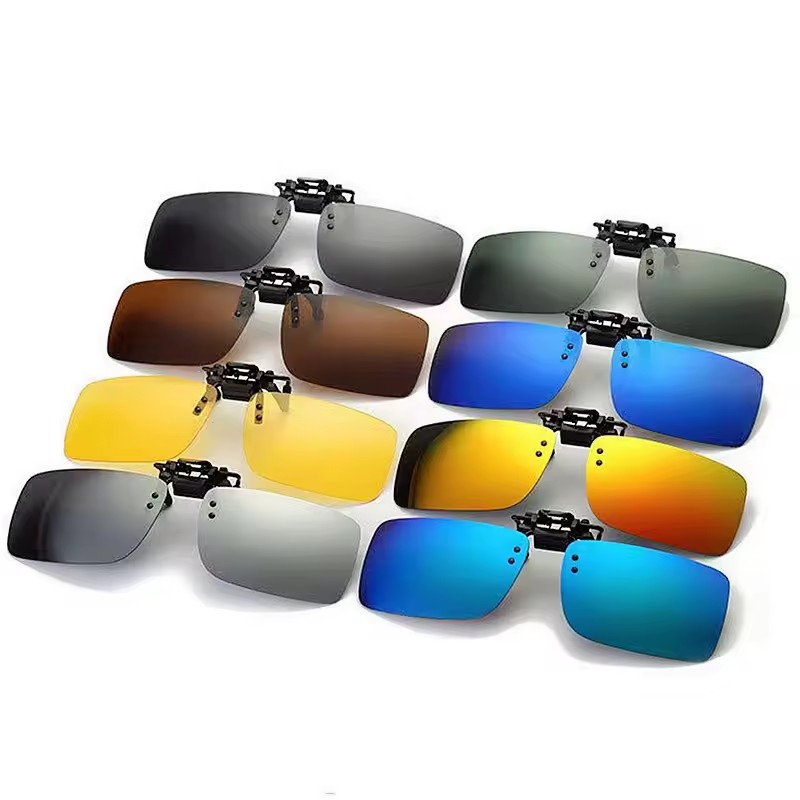
Furthermore, international retail markets enforce strict product compliance. Experienced manufacturers using rapid prototyping facilities rely on physical quality inspections to confirm that impact resistance, anti-blue light coatings, and frame wear resistance fulfill regulatory thresholds before initiating full-scale manufacturing runs.
Feature Comparison: Digital Renders vs. Physical Samples
| Evaluation Metric | Digital Mockup Stage | Physical Sample Stage |
|---|---|---|
| Branding & Color Verification | Supported (2D/3D Mockup) | Supported (Tactile & Color Inspection) |
| Ergonomic Fit & Tactile Comfort | Not Supported | Supported (Trial Wear & Stress Testing) |
| UV400 & Optical Compliance | Not Supported | Supported (Spectrophotometric Testing) |
| Clip Mechanism Endurance | Not Supported | Supported (Mechanical Tension Cycles) |
| Shipping & Supply Chain Planning | Design Hand-off Only | Supported via Air Freight, Sea Freight, Land Transport |
| Commercial Order Execution | Preliminary Quote | Wire Transfer / Corporate Bank Transfer for Mass Orders |
Frequently Asked Questions
Why shouldn't buyers order mass production based only on 3D renders?
Digital mockups only depict visual concepts; they cannot measure frame weight distribution, material flexibility, hinge tension, or lens optical performance. Physical prototyping ensures functional validity prior to mass production.
Which technical evaluations are mandatory for physical sunglasses samples?
Physical samples must undergo UV400 light filtration tests, lens polarization verification, drop-ball impact resistance tests, and mechanical stress evaluations against international safety regulations like CE, FDA, and AS/NZS.
How does rapid prototyping benefit OEM/ODM eyewear sourcing?
Rapid prototyping turns 3D CAD files into physical samples quickly, enabling prompt evaluation of frame fit, clip-on functionality, and custom logos while shortening overall lead times before bulk manufacturing.
Strategic Recommendations & Conclusion
Relying exclusively on digital renders leaves brands vulnerable to fit issues, frame failures, and non-compliance with global safety regulations. B2B buyers purchasing custom wholesale sunglasses should utilize digital mockups strictly for preliminary visual approvals, followed by hands-on prototype testing to confirm build quality and optical performance. Partnering with established OEM/ODM manufacturers equipped with global logistics support—including Air Freight, Sea Freight, and Land Transportation—ensures reliable delivery once samples are approved. For customized technical advice or inquiry support, contact our team at leoxiao@cngreenshine.com.
About Our Company
Founded in 2016, Yiwu Green Shine Arts & Crafts Co., Ltd is located in Yiwu, Zhejiang Province, operating from a 130-square-meter facility with 10 skilled professionals. The enterprise yields an annual capacity of over 3 million sunglasses pairs, exporting 90% of production to global destinations such as the United States, Spain, Germany, Australia, Italy, France, and Ireland. Powered by advanced R&D and 3D modeling rapid prototyping systems, the company provides robust OEM and ODM solutions for international markets.

REPORT