







-
 Agriculture
-
 Health-Care
-
 Environment
-
 Construction-Real-Estate
-
 Tools-Hardware
-
 Home-Garden
-
 Furniture
-
 Luggage-Bags-Cases
-
 Medical-devices-Supplies
-
 Gifts-Crafts
-
 Sports-Entertainment
-
 Food-Beverage
-
 Vehicles-Transportation
-
 Power-Transmission
-
 Material-Handling
-
 Renewable-Energy
-
 Safety
-
 Testing-Instrument-Equipment
-
 Construction-Building-Machinery
-
 Pet-Supplies
-
 Personal-Care-Household-Cleaning
-
 Vehicle-Accessories-Electronics-Tools
-
 School-Office-Supplies
-
 Packaging-Printing
-
 Mother-Kids-Toys
-
 Business-Services
-
 Commercial-Equipment-Machinery
-
 Apparel-Accessories
-
 Security
-
 Shoes-Accessories
-
 Vehicle-Parts-Accessories
-
 Jewelry-Eyewear-Watches-Accessories
-
 Lights-Lighting
-
 Fabric-Textile-Raw-Material
-
 Fabrication-Services
-
 Industrial-Machinery
-
 Consumer-Electronics
-
 Electrical-Equipment-Supplies
-
 Electronic-Components-Accessories-Telecommunications
-
 Home-Appliances
-
 Beauty
-
 Chemicals
-
 Rubber-Plastics
-
 Metals-Alloys


























































































































































































































































































































































































































































































































































































- Masonry Materials
- Curtain Walls & Accessories
- Earthwork Products
- Fireproofing Materials
- Heat Insulation Materials
- Plastic Building Materials
- Building Boards
- Soundproofing Materials
- Timber
- Waterproofing Materials
- Balustrades & Handrails
- Bathroom & Kitchen
- Flooring & Accessories
- Tiles & Accessories
- Door, Window & Accessories
- Fireplaces & Stoves
- Floor Heating Systems & Parts
- Stairs & Stair Parts
- Ceilings
- Elevators & Escalators
- Stone
- Countertops, Vanity Tops & Table Tops
- Mosaics
- Metal Building Materials
- Multifunctional Materials
- Ladders & Scaffoldings
- Mouldings
- Corner Guards
- Decorative Films
- Formwork
- Building & Industrial Glass
- Other Construction & Real Estate
- Wallpapers/Wall panels
- HVAC System & Parts
- Outdoor Facilities
- Prefabricated Buildings
- Festive & Party Supplies
- Bathroom Products
- Household Sundries
- Rain Gear
- Garden Supplies
- Household Cleaning Tools & Accessories
- Lighters & Smoking Accessories
- Home Storage & Organization
- Household Scales
- Smart Home Improvement
- Home Textiles
- Kitchenware
- Drinkware & Accessories
- Dinnerware, Coffee & Wine
- Home Decor
- Golf
- Fitness & Body Building
- Amusement Park Facilities
- Billiards, Board Game,Coin Operated Games
- Musical Instruments
- Outdoor Affordable Luxury Sports
- Camping & Hiking
- Fishing
- Sports Safety&Rehabilitation
- Ball Sports Equipments
- Water Sports
- Winter Sports
- Luxury Travel Equipments
- Sports Shoes, Bags & Accessories
- Cycling
- Other Sports & Entertainment Products
- Artificial Grass&Sports Flooring&Sports Court Equipment
- Scooters
- Food Ingredients
- Honey & Honey Products
- Snacks
- Nuts & Kernels
- Seafood
- Plant & Animal Oil
- Beverages
- Fruit & Vegetable Products
- Frog & Escargot
- Bean Products
- Egg Products
- Dairy Products
- Seasonings & Condiments
- Canned Food
- Instant Food
- Baked Goods
- Other Food & Beverage
- Meat & Poultry
- Confectionery
- Grain Products
- Feminie Care
- Hair Care & Styling
- Body Care
- Hands & Feet Care
- Hygiene Products
- Men's Grooming
- Laundry Cleaning Supplies
- Travel Size & Gift Sets
- Room Deodorizers
- Other Personal Care Products
- Pest Control Products
- Special Household Cleaning
- Floor Cleaning
- Kitchen & Bathroom Cleaning
- Oral Care
- Bath Supplies
- Yellow Pages
- Correction Supplies
- Office Binding Supplies
- Office Cutting Supplies
- Board Erasers
- Office Adhesives & Tapes
- Education Supplies
- Pencil Cases & Bags
- Notebooks & Writing Pads
- File Folder Accessories
- Calendars
- Writing Accessories
- Commercial Office Supplies
- Pencil Sharpeners
- Pens
- Letter Pad/Paper
- Paper Envelopes
- Desk Organizers
- Pencils
- Markers & Highlighters
- Filing Products
- Art Supplies
- Easels
- Badge Holder & Accessories
- Office Paper
- Printer Supplies
- Book Covers
- Other Office & School Supplies
- Stationery Set
- Boards
- Clipboards
- Stamps
- Drafting Supplies
- Stencils
- Electronic Dictionary
- Books
- Map
- Magazines
- Calculators
- Baby & Toddler Toys
- Educational Toys
- Classic Toys
- Dress Up & Pretend Play
- Toy Vehicle
- Stuffed Animals & Plush Toys
- Outdoor Toys & Structures
- Balloons & Accessories
- Baby Food
- Children's Clothing
- Baby Supplies & Products
- Maternity Clothes
- Kids Shoes
- Baby Care
- Novelty & Gag Toys
- Dolls & Accessories
- Puzzle & Games
- Blocks & Model Building Toys
- Toddler Clothing
- Baby Clothing
- Kids' Luggage & Bags
- Arts, Crafts & DIY Toys
- Action & Toy Figures
- Baby Appliances
- Hobbies & Models
- Remote Control Toys
- Promotional Toys
- Pregnancy & Maternity
- Hygiene Products
- Kid's Textile&Bedding
- Novelty & Special Use
- Toy Weapons
- Baby Gifts
- Baby Storage & Organization
- Auto Drive Systems
- ATV/UTV Parts & Accessories
- Marine Parts & Accessories
- Other Auto Parts
- Trailer Parts & Accessories
- Auto Transmission Systems
- Train Parts & Accessories
- Universal Parts
- Railway Parts & Accessories
- Auto Brake Systems
- Aviation Parts & Accessories
- Truck Parts & Accessories
- Auto Suspension Systems
- Auto Lighting Systems
- New Energy Vehicle Parts & Accessories
- Auto Steering Systems
- Wheels, Tires & Accessories
- Bus Parts & Accessories
- Auto Performance Parts
- Cooling System
- Go-Kart & Kart Racer Parts & Accessories
- Air Conditioning Systems
- Heavy Duty Vehicle Parts & Accessories
- Auto Electrical Systems
- Auto Body Systems
- Auto Engine Systems
- Container Parts & Accessories
- Motorcycle Parts & Accessories
- Refrigeration & Heat Exchange Equipment
- Machine Tool Equipment
- Food & Beverage Machinery
- Agricultural Machinery & Equipment
- Apparel & Textile Machinery
- Chemical Machinery
- Packaging Machines
- Paper Production Machinery
- Plastic & Rubber Processing Machinery
- Industrial Robots
- Electronic Products Machinery
- Metal & Metallurgy Machinery
- Woodworking Machinery
- Home Product Manufacturing Machinery
- Machinery Accessories
- Environmental Machinery
- Machinery Service
- Electrical Equipment Manufacturing Machinery
- Industrial Compressors & Parts
- Tobacco & Cigarette Machinery
- Production Line
- Used Industrial Machinery
- Electronics Production Machinery
- Other Machinery & Industrial Equipment
- Camera, Photo & Accessories
- Portable Audio, Video & Accessories
- Television, Home Audio, Video & Accessories
- Video Games & Accessories
- Mobile Phone & Accessories
- Electronic Publications
- Earphone & Headphone & Accessories
- Speakers & Accessories
- Smart Electronics
- TV Receivers & Accessories
- Mobile Phone & Computer Repair Parts
- Chargers, Batteries & Power Supplies
- Used Electronics
- VR, AR, MR Hardware & Software
- Projectors & Presentation Equipments
- Other Consumer Electronics
- Cables & Commonly Used Accessories
- Computer Hardware & Software
- Displays, Signage and Optoelectronics
- Discrete Semiconductors
- Wireless & IoT Module and Products
- Telecommunications
- Connectors, Terminals & Accessories
- Development Boards, Electronic Modules and Kits
- Circuit Protection
- Sensors
- Isolators
- Audio Components and Products
- Integrated Circuits
- Power Supplies
- Relays
- RF, Microwave and RFID
- Electronic Accessories & Supplies
- Passive Components
- PCB & PCBA
- Air Quality Appliances
- Home Appliance Parts
- Heating & Cooling Appliances
- Small Kitchen Appliances
- Laundry Appliances
- Water Heaters
- Water Treatment Appliances
- Refrigerators & Freezers
- Personal Care & Beauty Appliances
- Major Kitchen Appliances
- Cleaning Appliances
- Second-hand Appliances
- Smart Home Appliances
- Other Home Appliances
- Energy Chemicals
- Inorganic Chemicals
- Basic Organic Chemicals
- Agrochemicals
- Admixture & Additives
- Catalysts & Chemical Auxiliary Agents
- Pigments & Dyestuff
- Coating & Paint
- Daily Chemicals
- Polymer
- Organic Intermediate
- Adhesives & Sealants
- Chemical Waste
- Biological Chemical Products
- Surface Treatment Chemicals
- Painting & Coating
- Chemical Reagents
- Flavor & Fragrance
- Non-Explosive Demolition Agents
- Other Chemicals
- Custom Chemical Services


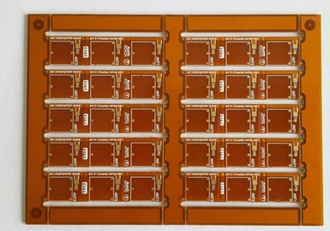
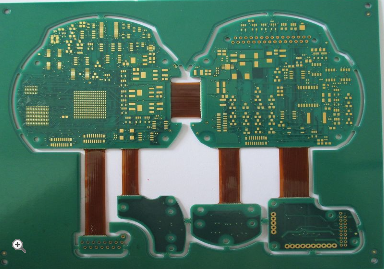
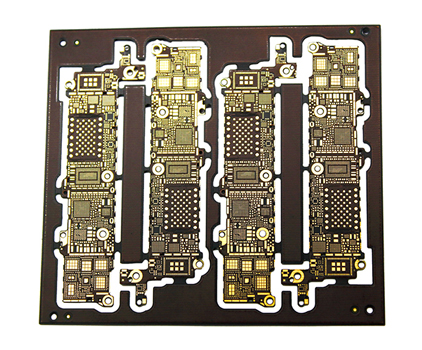
Explore The Engineering Marvel Of Rigid Flex PCBs Enabling Sleeker More Reliable Electronic Devices Across Industries
In an era where electronic devices are becoming increasingly compact, powerful, and integral to every facet of modern life, the quest for more sophisticated and reliable internal architectures is relentless. At the heart of this miniaturization revolution lies a critical but often overlooked engineering component: the printed circuit board (PCB). While traditional rigid PCBs have served as the backbone of electronics for decades, their limitations in space-constrained, dynamic, or high-reliability applications have spurred the development of a hybrid solution. Enter the world of rigid-flex PCBs—a true engineering marvel that seamlessly integrates the stability of rigid boards with the adaptability of flexible circuits. This innovative technology is not merely an incremental improvement but a transformative force, enabling the creation of sleeker, lighter, and far more reliable electronic devices that are reshaping industries from consumer electronics and medical devices to aerospace and automotive systems. By exploring the design, advantages, and applications of rigid-flex PCBs, we can appreciate how this technology is quietly powering the next generation of electronic innovation.
The Hybrid Architecture: Uniting Rigidity and Flexibility
The fundamental genius of a rigid-flex PCB lies in its construction. It is not simply a flexible cable attached to a rigid board; rather, it is a single, unified circuit structure manufactured as one complete entity. The board consists of multiple layers of flexible polyimide film substrates, which are laminated together with adhesive and conductive copper traces. In specific areas, rigid sections are formed by adding thicker, reinforcing layers of FR4 or similar rigid materials. These rigid and flexible layers are fused during the lamination process under heat and pressure, creating a continuous, reliable interconnection without the need for connectors, cables, or solder joints at the transition points.
This monolithic design eliminates many of the failure points associated with traditional interconnection methods. Connectors and cabling, which are prone to wear, corrosion, and disconnection under stress or vibration, are rendered unnecessary. The flexible sections can be designed to bend, fold, or twist dynamically during the product's operation or to be statically folded into a compact three-dimensional shape during assembly. This allows engineers to utilize the full three-dimensional volume of a device's enclosure, paving the way for groundbreaking form factors that were previously impossible with arrays of rigid boards connected by wires.
Enabling Sleeker, Lighter, and More Robust Devices
The most immediate impact of rigid-flex technology is on the physical design of electronic devices. By replacing bulky connector assemblies and multiple discrete boards with a single, integrated unit, designers can achieve significant reductions in weight and volume. This is paramount in industries like aerospace, where every gram counts, and in modern smartphones and wearables, where slim, ergonomic profiles are key selling points. The ability to fold the circuitry allows it to conform to irregular shapes, fitting snugly into curved or tight spaces within a product.
Beyond miniaturization, rigid-flex PCBs dramatically enhance device reliability. The elimination of connectors reduces the number of potential contact failures. The entire circuit is more resistant to shock and vibration because the flexible sections can absorb and dissipate mechanical stress that would otherwise fracture solder joints on a rigid board. This makes rigid-flex ideal for applications subjected to constant motion or harsh environments, such as in automotive control systems, industrial robotics, or handheld medical diagnostic tools. Furthermore, the reduced part count (fewer boards, connectors, and fasteners) simplifies assembly, potentially lowering manufacturing costs and improving yield over the product lifecycle.
Driving Innovation Across Diverse Industries
The versatility of rigid-flex PCBs has made them indispensable across a wide spectrum of high-tech industries. In the medical field, they are the enabling technology for advanced implantable devices like pacemakers and neurostimulators, where reliability and compactness are matters of life and death. They are also found in endoscopic capsules and sophisticated hearing aids, where their flexibility and small footprint are critical.
In consumer electronics, rigid-flex boards are ubiquitous. They are the reason modern smartphones can pack immense computing power into a slim body, often connecting the main logic board to displays, cameras, and buttons via flexible "tails." Laptops use them to connect keyboards and touchpads to motherboards through hinged sections that withstand thousands of open-close cycles. The automotive industry relies on them for infotainment systems, sensor arrays, and engine control units (ECUs), where they must endure extreme temperatures, constant vibration, and tight packaging under the hood or within the dashboard.
Perhaps the most demanding applications are in aerospace and defense. Satellites, avionics, and military communications equipment benefit from the supreme reliability, light weight, and ability of rigid-flex circuits to survive the tremendous G-forces and vibrational stresses of launch and operation. Here, the technology's contribution to system integrity and mission success is invaluable.
Design and Manufacturing Considerations
Harnessing the full potential of rigid-flex PCBs requires a specialized design and manufacturing approach. The process begins with meticulous 3D mechanical modeling to define the precise bend radii, fold locations, and static versus dynamic flexing areas. Bend radii must be carefully calculated to prevent cracking the copper traces; typically, a minimum radius is specified to ensure longevity. The transition zones between rigid and flexible areas are critical and require careful layout of materials and traces to manage stress.
Manufacturing rigid-flex circuits is more complex and costly than producing standard rigid boards. It involves specialized materials, precise layer alignment, and controlled lamination cycles. The flexible polyimide layers are delicate and require careful handling. Despite the higher initial cost, the total cost of ownership is often lower due to the reduced assembly time, higher reliability (leading to fewer field failures), and superior performance. Collaboration between the product designer, PCB designer, and manufacturer from the earliest stages is essential to navigate these complexities and optimize the design for both function and manufacturability.
As electronic devices continue to evolve towards greater integration, mobility, and durability, the role of rigid-flex PCB technology will only expand. It stands as a cornerstone of modern electrical engineering, providing the physical platform that turns ambitious industrial design into reliable, functional reality. From life-saving medical implants to the smartphone in your pocket and the satellite orbiting Earth, rigid-flex PCBs are the unsung heroes enabling the sleek, powerful, and dependable electronic ecosystem that defines our world. Their continued development promises to unlock even more innovative applications, solidifying their status as a true engineering marvel.
REPORT