







-
 Agriculture
-
 Health-Care
-
 Environment
-
 Construction-Real-Estate
-
 Tools-Hardware
-
 Home-Garden
-
 Furniture
-
 Luggage-Bags-Cases
-
 Medical-devices-Supplies
-
 Gifts-Crafts
-
 Sports-Entertainment
-
 Food-Beverage
-
 Vehicles-Transportation
-
 Power-Transmission
-
 Material-Handling
-
 Renewable-Energy
-
 Safety
-
 Testing-Instrument-Equipment
-
 Construction-Building-Machinery
-
 Pet-Supplies
-
 Personal-Care-Household-Cleaning
-
 Vehicle-Accessories-Electronics-Tools
-
 School-Office-Supplies
-
 Packaging-Printing
-
 Mother-Kids-Toys
-
 Business-Services
-
 Commercial-Equipment-Machinery
-
 Apparel-Accessories
-
 Security
-
 Shoes-Accessories
-
 Vehicle-Parts-Accessories
-
 Jewelry-Eyewear-Watches-Accessories
-
 Lights-Lighting
-
 Fabric-Textile-Raw-Material
-
 Fabrication-Services
-
 Industrial-Machinery
-
 Consumer-Electronics
-
 Electrical-Equipment-Supplies
-
 Electronic-Components-Accessories-Telecommunications
-
 Home-Appliances
-
 Beauty
-
 Chemicals
-
 Rubber-Plastics
-
 Metals-Alloys


























































































































































































































































































































































































































































































































































































- Masonry Materials
- Curtain Walls & Accessories
- Earthwork Products
- Fireproofing Materials
- Heat Insulation Materials
- Plastic Building Materials
- Building Boards
- Soundproofing Materials
- Timber
- Waterproofing Materials
- Balustrades & Handrails
- Bathroom & Kitchen
- Flooring & Accessories
- Tiles & Accessories
- Door, Window & Accessories
- Fireplaces & Stoves
- Floor Heating Systems & Parts
- Stairs & Stair Parts
- Ceilings
- Elevators & Escalators
- Stone
- Countertops, Vanity Tops & Table Tops
- Mosaics
- Metal Building Materials
- Multifunctional Materials
- Ladders & Scaffoldings
- Mouldings
- Corner Guards
- Decorative Films
- Formwork
- Building & Industrial Glass
- Other Construction & Real Estate
- Wallpapers/Wall panels
- HVAC System & Parts
- Outdoor Facilities
- Prefabricated Buildings
- Festive & Party Supplies
- Bathroom Products
- Household Sundries
- Rain Gear
- Garden Supplies
- Household Cleaning Tools & Accessories
- Lighters & Smoking Accessories
- Home Storage & Organization
- Household Scales
- Smart Home Improvement
- Home Textiles
- Kitchenware
- Drinkware & Accessories
- Dinnerware, Coffee & Wine
- Home Decor
- Golf
- Fitness & Body Building
- Amusement Park Facilities
- Billiards, Board Game,Coin Operated Games
- Musical Instruments
- Outdoor Affordable Luxury Sports
- Camping & Hiking
- Fishing
- Sports Safety&Rehabilitation
- Ball Sports Equipments
- Water Sports
- Winter Sports
- Luxury Travel Equipments
- Sports Shoes, Bags & Accessories
- Cycling
- Other Sports & Entertainment Products
- Artificial Grass&Sports Flooring&Sports Court Equipment
- Scooters
- Food Ingredients
- Honey & Honey Products
- Snacks
- Nuts & Kernels
- Seafood
- Plant & Animal Oil
- Beverages
- Fruit & Vegetable Products
- Frog & Escargot
- Bean Products
- Egg Products
- Dairy Products
- Seasonings & Condiments
- Canned Food
- Instant Food
- Baked Goods
- Other Food & Beverage
- Meat & Poultry
- Confectionery
- Grain Products
- Feminie Care
- Hair Care & Styling
- Body Care
- Hands & Feet Care
- Hygiene Products
- Men's Grooming
- Laundry Cleaning Supplies
- Travel Size & Gift Sets
- Room Deodorizers
- Other Personal Care Products
- Pest Control Products
- Special Household Cleaning
- Floor Cleaning
- Kitchen & Bathroom Cleaning
- Oral Care
- Bath Supplies
- Yellow Pages
- Correction Supplies
- Office Binding Supplies
- Office Cutting Supplies
- Board Erasers
- Office Adhesives & Tapes
- Education Supplies
- Pencil Cases & Bags
- Notebooks & Writing Pads
- File Folder Accessories
- Calendars
- Writing Accessories
- Commercial Office Supplies
- Pencil Sharpeners
- Pens
- Letter Pad/Paper
- Paper Envelopes
- Desk Organizers
- Pencils
- Markers & Highlighters
- Filing Products
- Art Supplies
- Easels
- Badge Holder & Accessories
- Office Paper
- Printer Supplies
- Book Covers
- Other Office & School Supplies
- Stationery Set
- Boards
- Clipboards
- Stamps
- Drafting Supplies
- Stencils
- Electronic Dictionary
- Books
- Map
- Magazines
- Calculators
- Baby & Toddler Toys
- Educational Toys
- Classic Toys
- Dress Up & Pretend Play
- Toy Vehicle
- Stuffed Animals & Plush Toys
- Outdoor Toys & Structures
- Balloons & Accessories
- Baby Food
- Children's Clothing
- Baby Supplies & Products
- Maternity Clothes
- Kids Shoes
- Baby Care
- Novelty & Gag Toys
- Dolls & Accessories
- Puzzle & Games
- Blocks & Model Building Toys
- Toddler Clothing
- Baby Clothing
- Kids' Luggage & Bags
- Arts, Crafts & DIY Toys
- Action & Toy Figures
- Baby Appliances
- Hobbies & Models
- Remote Control Toys
- Promotional Toys
- Pregnancy & Maternity
- Hygiene Products
- Kid's Textile&Bedding
- Novelty & Special Use
- Toy Weapons
- Baby Gifts
- Baby Storage & Organization
- Auto Drive Systems
- ATV/UTV Parts & Accessories
- Marine Parts & Accessories
- Other Auto Parts
- Trailer Parts & Accessories
- Auto Transmission Systems
- Train Parts & Accessories
- Universal Parts
- Railway Parts & Accessories
- Auto Brake Systems
- Aviation Parts & Accessories
- Truck Parts & Accessories
- Auto Suspension Systems
- Auto Lighting Systems
- New Energy Vehicle Parts & Accessories
- Auto Steering Systems
- Wheels, Tires & Accessories
- Bus Parts & Accessories
- Auto Performance Parts
- Cooling System
- Go-Kart & Kart Racer Parts & Accessories
- Air Conditioning Systems
- Heavy Duty Vehicle Parts & Accessories
- Auto Electrical Systems
- Auto Body Systems
- Auto Engine Systems
- Container Parts & Accessories
- Motorcycle Parts & Accessories
- Refrigeration & Heat Exchange Equipment
- Machine Tool Equipment
- Food & Beverage Machinery
- Agricultural Machinery & Equipment
- Apparel & Textile Machinery
- Chemical Machinery
- Packaging Machines
- Paper Production Machinery
- Plastic & Rubber Processing Machinery
- Industrial Robots
- Electronic Products Machinery
- Metal & Metallurgy Machinery
- Woodworking Machinery
- Home Product Manufacturing Machinery
- Machinery Accessories
- Environmental Machinery
- Machinery Service
- Electrical Equipment Manufacturing Machinery
- Industrial Compressors & Parts
- Tobacco & Cigarette Machinery
- Production Line
- Used Industrial Machinery
- Electronics Production Machinery
- Other Machinery & Industrial Equipment
- Camera, Photo & Accessories
- Portable Audio, Video & Accessories
- Television, Home Audio, Video & Accessories
- Video Games & Accessories
- Mobile Phone & Accessories
- Electronic Publications
- Earphone & Headphone & Accessories
- Speakers & Accessories
- Smart Electronics
- TV Receivers & Accessories
- Mobile Phone & Computer Repair Parts
- Chargers, Batteries & Power Supplies
- Used Electronics
- VR, AR, MR Hardware & Software
- Projectors & Presentation Equipments
- Other Consumer Electronics
- Cables & Commonly Used Accessories
- Computer Hardware & Software
- Displays, Signage and Optoelectronics
- Discrete Semiconductors
- Wireless & IoT Module and Products
- Telecommunications
- Connectors, Terminals & Accessories
- Development Boards, Electronic Modules and Kits
- Circuit Protection
- Sensors
- Isolators
- Audio Components and Products
- Integrated Circuits
- Power Supplies
- Relays
- RF, Microwave and RFID
- Electronic Accessories & Supplies
- Passive Components
- PCB & PCBA
- Air Quality Appliances
- Home Appliance Parts
- Heating & Cooling Appliances
- Small Kitchen Appliances
- Laundry Appliances
- Water Heaters
- Water Treatment Appliances
- Refrigerators & Freezers
- Personal Care & Beauty Appliances
- Major Kitchen Appliances
- Cleaning Appliances
- Second-hand Appliances
- Smart Home Appliances
- Other Home Appliances
- Energy Chemicals
- Inorganic Chemicals
- Basic Organic Chemicals
- Agrochemicals
- Admixture & Additives
- Catalysts & Chemical Auxiliary Agents
- Pigments & Dyestuff
- Coating & Paint
- Daily Chemicals
- Polymer
- Organic Intermediate
- Adhesives & Sealants
- Chemical Waste
- Biological Chemical Products
- Surface Treatment Chemicals
- Painting & Coating
- Chemical Reagents
- Flavor & Fragrance
- Non-Explosive Demolition Agents
- Other Chemicals
- Custom Chemical Services

Factory Audit Guide for Double-End Saw Equipment: Essential Checkpoints & Standards
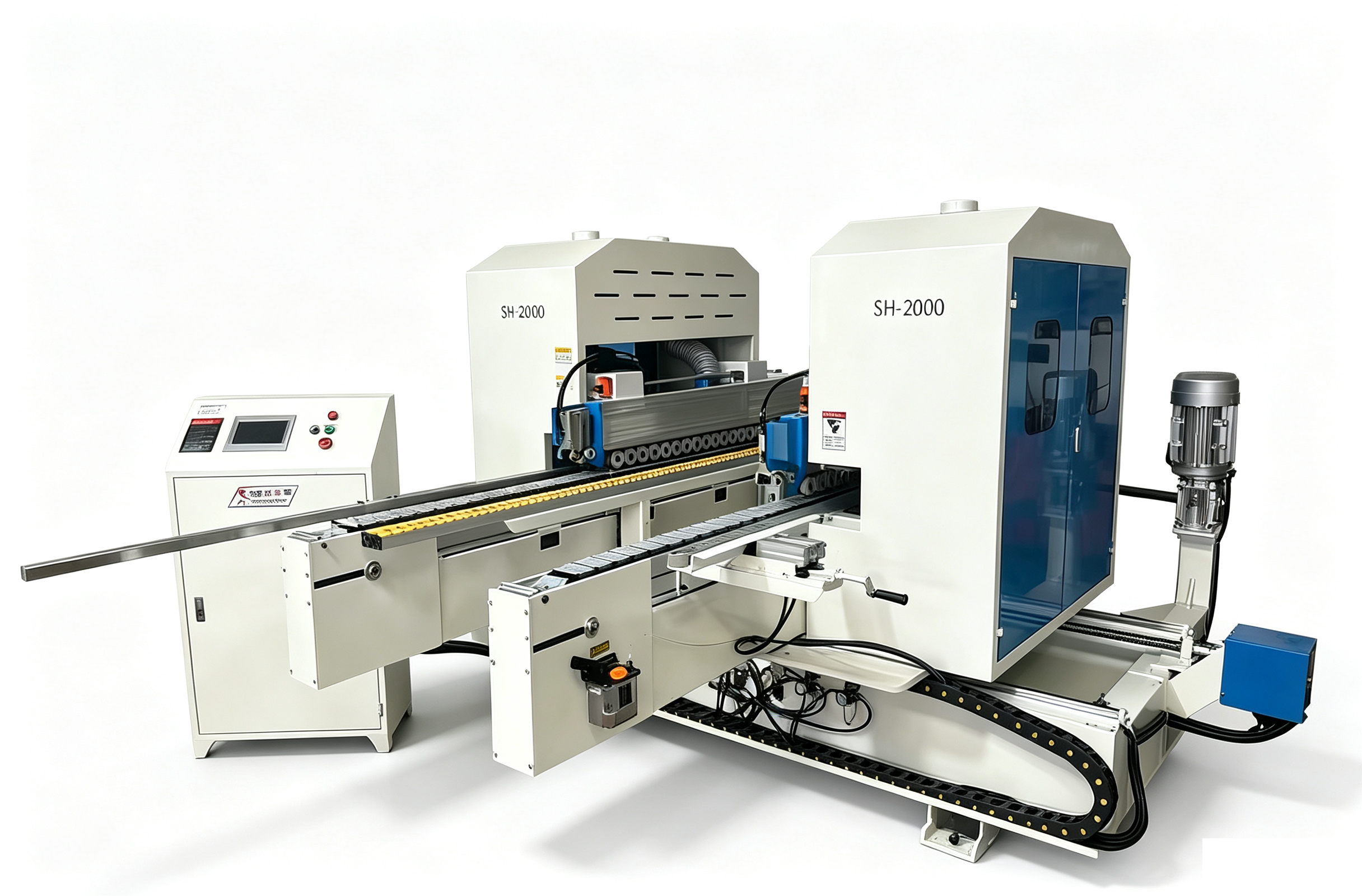
Executing a thorough factory audit when procuring Double-end Saw equipment ensures that incoming machinery meets accurate engineering standards, mechanical tolerances, and operational safety requirements. A comprehensive evaluation spans the dual-saw architecture, automated width and feeding controls, pre-shipment quality verification, and manufacturer support infrastructure.
Key Architectural Checkpoints & Spindle Specifications
A rigorous inspection begins with the core drive units and structural configuration. Auditors should cross-reference nameplate ratings, wiring integrity, and physical build against factory documentation. Key parameters to examine include:
- Dual Sawing Configuration: Inspect the upper 4 kW electric spindle and lower 2.2 kW electric spindle assembly. Confirm both operate reliably within the specified 6000–8000 rpm range under frequency converter regulation.
- Safety Features: Verify the presence and integrity of the lower saw's explosion-proof edge protection mechanism.
- Frame & Auxiliary Tables: Check structural integrity for the standard 3800x2600x1900 mm footprint and 2000 kg weight rating, including four auxiliary tables on one section and three on the adjacent section.
Precision Motion, Feeding & Material Pressing Systems
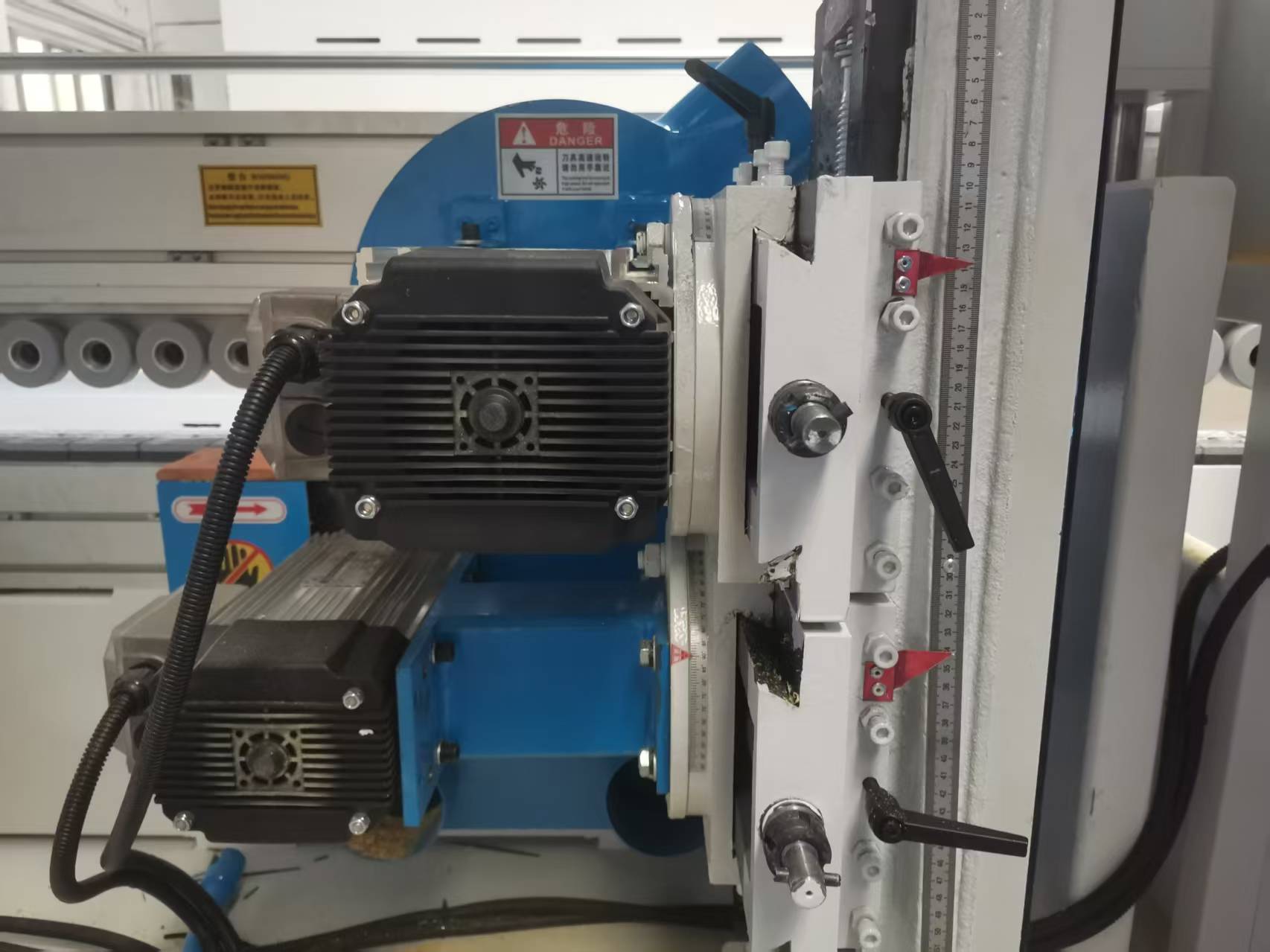
Automated cutting stability relies heavily on precise alignment and smooth linear motion. The audit protocol must thoroughly test all motorized adjustments and feeding mechanisms:
1. Width & Cutting Adjustment Controls
Ensure that the width adjustment system—powered by a dedicated servo motor and precision ball screw—responds accurately to touch-screen inputs. Simultaneously, evaluate the dual 550 W servo cutting adjustment motors to confirm zero play and fluid movement along the ball screws.
2. Conveyor Drive & Material Positioning
Examine the conveyor's 2.2 kW motor and variable speed control. Auditors must verify that the feeding point positioning mechanism engages consistently without skewing incoming workpieces.
3. Hold-Down Systems
Inspect the dual 750 W electric lifting units responsible for material pressing to guarantee balanced pressure across various panel thicknesses during processing.
Quality Testing, Load Calibration & Packaging Protocol
Before any unit is cleared for dispatch, factory records must confirm complete quality assurance workflows. The inspection process should review component pre-checks, alignment logs, electrical safety tests, and extended burn-in running tests.
Auditors should review test data covering mechanical tolerances, positioning accuracy, vibration profiles, and operational noise levels. Any detected surface paint flaws, unfastened bolts, machining variances, or electrical fluctuations must be rectified and documented prior to release.
Packaging standards require equal scrutiny. Precision heads, linear guides, and control cabinets must be secured in reinforced, fumigated wooden cases with rust inhibitors and moisture-absorbing desiccants to prevent transit damage.
Audit Criteria Matrix
| Evaluation Zone | Component / Parameter Checked | Desired Audit Outcome |
|---|---|---|
| Sawing Drives | Upper (4 kW) & lower (2.2 kW) spindles; 6000–8000 rpm; VFD drive | Verified via load tests and operational documentation |
| Precision Positioning | Servo motors, ball screws, touch screen, twin 550 W cutting adjustments | Accurate positioning response and precise width settings |
| Feed & Press Mechanism | 2.2 kW conveyor drive, positioning device, dual 750 W electric press units | Smooth workpiece feeding and stable clamping force |
| Physical Assembly | Overall dimensions (3800x2600x1900 mm), 2000 kg weight, auxiliary tables (4+3) | Physical construction matches design schematics |
| Quality Control | Burn-in load testing, clearance checks, pre-shipment audit logs | All non-conformances cleared prior to packing |
| Post-Sale Support | 1-year warranty, spare parts pipeline, remote video/voice tech assistance | Clear operational procedures for technical service |
Manufacturer Profile & Application Scope
Foshan Sun Hunt Woodworking Machinery Co.,Ltd. (also known as Foshan Sun Hunt, Sheng Heng, or Sun Hunt) operates a 2,000 m² manufacturing site in Lunjiao Subdistrict, Shunde District, Foshan City. Founded in 2014, the firm relies on an in-house management and R&D team producing up to 50 medium-sized units monthly (600 annually) under a 7-pillar management framework covering raw material sourcing, key-parameter assembly, quality verification, and after-sales service.

Their machinery portfolio includes CNC Router Machines, Double-End Saw Series, Planer Machines, Drilling Machines, Edge Banding Machines, and Panel Saws. These systems serve panel furniture, solid wood manufacturing, and custom door/window production lines, with proven international project deployments such as door plant setups in India and complete wood-processing lines in the UAE.
Frequently Asked Questions
What are the critical mechanical hardware items to inspect on a Double-end Saw?
Priority should be given to the 4 kW upper and 2.2 kW lower electric spindles, variable frequency drives, ball screws, servo width positioning assemblies, conveyor motors, positioning devices, and electric workpiece hold-down units.
Which pre-shipment test records should buyers request?
Buyers should request records for long-duration load running, precision positioning calibration, noise and vibration checks, program functionality validation, and final mechanical/electrical safety clearance certificates.
What after-sales provisions ought to be documented?
Verify coverage details for the standard 1-year warranty (excluding consumables and improper use damage), availability of video/voice technical assistance, rapid spare-parts delivery, control software optimization, and optional on-site engineering installation guidance.
Summary & Recommendations
A rigorous audit bridges documented equipment parameters with real-world machine reliability. Ensuring compliance across electrical, mechanical, and precision motion systems safeguards production line efficiency. Suppliers supporting non-standard customization typically operate with a minimum order quantity of 1 set and standard production lead times of 20–35 days. To learn more about customized Double-end Saw engineering solutions, contact Vincent Guo directly at vincent@fsshmachine.cn or visit Foshan Sun Hunt Woodworking Machinery Co.,Ltd..
REPORT