







-
 Agriculture
-
 Health-Care
-
 Environment
-
 Construction-Real-Estate
-
 Tools-Hardware
-
 Home-Garden
-
 Furniture
-
 Luggage-Bags-Cases
-
 Medical-devices-Supplies
-
 Gifts-Crafts
-
 Sports-Entertainment
-
 Food-Beverage
-
 Vehicles-Transportation
-
 Power-Transmission
-
 Material-Handling
-
 Renewable-Energy
-
 Safety
-
 Testing-Instrument-Equipment
-
 Construction-Building-Machinery
-
 Pet-Supplies
-
 Personal-Care-Household-Cleaning
-
 Vehicle-Accessories-Electronics-Tools
-
 School-Office-Supplies
-
 Packaging-Printing
-
 Mother-Kids-Toys
-
 Business-Services
-
 Commercial-Equipment-Machinery
-
 Apparel-Accessories
-
 Security
-
 Shoes-Accessories
-
 Vehicle-Parts-Accessories
-
 Jewelry-Eyewear-Watches-Accessories
-
 Lights-Lighting
-
 Fabric-Textile-Raw-Material
-
 Fabrication-Services
-
 Industrial-Machinery
-
 Consumer-Electronics
-
 Electrical-Equipment-Supplies
-
 Electronic-Components-Accessories-Telecommunications
-
 Home-Appliances
-
 Beauty
-
 Chemicals
-
 Rubber-Plastics
-
 Metals-Alloys


























































































































































































































































































































































































































































































































































































- Masonry Materials
- Curtain Walls & Accessories
- Earthwork Products
- Fireproofing Materials
- Heat Insulation Materials
- Plastic Building Materials
- Building Boards
- Soundproofing Materials
- Timber
- Waterproofing Materials
- Balustrades & Handrails
- Bathroom & Kitchen
- Flooring & Accessories
- Tiles & Accessories
- Door, Window & Accessories
- Fireplaces & Stoves
- Floor Heating Systems & Parts
- Stairs & Stair Parts
- Ceilings
- Elevators & Escalators
- Stone
- Countertops, Vanity Tops & Table Tops
- Mosaics
- Metal Building Materials
- Multifunctional Materials
- Ladders & Scaffoldings
- Mouldings
- Corner Guards
- Decorative Films
- Formwork
- Building & Industrial Glass
- Other Construction & Real Estate
- Wallpapers/Wall panels
- HVAC System & Parts
- Outdoor Facilities
- Prefabricated Buildings
- Festive & Party Supplies
- Bathroom Products
- Household Sundries
- Rain Gear
- Garden Supplies
- Household Cleaning Tools & Accessories
- Lighters & Smoking Accessories
- Home Storage & Organization
- Household Scales
- Smart Home Improvement
- Home Textiles
- Kitchenware
- Drinkware & Accessories
- Dinnerware, Coffee & Wine
- Home Decor
- Golf
- Fitness & Body Building
- Amusement Park Facilities
- Billiards, Board Game,Coin Operated Games
- Musical Instruments
- Outdoor Affordable Luxury Sports
- Camping & Hiking
- Fishing
- Sports Safety&Rehabilitation
- Ball Sports Equipments
- Water Sports
- Winter Sports
- Luxury Travel Equipments
- Sports Shoes, Bags & Accessories
- Cycling
- Other Sports & Entertainment Products
- Artificial Grass&Sports Flooring&Sports Court Equipment
- Scooters
- Food Ingredients
- Honey & Honey Products
- Snacks
- Nuts & Kernels
- Seafood
- Plant & Animal Oil
- Beverages
- Fruit & Vegetable Products
- Frog & Escargot
- Bean Products
- Egg Products
- Dairy Products
- Seasonings & Condiments
- Canned Food
- Instant Food
- Baked Goods
- Other Food & Beverage
- Meat & Poultry
- Confectionery
- Grain Products
- Feminie Care
- Hair Care & Styling
- Body Care
- Hands & Feet Care
- Hygiene Products
- Men's Grooming
- Laundry Cleaning Supplies
- Travel Size & Gift Sets
- Room Deodorizers
- Other Personal Care Products
- Pest Control Products
- Special Household Cleaning
- Floor Cleaning
- Kitchen & Bathroom Cleaning
- Oral Care
- Bath Supplies
- Yellow Pages
- Correction Supplies
- Office Binding Supplies
- Office Cutting Supplies
- Board Erasers
- Office Adhesives & Tapes
- Education Supplies
- Pencil Cases & Bags
- Notebooks & Writing Pads
- File Folder Accessories
- Calendars
- Writing Accessories
- Commercial Office Supplies
- Pencil Sharpeners
- Pens
- Letter Pad/Paper
- Paper Envelopes
- Desk Organizers
- Pencils
- Markers & Highlighters
- Filing Products
- Art Supplies
- Easels
- Badge Holder & Accessories
- Office Paper
- Printer Supplies
- Book Covers
- Other Office & School Supplies
- Stationery Set
- Boards
- Clipboards
- Stamps
- Drafting Supplies
- Stencils
- Electronic Dictionary
- Books
- Map
- Magazines
- Calculators
- Baby & Toddler Toys
- Educational Toys
- Classic Toys
- Dress Up & Pretend Play
- Toy Vehicle
- Stuffed Animals & Plush Toys
- Outdoor Toys & Structures
- Balloons & Accessories
- Baby Food
- Children's Clothing
- Baby Supplies & Products
- Maternity Clothes
- Kids Shoes
- Baby Care
- Novelty & Gag Toys
- Dolls & Accessories
- Puzzle & Games
- Blocks & Model Building Toys
- Toddler Clothing
- Baby Clothing
- Kids' Luggage & Bags
- Arts, Crafts & DIY Toys
- Action & Toy Figures
- Baby Appliances
- Hobbies & Models
- Remote Control Toys
- Promotional Toys
- Pregnancy & Maternity
- Hygiene Products
- Kid's Textile&Bedding
- Novelty & Special Use
- Toy Weapons
- Baby Gifts
- Baby Storage & Organization
- Auto Drive Systems
- ATV/UTV Parts & Accessories
- Marine Parts & Accessories
- Other Auto Parts
- Trailer Parts & Accessories
- Auto Transmission Systems
- Train Parts & Accessories
- Universal Parts
- Railway Parts & Accessories
- Auto Brake Systems
- Aviation Parts & Accessories
- Truck Parts & Accessories
- Auto Suspension Systems
- Auto Lighting Systems
- New Energy Vehicle Parts & Accessories
- Auto Steering Systems
- Wheels, Tires & Accessories
- Bus Parts & Accessories
- Auto Performance Parts
- Cooling System
- Go-Kart & Kart Racer Parts & Accessories
- Air Conditioning Systems
- Heavy Duty Vehicle Parts & Accessories
- Auto Electrical Systems
- Auto Body Systems
- Auto Engine Systems
- Container Parts & Accessories
- Motorcycle Parts & Accessories
- Refrigeration & Heat Exchange Equipment
- Machine Tool Equipment
- Food & Beverage Machinery
- Agricultural Machinery & Equipment
- Apparel & Textile Machinery
- Chemical Machinery
- Packaging Machines
- Paper Production Machinery
- Plastic & Rubber Processing Machinery
- Industrial Robots
- Electronic Products Machinery
- Metal & Metallurgy Machinery
- Woodworking Machinery
- Home Product Manufacturing Machinery
- Machinery Accessories
- Environmental Machinery
- Machinery Service
- Electrical Equipment Manufacturing Machinery
- Industrial Compressors & Parts
- Tobacco & Cigarette Machinery
- Production Line
- Used Industrial Machinery
- Electronics Production Machinery
- Other Machinery & Industrial Equipment
- Camera, Photo & Accessories
- Portable Audio, Video & Accessories
- Television, Home Audio, Video & Accessories
- Video Games & Accessories
- Mobile Phone & Accessories
- Electronic Publications
- Earphone & Headphone & Accessories
- Speakers & Accessories
- Smart Electronics
- TV Receivers & Accessories
- Mobile Phone & Computer Repair Parts
- Chargers, Batteries & Power Supplies
- Used Electronics
- VR, AR, MR Hardware & Software
- Projectors & Presentation Equipments
- Other Consumer Electronics
- Cables & Commonly Used Accessories
- Computer Hardware & Software
- Displays, Signage and Optoelectronics
- Discrete Semiconductors
- Wireless & IoT Module and Products
- Telecommunications
- Connectors, Terminals & Accessories
- Development Boards, Electronic Modules and Kits
- Circuit Protection
- Sensors
- Isolators
- Audio Components and Products
- Integrated Circuits
- Power Supplies
- Relays
- RF, Microwave and RFID
- Electronic Accessories & Supplies
- Passive Components
- PCB & PCBA
- Air Quality Appliances
- Home Appliance Parts
- Heating & Cooling Appliances
- Small Kitchen Appliances
- Laundry Appliances
- Water Heaters
- Water Treatment Appliances
- Refrigerators & Freezers
- Personal Care & Beauty Appliances
- Major Kitchen Appliances
- Cleaning Appliances
- Second-hand Appliances
- Smart Home Appliances
- Other Home Appliances
- Energy Chemicals
- Inorganic Chemicals
- Basic Organic Chemicals
- Agrochemicals
- Admixture & Additives
- Catalysts & Chemical Auxiliary Agents
- Pigments & Dyestuff
- Coating & Paint
- Daily Chemicals
- Polymer
- Organic Intermediate
- Adhesives & Sealants
- Chemical Waste
- Biological Chemical Products
- Surface Treatment Chemicals
- Painting & Coating
- Chemical Reagents
- Flavor & Fragrance
- Non-Explosive Demolition Agents
- Other Chemicals
- Custom Chemical Services

How to Ensure Safety Compliance: Verifying Guards and Emergency Stops on Double-End Saws
Understanding Safety Verification for Double-End Woodworking Saws
When purchasing industrial woodworking machinery like a Double-end Saw, buyers often encounter comprehensive technical specifications covering motor wattage, spindle speed, and numerical positioning controls. However, essential operator protection mechanisms—specifically protective guarding and emergency shutdown controls—are frequently omitted from basic spec sheets. To ensure full operational safety and regulatory compliance, buyers must proactively verify these physical safety features through documented manufacturer confirmation and rigorous pre-shipment testing.
Core Inspection Takeaways
- Physical Barrier Audit: Verify that protective guards completely shield operators from both upper and lower high-speed blade areas.
- E-Stop Functionality: Request formal pre-dispatch test logs confirming that emergency stop buttons are strategically located, fully operational, and immediately accessible.
- Pre-Shipment Integration: Ensure safety audits are incorporated into the manufacturer's standard quality control and pre-shipment inspection (PSI) protocols.
- Application Scope: Double-end saws are essential for precision cutting in wooden door and window manufacturing, panel furniture, and custom cabinetry production.
Technical Architecture and Safety Compliance Gaps
Standard Double-end Saws feature high-performance dual-sawing configurations, typically utilizing a 4 kW upper spindle and a 2.2 kW lower spindle operating at 6000–8000 rpm. Advanced models incorporate frequency-converter speed control, touch-screen servo width adjustment via ball screws, and motorized feeding conveyors. While these technical features guarantee high positioning accuracy and repeatable output, they do not automatically guarantee compliance with machine safety standards.
Because equipment specs rarely detail interlock switch mechanisms, guard construction materials, or emergency-stop wiring logic, safety verification must be conducted as an independent inspection step. Operators should physically confirm that guards are securely anchored, prevent reach-in access to cutting zones, and that emergency stop devices immediately kill motor power upon actuation.
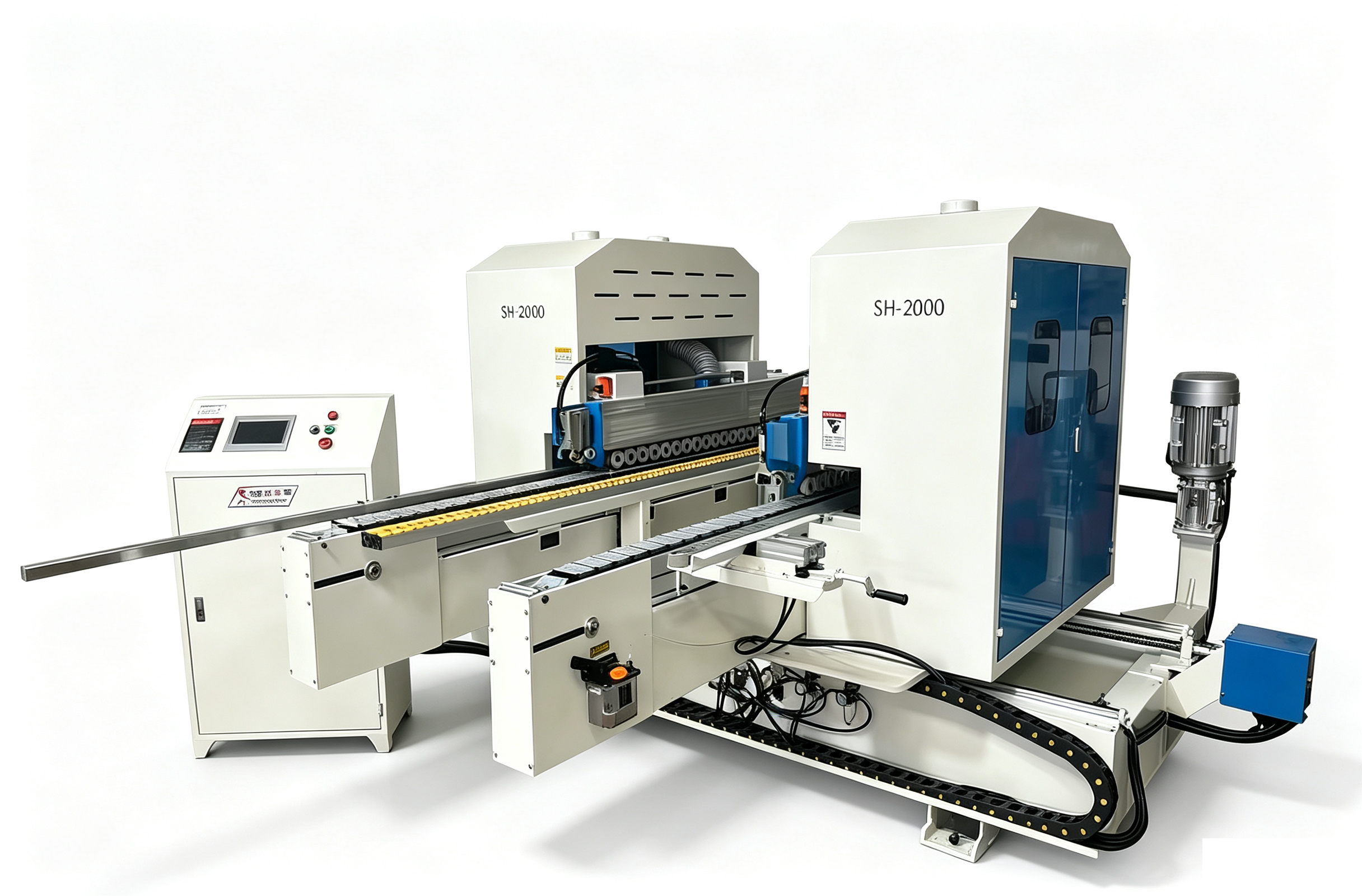
Verification Matrix: Features vs. Safety Documentation
| Inspection Parameter | Provided Specifications vs. Verification Requirement |
|---|---|
| Blade Guard Protection | Upper/lower saw power defined; guard structure and interlocks require physical PSI confirmation. |
| Emergency Stop System | Control panel existence noted; button placement, quantity, and cutoff circuit testing require explicit confirmation. |
| Drive & Motion Controls | Frequency conversion, servo drive, and ball-screw positioning verified via operational testing. |
| Factory Pre-Shipment Audit | Standard load testing and calibration done; dedicated safety guard/E-stop checks must be added to final QC checklist. |
Leveraging Manufacturer Quality Control Systems
Leading machinery builders, such as Foshan Sun Hunt Woodworking Machinery Co.,Ltd., implement robust seven-pillar quality management frameworks spanning raw material control, key component machining, assembly, precision calibration, vibration/noise detection, electrical stability testing, and pre-shipment inspection. With proven line deployments—such as a 19-machine line delivered to India and a 10-machine processing setup in the UAE—the manufacturer has extensive experience in large-scale machinery integration. Buyers should explicitly instruct the engineering team to include safety guard integrity and E-stop response tests as mandatory items on the final Pre-Shipment Inspection checklist.
Frequently Asked Questions
Does standard product technical documentation confirm guard compliance?
No. Standard datasheets specify mechanical dimensions, motor power ratings, and control systems, but rarely include detailed safety guard design standards or safety interlock documentation.
Are emergency stop features guaranteed to be present if electrical stability is tested?
Electrical stability tests evaluate power supply consistency and control board response, but do not inherently verify the physical placement, quantity, or fault-handling behavior of emergency stop buttons.
When is the ideal time to perform safety guard and E-stop verification?
Verification must occur prior to container loading during the final Pre-Shipment Inspection (PSI). Request written inspection certificates and video proof of emergency stop operations before dispatch.
Summary and Next Steps
Ensuring that a Double-end Saw meets safety guard and emergency stop requirements requires active verification beyond basic technical spec sheets. Foshan Sun Hunt Woodworking Machinery Co.,Ltd. offers non-standard custom engineering and comprehensive production line setups with a minimum order quantity of 1 set and standard lead times of 20 to 35 days. To request detailed technical documentation or customized safety configurations, contact their engineering team at vincent@fsshmachine.cn.
About the Manufacturer
Foshan Sun Hunt Woodworking Machinery Co.,Ltd. (also operating under the brand names Sheng Heng or Sun Hunt) was established in 2014 in Lunjiao Town, Shunde District, Foshan City. Operating a 2,000 m² modern manufacturing facility, the company specializes in high-precision CNC routers, double-end saws, planers, drilling machinery, edge banders, and panel saws, backed by a rigorous seven-pillar quality assurance framework.

REPORT