







-
 Agriculture
-
 Health-Care
-
 Environment
-
 Construction-Real-Estate
-
 Tools-Hardware
-
 Home-Garden
-
 Furniture
-
 Luggage-Bags-Cases
-
 Medical-devices-Supplies
-
 Gifts-Crafts
-
 Sports-Entertainment
-
 Food-Beverage
-
 Vehicles-Transportation
-
 Power-Transmission
-
 Material-Handling
-
 Renewable-Energy
-
 Safety
-
 Testing-Instrument-Equipment
-
 Construction-Building-Machinery
-
 Pet-Supplies
-
 Personal-Care-Household-Cleaning
-
 Vehicle-Accessories-Electronics-Tools
-
 School-Office-Supplies
-
 Packaging-Printing
-
 Mother-Kids-Toys
-
 Business-Services
-
 Commercial-Equipment-Machinery
-
 Apparel-Accessories
-
 Security
-
 Shoes-Accessories
-
 Vehicle-Parts-Accessories
-
 Jewelry-Eyewear-Watches-Accessories
-
 Lights-Lighting
-
 Fabric-Textile-Raw-Material
-
 Fabrication-Services
-
 Industrial-Machinery
-
 Consumer-Electronics
-
 Electrical-Equipment-Supplies
-
 Electronic-Components-Accessories-Telecommunications
-
 Home-Appliances
-
 Beauty
-
 Chemicals
-
 Rubber-Plastics
-
 Metals-Alloys


























































































































































































































































































































































































































































































































































































- Masonry Materials
- Curtain Walls & Accessories
- Earthwork Products
- Fireproofing Materials
- Heat Insulation Materials
- Plastic Building Materials
- Building Boards
- Soundproofing Materials
- Timber
- Waterproofing Materials
- Balustrades & Handrails
- Bathroom & Kitchen
- Flooring & Accessories
- Tiles & Accessories
- Door, Window & Accessories
- Fireplaces & Stoves
- Floor Heating Systems & Parts
- Stairs & Stair Parts
- Ceilings
- Elevators & Escalators
- Stone
- Countertops, Vanity Tops & Table Tops
- Mosaics
- Metal Building Materials
- Multifunctional Materials
- Ladders & Scaffoldings
- Mouldings
- Corner Guards
- Decorative Films
- Formwork
- Building & Industrial Glass
- Other Construction & Real Estate
- Wallpapers/Wall panels
- HVAC System & Parts
- Outdoor Facilities
- Prefabricated Buildings
- Festive & Party Supplies
- Bathroom Products
- Household Sundries
- Rain Gear
- Garden Supplies
- Household Cleaning Tools & Accessories
- Lighters & Smoking Accessories
- Home Storage & Organization
- Household Scales
- Smart Home Improvement
- Home Textiles
- Kitchenware
- Drinkware & Accessories
- Dinnerware, Coffee & Wine
- Home Decor
- Golf
- Fitness & Body Building
- Amusement Park Facilities
- Billiards, Board Game,Coin Operated Games
- Musical Instruments
- Outdoor Affordable Luxury Sports
- Camping & Hiking
- Fishing
- Sports Safety&Rehabilitation
- Ball Sports Equipments
- Water Sports
- Winter Sports
- Luxury Travel Equipments
- Sports Shoes, Bags & Accessories
- Cycling
- Other Sports & Entertainment Products
- Artificial Grass&Sports Flooring&Sports Court Equipment
- Scooters
- Food Ingredients
- Honey & Honey Products
- Snacks
- Nuts & Kernels
- Seafood
- Plant & Animal Oil
- Beverages
- Fruit & Vegetable Products
- Frog & Escargot
- Bean Products
- Egg Products
- Dairy Products
- Seasonings & Condiments
- Canned Food
- Instant Food
- Baked Goods
- Other Food & Beverage
- Meat & Poultry
- Confectionery
- Grain Products
- Feminie Care
- Hair Care & Styling
- Body Care
- Hands & Feet Care
- Hygiene Products
- Men's Grooming
- Laundry Cleaning Supplies
- Travel Size & Gift Sets
- Room Deodorizers
- Other Personal Care Products
- Pest Control Products
- Special Household Cleaning
- Floor Cleaning
- Kitchen & Bathroom Cleaning
- Oral Care
- Bath Supplies
- Yellow Pages
- Correction Supplies
- Office Binding Supplies
- Office Cutting Supplies
- Board Erasers
- Office Adhesives & Tapes
- Education Supplies
- Pencil Cases & Bags
- Notebooks & Writing Pads
- File Folder Accessories
- Calendars
- Writing Accessories
- Commercial Office Supplies
- Pencil Sharpeners
- Pens
- Letter Pad/Paper
- Paper Envelopes
- Desk Organizers
- Pencils
- Markers & Highlighters
- Filing Products
- Art Supplies
- Easels
- Badge Holder & Accessories
- Office Paper
- Printer Supplies
- Book Covers
- Other Office & School Supplies
- Stationery Set
- Boards
- Clipboards
- Stamps
- Drafting Supplies
- Stencils
- Electronic Dictionary
- Books
- Map
- Magazines
- Calculators
- Baby & Toddler Toys
- Educational Toys
- Classic Toys
- Dress Up & Pretend Play
- Toy Vehicle
- Stuffed Animals & Plush Toys
- Outdoor Toys & Structures
- Balloons & Accessories
- Baby Food
- Children's Clothing
- Baby Supplies & Products
- Maternity Clothes
- Kids Shoes
- Baby Care
- Novelty & Gag Toys
- Dolls & Accessories
- Puzzle & Games
- Blocks & Model Building Toys
- Toddler Clothing
- Baby Clothing
- Kids' Luggage & Bags
- Arts, Crafts & DIY Toys
- Action & Toy Figures
- Baby Appliances
- Hobbies & Models
- Remote Control Toys
- Promotional Toys
- Pregnancy & Maternity
- Hygiene Products
- Kid's Textile&Bedding
- Novelty & Special Use
- Toy Weapons
- Baby Gifts
- Baby Storage & Organization
- Auto Drive Systems
- ATV/UTV Parts & Accessories
- Marine Parts & Accessories
- Other Auto Parts
- Trailer Parts & Accessories
- Auto Transmission Systems
- Train Parts & Accessories
- Universal Parts
- Railway Parts & Accessories
- Auto Brake Systems
- Aviation Parts & Accessories
- Truck Parts & Accessories
- Auto Suspension Systems
- Auto Lighting Systems
- New Energy Vehicle Parts & Accessories
- Auto Steering Systems
- Wheels, Tires & Accessories
- Bus Parts & Accessories
- Auto Performance Parts
- Cooling System
- Go-Kart & Kart Racer Parts & Accessories
- Air Conditioning Systems
- Heavy Duty Vehicle Parts & Accessories
- Auto Electrical Systems
- Auto Body Systems
- Auto Engine Systems
- Container Parts & Accessories
- Motorcycle Parts & Accessories
- Refrigeration & Heat Exchange Equipment
- Machine Tool Equipment
- Food & Beverage Machinery
- Agricultural Machinery & Equipment
- Apparel & Textile Machinery
- Chemical Machinery
- Packaging Machines
- Paper Production Machinery
- Plastic & Rubber Processing Machinery
- Industrial Robots
- Electronic Products Machinery
- Metal & Metallurgy Machinery
- Woodworking Machinery
- Home Product Manufacturing Machinery
- Machinery Accessories
- Environmental Machinery
- Machinery Service
- Electrical Equipment Manufacturing Machinery
- Industrial Compressors & Parts
- Tobacco & Cigarette Machinery
- Production Line
- Used Industrial Machinery
- Electronics Production Machinery
- Other Machinery & Industrial Equipment
- Camera, Photo & Accessories
- Portable Audio, Video & Accessories
- Television, Home Audio, Video & Accessories
- Video Games & Accessories
- Mobile Phone & Accessories
- Electronic Publications
- Earphone & Headphone & Accessories
- Speakers & Accessories
- Smart Electronics
- TV Receivers & Accessories
- Mobile Phone & Computer Repair Parts
- Chargers, Batteries & Power Supplies
- Used Electronics
- VR, AR, MR Hardware & Software
- Projectors & Presentation Equipments
- Other Consumer Electronics
- Cables & Commonly Used Accessories
- Computer Hardware & Software
- Displays, Signage and Optoelectronics
- Discrete Semiconductors
- Wireless & IoT Module and Products
- Telecommunications
- Connectors, Terminals & Accessories
- Development Boards, Electronic Modules and Kits
- Circuit Protection
- Sensors
- Isolators
- Audio Components and Products
- Integrated Circuits
- Power Supplies
- Relays
- RF, Microwave and RFID
- Electronic Accessories & Supplies
- Passive Components
- PCB & PCBA
- Air Quality Appliances
- Home Appliance Parts
- Heating & Cooling Appliances
- Small Kitchen Appliances
- Laundry Appliances
- Water Heaters
- Water Treatment Appliances
- Refrigerators & Freezers
- Personal Care & Beauty Appliances
- Major Kitchen Appliances
- Cleaning Appliances
- Second-hand Appliances
- Smart Home Appliances
- Other Home Appliances
- Energy Chemicals
- Inorganic Chemicals
- Basic Organic Chemicals
- Agrochemicals
- Admixture & Additives
- Catalysts & Chemical Auxiliary Agents
- Pigments & Dyestuff
- Coating & Paint
- Daily Chemicals
- Polymer
- Organic Intermediate
- Adhesives & Sealants
- Chemical Waste
- Biological Chemical Products
- Surface Treatment Chemicals
- Painting & Coating
- Chemical Reagents
- Flavor & Fragrance
- Non-Explosive Demolition Agents
- Other Chemicals
- Custom Chemical Services

Garment Wash Accuracy: Bridging the Gap Between Samples and Bulk Production
When transitioning from a single prototype to full-scale manufacturing, apparel brands frequently ask: can bulk production replicate the exact wash finish of a sample? Under controlled industrial parameters, garment wash matching between sample garments and mass production runs reliably achieves a 90% to 95% match rate. While minor shade and texture variations can emerge due to differences in vessel volume and mechanical friction, standardized production protocols ensure high consistency for custom OEM/ODM streetwear and heavyweight cotton garments.
Understanding the Mechanics: Why Sample and Mass Washes Differ
The variance between a sample wash and a bulk wash primarily stems from physical scale dynamics. A single sample garment washed in a small liquor vessel undergoes low mechanical friction and precise water-to-fabric contact. Conversely, heavy industrial washing drums loaded with hundreds of garments generate significantly higher garment-to-garment friction and heat retention. Technical teams at Dongguan City Dule Garment Co.,Ltd address this challenge by applying precise formula scale factors—recalibrating enzyme dosages, water temperatures, and stone-wash cycle durations based on total fabric weight in kilograms.
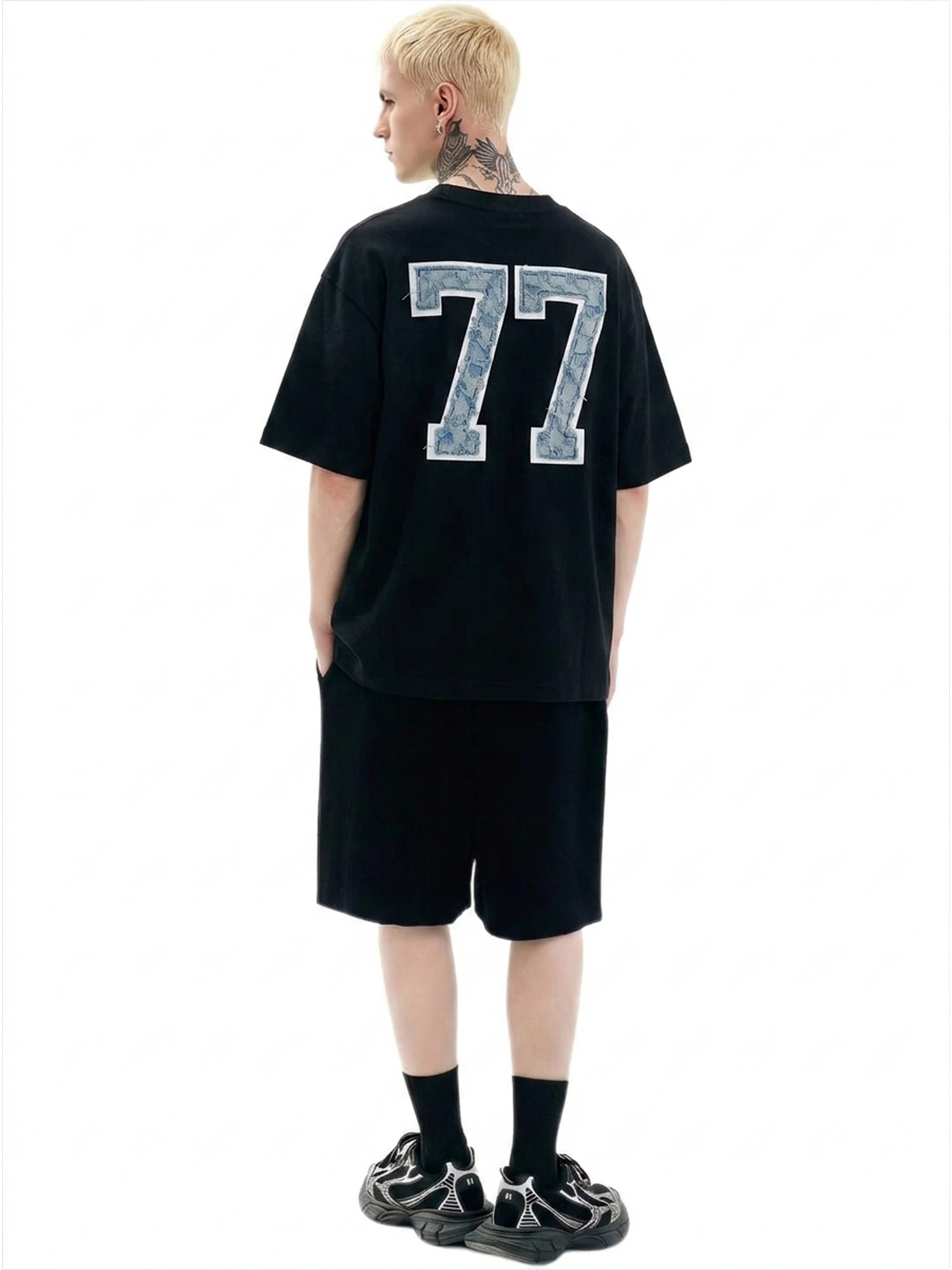
To maintain rigorous quality standards, manufacturers adhere strictly to ISO 2859-1 guidelines, combining mid-production checks with Final AQL 2.5 inspections. For example, in ongoing supply programs for UK-based direct-to-consumer retailer Vanguard Shop Co. (requiring 1,000 units per SKU across 24 drops per year), approved pre-production samples (PPS) establish the benchmark range for shading, shrinkage tolerance, and artwork retention under intensive washing conditions.
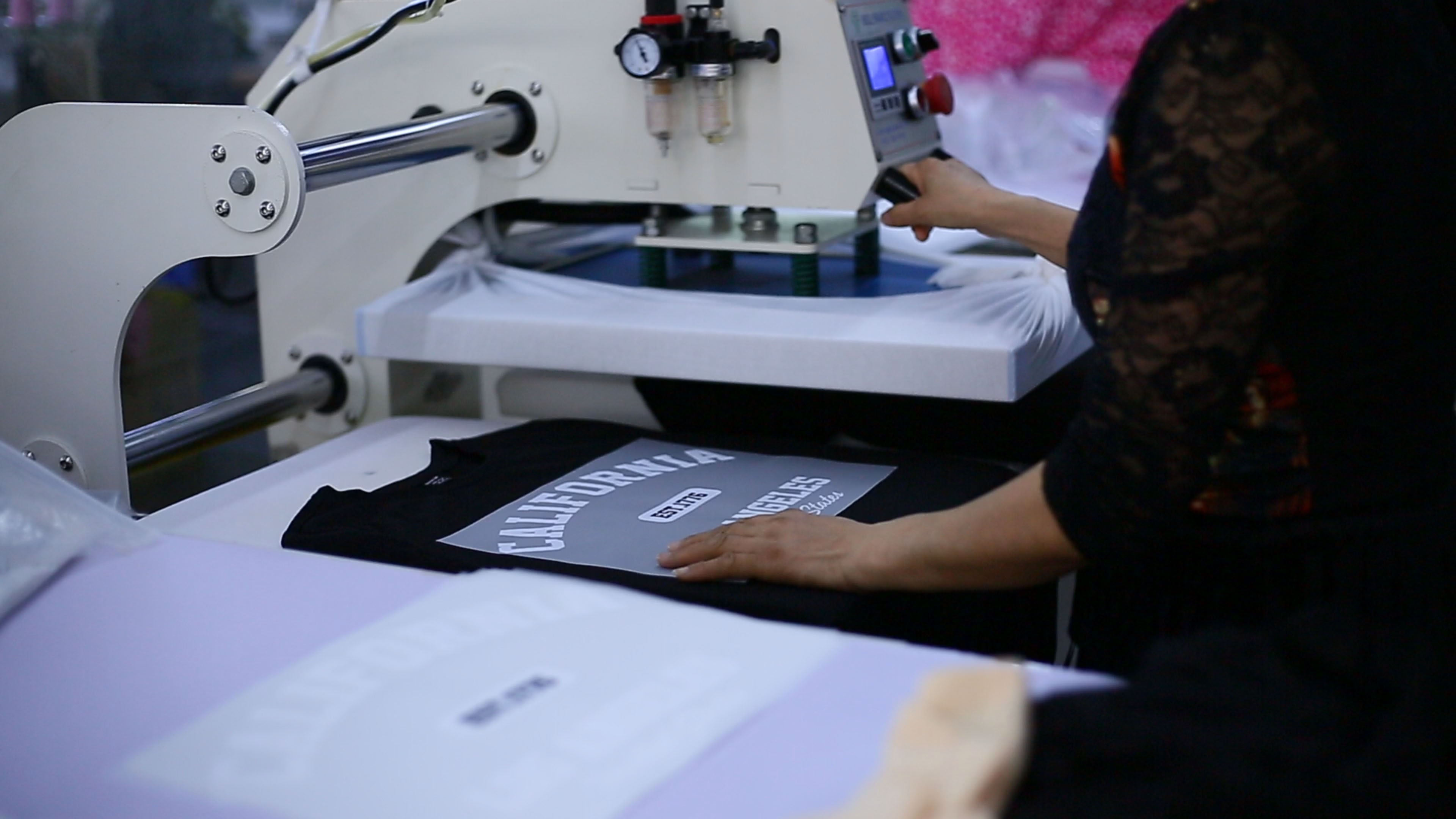
Key Solutions to Ensure Batch-to-Batch Wash Consistency
- Standardized Liquor Ratios: Maintaining identical chemical concentration ratios between sample wash units and industrial drums minimizes color shift and surface texture drift.
- Fabric Dye Lot Locking: Sourcing bulk cotton fabric from the exact same dye lot used during sample development prevents differential dye absorption during vintage, acid, or enzyme washing.
- Structured Pre-Production Approval: Approving strike-off samples and pre-production samples (PPS) defines clear visual and physical tolerance limits prior to mass production.
- Flexible Small-Batch Validation: Utilizing low minimum order quantities (MOQ of 50 pieces per custom style) allows independent fashion labels to validate wash effects on an industrial scale before launching high-volume orders.
Comparative Analysis: Sample vs. Mass Production Wash Parameters
| Process Parameter | Sample Production (1–5 pcs) | Mass Production (50–1,000+ pcs) | Control Strategy / Tolerance |
|---|---|---|---|
| Liquor Ratio (Water to Fabric) | 1:15 to 1:20 | 1:8 to 1:10 | Automated liquid metering to maintain chemical concentration stability |
| Mechanical Abrasion Level | Low to Moderate | High (Garment-to-garment contact) | Calibrated drum rotation speed and adjusted stone volume ratio |
| Color / Shade Tolerance | Baseline Reference | ±5% Spectrophotometer Variance | AQL 2.5 inspection against approved Pre-Production Sample |
| Fabric Shrinkage Range | 3% to 5% (Post-Wash) | 3% to 5% (Post-Wash) | Pre-shrunk fabric pattern engineering prior to cutting |
| Turnaround Lead Time | 3–15 Days | 20–35 Days | Batch scheduling based on fabric sourcing and process complexity |
Frequently Asked Questions (FAQ)
Q: Why does the color intensity of a mass-produced vintage wash t-shirt slightly differ from the sample?
A: Shading variations occur due to differences in bath volume, dye lot shifts, and increased mechanical friction inside larger industrial washing vats. Maintaining a single dye lot across bulk fabric rolls keeps variation within a tight ±5% tolerance.
Q: How does garment washing affect chest embroideries or 3D prints on heavyweight cotton t-shirts?
A: High-friction washes can distress surface prints or pucker embroidery threads if backing stabilizers are insufficient. In-house tech pack evaluation ensures proper thread tension and backing density are applied before washing.
Q: What minimum order quantity is required to guarantee accurate wash sampling before full production?
A: Samples are developed in 3 to 15 days for design approval. Custom style mass production requires an MOQ of 50 pieces per style/color, allowing precise industrial wash scaling without material waste.
Final Conclusion & Strategic Recommendations
Achieving standard-to-bulk fidelity in garment washing requires strict chemical ratio scaling, controlled machinery calibration, and rigorous quality inspection protocols. Streetwear brands and independent designers should establish clear pre-production approval stages and work with experienced OEM/ODM manufacturers capable of managing end-to-end processing from Tech Pack reproduction to final shipment via FOB Shenzhen or door-to-door DDP terms. For detailed technical solutions or support, please reach out to us via yutianfang88@gmail.com.
About Us
Dongguan City Dule Garment Co.,Ltd (brand name DOLUXE) is a professional OEM/ODM streetwear and heavyweight apparel manufacturer established in 2007 in Humen Town, Dongguan, China. Operating 50+ types of equipment to achieve full-process garment manufacturing in-house, the company delivers an annual production capacity of 1.2 million pieces. Specializing in 480–630 GSM heavyweight hoodies, t-shirts, cargo pants, and denim with vintage washing, puff print, and 3D embroidery, the enterprise serves over 200 brands across North America, Europe, Australia, and Asia.

REPORT