







-
 Agriculture
-
 Health-Care
-
 Environment
-
 Construction-Real-Estate
-
 Tools-Hardware
-
 Home-Garden
-
 Furniture
-
 Luggage-Bags-Cases
-
 Medical-devices-Supplies
-
 Gifts-Crafts
-
 Sports-Entertainment
-
 Food-Beverage
-
 Vehicles-Transportation
-
 Power-Transmission
-
 Material-Handling
-
 Renewable-Energy
-
 Safety
-
 Testing-Instrument-Equipment
-
 Construction-Building-Machinery
-
 Pet-Supplies
-
 Personal-Care-Household-Cleaning
-
 Vehicle-Accessories-Electronics-Tools
-
 School-Office-Supplies
-
 Packaging-Printing
-
 Mother-Kids-Toys
-
 Business-Services
-
 Commercial-Equipment-Machinery
-
 Apparel-Accessories
-
 Security
-
 Shoes-Accessories
-
 Vehicle-Parts-Accessories
-
 Jewelry-Eyewear-Watches-Accessories
-
 Lights-Lighting
-
 Fabric-Textile-Raw-Material
-
 Fabrication-Services
-
 Industrial-Machinery
-
 Consumer-Electronics
-
 Electrical-Equipment-Supplies
-
 Electronic-Components-Accessories-Telecommunications
-
 Home-Appliances
-
 Beauty
-
 Chemicals
-
 Rubber-Plastics
-
 Metals-Alloys


























































































































































































































































































































































































































































































































































































- Masonry Materials
- Curtain Walls & Accessories
- Earthwork Products
- Fireproofing Materials
- Heat Insulation Materials
- Plastic Building Materials
- Building Boards
- Soundproofing Materials
- Timber
- Waterproofing Materials
- Balustrades & Handrails
- Bathroom & Kitchen
- Flooring & Accessories
- Tiles & Accessories
- Door, Window & Accessories
- Fireplaces & Stoves
- Floor Heating Systems & Parts
- Stairs & Stair Parts
- Ceilings
- Elevators & Escalators
- Stone
- Countertops, Vanity Tops & Table Tops
- Mosaics
- Metal Building Materials
- Multifunctional Materials
- Ladders & Scaffoldings
- Mouldings
- Corner Guards
- Decorative Films
- Formwork
- Building & Industrial Glass
- Other Construction & Real Estate
- Wallpapers/Wall panels
- HVAC System & Parts
- Outdoor Facilities
- Prefabricated Buildings
- Festive & Party Supplies
- Bathroom Products
- Household Sundries
- Rain Gear
- Garden Supplies
- Household Cleaning Tools & Accessories
- Lighters & Smoking Accessories
- Home Storage & Organization
- Household Scales
- Smart Home Improvement
- Home Textiles
- Kitchenware
- Drinkware & Accessories
- Dinnerware, Coffee & Wine
- Home Decor
- Golf
- Fitness & Body Building
- Amusement Park Facilities
- Billiards, Board Game,Coin Operated Games
- Musical Instruments
- Outdoor Affordable Luxury Sports
- Camping & Hiking
- Fishing
- Sports Safety&Rehabilitation
- Ball Sports Equipments
- Water Sports
- Winter Sports
- Luxury Travel Equipments
- Sports Shoes, Bags & Accessories
- Cycling
- Other Sports & Entertainment Products
- Artificial Grass&Sports Flooring&Sports Court Equipment
- Scooters
- Food Ingredients
- Honey & Honey Products
- Snacks
- Nuts & Kernels
- Seafood
- Plant & Animal Oil
- Beverages
- Fruit & Vegetable Products
- Frog & Escargot
- Bean Products
- Egg Products
- Dairy Products
- Seasonings & Condiments
- Canned Food
- Instant Food
- Baked Goods
- Other Food & Beverage
- Meat & Poultry
- Confectionery
- Grain Products
- Feminie Care
- Hair Care & Styling
- Body Care
- Hands & Feet Care
- Hygiene Products
- Men's Grooming
- Laundry Cleaning Supplies
- Travel Size & Gift Sets
- Room Deodorizers
- Other Personal Care Products
- Pest Control Products
- Special Household Cleaning
- Floor Cleaning
- Kitchen & Bathroom Cleaning
- Oral Care
- Bath Supplies
- Yellow Pages
- Correction Supplies
- Office Binding Supplies
- Office Cutting Supplies
- Board Erasers
- Office Adhesives & Tapes
- Education Supplies
- Pencil Cases & Bags
- Notebooks & Writing Pads
- File Folder Accessories
- Calendars
- Writing Accessories
- Commercial Office Supplies
- Pencil Sharpeners
- Pens
- Letter Pad/Paper
- Paper Envelopes
- Desk Organizers
- Pencils
- Markers & Highlighters
- Filing Products
- Art Supplies
- Easels
- Badge Holder & Accessories
- Office Paper
- Printer Supplies
- Book Covers
- Other Office & School Supplies
- Stationery Set
- Boards
- Clipboards
- Stamps
- Drafting Supplies
- Stencils
- Electronic Dictionary
- Books
- Map
- Magazines
- Calculators
- Baby & Toddler Toys
- Educational Toys
- Classic Toys
- Dress Up & Pretend Play
- Toy Vehicle
- Stuffed Animals & Plush Toys
- Outdoor Toys & Structures
- Balloons & Accessories
- Baby Food
- Children's Clothing
- Baby Supplies & Products
- Maternity Clothes
- Kids Shoes
- Baby Care
- Novelty & Gag Toys
- Dolls & Accessories
- Puzzle & Games
- Blocks & Model Building Toys
- Toddler Clothing
- Baby Clothing
- Kids' Luggage & Bags
- Arts, Crafts & DIY Toys
- Action & Toy Figures
- Baby Appliances
- Hobbies & Models
- Remote Control Toys
- Promotional Toys
- Pregnancy & Maternity
- Hygiene Products
- Kid's Textile&Bedding
- Novelty & Special Use
- Toy Weapons
- Baby Gifts
- Baby Storage & Organization
- Auto Drive Systems
- ATV/UTV Parts & Accessories
- Marine Parts & Accessories
- Other Auto Parts
- Trailer Parts & Accessories
- Auto Transmission Systems
- Train Parts & Accessories
- Universal Parts
- Railway Parts & Accessories
- Auto Brake Systems
- Aviation Parts & Accessories
- Truck Parts & Accessories
- Auto Suspension Systems
- Auto Lighting Systems
- New Energy Vehicle Parts & Accessories
- Auto Steering Systems
- Wheels, Tires & Accessories
- Bus Parts & Accessories
- Auto Performance Parts
- Cooling System
- Go-Kart & Kart Racer Parts & Accessories
- Air Conditioning Systems
- Heavy Duty Vehicle Parts & Accessories
- Auto Electrical Systems
- Auto Body Systems
- Auto Engine Systems
- Container Parts & Accessories
- Motorcycle Parts & Accessories
- Refrigeration & Heat Exchange Equipment
- Machine Tool Equipment
- Food & Beverage Machinery
- Agricultural Machinery & Equipment
- Apparel & Textile Machinery
- Chemical Machinery
- Packaging Machines
- Paper Production Machinery
- Plastic & Rubber Processing Machinery
- Industrial Robots
- Electronic Products Machinery
- Metal & Metallurgy Machinery
- Woodworking Machinery
- Home Product Manufacturing Machinery
- Machinery Accessories
- Environmental Machinery
- Machinery Service
- Electrical Equipment Manufacturing Machinery
- Industrial Compressors & Parts
- Tobacco & Cigarette Machinery
- Production Line
- Used Industrial Machinery
- Electronics Production Machinery
- Other Machinery & Industrial Equipment
- Camera, Photo & Accessories
- Portable Audio, Video & Accessories
- Television, Home Audio, Video & Accessories
- Video Games & Accessories
- Mobile Phone & Accessories
- Electronic Publications
- Earphone & Headphone & Accessories
- Speakers & Accessories
- Smart Electronics
- TV Receivers & Accessories
- Mobile Phone & Computer Repair Parts
- Chargers, Batteries & Power Supplies
- Used Electronics
- VR, AR, MR Hardware & Software
- Projectors & Presentation Equipments
- Other Consumer Electronics
- Cables & Commonly Used Accessories
- Computer Hardware & Software
- Displays, Signage and Optoelectronics
- Discrete Semiconductors
- Wireless & IoT Module and Products
- Telecommunications
- Connectors, Terminals & Accessories
- Development Boards, Electronic Modules and Kits
- Circuit Protection
- Sensors
- Isolators
- Audio Components and Products
- Integrated Circuits
- Power Supplies
- Relays
- RF, Microwave and RFID
- Electronic Accessories & Supplies
- Passive Components
- PCB & PCBA
- Air Quality Appliances
- Home Appliance Parts
- Heating & Cooling Appliances
- Small Kitchen Appliances
- Laundry Appliances
- Water Heaters
- Water Treatment Appliances
- Refrigerators & Freezers
- Personal Care & Beauty Appliances
- Major Kitchen Appliances
- Cleaning Appliances
- Second-hand Appliances
- Smart Home Appliances
- Other Home Appliances
- Energy Chemicals
- Inorganic Chemicals
- Basic Organic Chemicals
- Agrochemicals
- Admixture & Additives
- Catalysts & Chemical Auxiliary Agents
- Pigments & Dyestuff
- Coating & Paint
- Daily Chemicals
- Polymer
- Organic Intermediate
- Adhesives & Sealants
- Chemical Waste
- Biological Chemical Products
- Surface Treatment Chemicals
- Painting & Coating
- Chemical Reagents
- Flavor & Fragrance
- Non-Explosive Demolition Agents
- Other Chemicals
- Custom Chemical Services

How to Budget a Laser Light Show System: Equipment, Setup, Control Software, and Spares
Planning a laser light show budget requires more than pricing the laser fixtures themselves. A complete system quotation should separate equipment, installation, control technology, software, spare parts, logistics, and applicable taxes or fees. Since pricing varies by configuration, quantity, venue conditions, control requirements, and shipping method, the final investment should be based on a detailed project specification rather than a single equipment price.
Before approving an order, confirm exactly what is included: laser fixtures, supporting lights, mounting hardware, rigging, testing, controllers, software licenses, programming, operator training, replacement parts, freight, and taxes. This approach helps avoid unexpected expenses during installation or operation.
Main Budget Categories for a Laser Show Project
1. Laser Fixtures and Supporting Effects Equipment
The first budget area is the physical equipment package. Depending on the visual design, a laser show may include RGB laser lights along with moving head fixtures, fog machines, snow machines, or other professional stage-effects products. Atmospheric effects can be particularly important because haze or fog may be needed to make laser beams more visible in the air.
When requesting a quotation, specify fixture models, quantities, power requirements, intended venue type, operating duration, and whether the installation is indoors or outdoors. Concerts, festivals, weddings, clubs, theaters, rental productions, architectural projects, and corporate events can all require different equipment combinations.
2. Installation, Rigging, and Commissioning
Setup costs should be quoted independently from the product purchase. This category may include fixture positioning, mounting or truss requirements, electrical connections, control-network setup, functional checks, aiming, safety considerations, and final commissioning. On-site labor can vary substantially according to access conditions, venue size, installation height, and project schedule.
Buyers should also clarify whether the supplier will provide installation guidance, operator instruction, and troubleshooting assistance. For customized projects, production and preparation time may be longer than for standard items, so the delivery schedule should be confirmed early.
3. Control Hardware and Laser Software
Control systems deserve their own line item in the budget. A professional laser presentation may require dedicated control hardware, compatible interfaces, show programming, software licenses, configuration services, and user training. These costs should not be assumed to be included with the fixtures unless they are clearly listed in the quotation.
For example, the 382W CMY hybrid moving head light is subject to DMX/RDM communication testing as part of its quality process. However, the available product information does not identify a specific laser-show software platform, license package, or software price. Buyers should therefore request written confirmation of the control solution, compatibility with existing equipment, license terms, programming scope, and training coverage.
Spare Parts, Service, and Operational Continuity
A spare-parts allowance is important for systems used frequently or operated for long hours. The recommended spare package should be matched to the final fixture selection and the working environment. Ask the supplier to provide an itemized list of suggested replacement components, available quantities, lead times, and the procedure for technical support or parts replacement.
The stated after-sales support scope includes technical consultation, installation guidance, operation training, troubleshooting support, and spare-parts supply. However, no fixed spare-part kits or prices are specified in the available information. Confirm whether recommended spares are included with the initial purchase or must be ordered separately.
Compliance and Product Verification
For laser projects, certification documents should be reviewed together with the exact product model, project configuration, and regulations in the destination market. NewFeel Lighting lists CE certification for Laser Light under certificate number UTT202406076C. Certification can support procurement review, but it should not replace a complete assessment of installation requirements, venue conditions, and local compliance obligations.

Why Project Scope Changes the Total Cost
System budgets differ because each project has its own fixture count, effect requirements, control method, deployment conditions, and delivery needs. Previous supply experience demonstrates the impact of scale: one United States distributor project involved more than 500 units of RGB laser lights, fog machines, and special-effects equipment for weddings, DJ events, private parties, and smaller entertainment venues. Another project in France supplied more than 1,500 units for live performances, music festivals, corporate functions, and entertainment locations.
These examples reflect equipment supply and support experience only; they do not provide project prices, laser programming costs, or software fees. A tailored quote remains necessary for every installation.
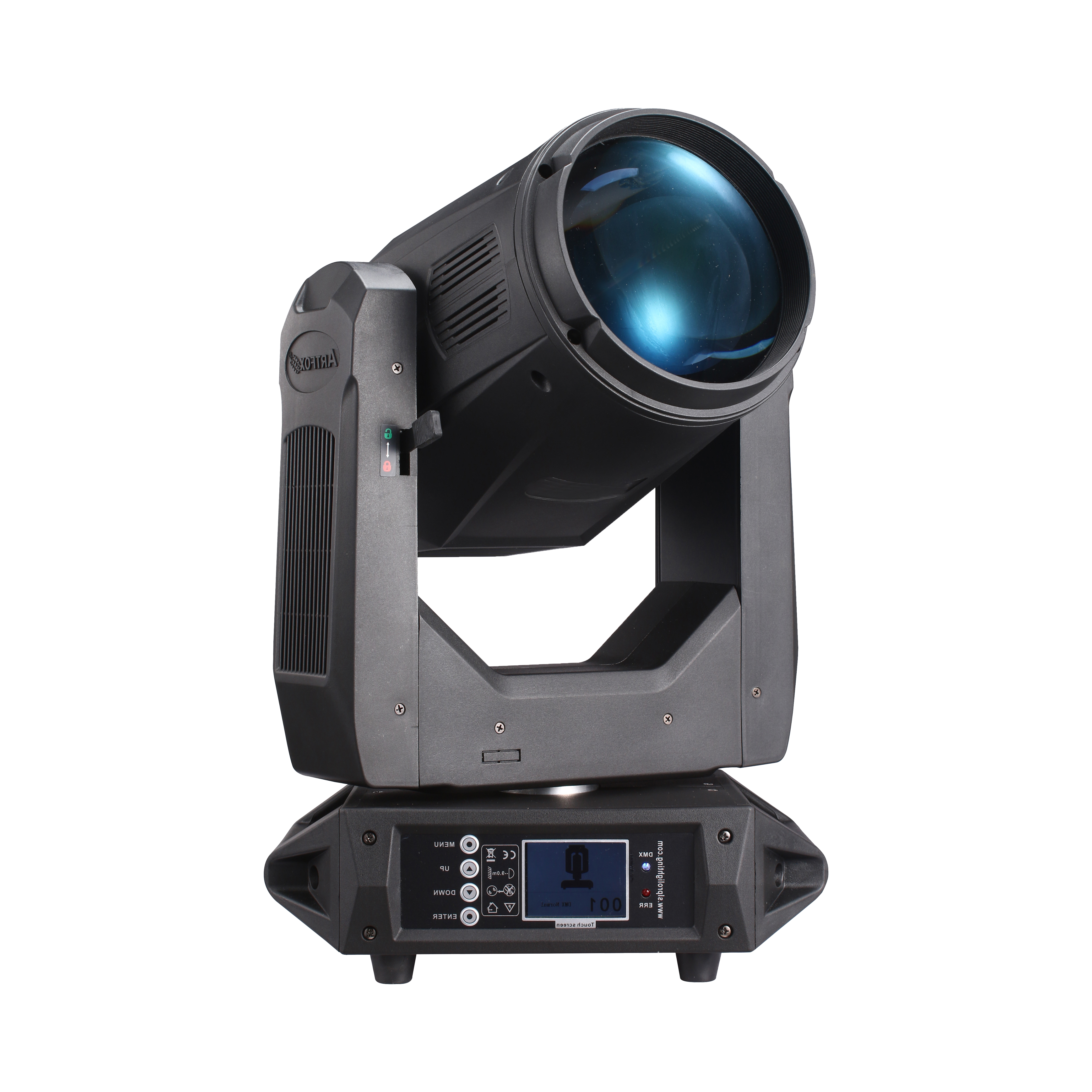
Where beam, spot, and wash capability is also needed, the 382W CMY hybrid moving head light can be considered for professional stage shows, theaters, concerts, festivals, rental applications, and entertainment venues. Its inspection process covers the light source, optical system, CMY color mixing, mechanical movement, DMX/RDM communication, aging, final-product evaluation, and pre-shipment testing.
Laser Light Show Budget Checklist
| Cost category | Items to confirm before ordering | Available information |
|---|---|---|
| Laser and stage equipment | Fixture types, quantities, electrical needs, and required atmospheric or effects equipment | The product range includes RGB laser lights, moving head lights, fog machines, snow machines, and professional stage-effects equipment. |
| Installation and testing | Rigging, mounting, wiring, control connections, functional testing, and operator guidance | Installation guidance, training, and technical support are stated, while project-specific setup charges require a quotation. |
| Control and software | Controllers, software platform, licenses, compatibility, show programming, configuration, and training | DMX/RDM testing is listed for the 382W CMY hybrid moving head light; laser software details and pricing are not stated. |
| Spare parts and support | Recommended components, quantities, replacement timing, and service coverage | Spare-parts supply and troubleshooting support are available, but specific kits and costs must be confirmed. |
| Shipping and payment | Incoterms, destination, transport method, payment schedule, customs-related charges, and taxes | Sea freight, air freight, and express delivery are available. T/T bank transfer, L/C, and Alibaba Trade Assurance are accepted; freight is finalized before shipment. |
Frequently Asked Questions
Should laser-show software be included in the first budget?
Yes. Even if the control platform has not been selected, reserve a separate budget line for software, licensing, control hardware, programming, and training. The available information does not state laser software models, license terms, or prices, so these points should be documented in the quotation.
What setup details should be agreed before purchase?
Confirm fixture quantities, mounting needs, installation location, control connections, testing procedures, training requirements, delivery destination, and project timeline. Customized systems may require additional production time.
How should replacement parts be planned?
Request a recommended spare-parts list based on the final equipment configuration, expected use frequency, and operating environment. Verify stock availability, included parts, separate-purchase options, and the support process for diagnosis and replacement.
Conclusion
The most reliable way to budget for a laser light show system is to use an itemized quotation that separates fixtures, setup work, control equipment, software, spares, freight, taxes, and payment-related charges. Guangzhou New Feel Lighting And Audio Equipment Co., Ltd. provides stage-lighting manufacturing, research and development, production, sales, export, OEM/ODM services, and customized lighting solutions. Its stated minimum order quantity is 2 units, while standard delivery is generally 7 to 30 days. For detailed technical planning or project support, contact sunny@nfstagelight.com.
About Us
Guangzhou New Feel Lighting And Audio Equipment Co., Ltd., operating under the NewFeel Lighting brand, is a Guangzhou-based manufacturer established in 2008. The company produces stage lighting and special-effects equipment, including RGB laser lights, outdoor laser projectors, moving head lights, fog machines, snow machines, and related equipment for events and entertainment applications.
Its research and development team focuses on optical design, electronic control, structural optimization, and customized product development. The company states a monthly production capacity of more than 5,000 lighting units and serves customers in sectors such as lighting distribution and stage production. CE certification is listed for Laser Light products.

REPORT