







-
 Agriculture
-
 Health-Care
-
 Environment
-
 Construction-Real-Estate
-
 Tools-Hardware
-
 Home-Garden
-
 Furniture
-
 Luggage-Bags-Cases
-
 Medical-devices-Supplies
-
 Gifts-Crafts
-
 Sports-Entertainment
-
 Food-Beverage
-
 Vehicles-Transportation
-
 Power-Transmission
-
 Material-Handling
-
 Renewable-Energy
-
 Safety
-
 Testing-Instrument-Equipment
-
 Construction-Building-Machinery
-
 Pet-Supplies
-
 Personal-Care-Household-Cleaning
-
 Vehicle-Accessories-Electronics-Tools
-
 School-Office-Supplies
-
 Packaging-Printing
-
 Mother-Kids-Toys
-
 Business-Services
-
 Commercial-Equipment-Machinery
-
 Apparel-Accessories
-
 Security
-
 Shoes-Accessories
-
 Vehicle-Parts-Accessories
-
 Jewelry-Eyewear-Watches-Accessories
-
 Lights-Lighting
-
 Fabric-Textile-Raw-Material
-
 Fabrication-Services
-
 Industrial-Machinery
-
 Consumer-Electronics
-
 Electrical-Equipment-Supplies
-
 Electronic-Components-Accessories-Telecommunications
-
 Home-Appliances
-
 Beauty
-
 Chemicals
-
 Rubber-Plastics
-
 Metals-Alloys


























































































































































































































































































































































































































































































































































































- Masonry Materials
- Curtain Walls & Accessories
- Earthwork Products
- Fireproofing Materials
- Heat Insulation Materials
- Plastic Building Materials
- Building Boards
- Soundproofing Materials
- Timber
- Waterproofing Materials
- Balustrades & Handrails
- Bathroom & Kitchen
- Flooring & Accessories
- Tiles & Accessories
- Door, Window & Accessories
- Fireplaces & Stoves
- Floor Heating Systems & Parts
- Stairs & Stair Parts
- Ceilings
- Elevators & Escalators
- Stone
- Countertops, Vanity Tops & Table Tops
- Mosaics
- Metal Building Materials
- Multifunctional Materials
- Ladders & Scaffoldings
- Mouldings
- Corner Guards
- Decorative Films
- Formwork
- Building & Industrial Glass
- Other Construction & Real Estate
- Wallpapers/Wall panels
- HVAC System & Parts
- Outdoor Facilities
- Prefabricated Buildings
- Festive & Party Supplies
- Bathroom Products
- Household Sundries
- Rain Gear
- Garden Supplies
- Household Cleaning Tools & Accessories
- Lighters & Smoking Accessories
- Home Storage & Organization
- Household Scales
- Smart Home Improvement
- Home Textiles
- Kitchenware
- Drinkware & Accessories
- Dinnerware, Coffee & Wine
- Home Decor
- Golf
- Fitness & Body Building
- Amusement Park Facilities
- Billiards, Board Game,Coin Operated Games
- Musical Instruments
- Outdoor Affordable Luxury Sports
- Camping & Hiking
- Fishing
- Sports Safety&Rehabilitation
- Ball Sports Equipments
- Water Sports
- Winter Sports
- Luxury Travel Equipments
- Sports Shoes, Bags & Accessories
- Cycling
- Other Sports & Entertainment Products
- Artificial Grass&Sports Flooring&Sports Court Equipment
- Scooters
- Food Ingredients
- Honey & Honey Products
- Snacks
- Nuts & Kernels
- Seafood
- Plant & Animal Oil
- Beverages
- Fruit & Vegetable Products
- Frog & Escargot
- Bean Products
- Egg Products
- Dairy Products
- Seasonings & Condiments
- Canned Food
- Instant Food
- Baked Goods
- Other Food & Beverage
- Meat & Poultry
- Confectionery
- Grain Products
- Feminie Care
- Hair Care & Styling
- Body Care
- Hands & Feet Care
- Hygiene Products
- Men's Grooming
- Laundry Cleaning Supplies
- Travel Size & Gift Sets
- Room Deodorizers
- Other Personal Care Products
- Pest Control Products
- Special Household Cleaning
- Floor Cleaning
- Kitchen & Bathroom Cleaning
- Oral Care
- Bath Supplies
- Yellow Pages
- Correction Supplies
- Office Binding Supplies
- Office Cutting Supplies
- Board Erasers
- Office Adhesives & Tapes
- Education Supplies
- Pencil Cases & Bags
- Notebooks & Writing Pads
- File Folder Accessories
- Calendars
- Writing Accessories
- Commercial Office Supplies
- Pencil Sharpeners
- Pens
- Letter Pad/Paper
- Paper Envelopes
- Desk Organizers
- Pencils
- Markers & Highlighters
- Filing Products
- Art Supplies
- Easels
- Badge Holder & Accessories
- Office Paper
- Printer Supplies
- Book Covers
- Other Office & School Supplies
- Stationery Set
- Boards
- Clipboards
- Stamps
- Drafting Supplies
- Stencils
- Electronic Dictionary
- Books
- Map
- Magazines
- Calculators
- Baby & Toddler Toys
- Educational Toys
- Classic Toys
- Dress Up & Pretend Play
- Toy Vehicle
- Stuffed Animals & Plush Toys
- Outdoor Toys & Structures
- Balloons & Accessories
- Baby Food
- Children's Clothing
- Baby Supplies & Products
- Maternity Clothes
- Kids Shoes
- Baby Care
- Novelty & Gag Toys
- Dolls & Accessories
- Puzzle & Games
- Blocks & Model Building Toys
- Toddler Clothing
- Baby Clothing
- Kids' Luggage & Bags
- Arts, Crafts & DIY Toys
- Action & Toy Figures
- Baby Appliances
- Hobbies & Models
- Remote Control Toys
- Promotional Toys
- Pregnancy & Maternity
- Hygiene Products
- Kid's Textile&Bedding
- Novelty & Special Use
- Toy Weapons
- Baby Gifts
- Baby Storage & Organization
- Auto Drive Systems
- ATV/UTV Parts & Accessories
- Marine Parts & Accessories
- Other Auto Parts
- Trailer Parts & Accessories
- Auto Transmission Systems
- Train Parts & Accessories
- Universal Parts
- Railway Parts & Accessories
- Auto Brake Systems
- Aviation Parts & Accessories
- Truck Parts & Accessories
- Auto Suspension Systems
- Auto Lighting Systems
- New Energy Vehicle Parts & Accessories
- Auto Steering Systems
- Wheels, Tires & Accessories
- Bus Parts & Accessories
- Auto Performance Parts
- Cooling System
- Go-Kart & Kart Racer Parts & Accessories
- Air Conditioning Systems
- Heavy Duty Vehicle Parts & Accessories
- Auto Electrical Systems
- Auto Body Systems
- Auto Engine Systems
- Container Parts & Accessories
- Motorcycle Parts & Accessories
- Refrigeration & Heat Exchange Equipment
- Machine Tool Equipment
- Food & Beverage Machinery
- Agricultural Machinery & Equipment
- Apparel & Textile Machinery
- Chemical Machinery
- Packaging Machines
- Paper Production Machinery
- Plastic & Rubber Processing Machinery
- Industrial Robots
- Electronic Products Machinery
- Metal & Metallurgy Machinery
- Woodworking Machinery
- Home Product Manufacturing Machinery
- Machinery Accessories
- Environmental Machinery
- Machinery Service
- Electrical Equipment Manufacturing Machinery
- Industrial Compressors & Parts
- Tobacco & Cigarette Machinery
- Production Line
- Used Industrial Machinery
- Electronics Production Machinery
- Other Machinery & Industrial Equipment
- Camera, Photo & Accessories
- Portable Audio, Video & Accessories
- Television, Home Audio, Video & Accessories
- Video Games & Accessories
- Mobile Phone & Accessories
- Electronic Publications
- Earphone & Headphone & Accessories
- Speakers & Accessories
- Smart Electronics
- TV Receivers & Accessories
- Mobile Phone & Computer Repair Parts
- Chargers, Batteries & Power Supplies
- Used Electronics
- VR, AR, MR Hardware & Software
- Projectors & Presentation Equipments
- Other Consumer Electronics
- Cables & Commonly Used Accessories
- Computer Hardware & Software
- Displays, Signage and Optoelectronics
- Discrete Semiconductors
- Wireless & IoT Module and Products
- Telecommunications
- Connectors, Terminals & Accessories
- Development Boards, Electronic Modules and Kits
- Circuit Protection
- Sensors
- Isolators
- Audio Components and Products
- Integrated Circuits
- Power Supplies
- Relays
- RF, Microwave and RFID
- Electronic Accessories & Supplies
- Passive Components
- PCB & PCBA
- Air Quality Appliances
- Home Appliance Parts
- Heating & Cooling Appliances
- Small Kitchen Appliances
- Laundry Appliances
- Water Heaters
- Water Treatment Appliances
- Refrigerators & Freezers
- Personal Care & Beauty Appliances
- Major Kitchen Appliances
- Cleaning Appliances
- Second-hand Appliances
- Smart Home Appliances
- Other Home Appliances
- Energy Chemicals
- Inorganic Chemicals
- Basic Organic Chemicals
- Agrochemicals
- Admixture & Additives
- Catalysts & Chemical Auxiliary Agents
- Pigments & Dyestuff
- Coating & Paint
- Daily Chemicals
- Polymer
- Organic Intermediate
- Adhesives & Sealants
- Chemical Waste
- Biological Chemical Products
- Surface Treatment Chemicals
- Painting & Coating
- Chemical Reagents
- Flavor & Fragrance
- Non-Explosive Demolition Agents
- Other Chemicals
- Custom Chemical Services

How to Evaluate LED Moving Head Lights for Output, Throw Distance, and Reliability
A Practical Guide to Comparing LED Moving Head Lights
Choosing the right LED moving head light involves more than comparing LED power or reading a headline specification. Professional buyers should evaluate projected light output, beam control, throw capability, color quality, control compatibility, environmental protection, and evidence of long-term durability. A fixture that performs well in a small indoor venue may not provide the required reach, coverage, or protection for a concert tour, broadcast studio, nightclub, or outdoor architectural installation.
The most effective comparison starts with the actual application. Define the venue dimensions, mounting height, target distance, desired beam effects, required wash area, camera requirements, and environmental conditions. These factors provide a clearer basis for selecting fixtures than wattage alone.
1. Compare Optical Output Instead of LED Wattage Alone
LED engine wattage is not a direct indicator of how bright a moving head will appear on stage or at a projected target. Optical efficiency, lens design, beam concentration, color-mixing components, and losses inside the fixture can all affect usable output. When available, compare declared optical output figures measured under equivalent conditions.
If manufacturers do not provide directly comparable output data, ask for the testing method, distance, beam setting, color setting, and measurement standard used. A fair assessment should also account for the beam angle, field angle, focus performance, zoom range, and the intended throw distance. A highly concentrated narrow beam can appear more powerful at a long distance than a wider fixture with a larger illuminated area.
Important Optical Specifications to Review
- Declared light output or illuminance data under stated test conditions
- Beam angle and field angle
- Zoom range and focus accuracy
- Lens quality and optical efficiency
- Color-mixing system and consistency between fixtures
- Performance at the distances required by the lighting design
2. Match Beam Range to the Venue and Lighting Objective
Beam angle and throw distance have a direct relationship. Fixtures with narrow beam angles concentrate light into a smaller area and are generally better suited to long-throw aerial effects, stage accents, and large venues. Wider beam or field angles spread the output over a broader surface, making them more appropriate for wash lighting, close-range use, and general coverage.
A moving head with motorized zoom and focus can offer greater design flexibility because it can adapt to changing positions and scene requirements. However, the published zoom range should be reviewed carefully. Confirm that the fixture can create the required beam size at its installed location while maintaining sufficient output and edge definition.
For example, a concert arena may require narrow, punchy beams that remain visible across a long room, while a television studio may prioritize even wash coverage, accurate white adjustment, quiet operation, and flicker-free dimming. Outdoor installations should additionally consider wind exposure, rain, dust, temperature variation, and connector protection.
3. Assess Color, Dimming, Effects, and Control Integration
Color performance is a key selection criterion for entertainment, studio, architectural, and event lighting. Review the LED configuration, color-mixing method, white-light adjustment range, color consistency, and any color-rendering expectations for the project. Fixtures used near cameras should be evaluated for flicker-free operation and smooth low-level dimming behavior.
Control features determine how easily a moving head can be integrated into a professional lighting system. Check the available DMX channel modes, DMX512 support, RDM capability, network compatibility where needed, wireless-control options, onboard programs, and signal-protection features. Also compare pan and tilt operation, strobe range, dimming curve options, built-in effects, and response consistency across multiple units.
4. Identify the Factors That Support Long-Term Reliability
Reliable operation depends on more than the fixture's initial brightness. Heat is one of the main factors affecting LED performance, driver stability, optical components, and electronics over time. A dependable fixture should have a well-designed heat sink, suitable fan management, thermal monitoring, and over-temperature protection.
Environmental sealing and electrical protection are equally important. For installations exposed to moisture, dust, or changing weather, verify the IP rating, connector protection, operating ambient-temperature limits, and intended mounting conditions. Indoor moving heads may not be suitable for exposed outdoor use unless their protection level is specifically designed for that environment.
The SMARTPAR 720EP is an IP65 outdoor LED flat PAR fixture rather than a moving head, but its published specifications demonstrate the type of reliability information buyers should request from any professional lighting product. It incorporates an aluminum heat sink, low-noise self-adjusting fan cooling, constant-temperature management, and over-temperature protection, with a stated operating ambient range of -25 to 45 degrees C.
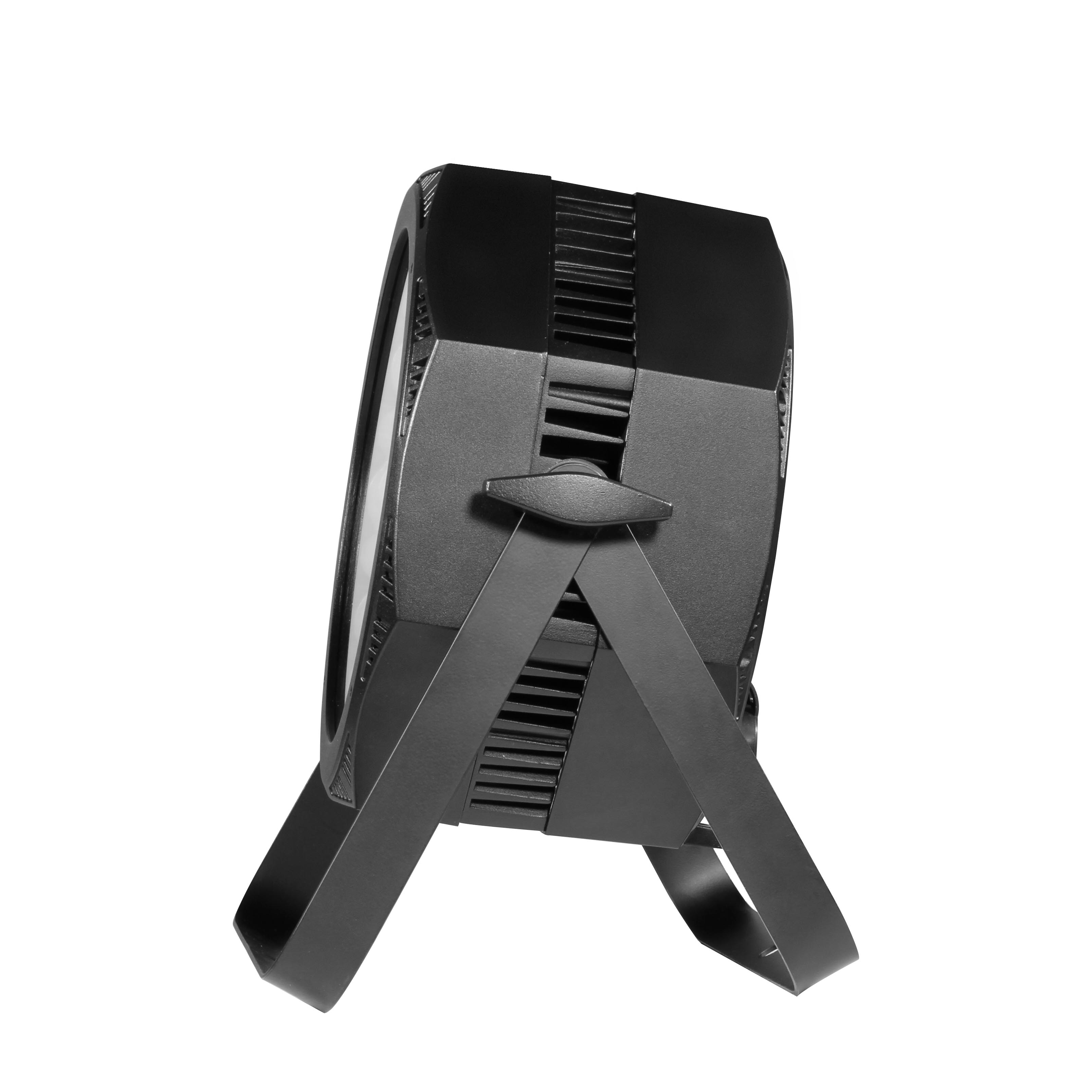
The SMARTPAR 720EP uses 7 x 20 W RGBWA+UV LEDs as its primary light source and 60 x 0.2 W RGB LEDs for auxiliary lighting. Its listed optical and control specifications include a 25-degree beam angle, 35-degree field angle, 2800 K to 5600 K color-temperature adjustment, 0 to 100 percent linear dimming, and 0 to 25 Hz strobe operation. These values should not be used as moving-head performance figures, but they illustrate the detailed data that should be available when comparing professional fixtures.
5. Verify Testing, Compliance, Service, and Product Support
Long-term reliability should be supported by documented manufacturing and quality-control procedures. Ask whether each fixture receives functional testing, burn-in testing, safety inspection, and final quality checks before shipment. It is also useful to confirm compliance records, warranty terms, access to spare parts, firmware support, technical documentation, and repair-service availability.
Color Imagination states that its fixtures undergo functional testing, burn-in testing, safety inspection, and final quality inspection prior to shipment. The company lists CE certificates and ISO certificates related to stage-light assembly and management activities. Its experience includes a nightclub project in Yunnan, China, where 3,500 stage lights incorporating beam, wash, effect, and pixel fixtures were supplied to create synchronized lighting effects throughout the venue.
Comparison Checklist for LED Moving Head Lights
| Evaluation area | What to compare | SMARTPAR 720EP reference information | Why it matters |
|---|---|---|---|
| Optical performance | Measured output, beam and field angles, zoom range, focus, and optical efficiency | 25-degree beam angle; 35-degree field angle; high-efficiency optical system | Beam and field data help estimate coverage, while moving-head output and zoom must be evaluated independently. |
| Color capability | Color-mixing technology, white adjustment, color consistency, and color-rendering needs | RGBWA+UV main light; RGB auxiliary light; 2800 K to 5600 K adjustment | Color control influences results in live events, studios, architecture, and stage productions. |
| Control and effects | DMX modes, RDM, networking, dimming, strobe, and onboard functions | 10/12/17 DMX channels; DMX512; RDM available; 0 to 100 percent dimming; 0 to 25 Hz strobe | Flexible control supports programming, system integration, and coordinated effects. |
| Environmental suitability | IP rating, operating temperature, protected connectors, and outdoor-use suitability | IP65 rating; -25 to 45 degrees C; IP65-rated 3-pin XLR and TRUE1 powerCON connectors | Protection levels must match the installation environment, especially in outdoor or exposed locations. |
| Thermal design and maintenance | Heat sink, fan control, thermal protection, inspections, spare parts, and service support | Aluminum heat sink; self-adjusting fan cooling; temperature management; over-temperature protection | Effective heat control and quality verification contribute to stable performance and easier maintenance planning. |
Frequently Asked Questions
How can I compare two moving heads with different LED engines?
Start with declared optical output measured under similar conditions, then compare beam angle, field angle, optics, color system, and required throw distance. Source wattage alone does not show how much useful light will reach the target.
What beam angle should I choose for long throws?
Narrower beam angles are typically preferred for long-distance projection because they keep the light concentrated. The final selection depends on the throw distance, target area, venue layout, and whether the fixture must also produce wider wash coverage.
Which specifications are most useful for judging reliability?
Review thermal design, fan and temperature management, operating limits, ingress protection, connector sealing, electrical safeguards, burn-in procedures, safety inspection, spare-parts access, firmware support, and repair services. For outdoor projects, make sure the IP rating is appropriate for the actual installation conditions.
Conclusion
The best LED moving head light is the one that matches verified optical performance with the required beam control, color functions, control protocols, installation environment, and service expectations. Compare real output and coverage rather than relying only on LED wattage, and give equal attention to thermal engineering, environmental protection, testing procedures, and after-sales support.
Color Imagination provides R&D, manufacturing, sales, technical service, OEM/ODM production, and project-based lighting solutions. Its stated process includes 100 percent functional testing, burn-in testing, safety inspection, and final checks before shipment. For technical solutions or product support, please contact jack@color-imagination.com.
About Us
Guangzhou Color Imagination LED Lighting Limited is a Guangzhou-based manufacturer of professional lighting equipment for stage, entertainment, studio, broadcast, and architectural applications. Founded in 2010, the company has 130 employees and a 6,000 SQM factory. Its development capabilities cover optics, mechanics, electronics, thermal management, and embedded software for complete lighting fixtures. The company offers standard products and customized OEM/ODM services, lists CE and ISO certificates, and serves clients across multiple industries.

REPORT