







-
 Agriculture
-
 Health-Care
-
 Environment
-
 Construction-Real-Estate
-
 Tools-Hardware
-
 Home-Garden
-
 Furniture
-
 Luggage-Bags-Cases
-
 Medical-devices-Supplies
-
 Gifts-Crafts
-
 Sports-Entertainment
-
 Food-Beverage
-
 Vehicles-Transportation
-
 Power-Transmission
-
 Material-Handling
-
 Renewable-Energy
-
 Safety
-
 Testing-Instrument-Equipment
-
 Construction-Building-Machinery
-
 Pet-Supplies
-
 Personal-Care-Household-Cleaning
-
 Vehicle-Accessories-Electronics-Tools
-
 School-Office-Supplies
-
 Packaging-Printing
-
 Mother-Kids-Toys
-
 Business-Services
-
 Commercial-Equipment-Machinery
-
 Apparel-Accessories
-
 Security
-
 Shoes-Accessories
-
 Vehicle-Parts-Accessories
-
 Jewelry-Eyewear-Watches-Accessories
-
 Lights-Lighting
-
 Fabric-Textile-Raw-Material
-
 Fabrication-Services
-
 Industrial-Machinery
-
 Consumer-Electronics
-
 Electrical-Equipment-Supplies
-
 Electronic-Components-Accessories-Telecommunications
-
 Home-Appliances
-
 Beauty
-
 Chemicals
-
 Rubber-Plastics
-
 Metals-Alloys


























































































































































































































































































































































































































































































































































































- Masonry Materials
- Curtain Walls & Accessories
- Earthwork Products
- Fireproofing Materials
- Heat Insulation Materials
- Plastic Building Materials
- Building Boards
- Soundproofing Materials
- Timber
- Waterproofing Materials
- Balustrades & Handrails
- Bathroom & Kitchen
- Flooring & Accessories
- Tiles & Accessories
- Door, Window & Accessories
- Fireplaces & Stoves
- Floor Heating Systems & Parts
- Stairs & Stair Parts
- Ceilings
- Elevators & Escalators
- Stone
- Countertops, Vanity Tops & Table Tops
- Mosaics
- Metal Building Materials
- Multifunctional Materials
- Ladders & Scaffoldings
- Mouldings
- Corner Guards
- Decorative Films
- Formwork
- Building & Industrial Glass
- Other Construction & Real Estate
- Wallpapers/Wall panels
- HVAC System & Parts
- Outdoor Facilities
- Prefabricated Buildings
- Festive & Party Supplies
- Bathroom Products
- Household Sundries
- Rain Gear
- Garden Supplies
- Household Cleaning Tools & Accessories
- Lighters & Smoking Accessories
- Home Storage & Organization
- Household Scales
- Smart Home Improvement
- Home Textiles
- Kitchenware
- Drinkware & Accessories
- Dinnerware, Coffee & Wine
- Home Decor
- Golf
- Fitness & Body Building
- Amusement Park Facilities
- Billiards, Board Game,Coin Operated Games
- Musical Instruments
- Outdoor Affordable Luxury Sports
- Camping & Hiking
- Fishing
- Sports Safety&Rehabilitation
- Ball Sports Equipments
- Water Sports
- Winter Sports
- Luxury Travel Equipments
- Sports Shoes, Bags & Accessories
- Cycling
- Other Sports & Entertainment Products
- Artificial Grass&Sports Flooring&Sports Court Equipment
- Scooters
- Food Ingredients
- Honey & Honey Products
- Snacks
- Nuts & Kernels
- Seafood
- Plant & Animal Oil
- Beverages
- Fruit & Vegetable Products
- Frog & Escargot
- Bean Products
- Egg Products
- Dairy Products
- Seasonings & Condiments
- Canned Food
- Instant Food
- Baked Goods
- Other Food & Beverage
- Meat & Poultry
- Confectionery
- Grain Products
- Feminie Care
- Hair Care & Styling
- Body Care
- Hands & Feet Care
- Hygiene Products
- Men's Grooming
- Laundry Cleaning Supplies
- Travel Size & Gift Sets
- Room Deodorizers
- Other Personal Care Products
- Pest Control Products
- Special Household Cleaning
- Floor Cleaning
- Kitchen & Bathroom Cleaning
- Oral Care
- Bath Supplies
- Yellow Pages
- Correction Supplies
- Office Binding Supplies
- Office Cutting Supplies
- Board Erasers
- Office Adhesives & Tapes
- Education Supplies
- Pencil Cases & Bags
- Notebooks & Writing Pads
- File Folder Accessories
- Calendars
- Writing Accessories
- Commercial Office Supplies
- Pencil Sharpeners
- Pens
- Letter Pad/Paper
- Paper Envelopes
- Desk Organizers
- Pencils
- Markers & Highlighters
- Filing Products
- Art Supplies
- Easels
- Badge Holder & Accessories
- Office Paper
- Printer Supplies
- Book Covers
- Other Office & School Supplies
- Stationery Set
- Boards
- Clipboards
- Stamps
- Drafting Supplies
- Stencils
- Electronic Dictionary
- Books
- Map
- Magazines
- Calculators
- Baby & Toddler Toys
- Educational Toys
- Classic Toys
- Dress Up & Pretend Play
- Toy Vehicle
- Stuffed Animals & Plush Toys
- Outdoor Toys & Structures
- Balloons & Accessories
- Baby Food
- Children's Clothing
- Baby Supplies & Products
- Maternity Clothes
- Kids Shoes
- Baby Care
- Novelty & Gag Toys
- Dolls & Accessories
- Puzzle & Games
- Blocks & Model Building Toys
- Toddler Clothing
- Baby Clothing
- Kids' Luggage & Bags
- Arts, Crafts & DIY Toys
- Action & Toy Figures
- Baby Appliances
- Hobbies & Models
- Remote Control Toys
- Promotional Toys
- Pregnancy & Maternity
- Hygiene Products
- Kid's Textile&Bedding
- Novelty & Special Use
- Toy Weapons
- Baby Gifts
- Baby Storage & Organization
- Auto Drive Systems
- ATV/UTV Parts & Accessories
- Marine Parts & Accessories
- Other Auto Parts
- Trailer Parts & Accessories
- Auto Transmission Systems
- Train Parts & Accessories
- Universal Parts
- Railway Parts & Accessories
- Auto Brake Systems
- Aviation Parts & Accessories
- Truck Parts & Accessories
- Auto Suspension Systems
- Auto Lighting Systems
- New Energy Vehicle Parts & Accessories
- Auto Steering Systems
- Wheels, Tires & Accessories
- Bus Parts & Accessories
- Auto Performance Parts
- Cooling System
- Go-Kart & Kart Racer Parts & Accessories
- Air Conditioning Systems
- Heavy Duty Vehicle Parts & Accessories
- Auto Electrical Systems
- Auto Body Systems
- Auto Engine Systems
- Container Parts & Accessories
- Motorcycle Parts & Accessories
- Refrigeration & Heat Exchange Equipment
- Machine Tool Equipment
- Food & Beverage Machinery
- Agricultural Machinery & Equipment
- Apparel & Textile Machinery
- Chemical Machinery
- Packaging Machines
- Paper Production Machinery
- Plastic & Rubber Processing Machinery
- Industrial Robots
- Electronic Products Machinery
- Metal & Metallurgy Machinery
- Woodworking Machinery
- Home Product Manufacturing Machinery
- Machinery Accessories
- Environmental Machinery
- Machinery Service
- Electrical Equipment Manufacturing Machinery
- Industrial Compressors & Parts
- Tobacco & Cigarette Machinery
- Production Line
- Used Industrial Machinery
- Electronics Production Machinery
- Other Machinery & Industrial Equipment
- Camera, Photo & Accessories
- Portable Audio, Video & Accessories
- Television, Home Audio, Video & Accessories
- Video Games & Accessories
- Mobile Phone & Accessories
- Electronic Publications
- Earphone & Headphone & Accessories
- Speakers & Accessories
- Smart Electronics
- TV Receivers & Accessories
- Mobile Phone & Computer Repair Parts
- Chargers, Batteries & Power Supplies
- Used Electronics
- VR, AR, MR Hardware & Software
- Projectors & Presentation Equipments
- Other Consumer Electronics
- Cables & Commonly Used Accessories
- Computer Hardware & Software
- Displays, Signage and Optoelectronics
- Discrete Semiconductors
- Wireless & IoT Module and Products
- Telecommunications
- Connectors, Terminals & Accessories
- Development Boards, Electronic Modules and Kits
- Circuit Protection
- Sensors
- Isolators
- Audio Components and Products
- Integrated Circuits
- Power Supplies
- Relays
- RF, Microwave and RFID
- Electronic Accessories & Supplies
- Passive Components
- PCB & PCBA
- Air Quality Appliances
- Home Appliance Parts
- Heating & Cooling Appliances
- Small Kitchen Appliances
- Laundry Appliances
- Water Heaters
- Water Treatment Appliances
- Refrigerators & Freezers
- Personal Care & Beauty Appliances
- Major Kitchen Appliances
- Cleaning Appliances
- Second-hand Appliances
- Smart Home Appliances
- Other Home Appliances
- Energy Chemicals
- Inorganic Chemicals
- Basic Organic Chemicals
- Agrochemicals
- Admixture & Additives
- Catalysts & Chemical Auxiliary Agents
- Pigments & Dyestuff
- Coating & Paint
- Daily Chemicals
- Polymer
- Organic Intermediate
- Adhesives & Sealants
- Chemical Waste
- Biological Chemical Products
- Surface Treatment Chemicals
- Painting & Coating
- Chemical Reagents
- Flavor & Fragrance
- Non-Explosive Demolition Agents
- Other Chemicals
- Custom Chemical Services

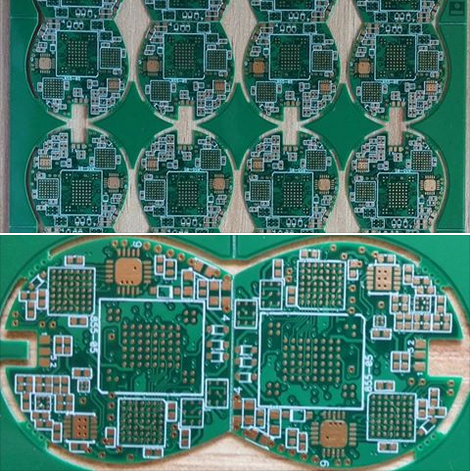
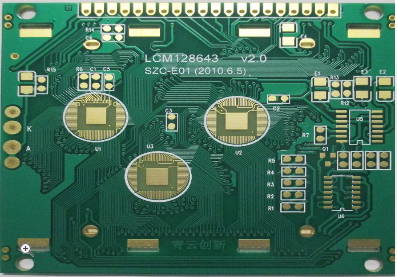
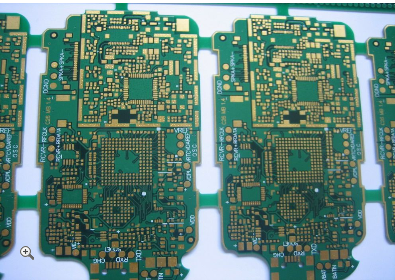
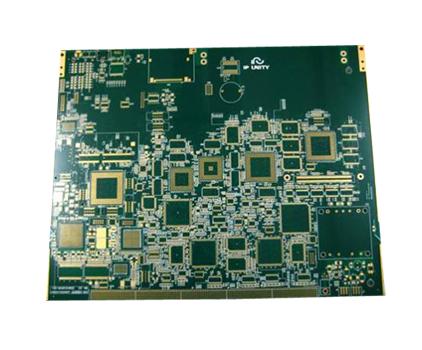
Innovative Techniques For Signal Integrity In Electronics Layout Design
In the rapidly evolving landscape of electronics, where data rates soar and device footprints shrink, maintaining signal integrity (SI) has transitioned from a desirable best practice to a non-negotiable cornerstone of successful product design. Signal integrity refers to the preservation of the quality and timing of electrical signals as they traverse the complex pathways of a printed circuit board (PCB). Degradation, manifesting as noise, distortion, or timing errors, can lead to catastrophic system failures, reduced performance, and costly design re-spins. Traditional layout rules, while foundational, are often insufficient to address the challenges posed by modern high-speed digital interfaces, RF communications, and mixed-signal systems. This reality has catalyzed a paradigm shift towards innovative techniques in electronics layout design. These advanced methodologies leverage sophisticated simulation, novel materials, and intelligent topological strategies to predict, mitigate, and control signal integrity issues from the earliest stages of the design cycle. By exploring these cutting-edge approaches, engineers can unlock new levels of performance and reliability, ensuring that their designs not only function but excel in an increasingly demanding technological environment.
Advanced Modeling and Simulation-Driven Design
The era of designing a layout and hoping for the best is long over. Modern signal integrity assurance is fundamentally rooted in predictive, simulation-driven workflows. Innovative techniques now employ 3D full-wave electromagnetic (EM) field solvers that go beyond simple rule-of-thumb calculations. These powerful tools can accurately model complex structures like via transitions, connectors, and intricate package geometries, extracting precise S-parameters and revealing parasitic effects that 2D simulations might miss.
Furthermore, the integration of these simulations directly into the PCB layout environment represents a significant leap forward. Real-time or "in-design" analysis allows engineers to receive immediate feedback on impedance, crosstalk, and eye diagram margins as they route critical nets. This iterative process prevents integrity violations from becoming entrenched, dramatically reducing debugging time later. Another key innovation is the use of statistical analysis and machine learning algorithms to model process variations and worst-case scenarios, ensuring robustness across manufacturing tolerances and environmental conditions.
Innovative Materials and Stack-up Engineering
The physical foundation of the PCB itself is a critical frontier for signal integrity innovation. Advanced laminate materials with tightly controlled dielectric constants (Dk) and dissipation factors (Df) are now essential for high-frequency applications. Low-loss laminates minimize signal attenuation, while materials with stable Dk across frequency and temperature ensure consistent impedance control.
Stack-up design has evolved into a sophisticated co-engineering effort between electrical and mechanical disciplines. Innovative techniques involve the strategic use of hybrid stack-ups, combining different material types within a single board to optimize cost and performance for various signal classes. The placement of power and ground planes is no longer just about providing DC voltage; it is meticulously planned to create controlled return paths, manage electromagnetic interference (EMI), and form embedded capacitance for power integrity, which is intrinsically linked to signal integrity. Techniques like using ultra-thin dielectrics for closer coupling between signal and reference planes are also employed to enhance performance.
Topological Strategies for High-Speed Routing
At the heart of layout design, the routing of traces has seen profound innovation. For parallel bus architectures like DDR memory, advanced fly-by topology with carefully designed on-die termination (ODT) has become standard to manage signal reflections and maintain clean timing across multiple devices. For serial links, the focus is on minimizing loss and preserving the purity of the signal waveform.
Differential pair routing, critical for high-speed serial interfaces, now employs techniques like phase tuning through serpentine routing with minimum impact on impedance, and length matching that accounts for the different propagation velocities in the fiber weave of the laminate. The management of vias, traditional signal integrity weak points, has been revolutionized by the use of back-drilling (controlled depth drilling) to remove unused via stubs, and the implementation of sophisticated via structures such as via-in-pad and microvias in high-density interconnect (HDI) designs to minimize discontinuities.
Power Integrity as a Foundation for Signal Integrity
A stable and clean power delivery network (PDN) is now universally recognized as a prerequisite for good signal integrity. Innovative techniques here focus on achieving target impedance across a broad frequency range. This involves the strategic placement and selection of decoupling capacitors, moving from simple bulk and ceramic caps to a optimized portfolio that addresses mid-frequency and high-frequency noise.
The design of the power and ground planes themselves is critical. Techniques like the use of dedicated power layers, the creation of split planes with careful attention to preventing return path discontinuities, and the implementation of electromagnetic bandgap (EBG) structures to suppress noise propagation are at the forefront. Co-simulation of the PDN with the signal networks allows designers to see how power supply noise directly modulates high-speed signals, enabling a holistic optimization of the entire system.
Addressing Crosstalk and EMI Proactively
As densities increase, unwanted electromagnetic coupling, or crosstalk, becomes a primary threat. Innovative layout techniques proactively manage this through 3D spacing rules, which consider not just horizontal separation but vertical separation between layers. Guard traces with grounded vias are strategically placed to isolate extremely sensitive nets, such as low-amplitude analog signals or clock lines.
Furthermore, signal integrity innovation is deeply intertwined with EMI control. Techniques like edge-rate control through series termination resistors, the use of shielding cans or localized copper fences for noisy circuits, and the careful management of slotting in reference planes are employed to contain electromagnetic emissions at the source. By treating SI and EMI as two sides of the same coin, these integrated techniques ensure the design meets both functional performance and regulatory compliance requirements.
REPORT