







-
 Agriculture
-
 Health-Care
-
 Environment
-
 Construction-Real-Estate
-
 Tools-Hardware
-
 Home-Garden
-
 Furniture
-
 Luggage-Bags-Cases
-
 Medical-devices-Supplies
-
 Gifts-Crafts
-
 Sports-Entertainment
-
 Food-Beverage
-
 Vehicles-Transportation
-
 Power-Transmission
-
 Material-Handling
-
 Renewable-Energy
-
 Safety
-
 Testing-Instrument-Equipment
-
 Construction-Building-Machinery
-
 Pet-Supplies
-
 Personal-Care-Household-Cleaning
-
 Vehicle-Accessories-Electronics-Tools
-
 School-Office-Supplies
-
 Packaging-Printing
-
 Mother-Kids-Toys
-
 Business-Services
-
 Commercial-Equipment-Machinery
-
 Apparel-Accessories
-
 Security
-
 Shoes-Accessories
-
 Vehicle-Parts-Accessories
-
 Jewelry-Eyewear-Watches-Accessories
-
 Lights-Lighting
-
 Fabric-Textile-Raw-Material
-
 Fabrication-Services
-
 Industrial-Machinery
-
 Consumer-Electronics
-
 Electrical-Equipment-Supplies
-
 Electronic-Components-Accessories-Telecommunications
-
 Home-Appliances
-
 Beauty
-
 Chemicals
-
 Rubber-Plastics
-
 Metals-Alloys


























































































































































































































































































































































































































































































































































































- Masonry Materials
- Curtain Walls & Accessories
- Earthwork Products
- Fireproofing Materials
- Heat Insulation Materials
- Plastic Building Materials
- Building Boards
- Soundproofing Materials
- Timber
- Waterproofing Materials
- Balustrades & Handrails
- Bathroom & Kitchen
- Flooring & Accessories
- Tiles & Accessories
- Door, Window & Accessories
- Fireplaces & Stoves
- Floor Heating Systems & Parts
- Stairs & Stair Parts
- Ceilings
- Elevators & Escalators
- Stone
- Countertops, Vanity Tops & Table Tops
- Mosaics
- Metal Building Materials
- Multifunctional Materials
- Ladders & Scaffoldings
- Mouldings
- Corner Guards
- Decorative Films
- Formwork
- Building & Industrial Glass
- Other Construction & Real Estate
- Wallpapers/Wall panels
- HVAC System & Parts
- Outdoor Facilities
- Prefabricated Buildings
- Festive & Party Supplies
- Bathroom Products
- Household Sundries
- Rain Gear
- Garden Supplies
- Household Cleaning Tools & Accessories
- Lighters & Smoking Accessories
- Home Storage & Organization
- Household Scales
- Smart Home Improvement
- Home Textiles
- Kitchenware
- Drinkware & Accessories
- Dinnerware, Coffee & Wine
- Home Decor
- Golf
- Fitness & Body Building
- Amusement Park Facilities
- Billiards, Board Game,Coin Operated Games
- Musical Instruments
- Outdoor Affordable Luxury Sports
- Camping & Hiking
- Fishing
- Sports Safety&Rehabilitation
- Ball Sports Equipments
- Water Sports
- Winter Sports
- Luxury Travel Equipments
- Sports Shoes, Bags & Accessories
- Cycling
- Other Sports & Entertainment Products
- Artificial Grass&Sports Flooring&Sports Court Equipment
- Scooters
- Food Ingredients
- Honey & Honey Products
- Snacks
- Nuts & Kernels
- Seafood
- Plant & Animal Oil
- Beverages
- Fruit & Vegetable Products
- Frog & Escargot
- Bean Products
- Egg Products
- Dairy Products
- Seasonings & Condiments
- Canned Food
- Instant Food
- Baked Goods
- Other Food & Beverage
- Meat & Poultry
- Confectionery
- Grain Products
- Feminie Care
- Hair Care & Styling
- Body Care
- Hands & Feet Care
- Hygiene Products
- Men's Grooming
- Laundry Cleaning Supplies
- Travel Size & Gift Sets
- Room Deodorizers
- Other Personal Care Products
- Pest Control Products
- Special Household Cleaning
- Floor Cleaning
- Kitchen & Bathroom Cleaning
- Oral Care
- Bath Supplies
- Yellow Pages
- Correction Supplies
- Office Binding Supplies
- Office Cutting Supplies
- Board Erasers
- Office Adhesives & Tapes
- Education Supplies
- Pencil Cases & Bags
- Notebooks & Writing Pads
- File Folder Accessories
- Calendars
- Writing Accessories
- Commercial Office Supplies
- Pencil Sharpeners
- Pens
- Letter Pad/Paper
- Paper Envelopes
- Desk Organizers
- Pencils
- Markers & Highlighters
- Filing Products
- Art Supplies
- Easels
- Badge Holder & Accessories
- Office Paper
- Printer Supplies
- Book Covers
- Other Office & School Supplies
- Stationery Set
- Boards
- Clipboards
- Stamps
- Drafting Supplies
- Stencils
- Electronic Dictionary
- Books
- Map
- Magazines
- Calculators
- Baby & Toddler Toys
- Educational Toys
- Classic Toys
- Dress Up & Pretend Play
- Toy Vehicle
- Stuffed Animals & Plush Toys
- Outdoor Toys & Structures
- Balloons & Accessories
- Baby Food
- Children's Clothing
- Baby Supplies & Products
- Maternity Clothes
- Kids Shoes
- Baby Care
- Novelty & Gag Toys
- Dolls & Accessories
- Puzzle & Games
- Blocks & Model Building Toys
- Toddler Clothing
- Baby Clothing
- Kids' Luggage & Bags
- Arts, Crafts & DIY Toys
- Action & Toy Figures
- Baby Appliances
- Hobbies & Models
- Remote Control Toys
- Promotional Toys
- Pregnancy & Maternity
- Hygiene Products
- Kid's Textile&Bedding
- Novelty & Special Use
- Toy Weapons
- Baby Gifts
- Baby Storage & Organization
- Auto Drive Systems
- ATV/UTV Parts & Accessories
- Marine Parts & Accessories
- Other Auto Parts
- Trailer Parts & Accessories
- Auto Transmission Systems
- Train Parts & Accessories
- Universal Parts
- Railway Parts & Accessories
- Auto Brake Systems
- Aviation Parts & Accessories
- Truck Parts & Accessories
- Auto Suspension Systems
- Auto Lighting Systems
- New Energy Vehicle Parts & Accessories
- Auto Steering Systems
- Wheels, Tires & Accessories
- Bus Parts & Accessories
- Auto Performance Parts
- Cooling System
- Go-Kart & Kart Racer Parts & Accessories
- Air Conditioning Systems
- Heavy Duty Vehicle Parts & Accessories
- Auto Electrical Systems
- Auto Body Systems
- Auto Engine Systems
- Container Parts & Accessories
- Motorcycle Parts & Accessories
- Refrigeration & Heat Exchange Equipment
- Machine Tool Equipment
- Food & Beverage Machinery
- Agricultural Machinery & Equipment
- Apparel & Textile Machinery
- Chemical Machinery
- Packaging Machines
- Paper Production Machinery
- Plastic & Rubber Processing Machinery
- Industrial Robots
- Electronic Products Machinery
- Metal & Metallurgy Machinery
- Woodworking Machinery
- Home Product Manufacturing Machinery
- Machinery Accessories
- Environmental Machinery
- Machinery Service
- Electrical Equipment Manufacturing Machinery
- Industrial Compressors & Parts
- Tobacco & Cigarette Machinery
- Production Line
- Used Industrial Machinery
- Electronics Production Machinery
- Other Machinery & Industrial Equipment
- Camera, Photo & Accessories
- Portable Audio, Video & Accessories
- Television, Home Audio, Video & Accessories
- Video Games & Accessories
- Mobile Phone & Accessories
- Electronic Publications
- Earphone & Headphone & Accessories
- Speakers & Accessories
- Smart Electronics
- TV Receivers & Accessories
- Mobile Phone & Computer Repair Parts
- Chargers, Batteries & Power Supplies
- Used Electronics
- VR, AR, MR Hardware & Software
- Projectors & Presentation Equipments
- Other Consumer Electronics
- Cables & Commonly Used Accessories
- Computer Hardware & Software
- Displays, Signage and Optoelectronics
- Discrete Semiconductors
- Wireless & IoT Module and Products
- Telecommunications
- Connectors, Terminals & Accessories
- Development Boards, Electronic Modules and Kits
- Circuit Protection
- Sensors
- Isolators
- Audio Components and Products
- Integrated Circuits
- Power Supplies
- Relays
- RF, Microwave and RFID
- Electronic Accessories & Supplies
- Passive Components
- PCB & PCBA
- Air Quality Appliances
- Home Appliance Parts
- Heating & Cooling Appliances
- Small Kitchen Appliances
- Laundry Appliances
- Water Heaters
- Water Treatment Appliances
- Refrigerators & Freezers
- Personal Care & Beauty Appliances
- Major Kitchen Appliances
- Cleaning Appliances
- Second-hand Appliances
- Smart Home Appliances
- Other Home Appliances
- Energy Chemicals
- Inorganic Chemicals
- Basic Organic Chemicals
- Agrochemicals
- Admixture & Additives
- Catalysts & Chemical Auxiliary Agents
- Pigments & Dyestuff
- Coating & Paint
- Daily Chemicals
- Polymer
- Organic Intermediate
- Adhesives & Sealants
- Chemical Waste
- Biological Chemical Products
- Surface Treatment Chemicals
- Painting & Coating
- Chemical Reagents
- Flavor & Fragrance
- Non-Explosive Demolition Agents
- Other Chemicals
- Custom Chemical Services


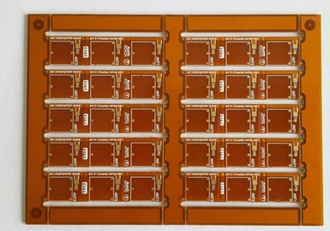
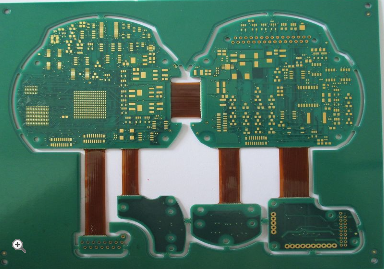
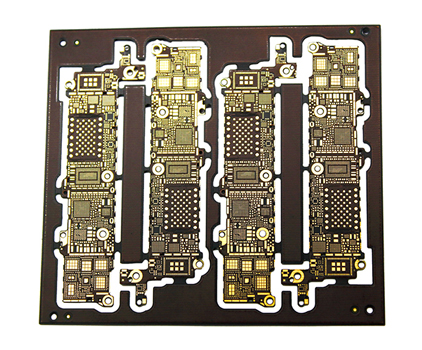
Next Generation Flexible Board With Edge Plating Technology For Improved Performance And Versatility
In the rapidly evolving landscape of electronics, the demand for more robust, versatile, and high-performance circuit boards is ever-increasing. Enter the Next Generation Flexible Board with Edge Plating Technology, a groundbreaking innovation poised to redefine the capabilities of flexible printed circuit boards (FPCBs). This advanced technology addresses critical limitations of traditional flexible circuits, such as susceptibility to damage at edges, limited interconnection options, and performance bottlenecks in high-frequency applications. By integrating specialized plating along the board's edges, this next-generation solution not only enhances mechanical durability and electrical performance but also unlocks new levels of design versatility for industries ranging from consumer electronics to aerospace and medical devices. As devices become smaller, more complex, and subjected to harsher environments, the introduction of edge plating technology marks a significant leap forward, promising improved reliability and functionality that can keep pace with the future of technological innovation.
Enhanced Mechanical Durability and Reliability
The primary advantage of edge plating technology in flexible boards lies in its profound impact on mechanical robustness. Traditional FPCBs are vulnerable at their cut edges, where the layered structure is exposed, leading to potential delamination, cracking, or moisture ingress under mechanical stress or environmental exposure. Edge plating effectively encapsulates these vulnerable edges with a continuous metallic layer, typically copper, followed by protective finishes like gold or tin. This creates a sealed, reinforced border that significantly reduces the risk of damage during handling, installation, or operation in dynamic applications.
Furthermore, this reinforcement translates directly into enhanced long-term reliability. The plated edge acts as a barrier against environmental contaminants such as dust, humidity, and corrosive agents, which are common causes of circuit failure. In applications involving frequent flexing or vibration—such as in wearable technology, folding smartphones, or robotic joints—the strengthened edge resists the initiation and propagation of cracks. Consequently, products utilizing these boards benefit from extended operational lifespans and reduced failure rates, which is critical for mission-critical systems in automotive or medical fields where reliability is paramount.
Superior Electrical Performance and Signal Integrity
Beyond mechanical benefits, edge plating technology delivers substantial improvements in electrical performance. In high-speed and high-frequency applications, signal integrity is a major concern. Traditional connection methods can introduce impedance discontinuities and signal reflections, degrading performance. The edge plating creates a continuous, low-resistance electrical path along the board's periphery, facilitating better grounding and shielding. This is particularly beneficial for electromagnetic interference (EMI) and radio frequency interference (RFI) management, as the plated edge can be connected to ground planes, forming an effective Faraday cage that contains electromagnetic emissions and protects sensitive circuits from external noise.
Additionally, this technology enables more efficient and reliable interconnections. The plated edge can serve as a direct contact point for connectors, eliminating the need for additional solder joints or connectors that can be points of failure. This results in lower contact resistance and more stable electrical connections, which is crucial for power distribution and high-data-rate signal transmission. For applications like 5G communications, advanced driver-assistance systems (ADAS), and high-performance computing, where signal loss and latency must be minimized, edge-plated flexible boards offer a clear performance advantage, ensuring cleaner signals and more efficient operation.
Unprecedented Design Versatility and Integration
The integration of edge plating opens up new horizons in design flexibility, allowing engineers to overcome traditional spatial and functional constraints. One of the most significant benefits is the facilitation of three-dimensional (3D) packaging and stacking. The reinforced edges enable secure and reliable interconnections between multiple flexible boards or between flexible and rigid boards stacked vertically, saving valuable space in compact devices. This is instrumental in the development of slimmer smartphones, miniaturized IoT sensors, and advanced medical implants where internal real estate is at a premium.
Moreover, this technology supports innovative form factors and assembly processes. Designers can now incorporate direct edge connectors, enabling quicker and more robust board-to-board or board-to-cable attachments without bulky hardware. This simplifies assembly lines, reduces component count, and lowers overall system weight. The versatility extends to hybrid applications, where flexible sections with edge plating can seamlessly integrate with rigid components, creating robust, multi-functional modules. As industries push the boundaries of what's possible—from foldable displays to conformal electronics in aerospace—the Next Generation Flexible Board with Edge Plating Technology provides the foundational adaptability needed to turn visionary designs into practical, reliable products.
Broad Industry Applications and Future Impact
The implications of this advanced flexible board technology span a wide array of industries, each benefiting from its unique combination of durability, performance, and versatility. In consumer electronics, it enables the creation of more durable, water-resistant wearable devices and foldable phones with reliable hinge interconnections. The automotive sector, particularly with the rise of electric and autonomous vehicles, utilizes these boards for robust sensor arrays, lighting systems, and battery management units that must withstand vibrations and harsh conditions while maintaining signal integrity.
In the medical field, the technology is transformative for implantable devices and diagnostic equipment. The enhanced reliability and biocompatible plating options ensure safe, long-term operation within the human body, while the flexibility allows for conformal placement. Aerospace and defense applications leverage the boards' lightweight nature and resilience for avionics, satellites, and communication systems exposed to extreme environments. Looking ahead, as the Internet of Things (IoT) and artificial intelligence (AI) drive demand for smarter, interconnected devices, the Next Generation Flexible Board with Edge Plating Technology will be a critical enabler, supporting the development of more compact, efficient, and reliable electronic systems that define the future of technology.
REPORT