







-
 Agriculture
-
 Health-Care
-
 Environment
-
 Construction-Real-Estate
-
 Tools-Hardware
-
 Home-Garden
-
 Furniture
-
 Luggage-Bags-Cases
-
 Medical-devices-Supplies
-
 Gifts-Crafts
-
 Sports-Entertainment
-
 Food-Beverage
-
 Vehicles-Transportation
-
 Power-Transmission
-
 Material-Handling
-
 Renewable-Energy
-
 Safety
-
 Testing-Instrument-Equipment
-
 Construction-Building-Machinery
-
 Pet-Supplies
-
 Personal-Care-Household-Cleaning
-
 Vehicle-Accessories-Electronics-Tools
-
 School-Office-Supplies
-
 Packaging-Printing
-
 Mother-Kids-Toys
-
 Business-Services
-
 Commercial-Equipment-Machinery
-
 Apparel-Accessories
-
 Security
-
 Shoes-Accessories
-
 Vehicle-Parts-Accessories
-
 Jewelry-Eyewear-Watches-Accessories
-
 Lights-Lighting
-
 Fabric-Textile-Raw-Material
-
 Fabrication-Services
-
 Industrial-Machinery
-
 Consumer-Electronics
-
 Electrical-Equipment-Supplies
-
 Electronic-Components-Accessories-Telecommunications
-
 Home-Appliances
-
 Beauty
-
 Chemicals
-
 Rubber-Plastics
-
 Metals-Alloys


























































































































































































































































































































































































































































































































































































- Masonry Materials
- Curtain Walls & Accessories
- Earthwork Products
- Fireproofing Materials
- Heat Insulation Materials
- Plastic Building Materials
- Building Boards
- Soundproofing Materials
- Timber
- Waterproofing Materials
- Balustrades & Handrails
- Bathroom & Kitchen
- Flooring & Accessories
- Tiles & Accessories
- Door, Window & Accessories
- Fireplaces & Stoves
- Floor Heating Systems & Parts
- Stairs & Stair Parts
- Ceilings
- Elevators & Escalators
- Stone
- Countertops, Vanity Tops & Table Tops
- Mosaics
- Metal Building Materials
- Multifunctional Materials
- Ladders & Scaffoldings
- Mouldings
- Corner Guards
- Decorative Films
- Formwork
- Building & Industrial Glass
- Other Construction & Real Estate
- Wallpapers/Wall panels
- HVAC System & Parts
- Outdoor Facilities
- Prefabricated Buildings
- Festive & Party Supplies
- Bathroom Products
- Household Sundries
- Rain Gear
- Garden Supplies
- Household Cleaning Tools & Accessories
- Lighters & Smoking Accessories
- Home Storage & Organization
- Household Scales
- Smart Home Improvement
- Home Textiles
- Kitchenware
- Drinkware & Accessories
- Dinnerware, Coffee & Wine
- Home Decor
- Golf
- Fitness & Body Building
- Amusement Park Facilities
- Billiards, Board Game,Coin Operated Games
- Musical Instruments
- Outdoor Affordable Luxury Sports
- Camping & Hiking
- Fishing
- Sports Safety&Rehabilitation
- Ball Sports Equipments
- Water Sports
- Winter Sports
- Luxury Travel Equipments
- Sports Shoes, Bags & Accessories
- Cycling
- Other Sports & Entertainment Products
- Artificial Grass&Sports Flooring&Sports Court Equipment
- Scooters
- Food Ingredients
- Honey & Honey Products
- Snacks
- Nuts & Kernels
- Seafood
- Plant & Animal Oil
- Beverages
- Fruit & Vegetable Products
- Frog & Escargot
- Bean Products
- Egg Products
- Dairy Products
- Seasonings & Condiments
- Canned Food
- Instant Food
- Baked Goods
- Other Food & Beverage
- Meat & Poultry
- Confectionery
- Grain Products
- Feminie Care
- Hair Care & Styling
- Body Care
- Hands & Feet Care
- Hygiene Products
- Men's Grooming
- Laundry Cleaning Supplies
- Travel Size & Gift Sets
- Room Deodorizers
- Other Personal Care Products
- Pest Control Products
- Special Household Cleaning
- Floor Cleaning
- Kitchen & Bathroom Cleaning
- Oral Care
- Bath Supplies
- Yellow Pages
- Correction Supplies
- Office Binding Supplies
- Office Cutting Supplies
- Board Erasers
- Office Adhesives & Tapes
- Education Supplies
- Pencil Cases & Bags
- Notebooks & Writing Pads
- File Folder Accessories
- Calendars
- Writing Accessories
- Commercial Office Supplies
- Pencil Sharpeners
- Pens
- Letter Pad/Paper
- Paper Envelopes
- Desk Organizers
- Pencils
- Markers & Highlighters
- Filing Products
- Art Supplies
- Easels
- Badge Holder & Accessories
- Office Paper
- Printer Supplies
- Book Covers
- Other Office & School Supplies
- Stationery Set
- Boards
- Clipboards
- Stamps
- Drafting Supplies
- Stencils
- Electronic Dictionary
- Books
- Map
- Magazines
- Calculators
- Baby & Toddler Toys
- Educational Toys
- Classic Toys
- Dress Up & Pretend Play
- Toy Vehicle
- Stuffed Animals & Plush Toys
- Outdoor Toys & Structures
- Balloons & Accessories
- Baby Food
- Children's Clothing
- Baby Supplies & Products
- Maternity Clothes
- Kids Shoes
- Baby Care
- Novelty & Gag Toys
- Dolls & Accessories
- Puzzle & Games
- Blocks & Model Building Toys
- Toddler Clothing
- Baby Clothing
- Kids' Luggage & Bags
- Arts, Crafts & DIY Toys
- Action & Toy Figures
- Baby Appliances
- Hobbies & Models
- Remote Control Toys
- Promotional Toys
- Pregnancy & Maternity
- Hygiene Products
- Kid's Textile&Bedding
- Novelty & Special Use
- Toy Weapons
- Baby Gifts
- Baby Storage & Organization
- Auto Drive Systems
- ATV/UTV Parts & Accessories
- Marine Parts & Accessories
- Other Auto Parts
- Trailer Parts & Accessories
- Auto Transmission Systems
- Train Parts & Accessories
- Universal Parts
- Railway Parts & Accessories
- Auto Brake Systems
- Aviation Parts & Accessories
- Truck Parts & Accessories
- Auto Suspension Systems
- Auto Lighting Systems
- New Energy Vehicle Parts & Accessories
- Auto Steering Systems
- Wheels, Tires & Accessories
- Bus Parts & Accessories
- Auto Performance Parts
- Cooling System
- Go-Kart & Kart Racer Parts & Accessories
- Air Conditioning Systems
- Heavy Duty Vehicle Parts & Accessories
- Auto Electrical Systems
- Auto Body Systems
- Auto Engine Systems
- Container Parts & Accessories
- Motorcycle Parts & Accessories
- Refrigeration & Heat Exchange Equipment
- Machine Tool Equipment
- Food & Beverage Machinery
- Agricultural Machinery & Equipment
- Apparel & Textile Machinery
- Chemical Machinery
- Packaging Machines
- Paper Production Machinery
- Plastic & Rubber Processing Machinery
- Industrial Robots
- Electronic Products Machinery
- Metal & Metallurgy Machinery
- Woodworking Machinery
- Home Product Manufacturing Machinery
- Machinery Accessories
- Environmental Machinery
- Machinery Service
- Electrical Equipment Manufacturing Machinery
- Industrial Compressors & Parts
- Tobacco & Cigarette Machinery
- Production Line
- Used Industrial Machinery
- Electronics Production Machinery
- Other Machinery & Industrial Equipment
- Camera, Photo & Accessories
- Portable Audio, Video & Accessories
- Television, Home Audio, Video & Accessories
- Video Games & Accessories
- Mobile Phone & Accessories
- Electronic Publications
- Earphone & Headphone & Accessories
- Speakers & Accessories
- Smart Electronics
- TV Receivers & Accessories
- Mobile Phone & Computer Repair Parts
- Chargers, Batteries & Power Supplies
- Used Electronics
- VR, AR, MR Hardware & Software
- Projectors & Presentation Equipments
- Other Consumer Electronics
- Cables & Commonly Used Accessories
- Computer Hardware & Software
- Displays, Signage and Optoelectronics
- Discrete Semiconductors
- Wireless & IoT Module and Products
- Telecommunications
- Connectors, Terminals & Accessories
- Development Boards, Electronic Modules and Kits
- Circuit Protection
- Sensors
- Isolators
- Audio Components and Products
- Integrated Circuits
- Power Supplies
- Relays
- RF, Microwave and RFID
- Electronic Accessories & Supplies
- Passive Components
- PCB & PCBA
- Air Quality Appliances
- Home Appliance Parts
- Heating & Cooling Appliances
- Small Kitchen Appliances
- Laundry Appliances
- Water Heaters
- Water Treatment Appliances
- Refrigerators & Freezers
- Personal Care & Beauty Appliances
- Major Kitchen Appliances
- Cleaning Appliances
- Second-hand Appliances
- Smart Home Appliances
- Other Home Appliances
- Energy Chemicals
- Inorganic Chemicals
- Basic Organic Chemicals
- Agrochemicals
- Admixture & Additives
- Catalysts & Chemical Auxiliary Agents
- Pigments & Dyestuff
- Coating & Paint
- Daily Chemicals
- Polymer
- Organic Intermediate
- Adhesives & Sealants
- Chemical Waste
- Biological Chemical Products
- Surface Treatment Chemicals
- Painting & Coating
- Chemical Reagents
- Flavor & Fragrance
- Non-Explosive Demolition Agents
- Other Chemicals
- Custom Chemical Services

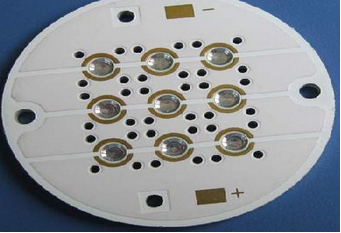
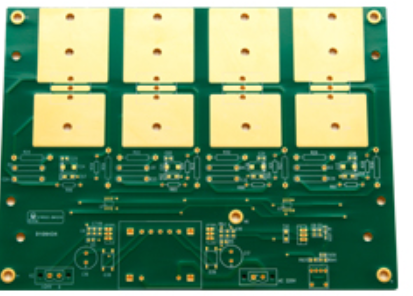
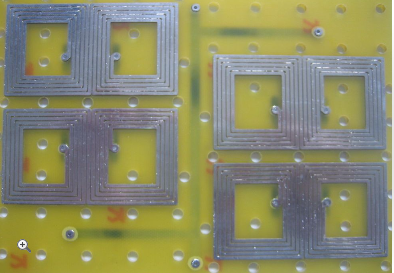
Next Generation PCB Materials For Improved Filter Response And Power Amplifier Efficiency
The relentless pursuit of higher performance in wireless communication systems, from 5G infrastructure to satellite networks, places immense demands on radio frequency (RF) hardware. Two critical components often become bottlenecks: filters, which must isolate desired signals with exceptional precision, and power amplifiers (PAs), which must convert DC power to RF signals with maximum efficiency. While circuit design and semiconductor technology advance, the foundational platform—the printed circuit board (PCB)—has emerged as a pivotal factor. Conventional PCB materials, like standard FR-4, struggle with the high-frequency losses, thermal management challenges, and signal integrity issues inherent in modern designs. This has catalyzed the development and adoption of next-generation PCB materials engineered specifically to unlock improved filter response and enhanced power amplifier efficiency. These advanced laminates are not merely incremental improvements but represent a paradigm shift, enabling designers to push the boundaries of what is possible in RF and microwave systems.
Advanced Dielectric Properties for Superior Filter Response
The performance of RF filters is intrinsically linked to the electrical properties of the PCB substrate. Next-generation materials are engineered with exceptionally low and stable dielectric constant (Dk) and dissipation factor (Df). A stable Dk across a wide frequency range and varying environmental conditions is crucial for maintaining precise filter center frequencies and bandwidths. Materials with ultra-low Df, such as those based on polytetrafluoroethylene (PTFE) ceramics or hydrocarbon ceramics, dramatically reduce dielectric losses. This directly translates to filters with sharper roll-off, lower insertion loss, and improved out-of-band rejection.
Furthermore, these materials offer superior consistency in dielectric properties, both across a single panel and from batch to batch. This homogeneity minimizes performance variations between fabricated filter units, enhancing manufacturing yield and reliability. For sophisticated filter topologies like edge-coupled bandpass filters or hairpin designs, the precise control over impedance and coupling afforded by these stable materials is indispensable. The result is the ability to design filters that meet the stringent requirements of modern spectrum-crowded applications without resorting to overly complex, lossy, or bulky structures.
Enhanced Thermal Management for Power Amplifier Efficiency
Power amplifier efficiency is heavily influenced by operating temperature. As heat builds up, semiconductor performance degrades, leading to reduced gain, output power compression, and potentially catastrophic failure. Next-generation PCB materials address this through significantly improved thermal conductivity. Traditional FR-4 acts as a thermal insulator, trapping heat near the active devices. In contrast, advanced materials often incorporate ceramic fillers or specialized resin systems that provide a direct thermal path from the heat-generating transistor die through the substrate to the chassis or heat sink.
This efficient heat dissipation allows power amplifiers to operate at lower junction temperatures for a given output power. Cooler operation directly improves power-added efficiency (PAE) and linearity, while also dramatically enhancing the long-term reliability and mean time between failures (MTBF) of the amplifier. Materials with matched coefficients of thermal expansion (CTE) to that of copper and semiconductor packages also prevent mechanical stress and delamination during thermal cycling, ensuring robust performance in demanding environments. By managing the thermal budget more effectively, these substrates enable the design of more compact, powerful, and efficient PAs.
Low-Loss Conductors and Surface Finishes for Reduced Insertion Loss
While dielectric losses are a primary concern, conductor losses become increasingly significant at millimeter-wave frequencies. Next-gen materials are paired with ultra-low-profile copper foils featuring very smooth surfaces. Rough copper foil increases the effective conductor length and creates impedance variations, leading to higher insertion loss and degraded filter response. The use of reverse-treated or low-profile copper minimizes this "skin effect" roughness loss, ensuring that the designed circuit patterns exhibit minimal resistive attenuation.
Similarly, the final surface finish applied to the PCB plays a critical role. While finishes like HASL (Hot Air Solder Leveling) are lossy at high frequencies, next-generation boards employ finishes like immersion silver, electroless nickel electroless palladium immersion gold (ENEPIG), or even bare copper with controlled oxidation. These finishes provide a smooth, consistent surface for component soldering and connector interfacing while maintaining low RF loss. The combined effect of low-loss dielectrics, smooth conductors, and appropriate surface finishes preserves signal strength and integrity from the PA output through the filter network to the antenna.
Design Flexibility and Integration Capabilities
The evolution of PCB materials also brings enhanced design flexibility. Many advanced laminates are available in thinner cores and prepregs, allowing for the fabrication of boards with fine line widths and spacings essential for miniaturized, high-frequency circuits. This supports the integration of passive filter elements directly into the PCB layout, reducing the need for discrete components and improving repeatability. Furthermore, some material systems support mixed-dielectric constructions, where different layers of a multilayer board can use materials optimized for specific functions—for instance, a high-thermal-conductivity layer for the PA section and an ultra-low-loss layer for the filter section.
This capability facilitates a system-in-package (SiP) or integrated module approach, where the PA, filter, matching networks, and even control circuitry can be co-designed on a single, optimized substrate. Such integration reduces parasitic interconnections, improves overall system efficiency, and shrinks the form factor. The mechanical stability and reliability of these materials also support advanced packaging techniques and harsh operating environments, making them suitable for aerospace, defense, and automotive radar applications where performance cannot be compromised.
REPORT